
The counter collects mail. The closet door catches on something every time you push it. And there’s one shoe under the bed that went missing around March.
Small apartments punish bad storage decisions in a way bigger homes never do. Buy one oversized armchair and you’re walking sideways through your own living room. The fix has almost nothing to do with square footage, and it definitely doesn’t start with buying fifteen matching bins before you know what’s going in them.
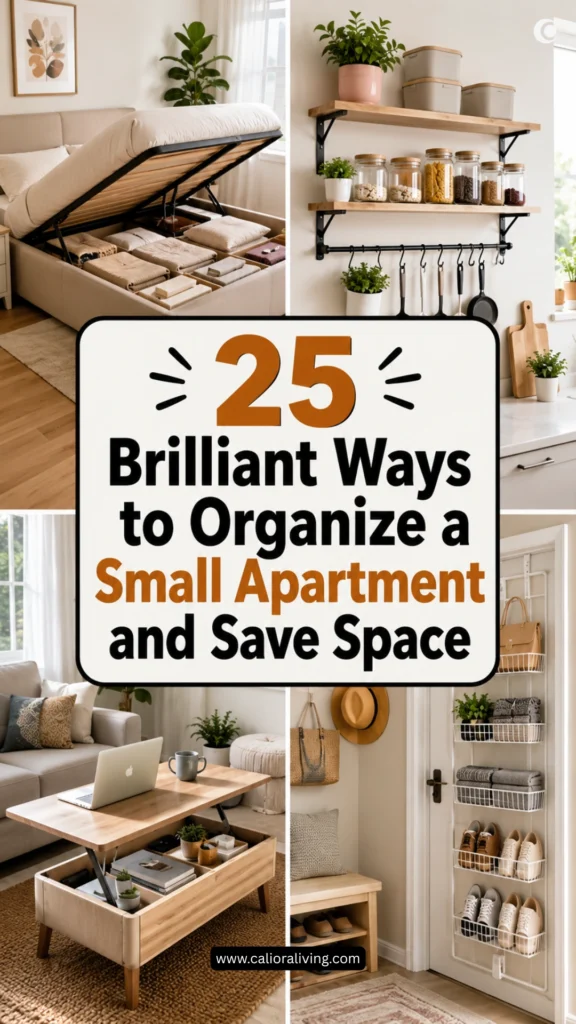
What follows is 25 practical ways to organize a small apartment, working room by room from the closet floor to the wall above your toilet. Most cost under $30. Nearly all of them work in a rental, so your security deposit stays exactly where it belongs.
1. Declutter Every Room Before You Buy a Single Storage Bin
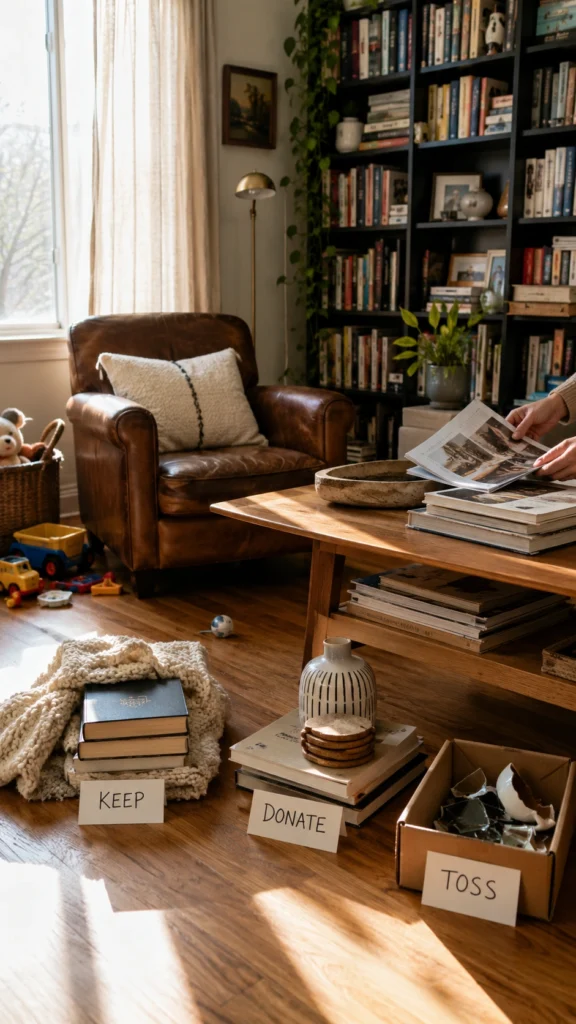
Containers organize your stuff. They don’t reduce it. If your closet holds 200 items and fits 140, no bin fixes that math.
Pull everything out of one zone, sort it into keep, donate, and toss, then look at what survived. Most people find they need less storage than they assumed.
The usual mistake runs backward: buy the organizers first, then hunt through the apartment for things to fill them. That’s how you end up with a bin of random cords nobody touches again.
2. Give Every Shelf One Job and One Category
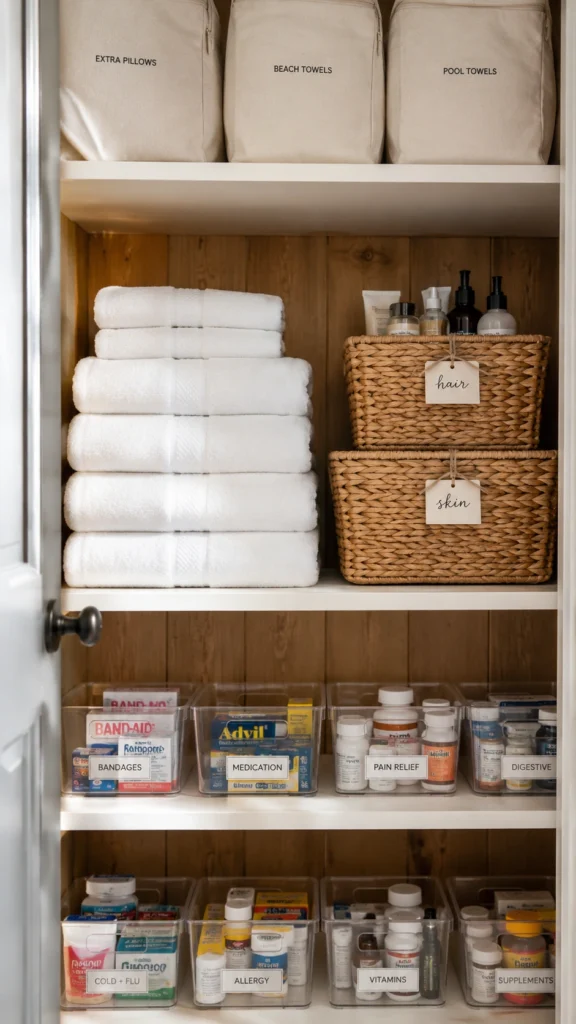
Dedicate each shelf in your storage closet to a single type of item. Towels on one. Paper goods on another. Cleaning supplies get their own.
This works because your eyes stop scanning and start pointing. You also see the moment you’re overstocked, which saves you from buying a fourth pack of sponges.
Linen closets, pantry shelves, and that oddly tall cabinet nobody knows what to do with all respond well to this.
3. Label Everything You Can’t See Into
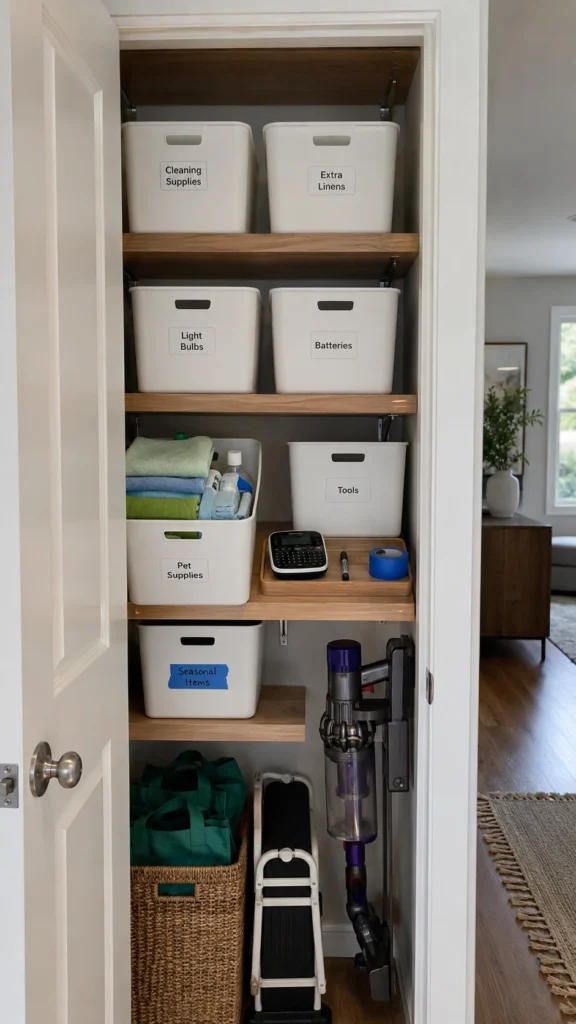
Labels do two jobs at once. They tell you where something goes, and they tell everyone else in the apartment where it goes, which turns out to matter more.
Opaque bins without labels become mystery boxes inside of three weeks. A $6 label maker settles it permanently, though painter’s tape and a marker cost almost nothing and peel off cleanly when you rearrange. And you will rearrange.
4. Take Your Storage All the Way Up the Wall
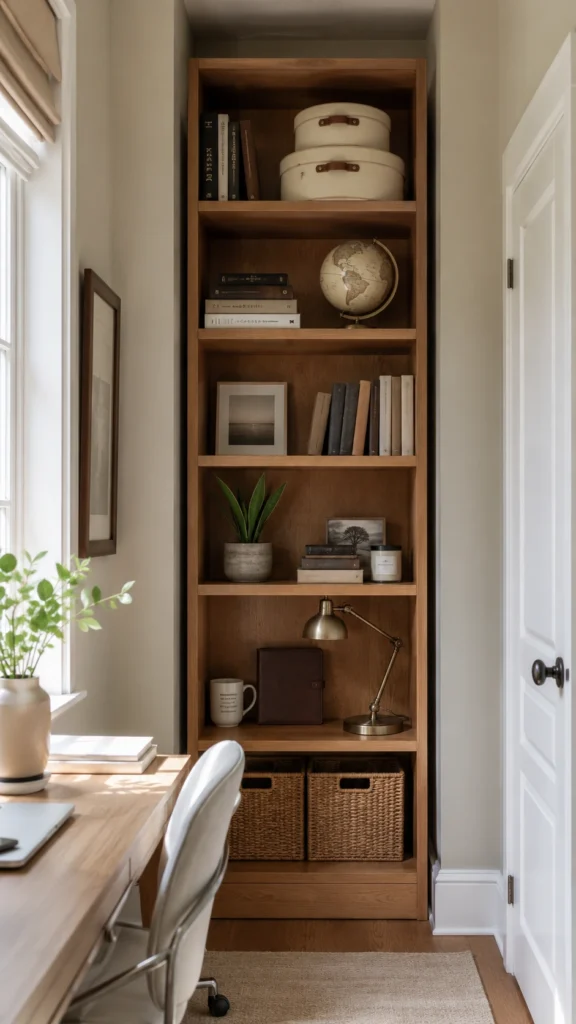
Most people stop storing things at eye level, which leaves two or three feet of dead wall in every room. Floating shelves, tall narrow bookcases, and stacked cube units all pull storage upward without eating floor space.
Pegboards earn their keep in kitchens and home offices because you can move the hooks whenever your needs shift. Keep daily items low and push the rarely used things up top.
If you’re mounting shelves anyway, run them to the ceiling instead of stopping at six feet. The eye follows them up and the room reads taller.
Related Blog:
5. Turn the Back of Every Door Into Storage Real Estate
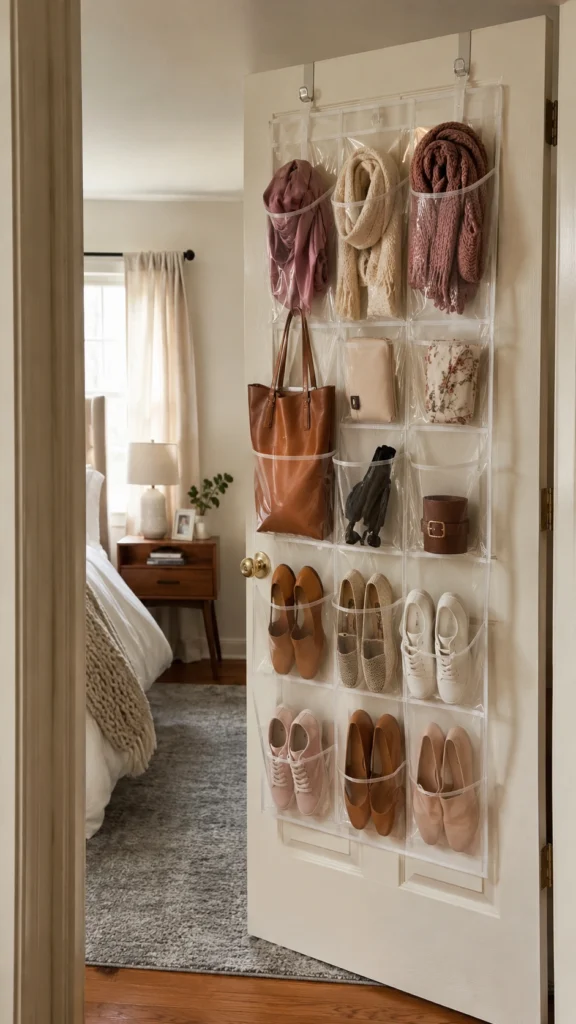
Count the doors in your apartment. Every one of them has a flat, empty back doing nothing at all. Over-the-door racks, hanging pocket organizers, and adhesive hooks fix that in about four minutes each.
The bathroom door handles hair tools and robes. The pantry door holds snacks and cleaning sprays. The bedroom door takes purses, tote bags, and scarves, and shoes are only part of what belongs there.
Renters do especially well with this one, since nothing here needs a drill.
6. Mount Slim Racks Inside Your Cabinet Doors
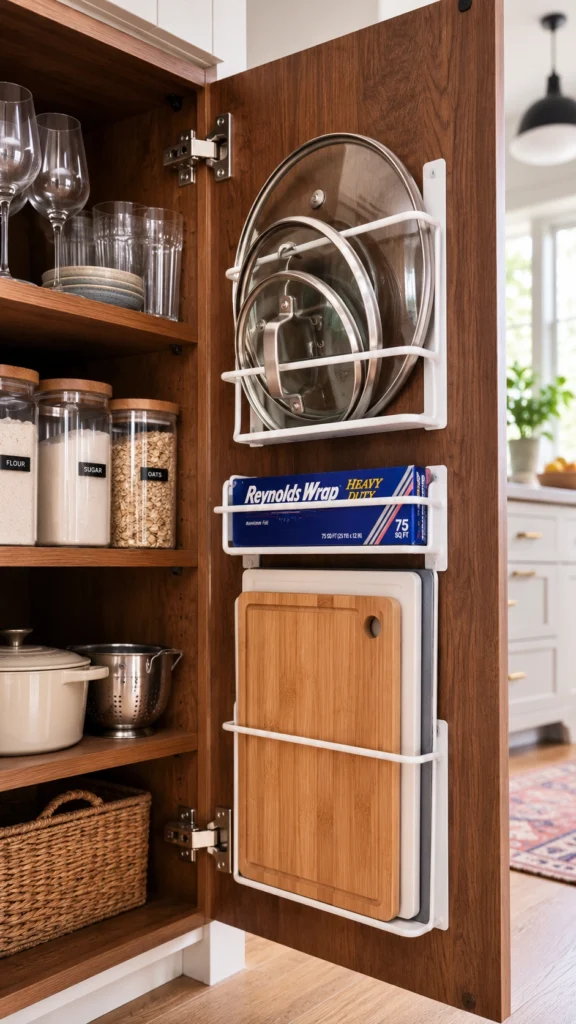
Open a cabinet and look at the gap between the shelf edge and the door. Usually about three inches, and it holds far more than it looks like it should.
Adhesive racks on the inside of the door take cutting boards, pot lids, foil boxes, and hair dryers. Cords stop tangling because each tool gets its own slot.
Measure your shelf clearance before you buy. A rack half an inch too deep leaves the cabinet permanently ajar, and you’ll notice it every day.
7. Fill the Under-Bed Zone With Rolling Bins
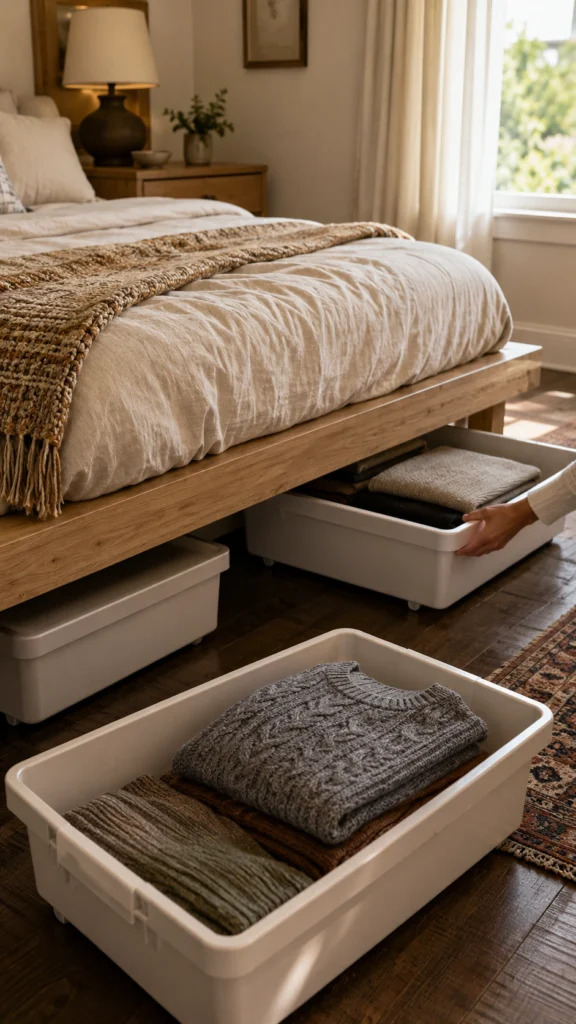
Your bed covers roughly 30 square feet of floor. In a small apartment, ignoring that is hard to justify.
Low-profile bins on casters slide out easily, which is the entire point, because you only use what you can reach. Shoes, spare linens, gift wrap, anything seasonal.
Deep bins without wheels fail for the opposite reason. You shove them under once, never pull them out again, and forget what’s inside by August.
8. Vacuum-Seal Your Off-Season Coats and Bedding
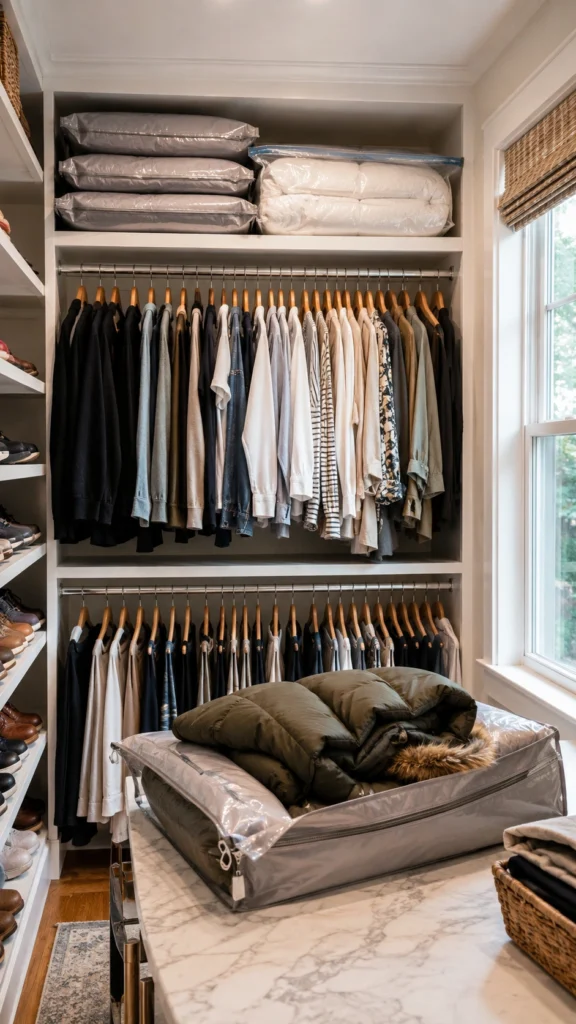
Winter coats and spare duvets occupy closet space for eight months a year while doing nothing. Vacuum storage bags compress them to about a third of their size.
Slide the flattened bags under the bed or onto the closet’s top shelf until the weather turns. Your hanging space opens up immediately.
Down and leather are the exceptions worth knowing. Long-term compression damages both, so use breathable garment bags for those instead.
9. Line Your Closet’s Top Shelf With Matching Bins
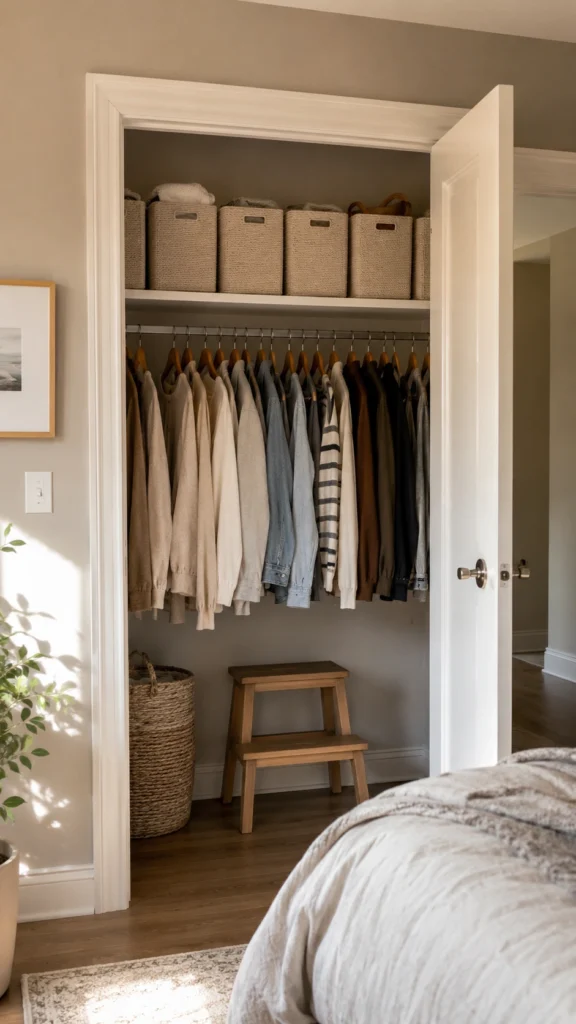
The top shelf usually turns into a graveyard of loose sweaters and stray bags. Matching bins turn the same shelf into deliberate storage: uniform containers stack cleanly, sit flush against each other, and look intentional rather than chaotic. Since you need a step stool up there anyway, reserve it for things you rarely touch.
Woven or fabric bins in one neutral color beat clear plastic at that height. Clear plastic broadcasts every messy thing inside.
Related Blog:
10. Build a Drawer Tower on Your Closet Floor
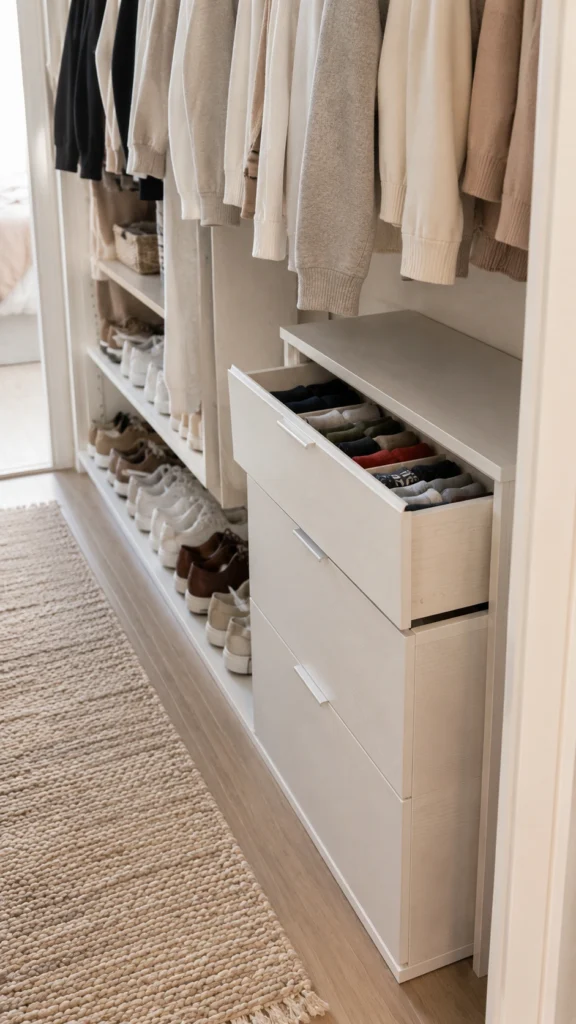
Most closet floors hold a pile of shoes and a laundry basket. A narrow drawer unit down there adds three or four drawers without putting another piece of furniture in your bedroom.
Use it for socks, underwear, workout clothes, or whatever’s currently crammed into an overstuffed dresser. If your bedroom can’t fit a full dresser, this is the closest substitute, and getting dressed speeds up when everything lives in one room.
11. Choose Furniture That Hides Storage Inside It
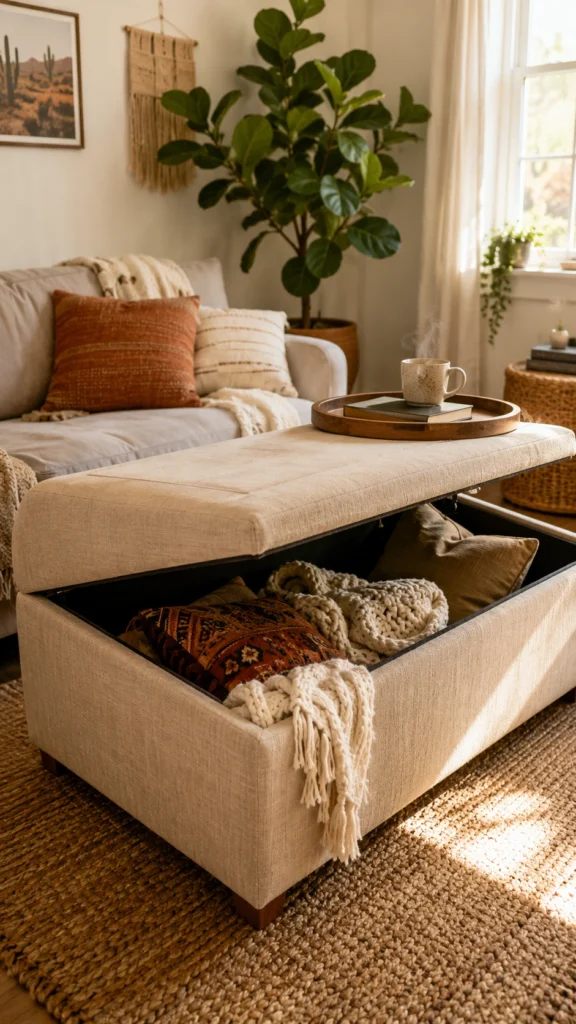
Every piece of furniture in a small apartment should earn its footprint twice. An ottoman with a hollow base swallows blankets. A lift-top coffee table hides remotes, chargers, and the mail you keep meaning to sort.
Compare your options honestly before buying:
- Storage ottoman: Bulky soft items like throws and pillows, plus extra seating when people visit.
- Lift-top coffee table: Small daily clutter, and a laptop surface at couch height.
- Storage bench: By the entry or at the foot of the bed, holding shoes and bags without looking like storage.
Related Blog:
12. Upgrade to a Storage Bed With Built-In Drawers
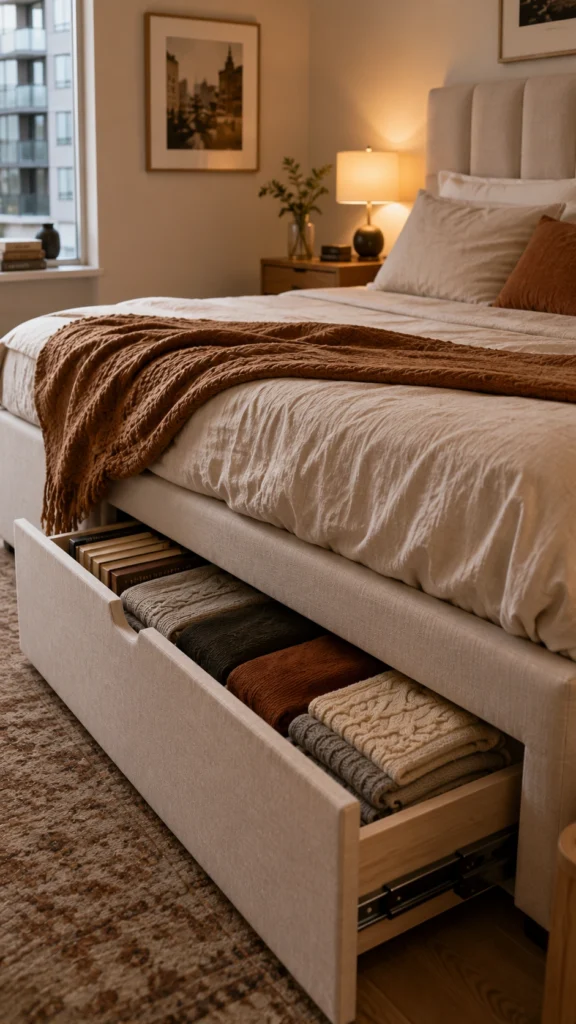
Your bed is the largest piece of furniture you own, so it may as well be the largest storage unit. Beds with drawers built into the base, or lift-up platform frames, do exactly that. Studios gain the most here, since a real closet often isn’t part of the deal.
Drawer beds give you easy daily access. Lift-up frames hold considerably more but take effort to open, so keep long-term storage in those and everyday items in drawers.
13. Swap Your Nightstand for a Slim Three-Drawer Dresser
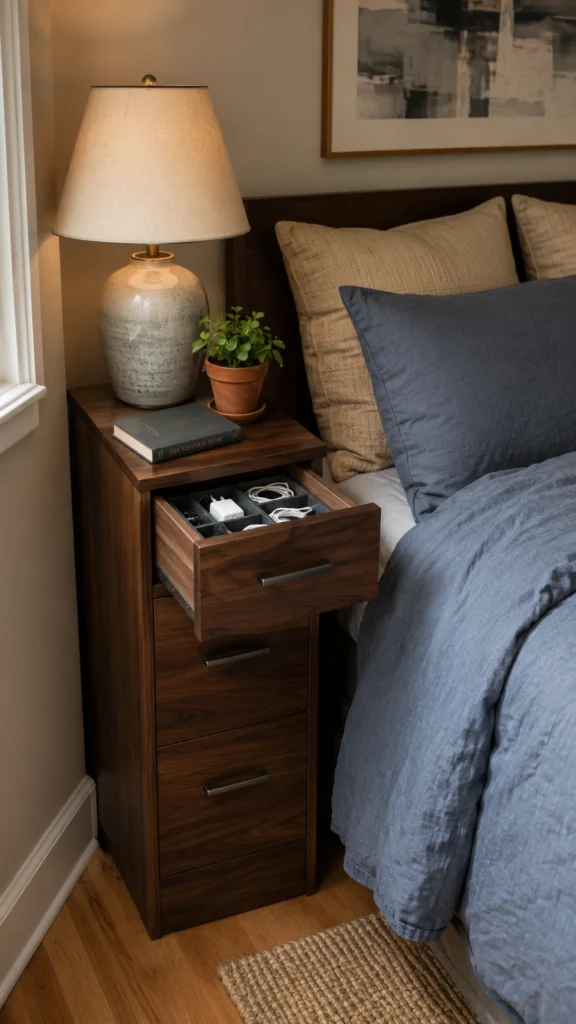
A standard nightstand offers one drawer and a surface. A narrow dresser takes nearly the same floor space and gives you three.
That’s real storage for books, chargers, medication, and the pile of small things that usually colonize a nightstand top. Look for something under 20 inches wide so it doesn’t crowd the bed.
If floor space matters more to you than drawers, a wall-mounted floating shelf beside the bed leaves the entire floor underneath open.
Related Blog:
14. Replace Your Side Table With a Three-Tier Rolling Cart
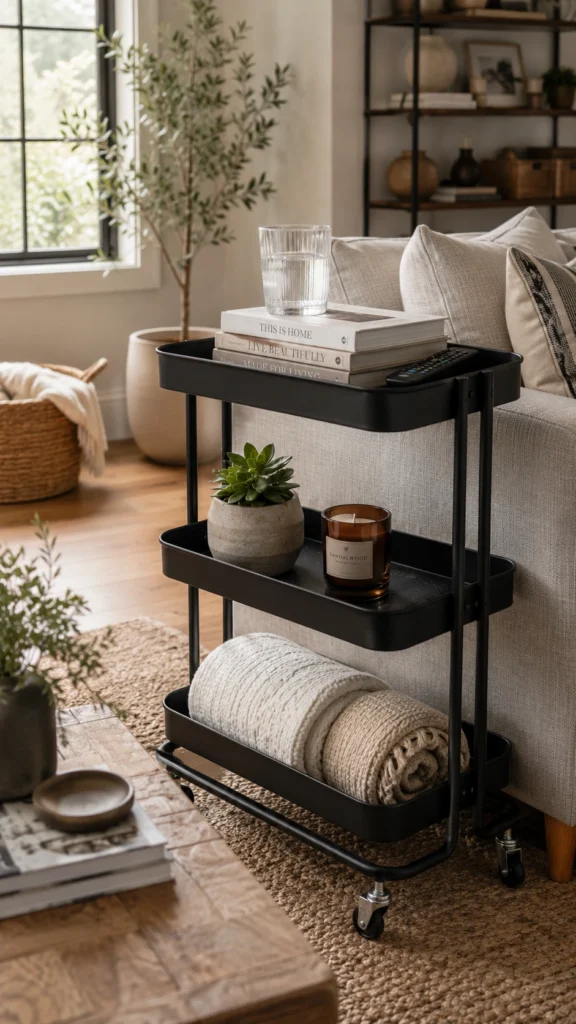
A three-tier rolling cart is a side table with two bonus shelves. Park it beside the sofa for books and drinks, then wheel it into the kitchen when you’re hosting.
The reason designers reach for these constantly is mobility. In a small apartment, furniture that moves solves the problems fixed furniture creates. Living rooms, bathrooms, anywhere storage needs to relocate on demand.
15. Stop Losing Things in Deep Cabinets With Slide-Out Trays
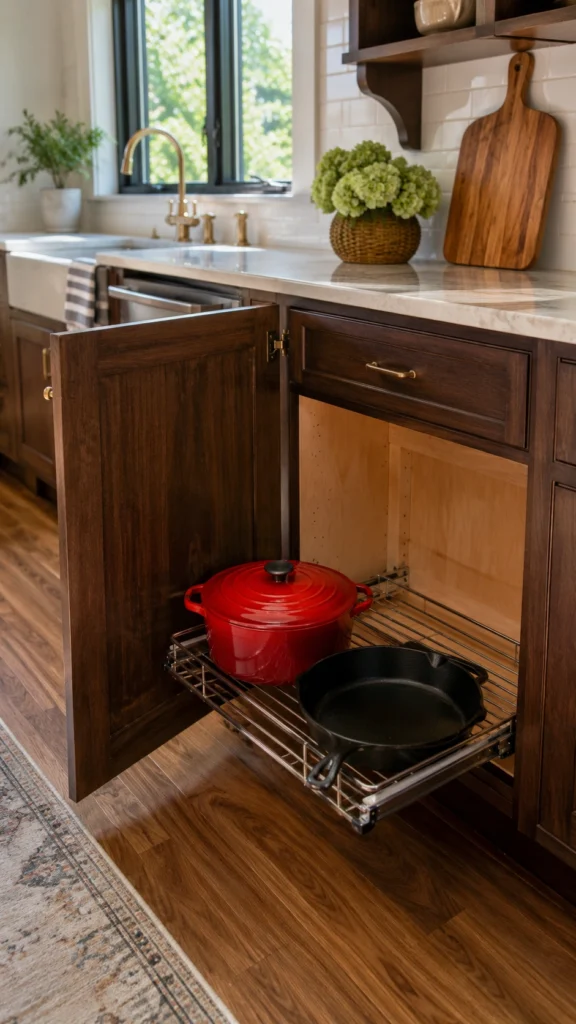
Deep lower cabinets hide everything at the back. You buy a second bottle of olive oil because the first one disappeared into the void six months ago.
Pull-out shelf inserts bring the contents forward where you can see them, and plenty of versions sit inside the cabinet without screws, so renters can use them too.
Put your heaviest items on the pull-outs: stock pots, small appliances, the Dutch oven. Lifting those straight up out of a deep cabinet is how backs get tweaked.
Related Blog:
16. Stack Clear Bins in Cabinets and on Counters
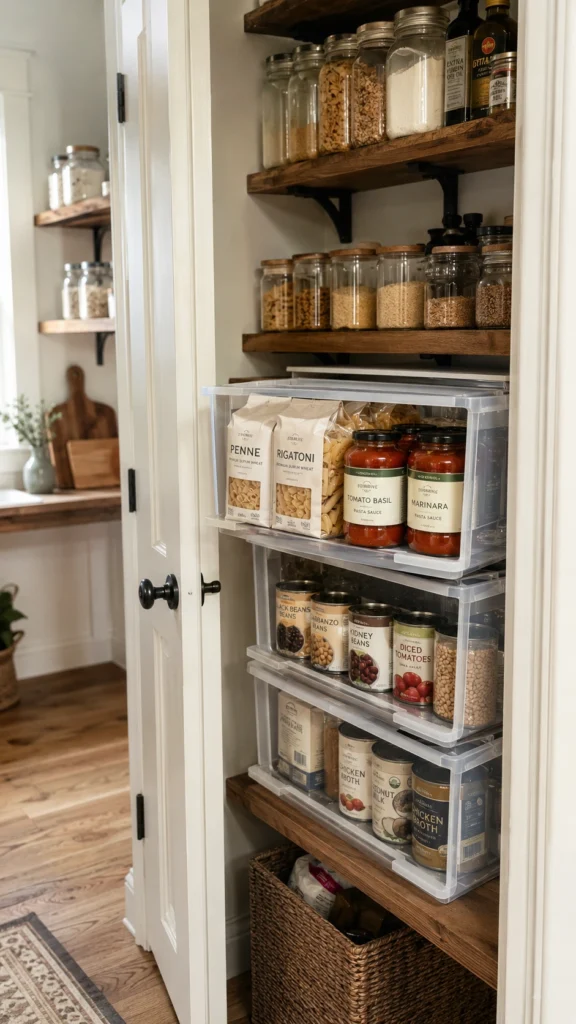
Stackable bins double your usable cabinet height. Instead of one layer of snacks with dead air above it, you get two or three.
Clear or wire versions let you check contents without unstacking anything, which matters because nobody unstacks bins to look for pasta. Group by category so each bin stays a single grab.
Three deep is the practical ceiling. Past that, the bottom bin becomes unreachable and you quietly stop using it.
17. Stand Your Cans Upright in a $10 File Sorter
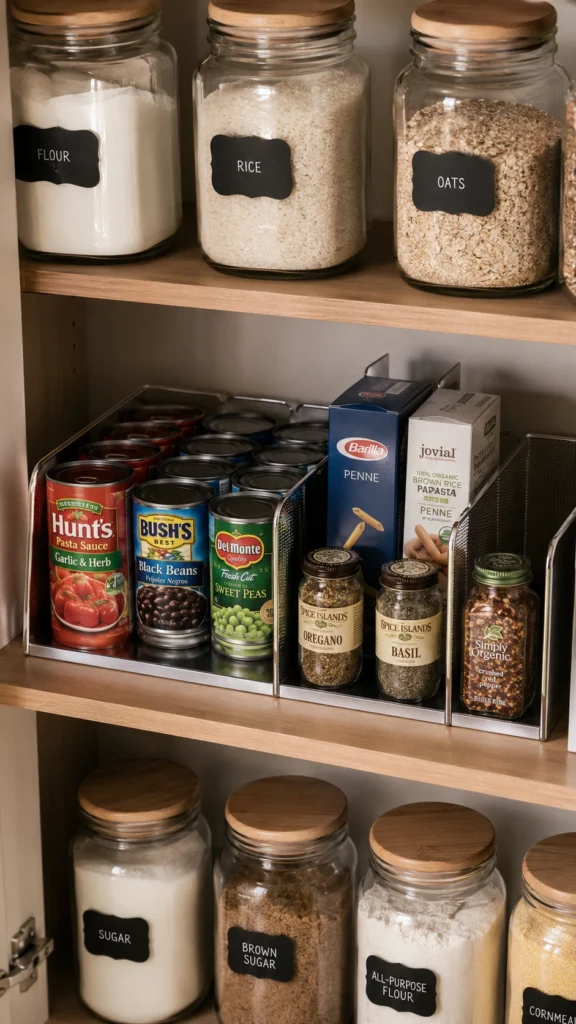
A metal or acrylic file sorter, laid flat in a cabinet or standing upright on a shelf, holds cans in neat rows. Every label faces you, and pulling one out doesn’t trigger an avalanche.
Boxed pasta, foil, and plastic wrap boxes stand on end in the same sorter. About $10 and ten minutes, and it does the most work on shallow pantry shelves and narrow cabinets.
18. Put a Lazy Susan in Every Dead Corner
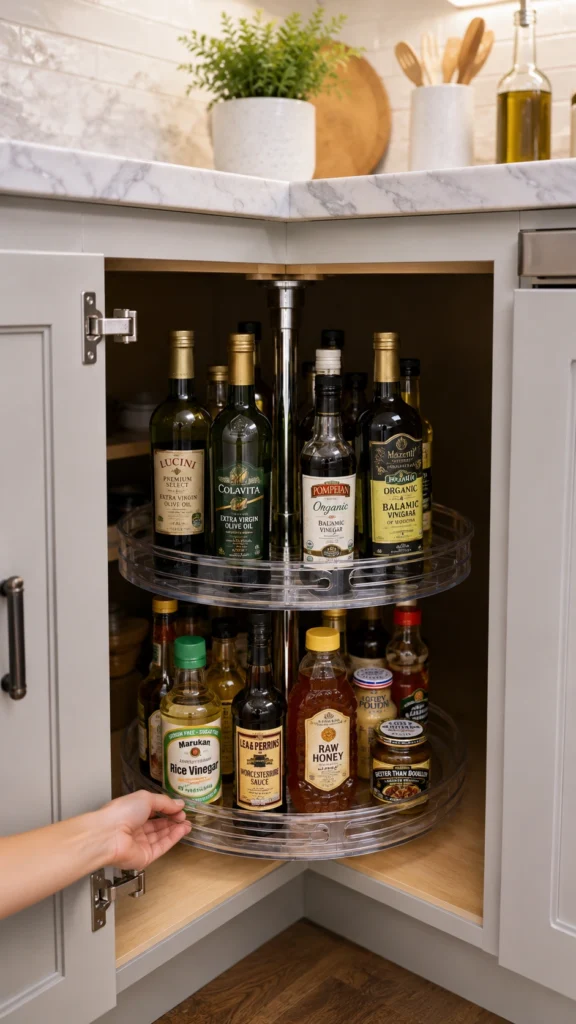
Corner cabinets and under-sink areas hide things in spots your arm can’t comfortably reach. A turntable brings the back row to you with one spin.
Use one under the bathroom sink for skincare, one in the pantry for oils and vinegars, and one in the fridge for condiments. Two-tier versions work well where you have the vertical clearance.
Buy one with a raised lip. Bottles tip over on flat turntables every single time.
19. Stick Magnetic Storage on the Sides of Your Fridge
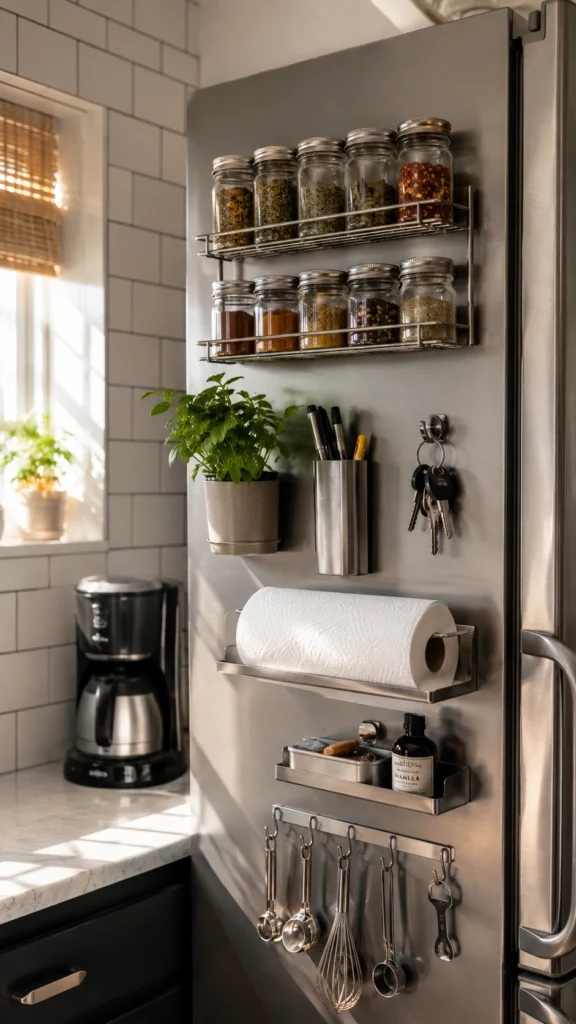
The side of your refrigerator is a free vertical steel wall. Magnetic spice racks, hooks, and shallow shelves attach in seconds and hold a surprising amount.
Spices, oven mitts, keys, and paper towel rolls all move off the counter. Counter space in a small kitchen is the most valuable surface you own, so defend it. Galley kitchens feel this most, where you might have two feet of usable counter in total.
20. Slide a Slim Rolling Cart Into the Bathroom Gap
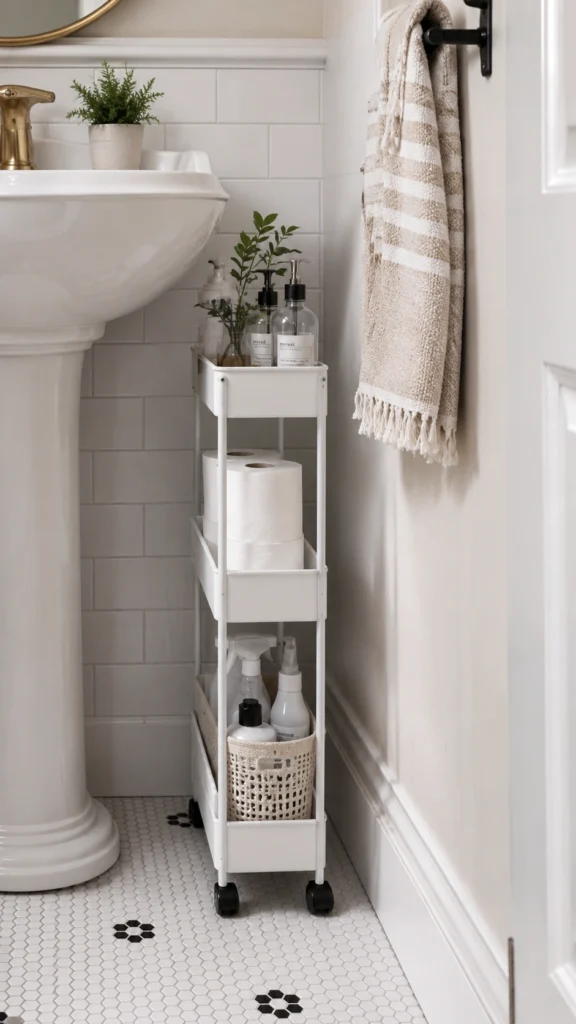
That awkward six-to-ten-inch gap between the sink and the toilet fits a narrow rolling cart almost perfectly. You go from a dust trap to three shelves.
Load it with extra toilet paper, backup toiletries, and cleaning supplies. The wheels also mean you can pull it out and clean behind it, which you’ll appreciate later.
Measure the gap at its narrowest point and include the baseboard. Bathrooms are rarely as square as they look.
21. Claim the Wall Above Your Toilet
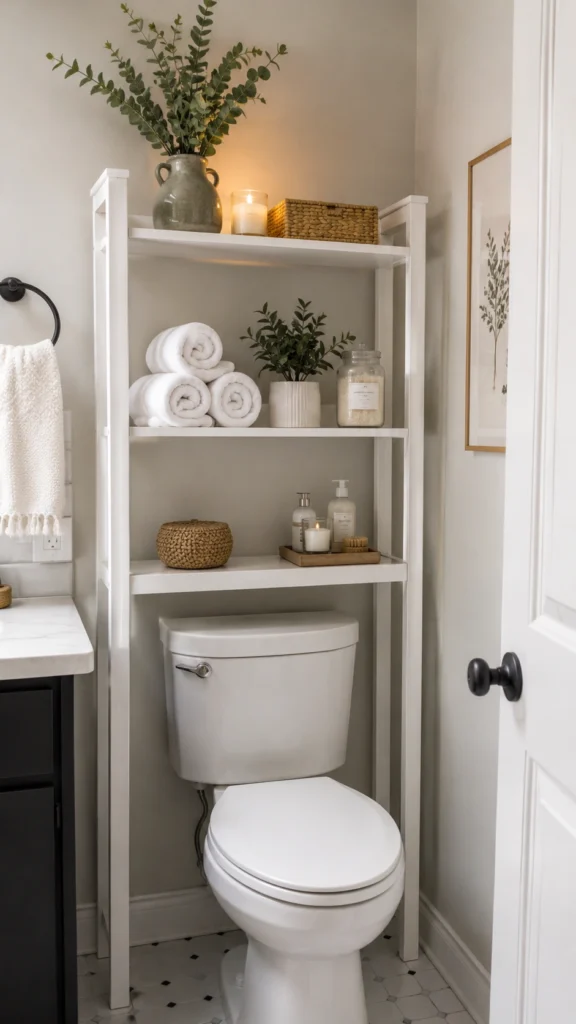
That wall sits empty in most apartments for no good reason. An over-the-toilet shelving unit, a floating shelf, or a wall cabinet adds real storage without touching your floor plan.
Freestanding over-the-toilet units need zero installation, which makes them the safer rental pick. Keep the bottom shelf at least a foot above the tank so you can still lift the lid.
Mix function and decor while you’re up there. Rolled towels, a small plant, and one closed basket for the unglamorous items.
Related Blog:
22. Turn a Wine Rack Into Rolled-Towel Storage
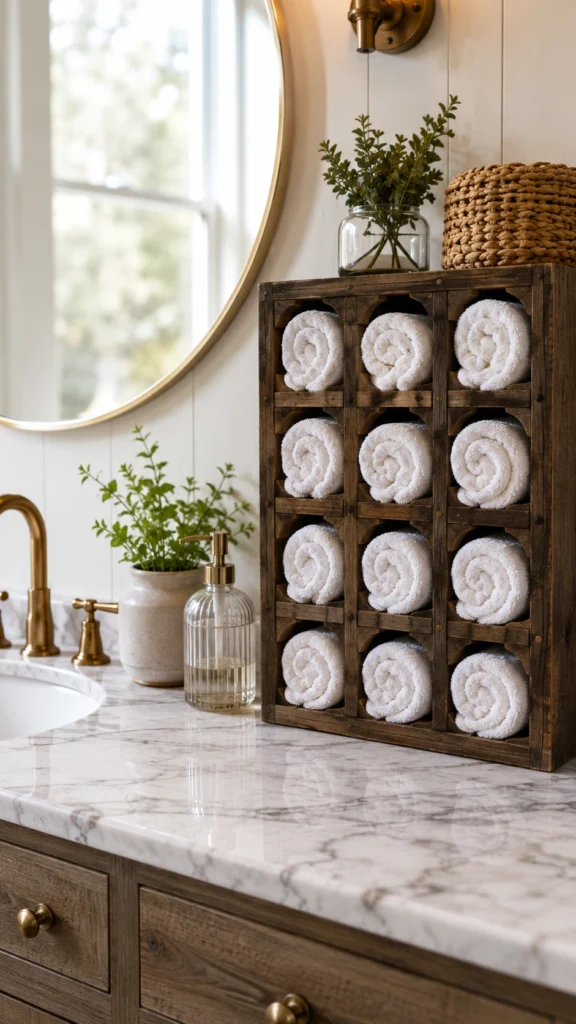
A wall-mounted or countertop wine rack holds rolled towels beautifully. Each slot takes one rolled hand towel or washcloth, and the whole thing reads as intentional spa styling rather than a storage workaround.
Towels stop eating your limited cabinet space, guests grab one without opening anything, and when you move somewhere bigger, the rack goes back to holding wine.
A wooden crate turned on its side does the same job for a few dollars if you’d rather not buy anything new.
23. Lean a Ladder for Blankets, Towels, and Bags
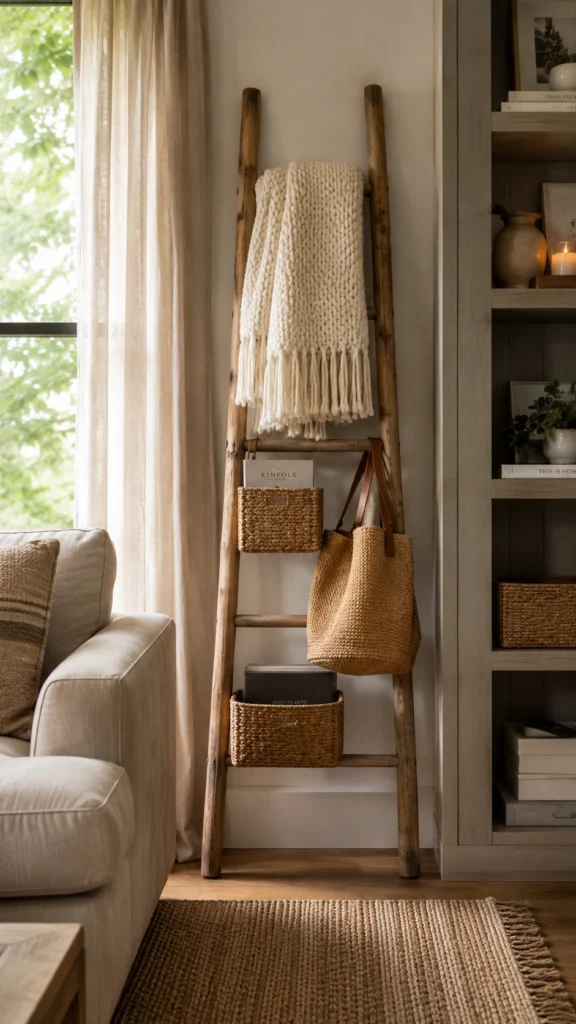
A leaning ladder takes up about a foot of floor and gives you four or five rungs of hanging storage. Throws in the living room, towels in the bathroom, clipped-on baskets by the entry.
For soft goods, it beats a shelf, because you fold once and drape. Nothing to restack, and no pile collapsing at 11 pm. Good choice for narrow wall sections where a cabinet won’t fit.
24. Hang Hooks in Every Unused Wall Gap
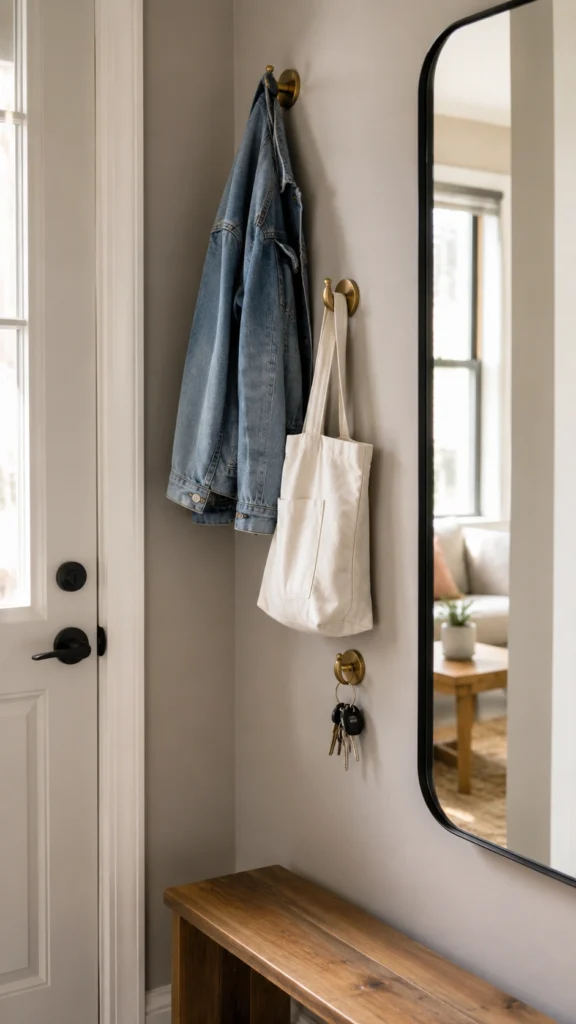
No $10 purchase solves more small-apartment problems than hooks. Coats by the door, bags inside the closet, mugs under a shelf, robes on the bathroom wall.
Adhesive hooks and Command Strips hold well when you respect the weight limit and press them for the full 30 seconds the instructions ask for. Skip that step and gravity teaches you the lesson at 3 am.
Resist hanging five coats on one hook. Space them out, and the wall stays intact.
25. Build a Real Drop Zone by Your Front Door
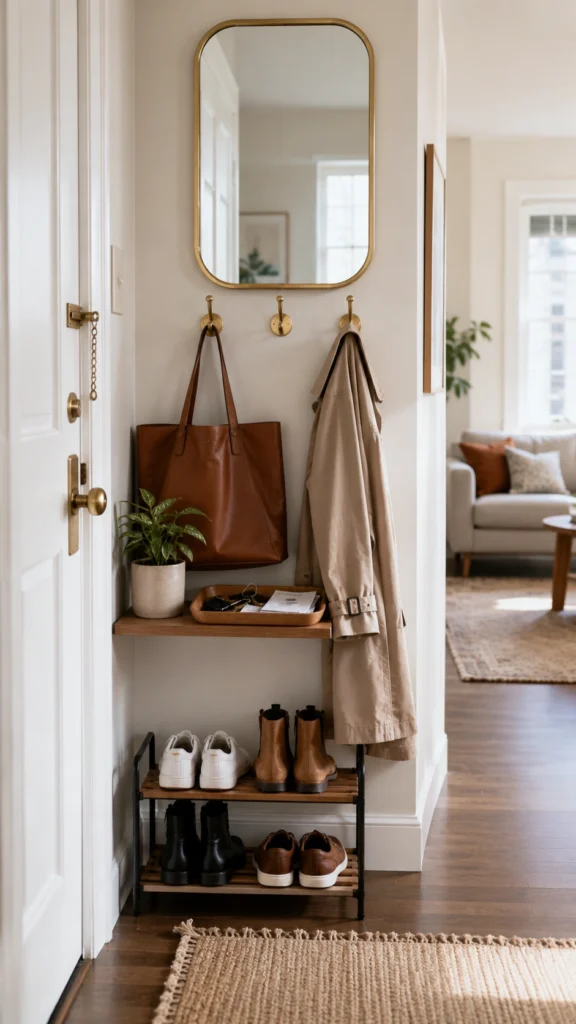
Keys, mail, shoes, and bags create most of the visible clutter in a small apartment for one reason: nothing tells them where to go. A drop zone does.
Three components cover it. Hooks for bags and coats, a small tray or bowl for keys and mail, and a shoe solution, either a narrow rack or a bench with storage inside. Eighteen inches of wall is enough.
Hang a small mirror above it if you can. It bounces light into the entry and a cramped hallway feels wider for it.
Related Blog:
How to Keep Your Small Apartment Organized Long Term
Setting up a system takes a weekend. Keeping it takes a few habits, and the habits matter more.
Four worth building:
- Run a five-minute reset every night. Clear surfaces, put shoes away, wipe the counter. Small apartments look messy fast because there’s less space to absorb chaos, so a daily reset pays off more here than in a house.
- Follow one-in, one-out. New mug in, old mug out. This single rule keeps your storage from silently refilling over six months.
- Rotate seasonal storage twice a year. Swap the winter and summer bins in spring and fall. Handle every item as you go and donate whatever you skipped an entire season.
- Leave about 20 percent of each shelf empty. Systems packed to capacity break the first week life gets busy. Breathing room is what keeps an organized apartment organized.
Recommended Blogs
- 24 Small Apartment Organization Hacks
- 23 Small Apartment Storage Hacks
- 22 Small Apartment Space-Saving Ideas
- 20 Small Apartment Storage Ideas and Solutions
- 27 Small Apartment Ideas
Final Thoughts on How to Organize a Small Apartment
Skip the pressure to do all 25. Pick the three that hit your worst problem area and start there this weekend.
For most people, that means decluttering one zone, taking storage vertical, and finally claiming the back of a door or two. Those three change how a small apartment feels to live in more than the other 22 combined.
The apartments that stay organized are the ones where every item has an address you can name without thinking about it. Build that, and the space stops working against you.
FREQUENTLY ASKED QUESTIONS
How do I organize a small apartment without spending much money?
Start with decluttering, which costs nothing and frees up the most space. After that, adhesive hooks, over-the-door racks, file organizers, and clear bins all sit under $15 each and handle most storage problems. Shop your own apartment first, since a spare crate, basket, or shoebox often does the same job as a $30 organizer.
What’s the best place to start when my whole apartment feels cluttered?
Start with the entryway. It’s the first thing you see when you walk in, it’s usually small enough to finish in an hour, and a clear entry makes the rest of the apartment feel calmer right away. Finishing one small zone also builds momentum, which matters more than picking the “right” room to begin with.
How do I add storage to a rental without losing my deposit?
Stick to freestanding and adhesive solutions. Over-the-door racks, tension rods, Command hooks, rolling carts, storage furniture, and over-the-toilet units all add serious storage without a single hole in the wall. Check your lease before drilling anything, because some landlords allow small nail holes as long as you patch them at move-out.
Should I use clear bins or opaque bins?
Use clear bins inside cabinets, closets, and the pantry, where you need to see contents fast. Use opaque or woven bins on open shelves and high shelves, where visible clutter makes the room look busy. Label the opaque ones so you never have to pull three bins down to find one thing.
How often should I reorganize a small apartment?
Do a full reset twice a year when you rotate seasonal storage. Between those, a nightly five-minute tidy and a quick monthly check of one problem zone keeps everything from sliding backward. If a certain drawer or shelf keeps falling apart within weeks, the system there is wrong for how you actually live, so rebuild that spot instead of tidying it again.