
You’ve probably stood in the middle of your living room, turned in a slow circle, and wondered where everything is supposed to go. The sofa sits too close to the bookshelf, the coffee table blocks the one clear path to the kitchen, and somehow there’s still nowhere to put your shoes. Small apartments don’t ask permission before they get cramped.
The walls aren’t moving. Your landlord isn’t knocking anything down. But how hard each square foot works is entirely up to you.
These 27 small apartment ideas cover layout, storage, lighting, furniture, and a few habits that keep your place from sliding back into chaos two weeks after you clean it. Most cost under $100. Several cost nothing. Every one works in a rental, so you won’t lose your deposit chasing something you saw online.
Layout Ideas That Create Instant Space
The fastest wins don’t cost a dime. You’re just rearranging what you already own, and the difference shows up in one afternoon.
1. Pull Your Furniture Off the Walls
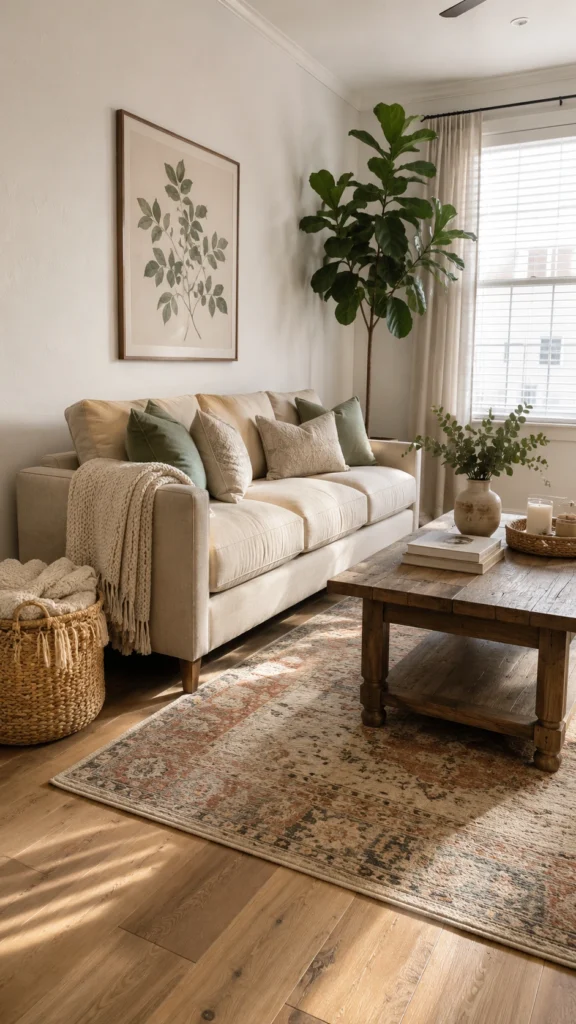
Shoving every piece flush against the wall feels like the logical move, but it leaves a hollow ring of furniture with dead space in the middle. Pull your sofa 6 to 12 inches away from the wall instead, and the room reads as more deliberate almost immediately. That small gap adds depth, and depth is what makes a room feel bigger than its actual measurements.
Furniture showrooms never push sofas flush against the wall. There’s a reason for that.
This trick has limits, though. In a room narrower than 10 feet, floating the sofa eats into your walking space instead of adding to it. Keep the sofa against the longest wall in tight rooms and float smaller pieces instead.
2. Define Zones with Area Rugs
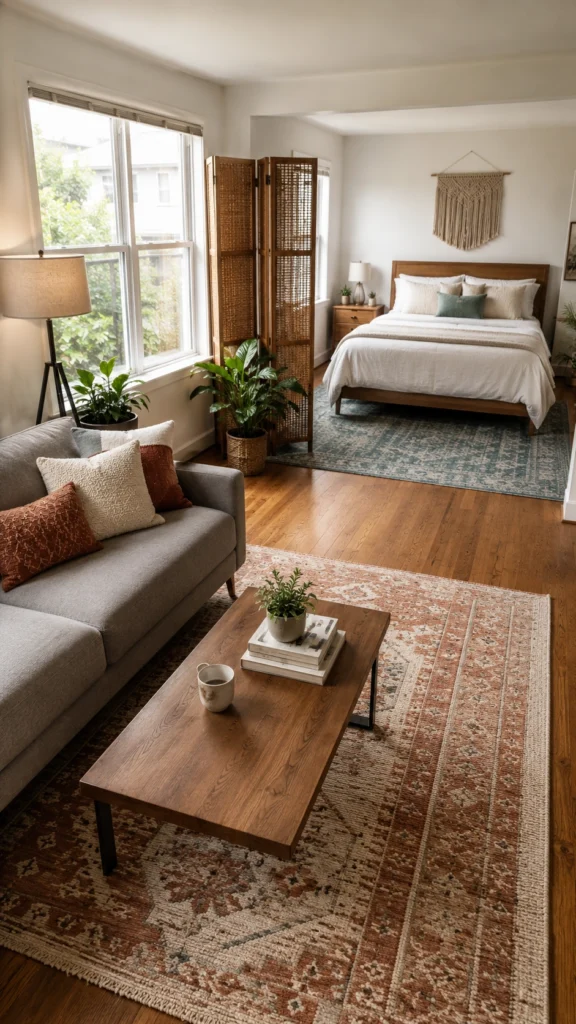
In a studio, a rug does the job a wall would otherwise do. One rug under the seating area and another under the bed tell your brain “these are two separate rooms” without costing you a single inch of floor space.
Size matters more than pattern here. A rug that’s too small makes the whole setup look accidental. At minimum, the front legs of your sofa should sit on it. For a living zone, that usually means 5×7 feet or larger.
3. Angle One Piece of Furniture
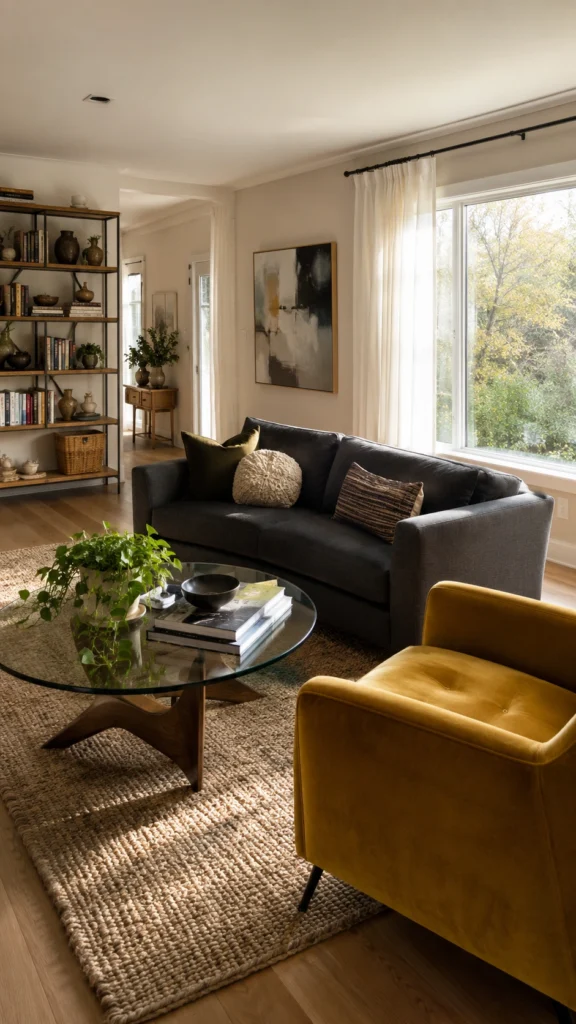
Square rooms feel boxy because every line runs parallel to the next. Placing your sofa or bed at a slight angle breaks that grid and sends the eye along a longer diagonal line. The room measures exactly the same, but it feels bigger because your eye travels farther before hitting a wall.
This works best in living rooms where the seating dominates the space. Skip it in anything under 100 square feet. In a room that small, the angle wastes corner space you can’t spare.
4. Swap the Bulky Coffee Table for Nesting Tables
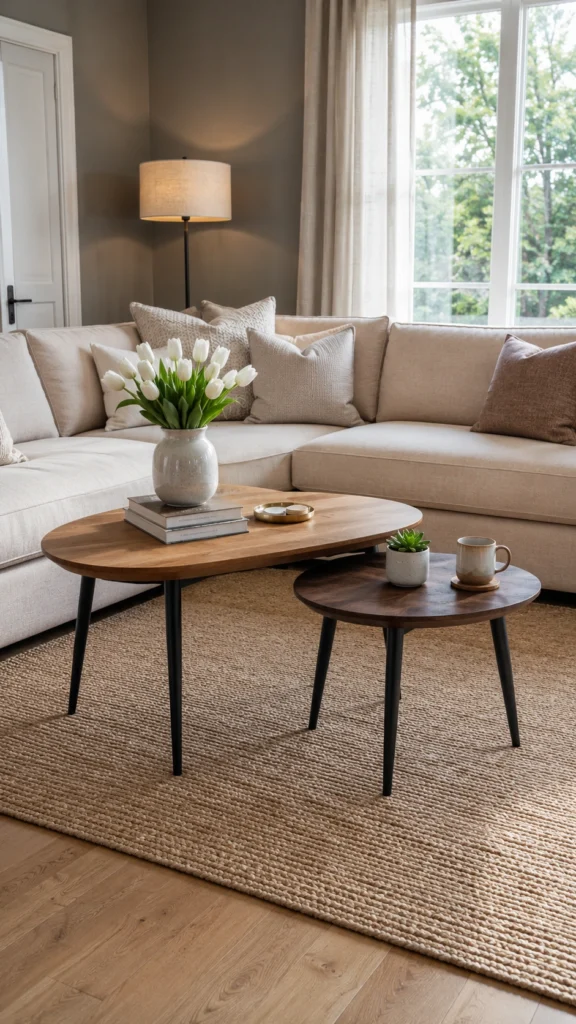
A chunky coffee table claims the most valuable real estate in your living room and rarely earns it. Nesting tables give you the same surface area, but only when you need it. Pull them apart for guests, stack them when you want the floor back.
If you live alone but host occasionally, this one’s worth the swap. Glass or acrylic versions work even better, since the eye passes straight through them instead of stopping.
5. Choose a Round Dining Table Over a Rectangular One
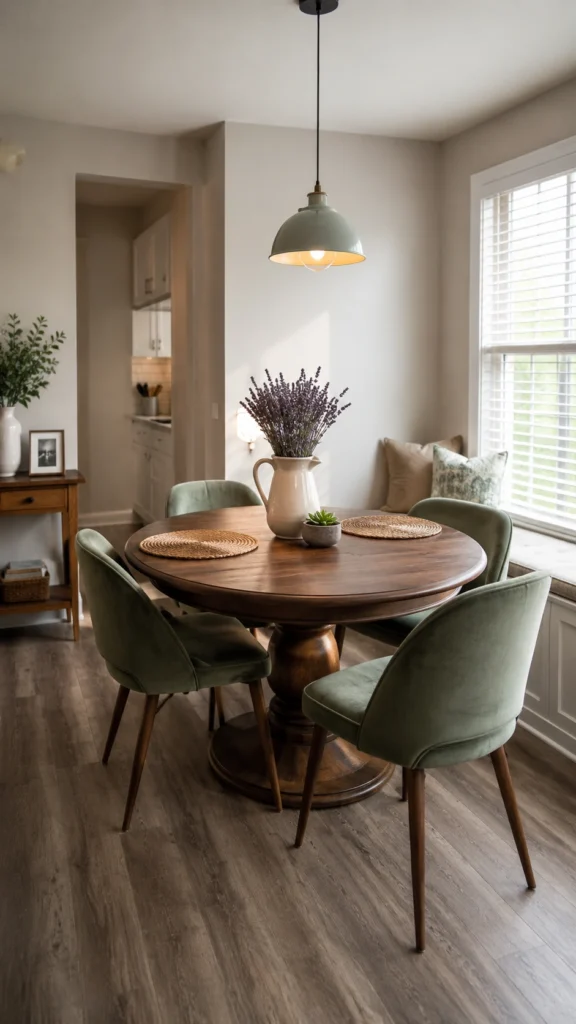
Corners are the enemy in a tight apartment. You bump them, walk around them, and lose floor space to them without even realizing it. A round table skips the corners entirely, tucks into smaller spots, and seats one more person in a pinch.
Here’s how the options stack up:
- Round table: easier traffic flow, no bruised hips, flexible seating
- Rectangular table: fits flush against a wall, better in narrow rooms
- Drop-leaf round table: folds down to a console when you’re not eating, giving you both
If your dining area doubles as a hallway, round wins nearly every time.
Light and Color Tricks That Make Rooms Feel Bigger
You can’t add square footage. You can absolutely change how much space your eyes register. These ideas cost the least and shift the most.
6. Hang One Large Mirror on Your Biggest Wall
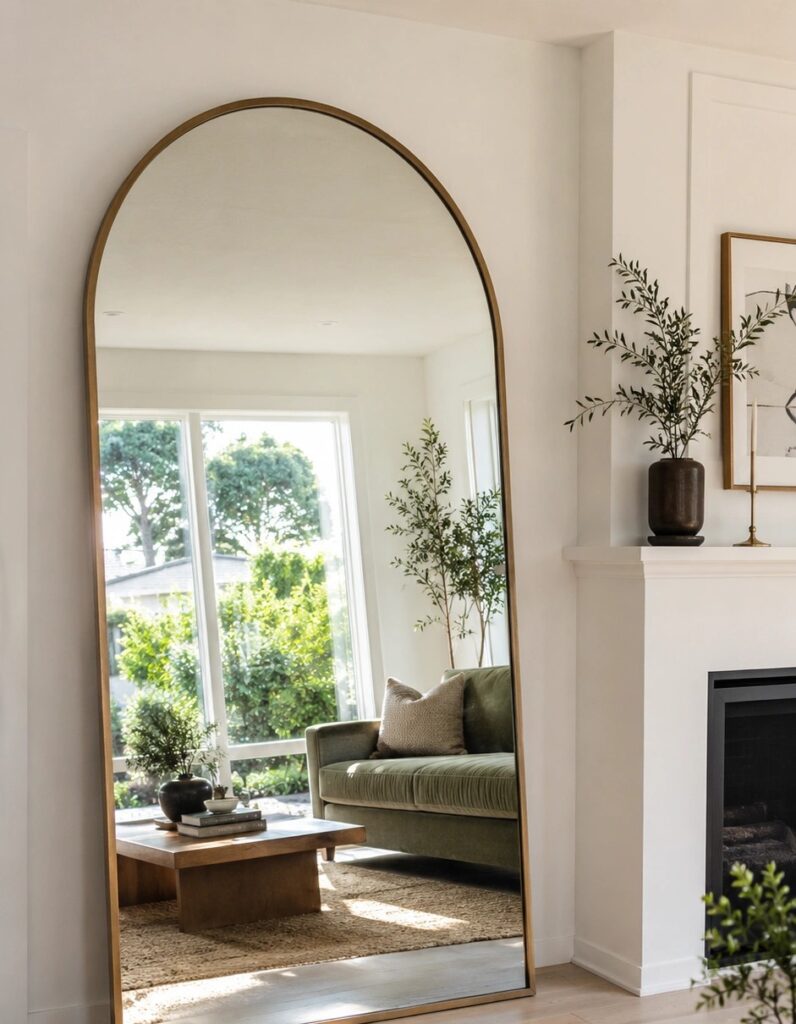
Mirrors bounce light and double the perceived depth of a room. It’s one of the oldest tricks in decorating, and it’s stuck around because it actually works. One large mirror beats a cluster of small ones, which just reads as clutter with a reflective surface.
A full-length mirror leaning against the wall works fine too, and it means no drilling. Position it across from a window and you effectively double your natural light for free.
7. Mount Curtains at the Ceiling, Not the Window Frame
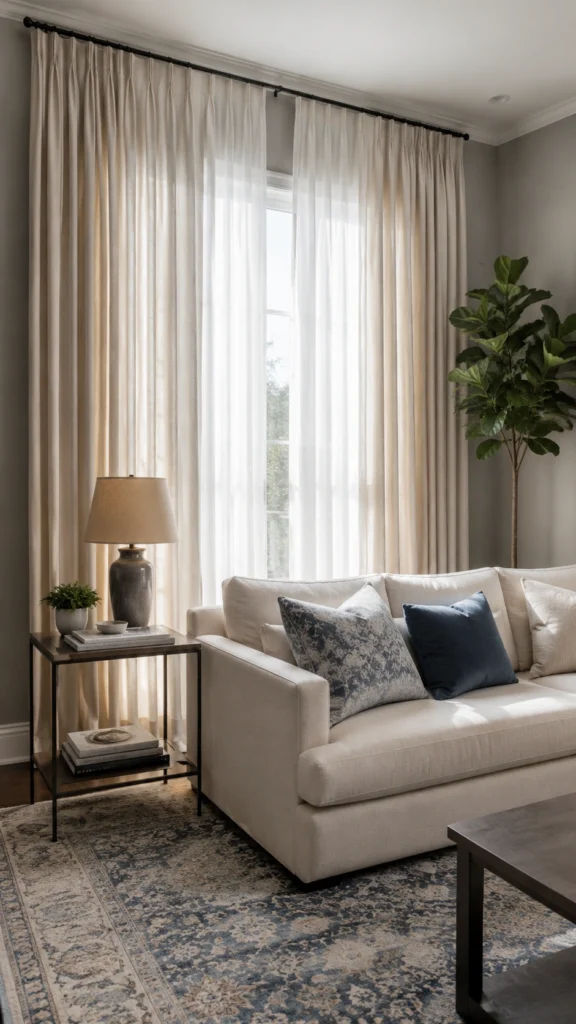
Where you hang the rod matters more than the curtains themselves. Mount it 2 to 4 inches below the ceiling and let the fabric run all the way to the floor. Your eye follows the fabric upward, the ceiling feels taller, and the window looks nearly twice its actual size.
Stick with light, airy fabrics for this one. Heavy blackout drapes running floor to ceiling can turn a small room into a movie theater, and not the good kind.
8. Paint the Walls and Ceiling the Same Light Color
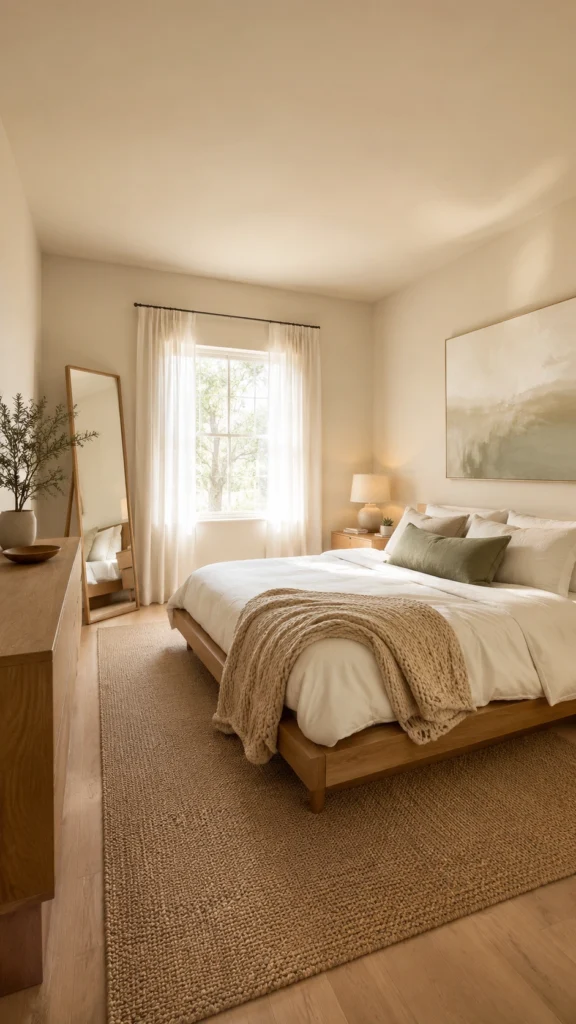
A ceiling painted a different shade than the walls creates a visible line where the room “stops.” Remove that line and your eye stops registering the boundary at all. Soft whites, warm creams, and pale greige all do the job.
One thing people often get wrong here: stark, cool whites. They photograph well but live badly, turning a cozy room clinical fast. A warmer undertone makes the same square footage feel like somewhere you’d actually want to sit.
9. Layer Three Light Sources Per Room
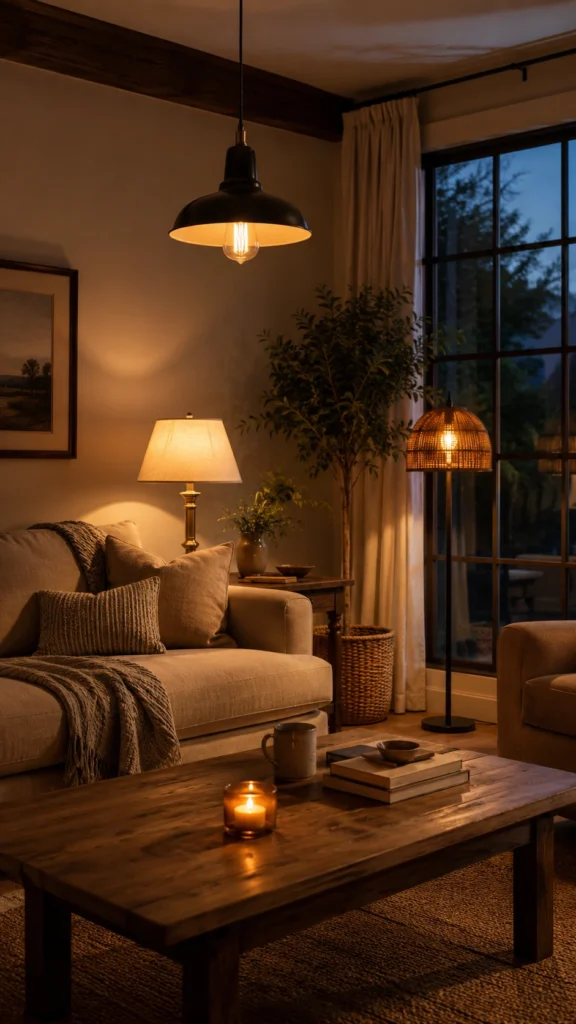
One sad ceiling fixture flattens a room and makes it look smaller than it is. Aim for three sources at different heights instead:
- Overhead: your existing ceiling light or a plug-in pendant
- Mid-level: a table lamp or wall sconce (plug-in versions exist for renters)
- Low: a floor lamp or LED strip tucked behind furniture
The layered shadows add depth, and depth is what reads as space. Warm bulbs around 2700K make a room, and everyone standing in it, look better.
10. Add Under-Cabinet Lighting in the Kitchen
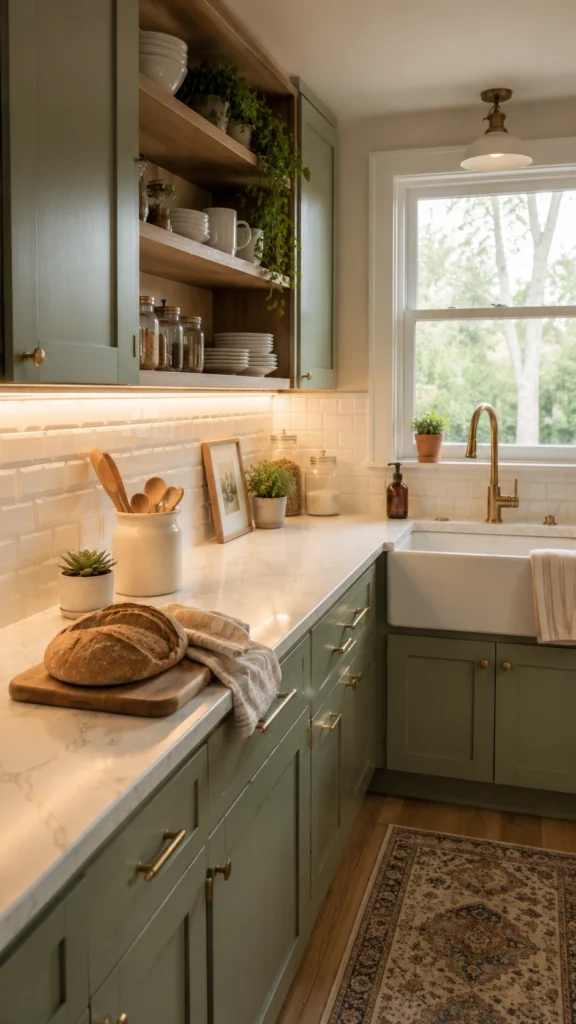
Dark counters make a small kitchen feel like a cave. Stick-on LED strips or rechargeable puck lights install in about 20 minutes, cost around $20, and turn your counter into something that looks designed instead of cramped.
They’re fully removable, which makes this one of the easiest upgrades on this whole list if you rent.
Vertical Storage Ideas for Small Apartments
Floor space runs out fast. Wall space, on the other hand, just sits there doing nothing. Time to put it to work.
11. Take Shelving All the Way Up
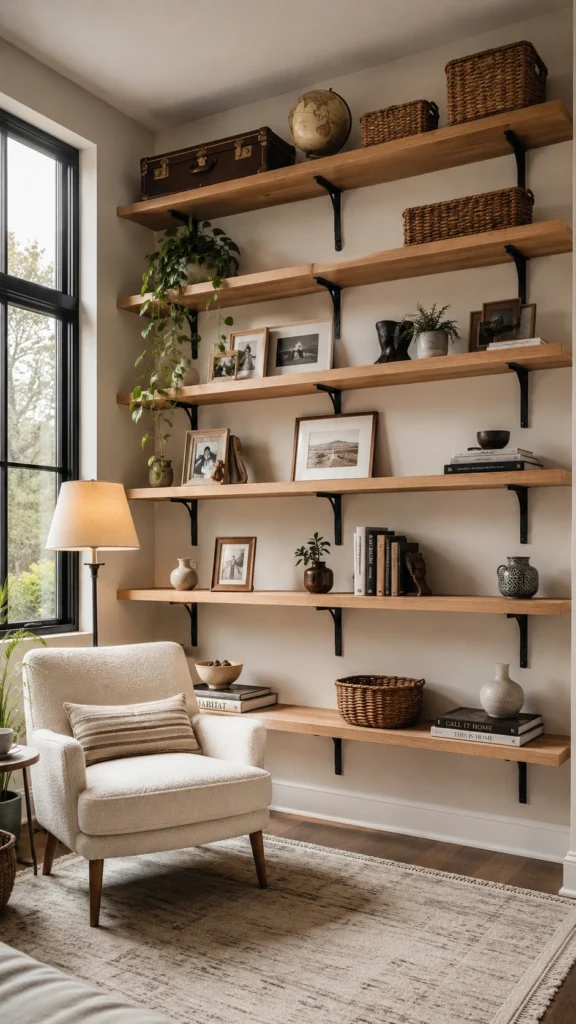
Most people hang shelves at eye level and stop there. Keep going. Shelves running from waist height to near the ceiling turn one wall into the storage equivalent of a full bookcase, minus the footprint.
Reserve the top shelves for things you touch twice a year, like luggage, holiday decor, or that fondue set you swear you’ll use again. Keep daily items within arm’s reach.
Leave 20 to 30 percent of shelf space empty, too. Packed shelves read as clutter, and clutter shrinks a room faster than anything else on this list.
12. Get a Bed Frame with Built-In Drawers
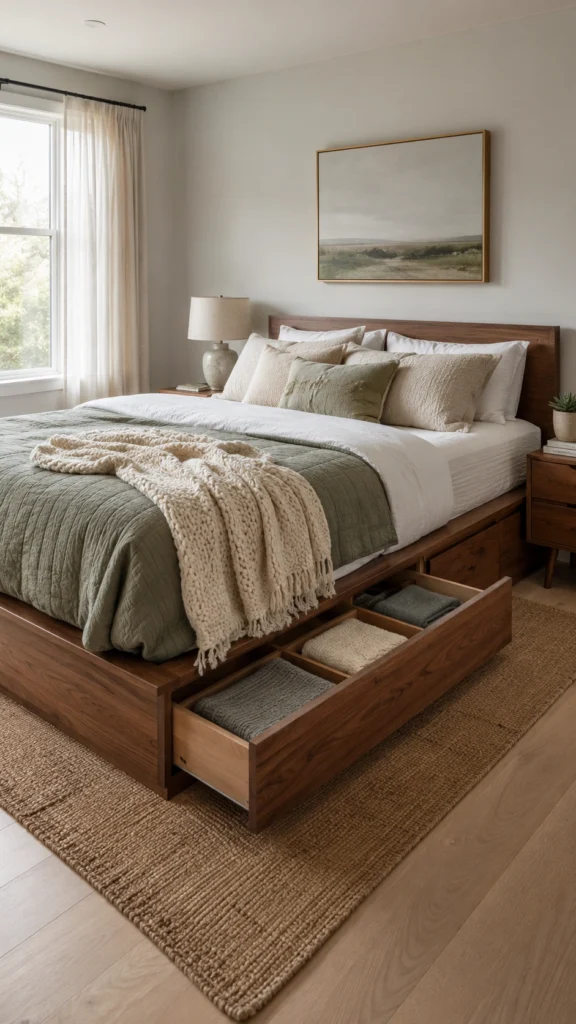
The area under your bed covers roughly 30 square feet in a queen setup. That’s a closet’s worth of storage sitting under your mattress, unused. A storage bed frame with drawers turns it into organized space for off-season clothes, spare linens, and shoes.
If you already own a frame you like, bed risers run about $15 and lift it high enough to slide rolling bins underneath.
13. Use Rolling Bins Under Everything
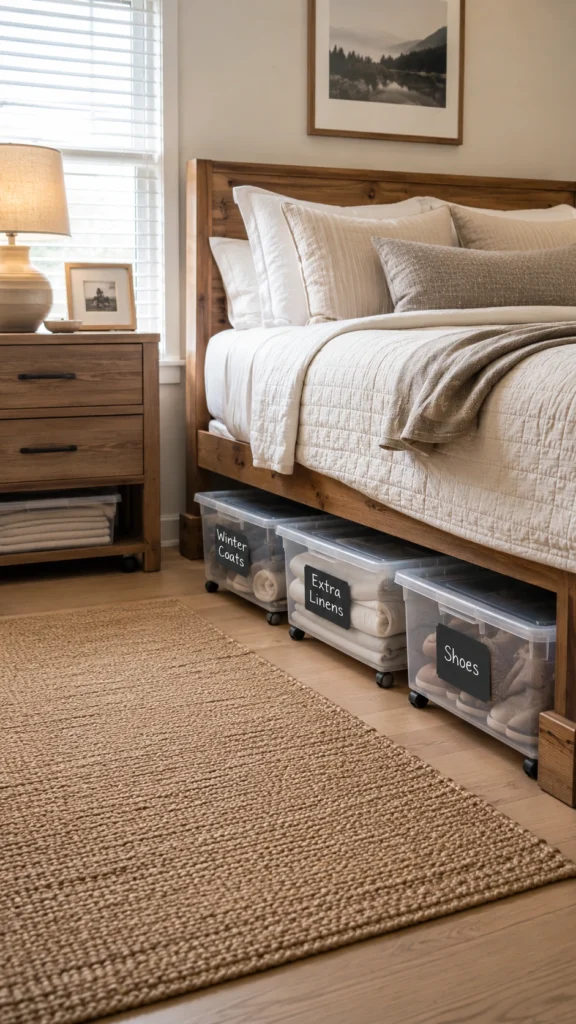
Beds, sofas, dressers with clearance underneath, all of it. Low-profile rolling bins slide into these gaps and disappear from view. Clear bins beat opaque ones, since you can see what’s inside without pulling everything out first.
Label them anyway. Future you, digging for a winter coat during the first cold snap, will thank present you.
14. Hang Over-Door Organizers in Every Room
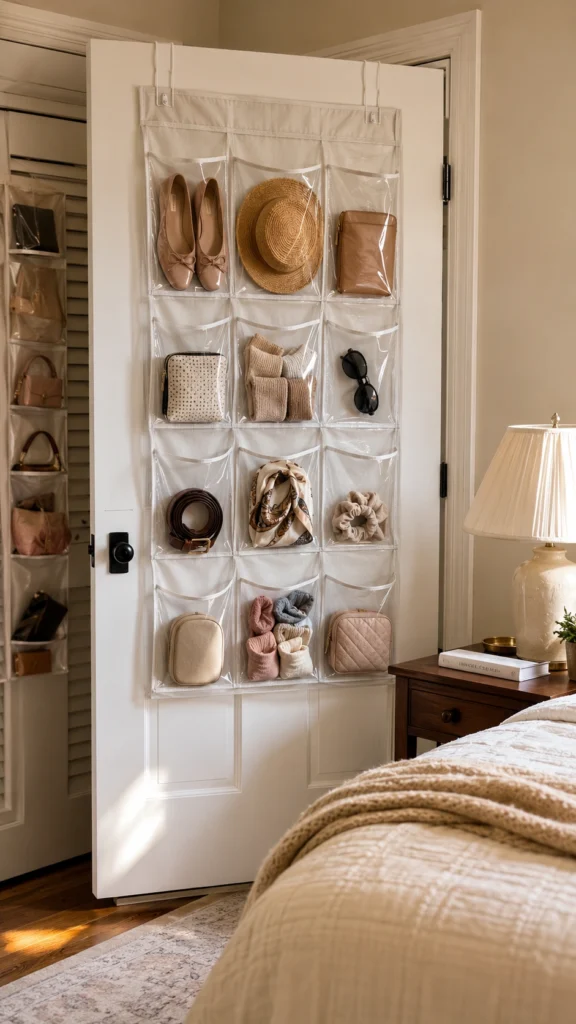
The back of every door in your apartment is free real estate that’s currently doing nothing. Over-door organizers hold shoes in the bedroom, cleaning supplies in the hall closet, snacks in the kitchen, toiletries in the bathroom. No tools, no holes, no conversation with your landlord.
One organizer holds roughly 20 pairs of shoes or a full pantry’s worth of overflow. That’s a cabinet you didn’t have to buy.
15. Claim Your Corners with Corner Shelves
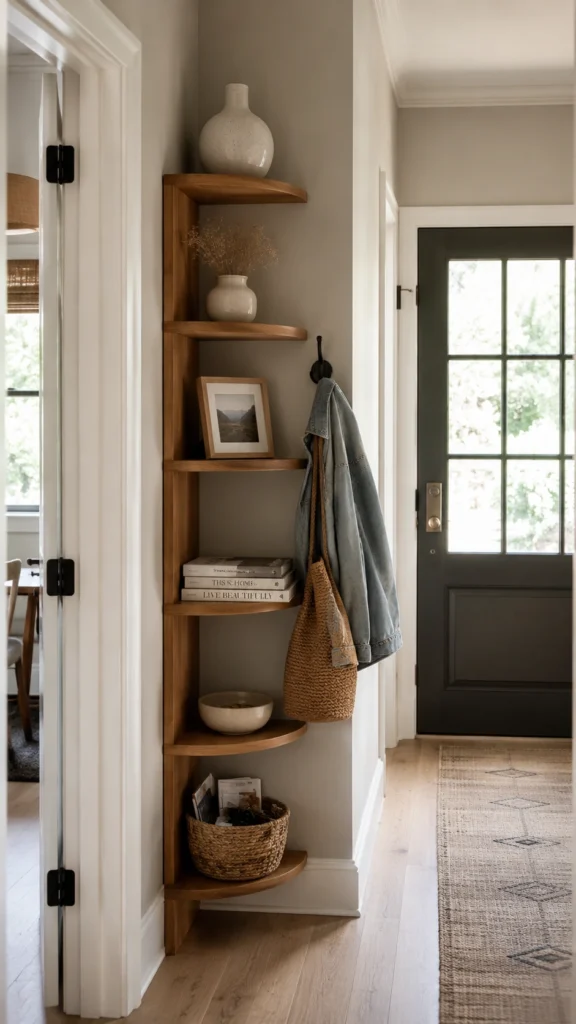
Corners collect dust in most apartments and not much else. A tall corner shelf unit, or a few floating corner shelves, turns that dead zone into display or storage without blocking a single walkway.
This one works especially well in entryways. A slim corner unit by the door gives keys, mail, and your bag somewhere to land, in a spot too narrow for a full console table.
16. Make Every Ottoman a Storage Ottoman
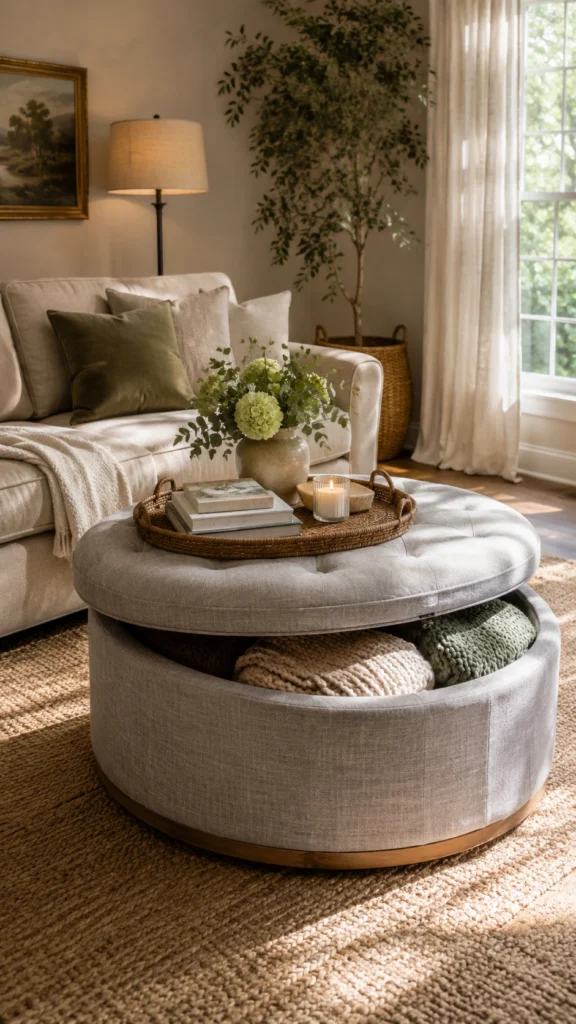
An ottoman without storage is a missed opportunity in a small apartment. A storage ottoman works as a footrest, an extra seat, a coffee table when you add a tray, and a hidden bin for blankets. Four jobs, one footprint.
Round versions work better in tight living rooms, since there are no corners to catch your shins on the way to the kitchen.
Furniture That Earns Its Floor Space
In a small apartment, every piece needs to justify why it’s there. Single-purpose furniture is a luxury most of us can’t spare the square footage for.
17. Buy a Sleeper Sofa or Storage Sofa
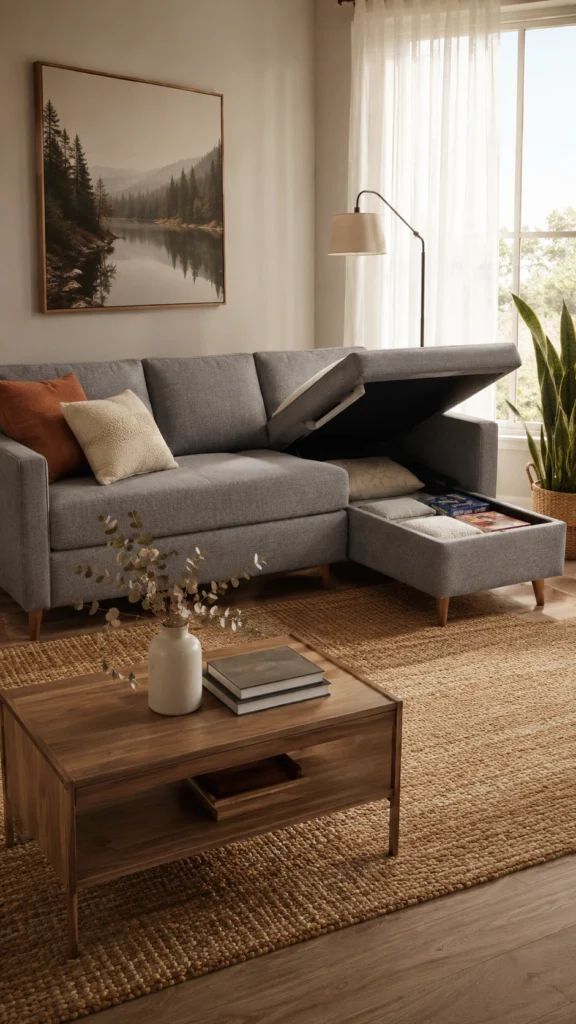
If guests stay over occasionally, a sleeper sofa saves you the entire problem of storing an air mattress. If they don’t, a sofa with a lift-top storage chaise still hides blankets, remotes, and everything else that piles up in a living room by Friday.
Modern sleeper sofas actually look like regular sofas now. That’s arguably the best furniture upgrade of the last decade. No one has to know your couch moonlights as a guest room.
18. Mount a Fold-Down Desk on the Wall
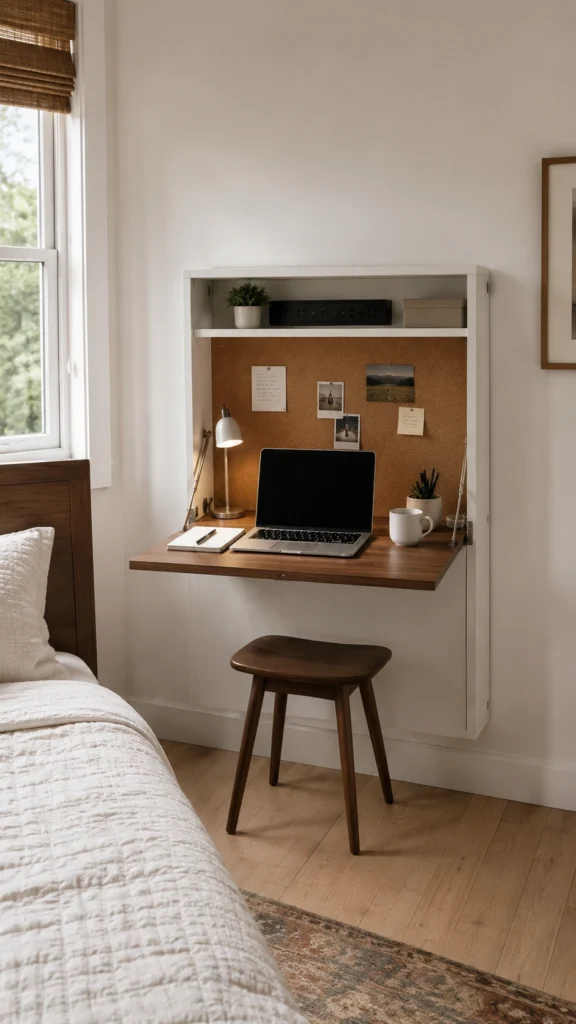
Working from home in a small apartment usually means the kitchen table becomes an office, permanently. A wall-mounted fold-down desk gives you a real workspace that disappears at 5 p.m. Closed, it looks like a slim cabinet or a shelf. Open, it’s a desk.
Mount it near an outlet and keep a small power strip inside the compartment. Your setup goes from folded to functional in about ten seconds.
19. Choose Furniture with Exposed Legs
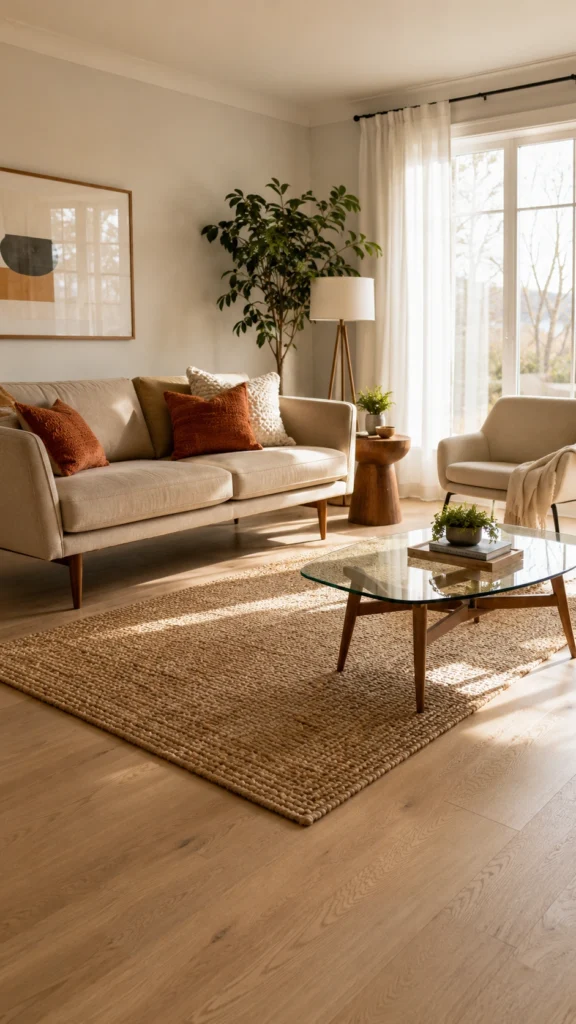
Furniture that sits flat on the floor acts as a visual anchor, and it weighs the whole room down. Pieces with visible legs let the eye travel underneath them, which registers as open floor even when the actual measurements haven’t changed at all.
A leggy sofa, a bed with clearance, a dresser up on feet. Once you start noticing the difference, you’ll spot it in every apartment you walk into.
20. Add a Rolling Cart That Moves Where You Need It
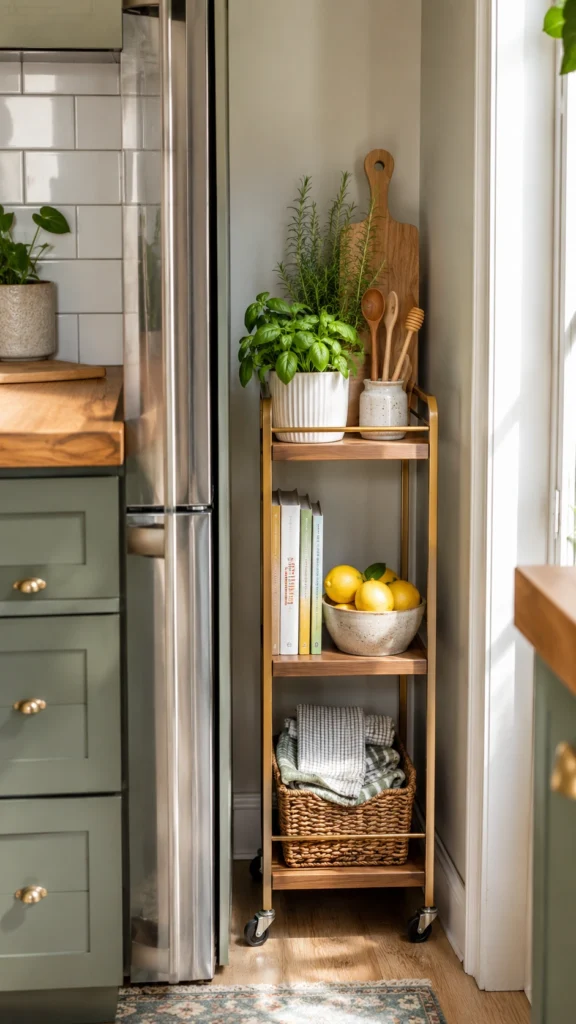
A slim three-tier rolling cart might be the most flexible $25 you’ll ever spend. It works as a bar cart when friends come over, a nightstand in a bedroom too tight for one, a kitchen island extension, or a bathroom organizer, depending on the day.
The 5-inch-wide versions slide into the gap between your fridge and the wall. That gap is currently storing nothing but crumbs.
Small Apartment Kitchen and Bathroom Ideas
The two smallest rooms usually cause the biggest storage headaches. These fixes go straight at them.
21. Hang a Rail or Pegboard on the Backsplash
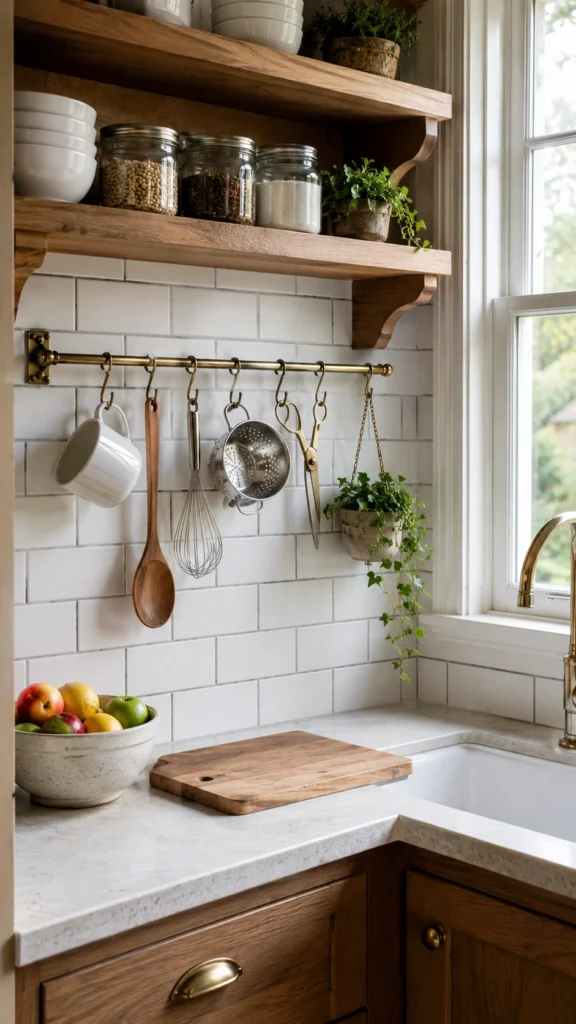
Counter space in a small kitchen is sacred. Get your utensils, knives, and mugs off it and onto the wall instead. A simple rail with S-hooks costs about $15, and adhesive versions exist for landlords who won’t budge on drilling. A pegboard takes it further and holds pans, cutting boards, and measuring cups too.
Your counters go back to doing their actual job: prepping food.
22. Double Your Cabinet Space with Risers and Racks
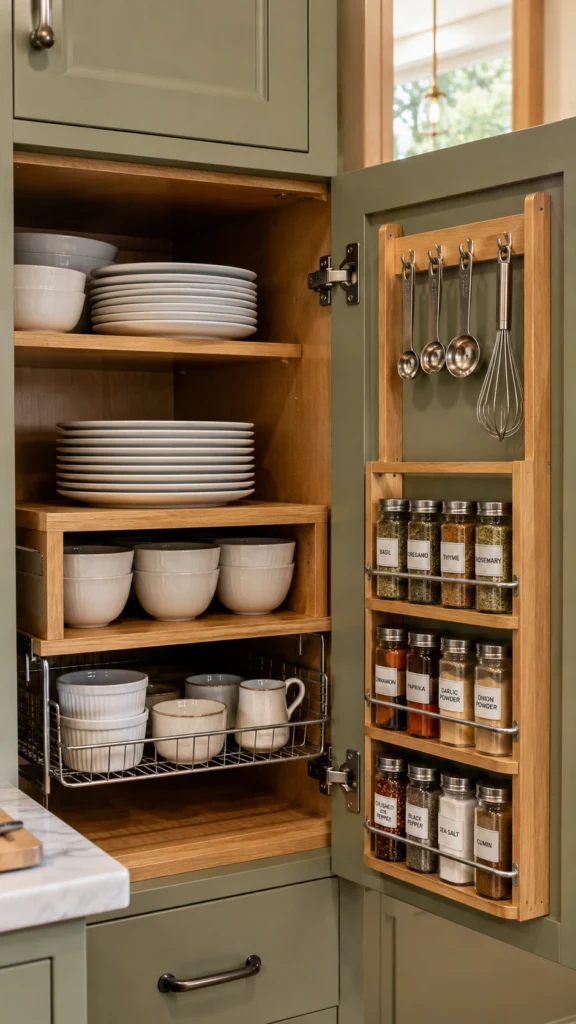
Most cabinet shelves waste half their height without you noticing. Shelf risers stack plates over bowls. Under-shelf baskets hang below and catch mugs or wraps. Door-mounted racks hold spices, lids, and cutting boards on the inside of the cabinet door itself.
Combined, these three additions can nearly double the usable space inside your existing cabinets for under $40. No renovation, no permission needed.
23. Install an Over-Toilet Shelf Unit
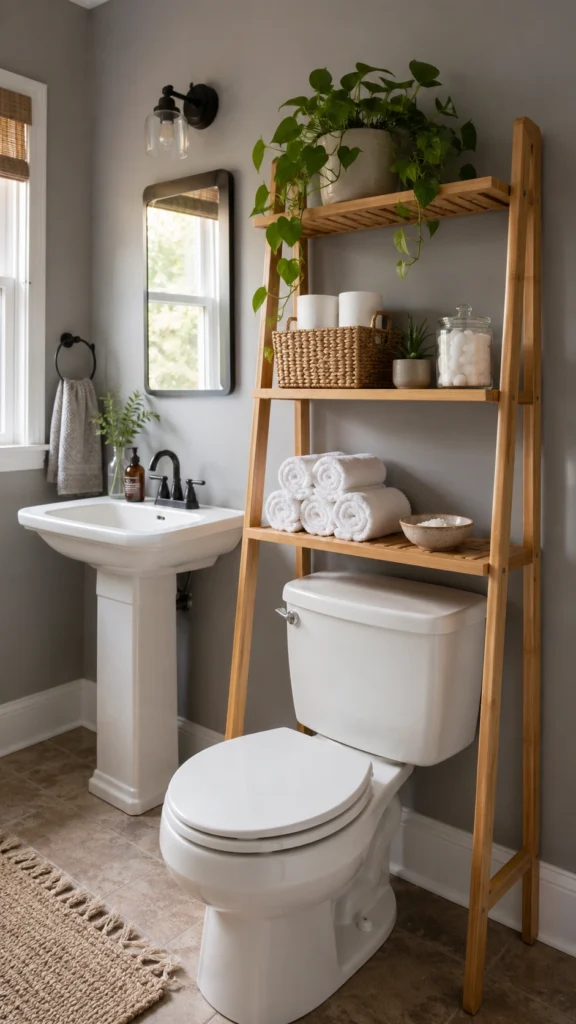
The wall above your toilet is the most ignored storage zone in any apartment. A freestanding ladder shelf or over-toilet unit adds three shelves of storage in a footprint that was doing absolutely nothing before.
Baskets on those shelves keep it from looking like a pharmacy display. Towels roll up, spare toiletries hide, one plant makes the whole thing look intentional instead of improvised.
24. Swap the Cabinet Hardware
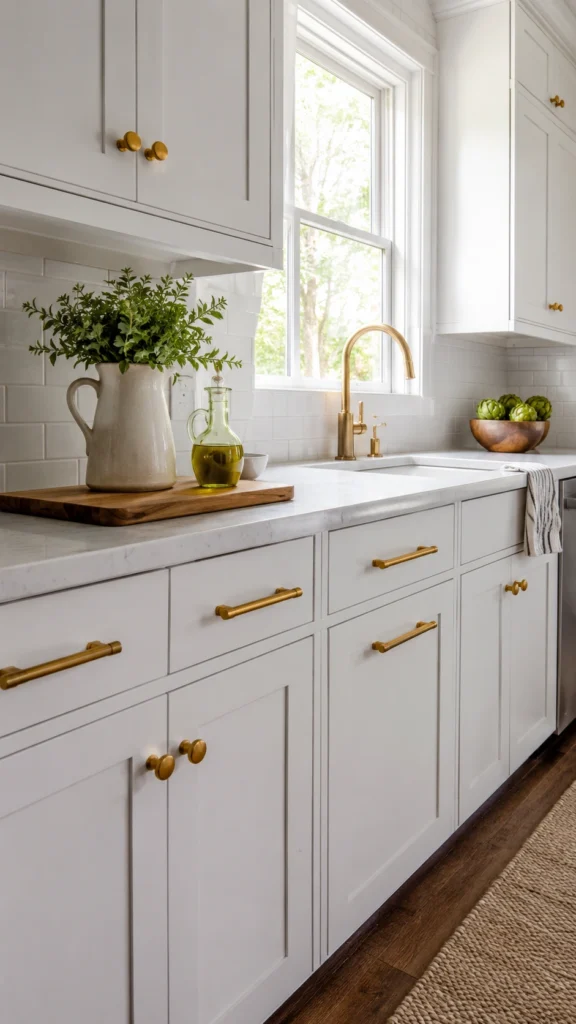
This one’s purely cosmetic, but it changes how the whole kitchen reads. Generic builder-grade knobs scream rental. Matte black or brushed brass pulls cost under $50 for a full kitchen and take about 30 minutes with a screwdriver.
Keep the original hardware in a labeled zip bag before you toss it. Swap it back before you move out, and your deposit stays exactly as safe as your style got upgraded.
Habits and Finishing Touches That Keep It Working
These last few ideas cost almost nothing, but they’re the ones that decide whether your apartment stays livable or slides back into chaos by March.
25. Commit to One Focal Point Per Room
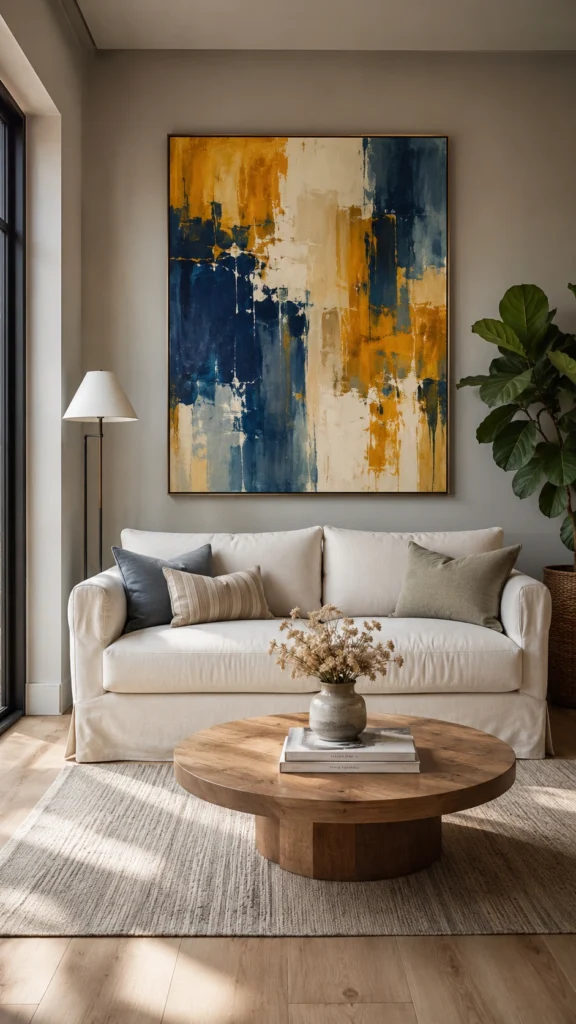
Small spaces fail visually when they try to do too much at once. Ten small art prints, six little plants, and a shelf of trinkets all compete for attention and end up reading as noise. One large statement per room beats twenty small ones, every time.
That could mean a big piece of art over the sofa, one dramatic floor plant, or a bold pendant light over the table. Everything else plays a supporting role.
26. Use Peel-and-Stick Wallpaper on One Wall
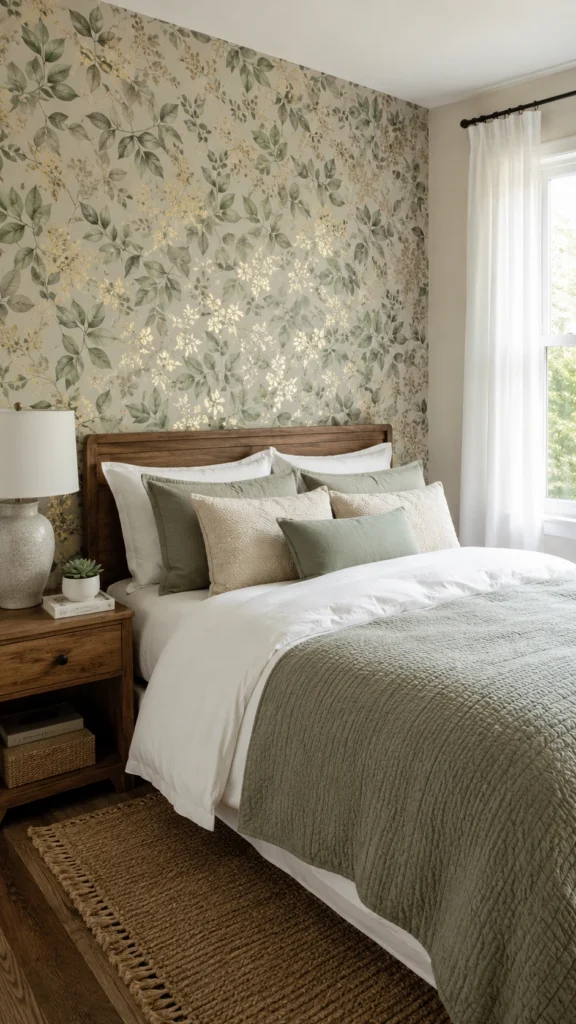
One accent wall gives a room personality without a paint conversation with your landlord. Modern peel-and-stick wallpaper removes cleanly now and looks dramatically better than the versions from a few years back.
Behind the bed and behind open shelving are the two highest-impact spots for it. Papering every wall in a bold pattern, on the other hand, shrinks the room instead of opening it up. One wall is the sweet spot.
27. Adopt a One-In, One-Out Rule
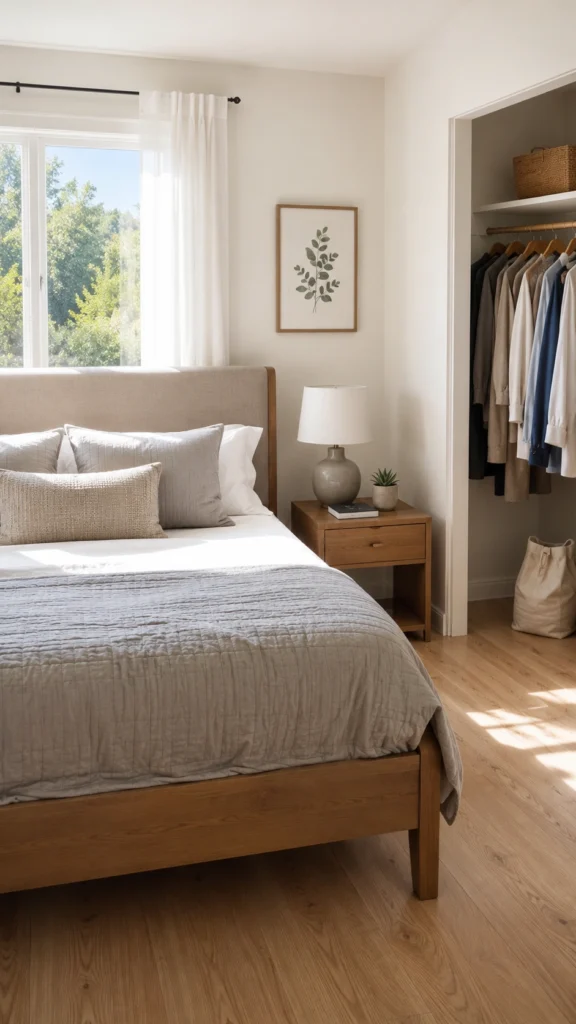
Here’s the uncomfortable part: no storage system survives unlimited stuff. Every trick on this list buys you capacity, and new purchases spend it right back down. When something new comes in, something old goes out. New sweater, old sweater donated. New mug, old mug gone.
Keep a donation bag in your closet at all times. When it fills up, it leaves. Your future self stays organized without ever scheduling a dreaded “big declutter weekend.”
Frequently Asked Questions
How do you make a small apartment look bigger without renovating?
Focus on perception rather than square footage. Hang one large mirror across from a window, mount curtain rods 2 to 4 inches below the ceiling, paint walls and ceiling the same light warm color, and choose furniture with exposed legs. Together, these changes shift how big the room reads without moving a single wall.
What is the best way to add storage to a small apartment without drilling?
Start with over-door organizers, tension rods, freestanding over-toilet shelves, rolling under-bed bins, and adhesive rails for the kitchen. All five install without tools and move with you when you leave. A standard over-door organizer alone holds around 20 pairs of shoes or a full pantry’s overflow.
How do you divide a studio apartment into zones?
Use rugs, lighting, and furniture placement instead of walls. One rug under the seating area and another under the bed read as two separate rooms. A bookshelf placed perpendicular to the wall works as a divider and stores things, which a curtain never could.
What furniture works best in a small apartment?
Pieces that do two or more jobs: a bed frame with drawers, a storage ottoman, a sleeper sofa, a drop-leaf table, and a slim rolling cart. Round tables beat rectangular ones in tight layouts because you lose the corners you’d otherwise be walking around all day.
How much does it cost to maximize a small apartment?
Less than you’d think. The layout changes cost nothing. Under-cabinet lights run about $20, a rolling cart about $25, cabinet risers and racks under $40, and new hardware under $50. You can work through most of this list for under $200 total.
Wrapping Up
Trying all 27 of these in one weekend is a good way to end up with a half-finished apartment and a bad mood. Start with what’s free: pull the furniture off the walls, rearrange for zones, clear the counters. Those three changes alone will shift how your place feels by Sunday night.
Then pick one storage upgrade, under-bed bins or an over-door organizer, and live with it for a week before adding the next. Small spaces reward small, consistent moves, not weekend overhauls.
Your apartment already has more room than it’s showing you. Go find it.