
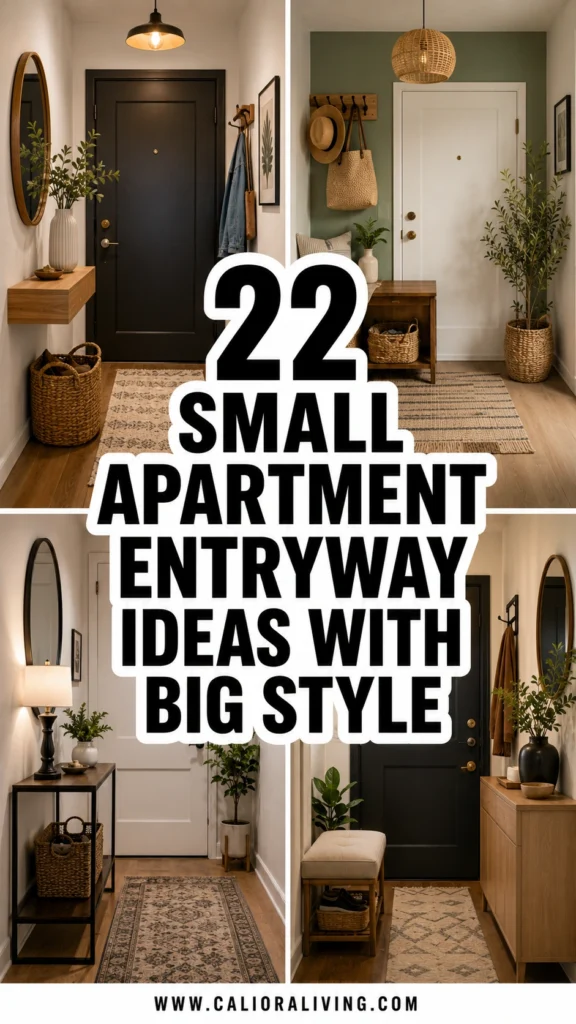

Most apartments skip the foyer entirely. The front door opens, you’re standing in the living room, and the “entryway” is whatever three feet of floor collects your shoes. Nobody designed that space. It just happened.
The fix costs less than you’d expect, and it starts before you buy anything. Grab a tape measure and write down two numbers: the width of your walkway and the open wall space next to the door. Every one of these 22 small apartment entryway ideas works within real measurements, so those two numbers tell you immediately which ones fit and which ones would block your own front door.
1. Anchor the Space With a Washable Rug
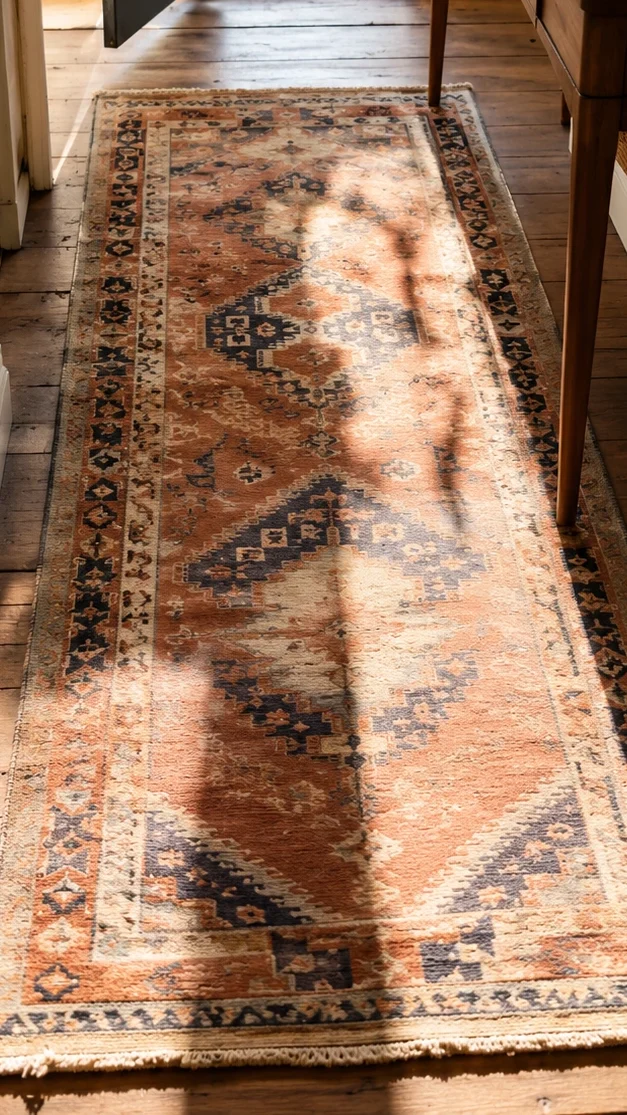
A rug is the fastest way to tell your brain the entryway starts here. Go flat-weave and machine-washable, because this rug will absorb every muddy footprint you produce for years. A 2×6 foot runner fits most apartment entries and usually costs $40 to $80.
Skip the solid neutral, even though it feels safe. A pattern with several colors hides dirt between washes far better, which means the entry looks decent on week three instead of week one only.
2. Choose a Console Table 12 Inches Deep or Less
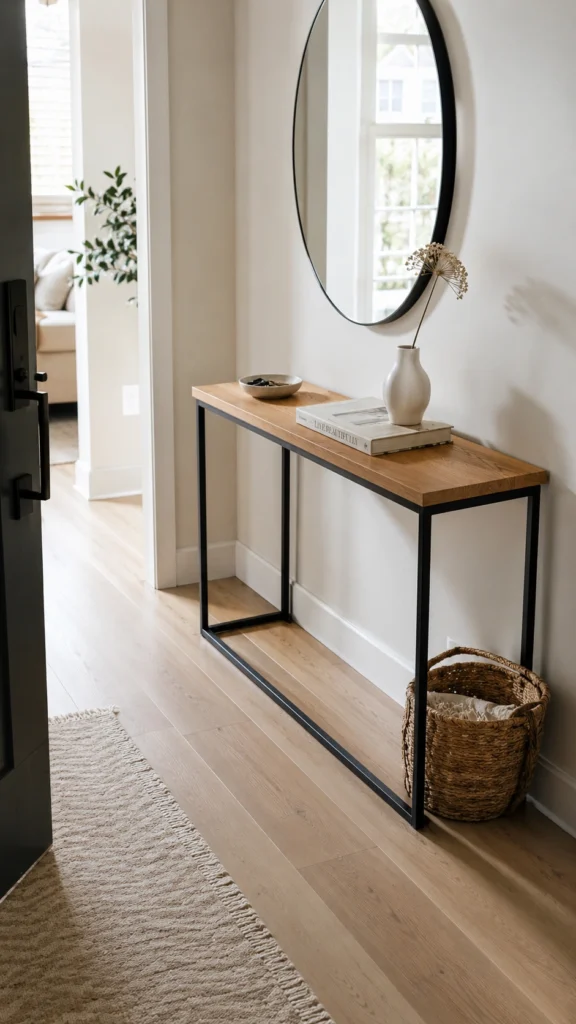
Standard console tables run 16 to 18 inches deep. In a narrow hallway, that’s the difference between walking past your furniture and turning sideways to squeeze by it. Look for 10 to 12 inches deep instead. You keep the surface for keys and mail without sacrificing the walkway.
Measure before you order, and protect at least 30 inches of clear passage. People who skip this step end up hip-checking the same table corner every morning until they finally return it.
Material changes how big the space feels, too. A console with slim metal legs or a glass top reads lighter than a chunky wood piece because you can see the floor continuing underneath. More visible floor, bigger-looking entry.
3. Float a Shelf When the Floor Is Off-Limits
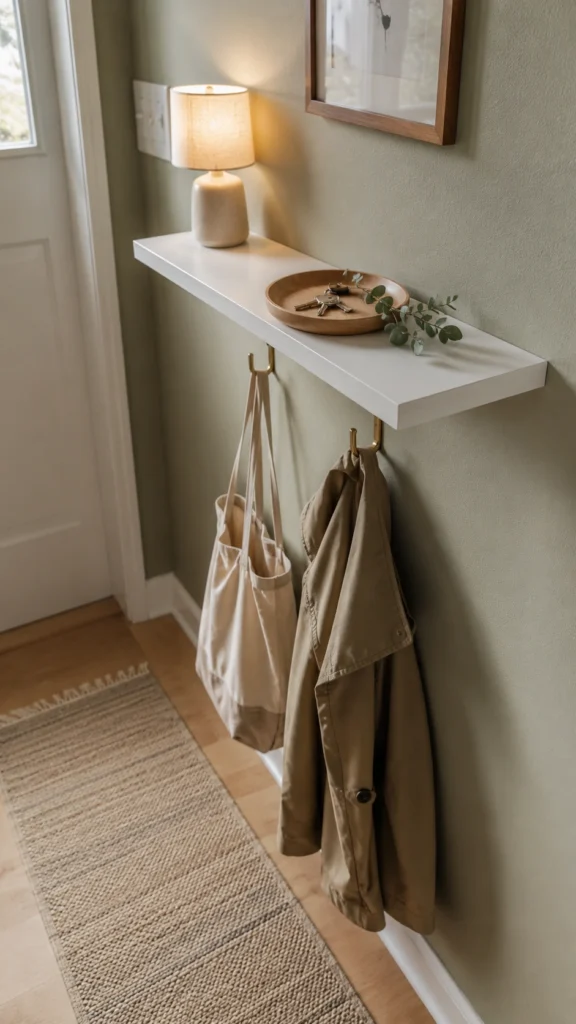
Some entries genuinely can’t spare 10 inches of floor. Fine. A wall-mounted floating shelf gives you the drop surface with zero legs in the way. Mount it at 34 to 36 inches, the same height as a console, and it reads as real furniture rather than a shelf stuck on a wall.
A small tray on top and two hooks underneath, and you’ve built a working entry that projects a few inches off the wall. That’s the whole footprint.
4. Hang a Mirror to Bounce Light Around
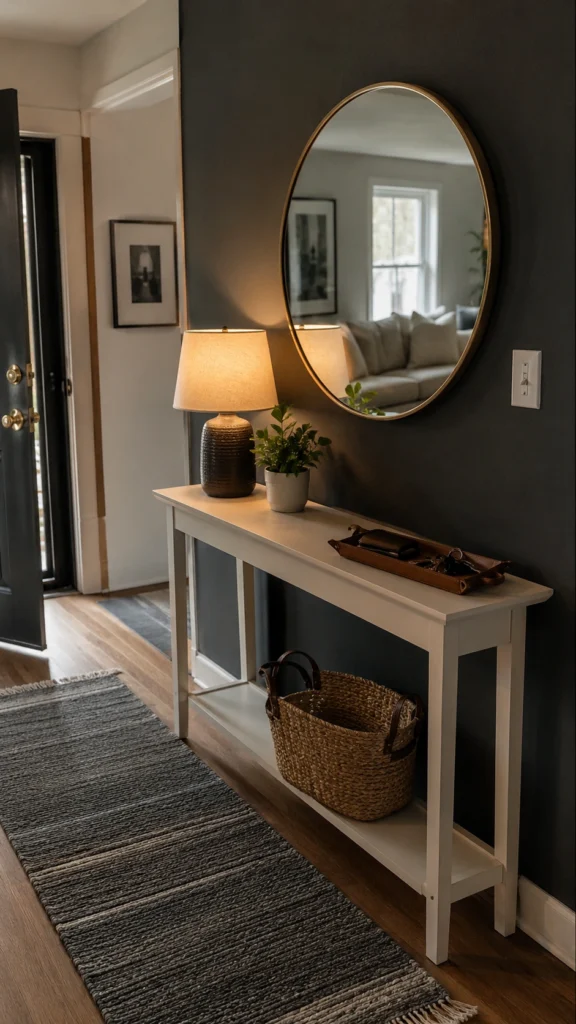
Apartment entries tend to sit in the darkest corner of the unit, far from any window. A mirror won’t add light, but it reflects whatever light exists back into the space, which in a dim hallway counts for a lot. Hang it directly above your console or shelf, sized at roughly two-thirds the width of the furniture below.
You also get a last check before you leave. Spinach in your teeth stays home.
5. Lean a Full-Length Mirror Against the Wall
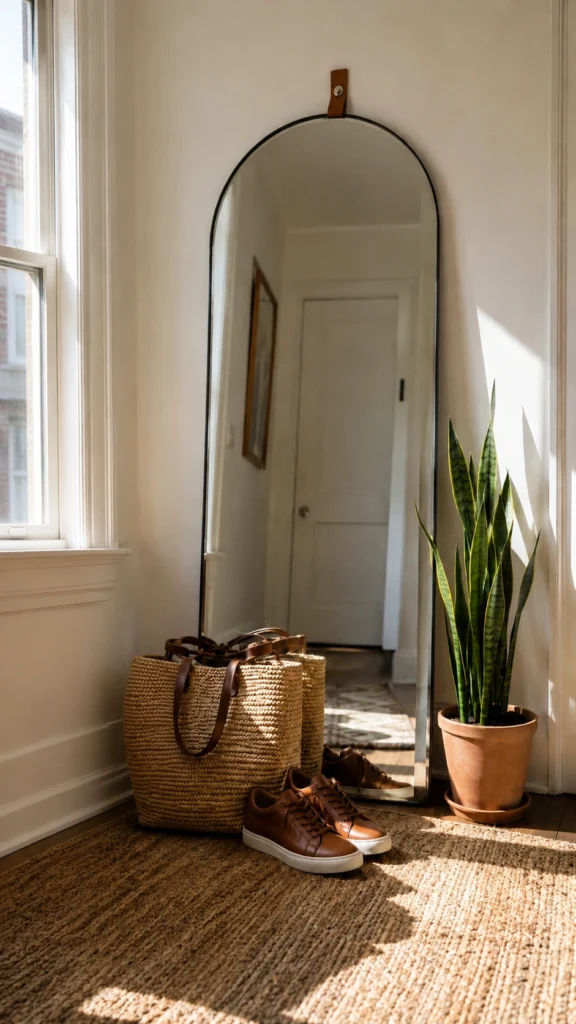
No console at all? A leaning floor mirror covers two jobs at once: the full outfit check, plus a cramped entry that suddenly feels twice as deep, since your eye reads the reflection as extra room.
Renters who can’t drill get the most out of this one. Just secure the top to the wall with a furniture strap or a removable adhesive anchor. A leaning mirror that can tip is a bad idea in general and a terrible one if you live with kids or a cat.
6. Install Hooks at Two Heights
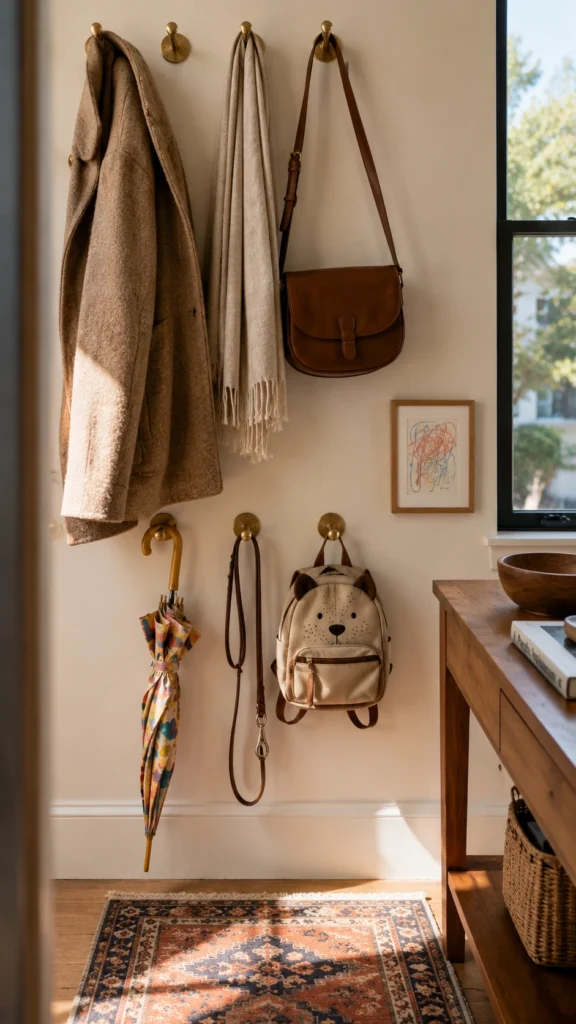
One row of hooks fills up in about a week, and no amount of discipline fixes a capacity problem. Install your main row at 5 feet and a second row around 3 feet off the floor. The upper row takes coats, scarves, and your everyday bag. The lower row handles leashes, umbrellas, and kids’ backpacks. Space hooks 4 to 6 inches apart so items actually hang instead of stacking.
Then hold one rule: one item per hook, current season only. October parkas live in the closet until October. Hooks work as active storage, and the moment they turn into an archive, the whole system collapses into a coat mountain.
7. Mount a Peg Rail Instead of Individual Hooks
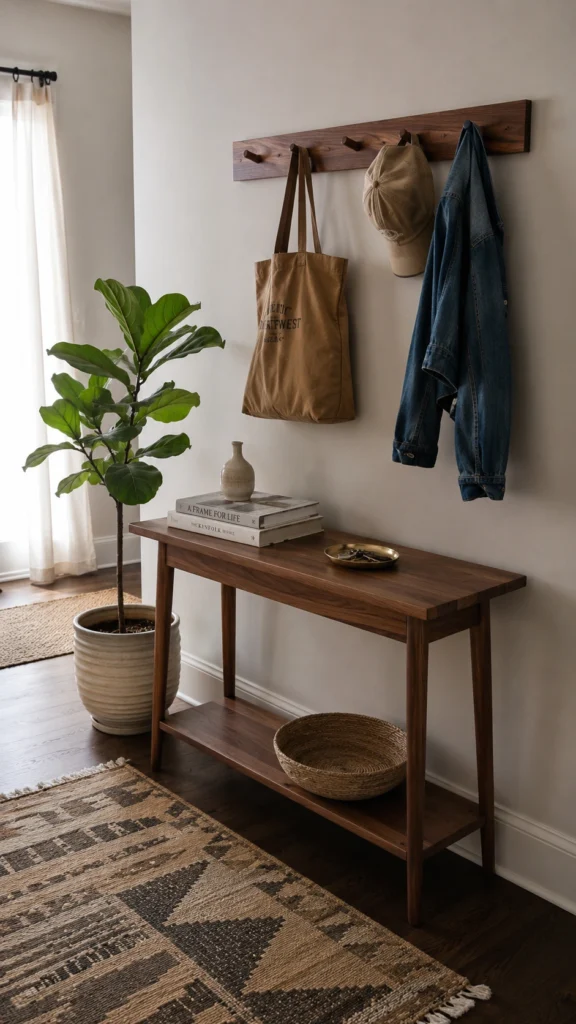
Here’s the odd thing about hooks: five mismatched ones read as clutter, while a single wooden peg rail holding the same stuff reads as design. The continuous wood strip does the work. One 36-inch rail with six pegs handles coats, hats, and a market bag, and it goes up with two screws.
Same function as scattered hooks, noticeably better look, and easier to patch at move-out since you’re only filling two holes.
8. Add a Storage Bench You Can Actually Sit On
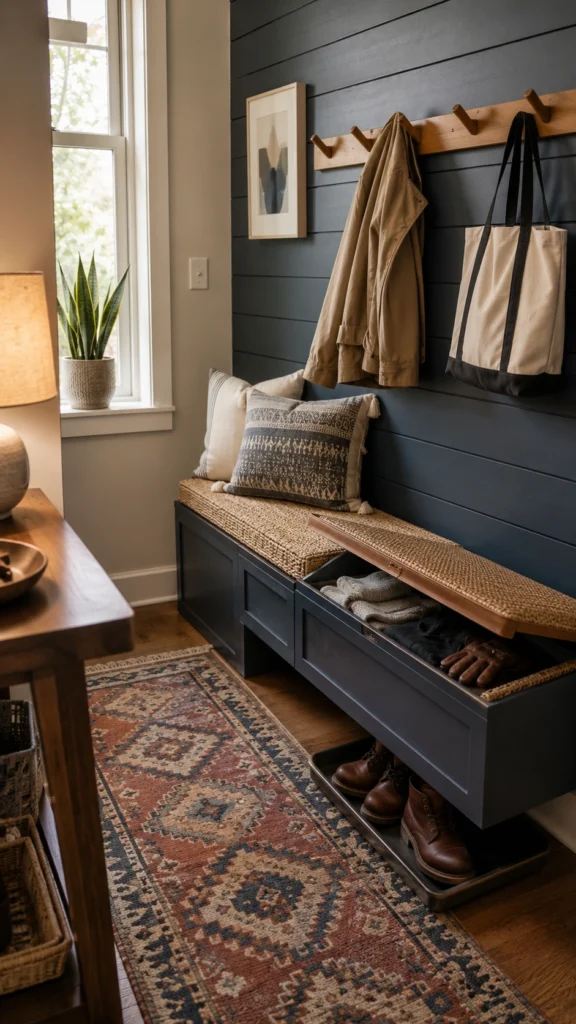
Putting on shoes while hopping on one foot gets old fast. A slim storage bench around 15 inches deep gives you a seat plus hidden storage for shoes or seasonal gear. Flip-top styles hold more; cubby styles let you grab shoes faster. Pick based on which annoys you less, digging or dusting.
If a proper bench blows the budget, a sturdy storage ottoman from a big-box store does the same job for $40 to $60, and its soft edges are friendlier in a tight walkway than a hard bench corner.
9. Go Vertical With a Slim Shoe Cabinet
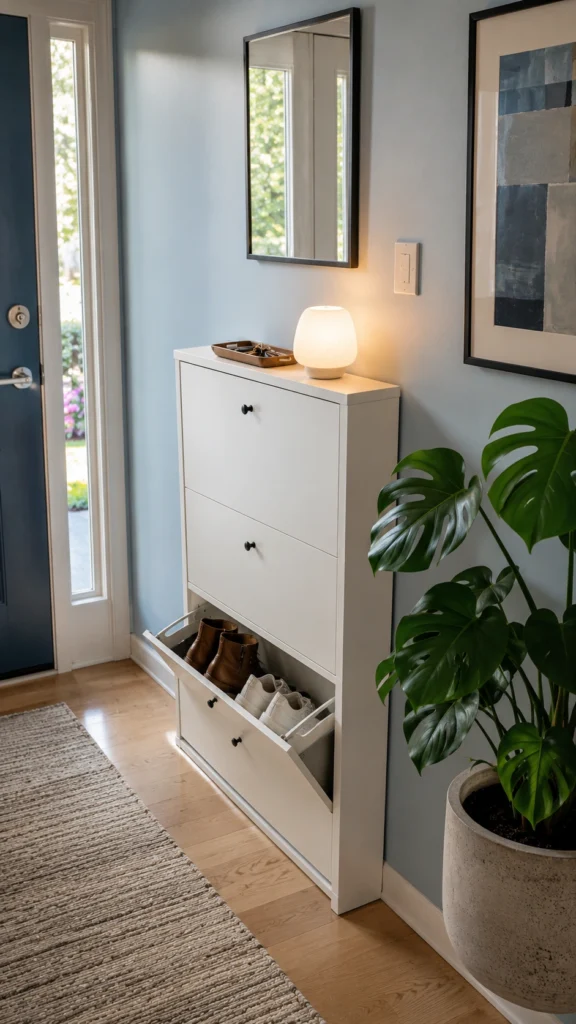
Shoe piles are the single biggest reason small entries look messy. A wall-hugging shoe cabinet with tilting drawers, usually 7 to 9 inches deep, stores 8 to 12 pairs in the footprint of a baseboard. The IKEA-style tilt-out unit became the default for a reason.
An open shoe rack holds the same amount but displays every scuffed sneaker you own to every guest who walks in. Closed storage wins in the one spot people see first.
If you can only buy one piece of furniture for your entry, make it this one. Top it with a tray and a lamp and it doubles as your console. Two functions, one 9-inch footprint.
10. Corral Keys in a Catch-All Tray
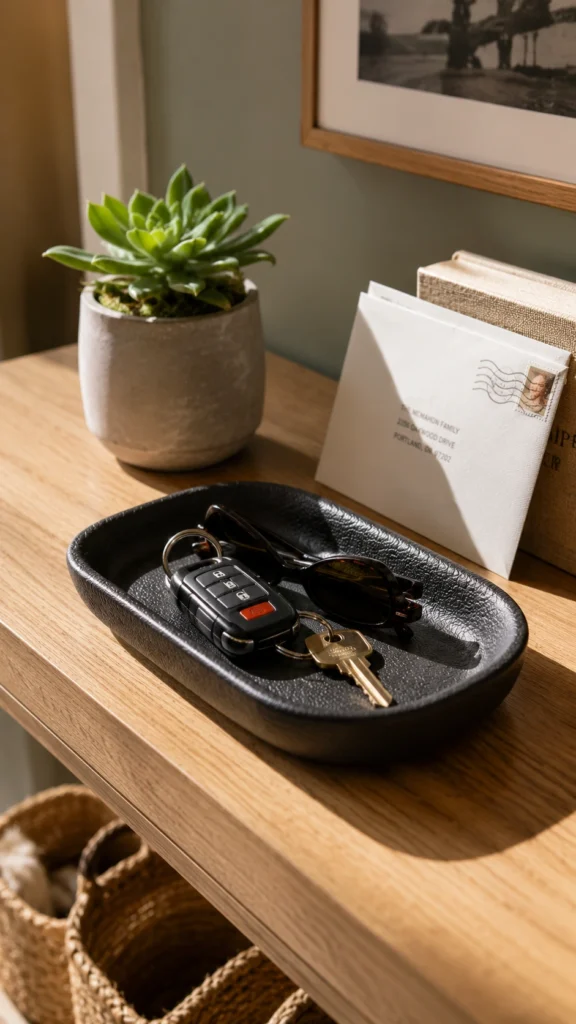
You only ever lose your keys when you’re already late. A small ceramic or wood tray on the console ends that hunt by giving keys, sunglasses, earbuds, and the day’s rogue receipt a single home.
Pick a tray that contrasts with the table surface, dark on light or the reverse. The contrast signals “put stuff here” without a label, and after about a week your hand does it automatically.
11. Hang a Wall-Mounted Mail and Key Organizer
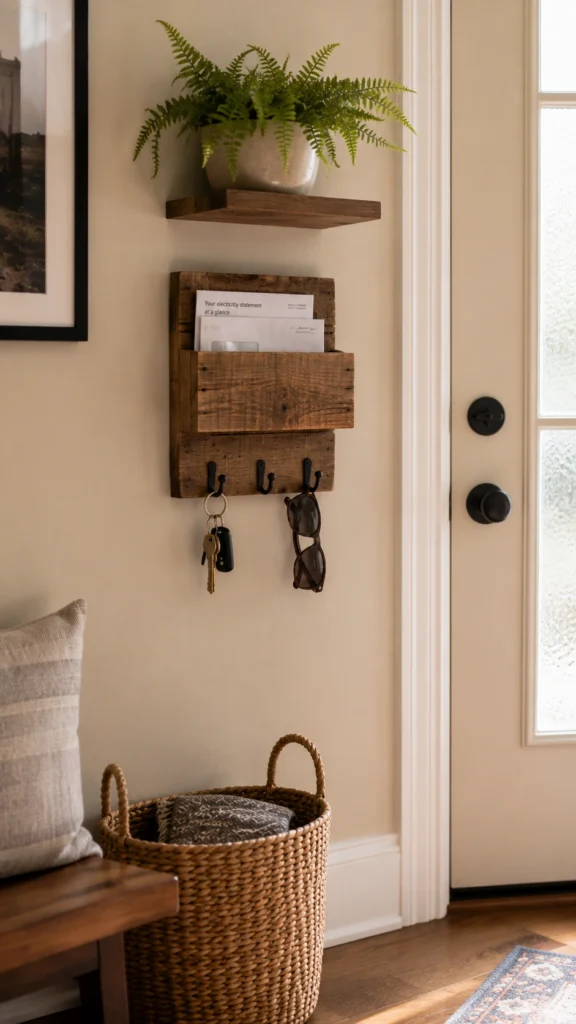
If mail piles up on your kitchen counter, the problem started at the door. Intercept it there. A wall organizer with a mail slot and key hooks takes up roughly one square foot and stops the paper migration into the rest of the apartment.
The habit matters more than the hardware: sort mail the second you walk in. Junk goes straight to recycling, everything else goes in the slot. Ten seconds, clear counters all week.
12. Plug In a Sconce for Real Lighting
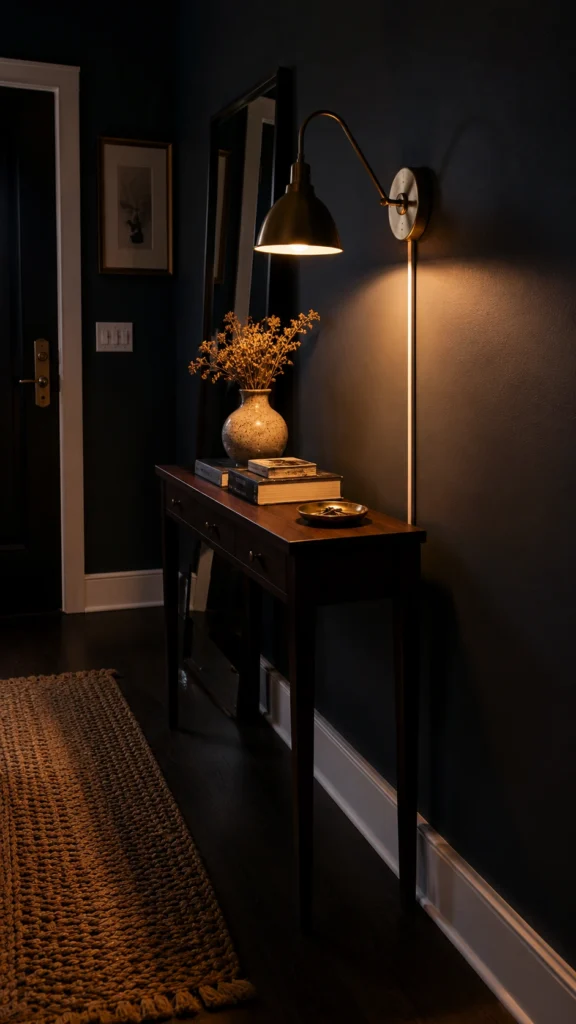
Rental entry lighting ranges from harsh to nonexistent, and you can’t rewire either problem away. A plug-in wall sconce adds warm, eye-level light with no electrician involved. Run the cord down the wall inside a matching cord cover and most people will assume it’s hardwired.
Use a warm bulb around 2700K, and put it on a smart plug set to sunset. Walking into a lit apartment beats fumbling along the wall for a switch, especially in winter when you’re getting home in the dark anyway.
13. Fake a Foyer With Furniture Placement
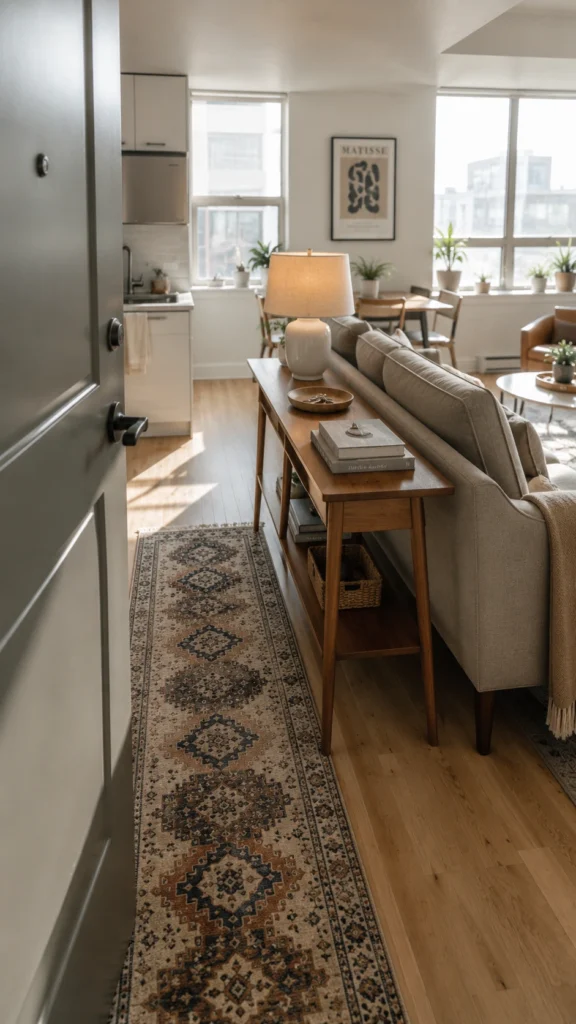
When the door opens straight into the living room, draw the boundary yourself. Float the sofa a few feet from the door and set a narrow console or low bookcase against its back. You’ve carved out an entry zone without building anything, because your eye treats the furniture line as a room divider. The strip behind the sofa becomes the hallway, complete with a surface for keys.
No room to float the sofa? A tall open bookshelf placed perpendicular to the door creates the same visual boundary. In a studio where even that won’t fit, a large plant on a stand marks the line well enough.
14. Add Peel-and-Stick Wallpaper on One Wall
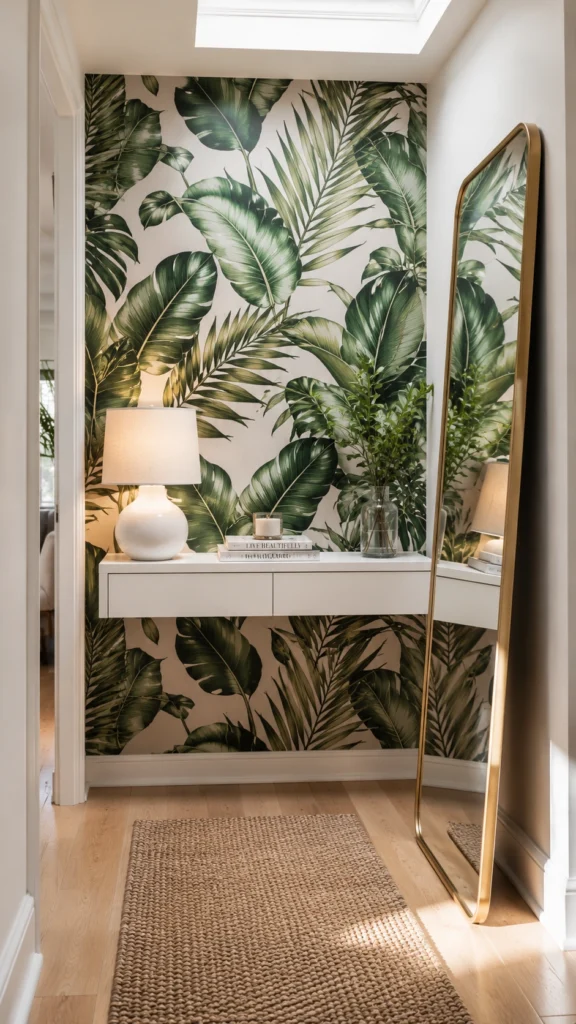
A small entry is the one spot where going bold carries almost no risk, because you pass through it rather than sit in it staring at the pattern. Peel-and-stick wallpaper turns a forgettable three-foot wall into the best-dressed corner of the apartment, and it removes cleanly when the lease ends. One wall usually needs two or three rolls, around $60 total.
Order one extra roll and test a strip somewhere hidden for a week before committing. Cheap peel-and-stick lifts in humid apartments, and you want to learn that on strip one, not strip six.
15. Paint the Inside of Your Front Door
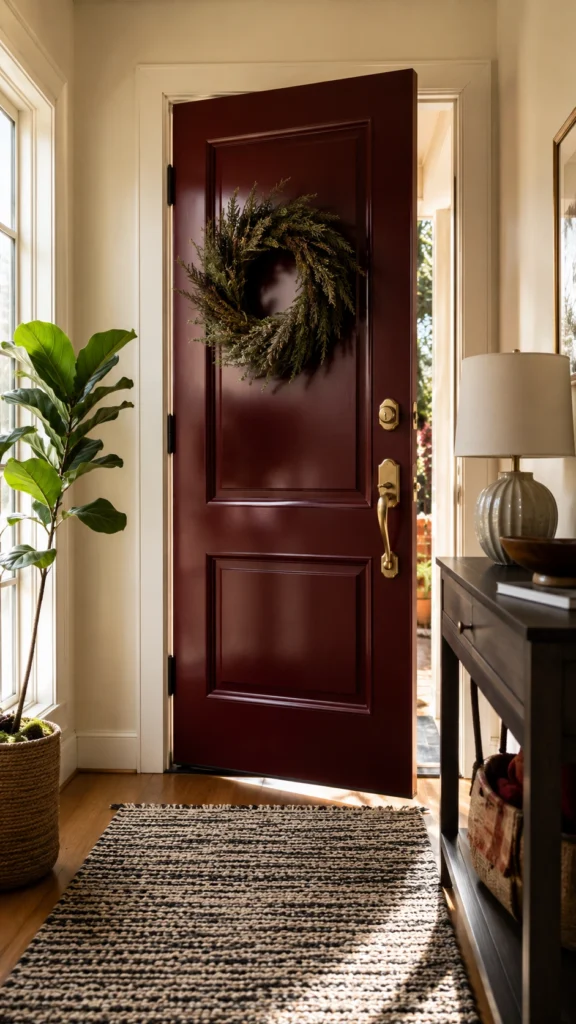
The back of your front door is dead space that most people never consider paintable. A coat of deep green, navy, or oxblood turns it into a focal point that frames every exit and entrance, and one quart covers a door twice with paint left over.
Check your lease first. If paint is off the table, a removable door decal or an oversized wreath delivers a similar punch with zero deposit risk.
16. Start a Mini Gallery Wall
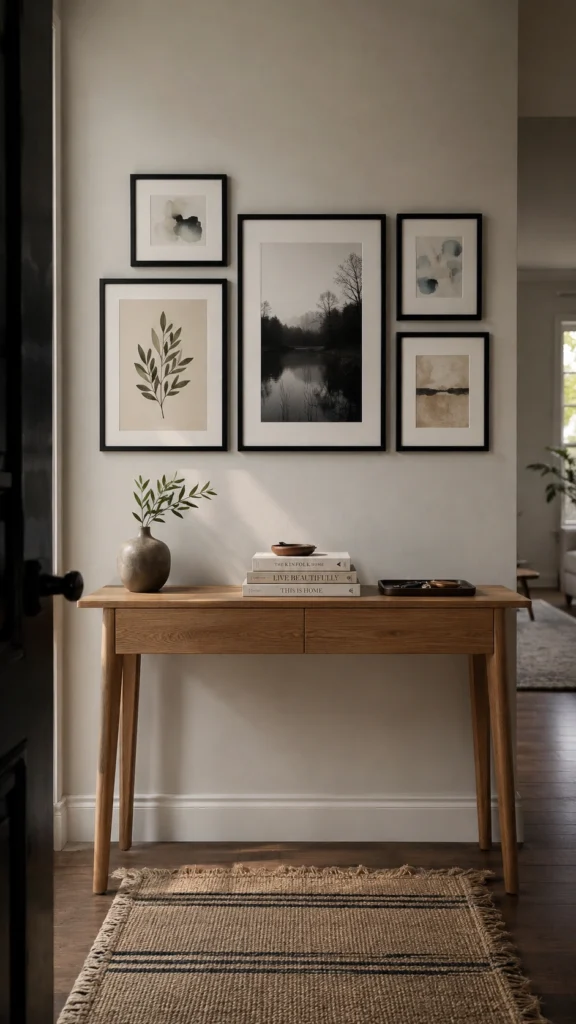
Three to five small frames above the hooks or bench make the entry feel finished instead of purely functional. Keep the frames in one consistent finish, all black or all wood, so the group reads as curated rather than leftover.
Height is where most gallery walls go wrong. Center the grouping at 57 to 60 inches from the floor, standard gallery height, so it relates to the furniture below it. Art hung near the ceiling looks like it’s avoiding the room.
17. Add One Hardy, Low-Light Plant
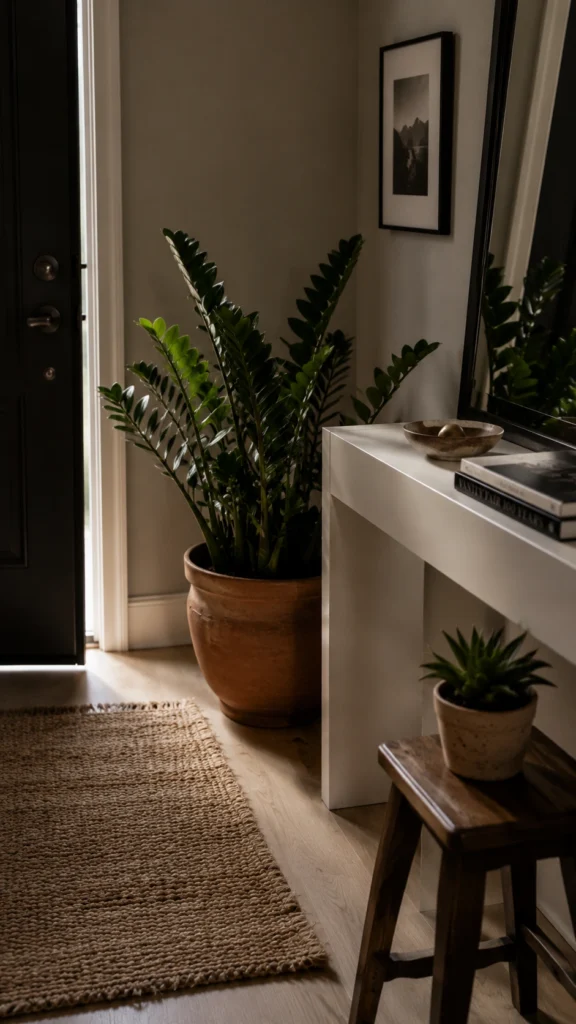
Entries almost never get direct sun, so choose a plant that tolerates neglect. A snake plant, ZZ plant, or pothos survives dim corners and irregular watering, and one plant softens all the hard surfaces stacked in an entry: door, floor, console, mirror.
No floor space? Hang a pothos from a ceiling hook or set it on the highest shelf and let it trail. And if you’ve killed every plant you’ve owned, current faux options look convincing enough that guests won’t check.
18. Use Baskets to Hide the Ugly Stuff
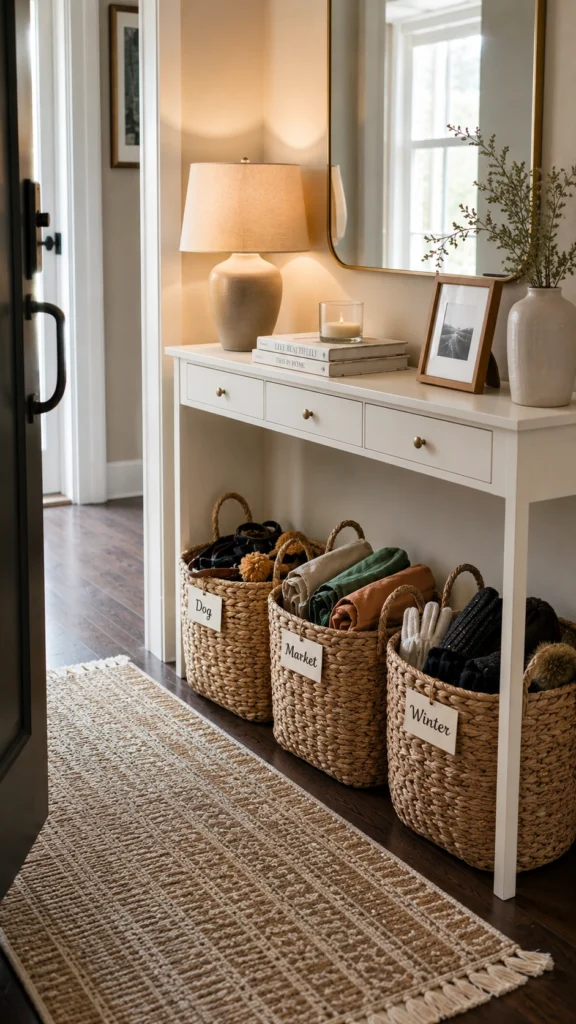
Dog leashes, reusable grocery bags, and winter gloves need a home that isn’t a visible pile. Woven baskets under the console or bench swallow that clutter and add some texture while they’re at it.
The part people skip is assigning each basket one job. Basket one holds hats, gloves, and scarves. Basket two holds reusable bags and packages going out. Basket three holds pet gear. One giant everything-basket turns into a junk drawer you dig through; three one-job baskets stay findable without labels.
19. Keep a Boot Tray by the Door
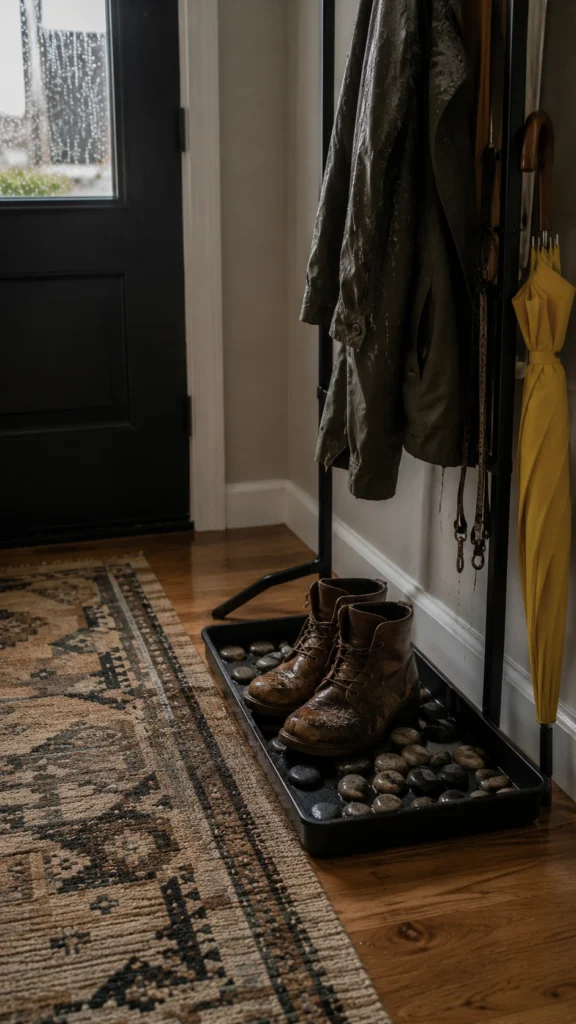
Wet shoes on hardwood or carpet cause real damage over time, and the puddle by the door looks bad long before the floor warps. A rubber or metal boot tray with a raised edge contains slush, rain, and mud in one washable spot.
A layer of river rocks inside the tray is a small upgrade worth making. Shoes drain and dry faster sitting on the rocks, and the tray starts looking like a design choice instead of a liability shield.
20. Build a Charging Drop Zone
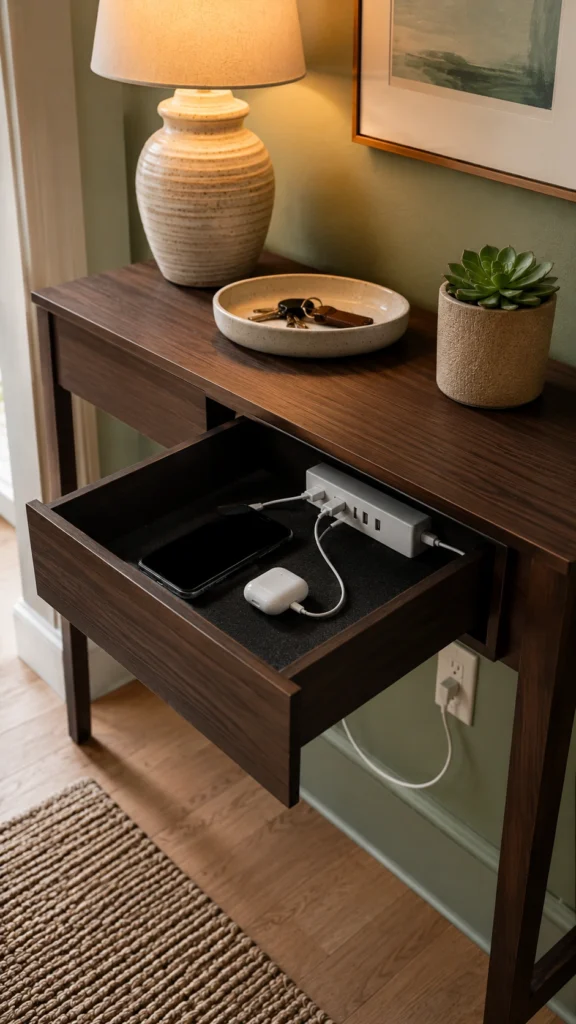
Your phone, earbuds, and watch all need charging, and you drop them all in the same place anyway. Tuck a small charging station or wireless pad into a console drawer or basket near an outlet. Walk in, drop the phone, and it’s full when you leave.
There’s a side benefit people notice after a couple of weeks: a phone that lives by the door stays out of your hand all evening, which does more for screen time than any app limit.
No outlet near the door? A battery bank in a drawer covers earbuds and watches, topped up once a week. Less elegant, still effective.
21. Upgrade the Doormat, Inside and Out
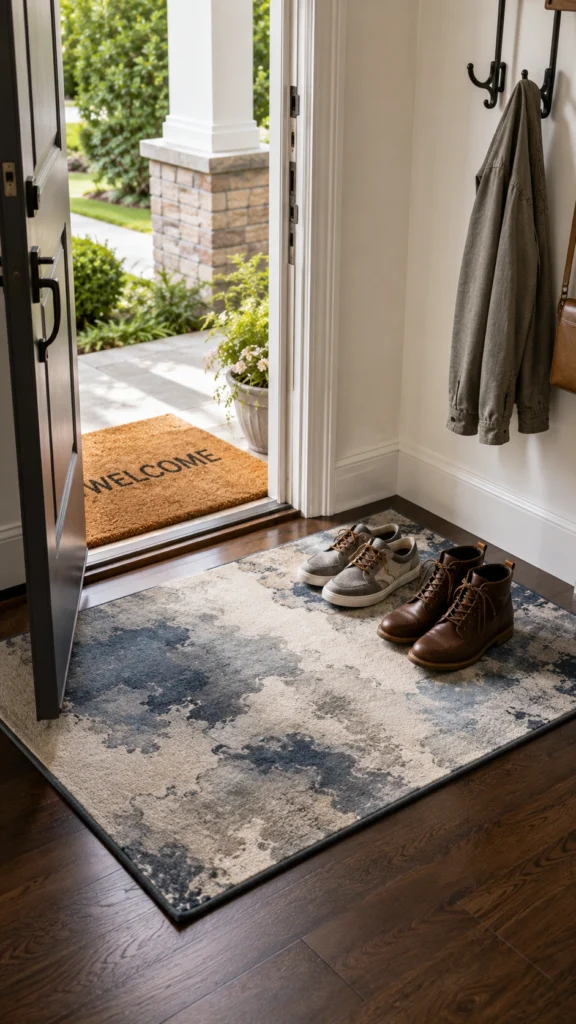
The doormat is the cheapest style decision in the whole apartment, yet most people keep the flattened beige one from move-in day. Run two mats instead: a coir mat outside for scraping, a low-profile washable mat inside for finishing the job. Two mats trap roughly twice the dirt of one, which your rug and floors will show within a month.
Pick an inside mat with a pattern or a little wit, since it sets the tone before anyone sees a single room. And replace it yearly. A flattened mat stops trapping dirt and just redistributes it.
22. Adopt a Five-Minute Weekly Reset
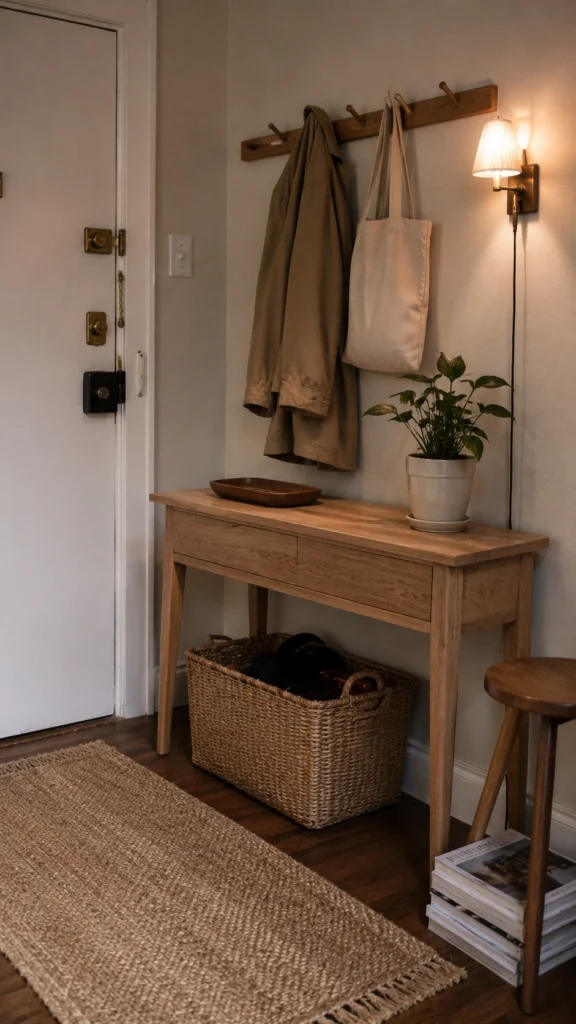
The best-designed entry still fails without maintenance. Once a week, spend five minutes returning strayed shoes to the cabinet, recycling the mail pile, and shaking out the rug. That’s the entire routine.
Entry clutter compounds, which is why this tiny habit carries so much weight. One pair of shoes becomes four, four becomes a pile, and the pile becomes the thing you stop seeing. The weekly reset is what keeps the other 21 ideas actually working.
Frequently Asked Questions
How do you create an entryway when there’s no foyer?
Define the zone with a rug, add one vertical storage piece like hooks or a peg rail, and place a slim surface for keys. Those three moves signal “entryway” even when the door opens directly into your living room.
What’s the best storage for a tiny apartment entryway?
Vertical storage wins. Wall hooks, a slim tilt-out shoe cabinet, and a floating shelf together use almost no floor space but handle coats, shoes, keys, and mail. Any furniture that sits on the floor should earn its footprint by storing something inside.
Which small apartment entryway ideas work for renters?
Adhesive hooks, leaning mirrors, plug-in sconces, peel-and-stick wallpaper, and freestanding furniture leave zero permanent marks. Save the drilling for pieces that carry real weight, like a loaded peg rail, and patch the holes before move-out.
How much should you spend on an entryway setup?
A fully functional entry runs $150 to $250: a washable rug, a slim console or shelf, hooks, a tray, and a doormat. Put the biggest chunk toward the storage piece, since it does the heaviest daily work.
What makes a small entryway look bigger?
Light does most of the work. A mirror, a plug-in sconce, and furniture with visible legs keep the space feeling open. Dark clutter at floor level shrinks an entry faster than anything else, so keep the floor as clear as your storage allows.
Wrapping Up
Strip away the details and a great small apartment entryway comes down to three things: a defined zone, vertical storage, and one honest surface for your daily stuff. The mirror, the plant, the moody door paint, all of that is style layered on top of a system that works.
Pick two ideas and do them this weekend. If you’re unsure which two, start with the rug and the hooks. Those alone handle most of the daily chaos, because they solve the two problems every entry shares: nothing marks where the entry is, and nothing holds what you’re carrying.
That corner by your door has been an afterthought long enough. Give it a job.


Pingback: 20 Fall Decor Ideas for Bedroom You'll Love This Season - Caliora Living
Pingback: 15 Fall Wall Decor Ideas for an Easy Autumn Makeover - Caliora Living