
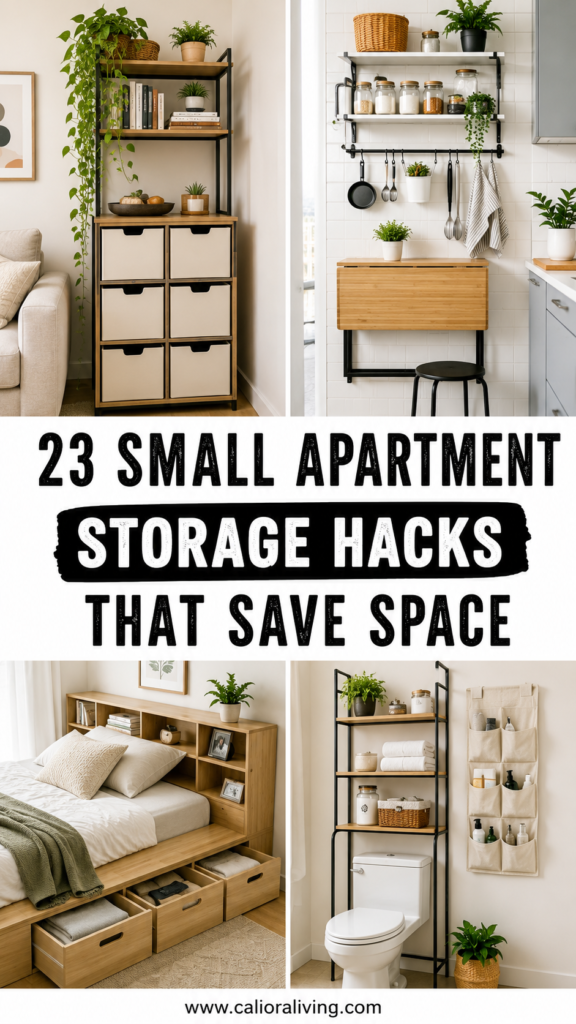

There’s a specific moment every small-apartment renter knows. You’re holding something, maybe a slow cooker, maybe a winter coat, and you slowly turn in a circle because there is genuinely nowhere to put it. The closet is full. The cabinets are full. The floor is already negotiating with a laundry basket.
Here’s what usually turns out to be true: the apartment has more room than it looks. It’s hiding in bare walls, dead corners, the backs of doors, and the foot of empty air above every door frame. None of it shows up until you go looking for it.
These 23 small apartment storage hacks pull that hidden space back into use. Everything here works in a rental, most of it costs under $30, and nothing puts your security deposit at risk.
1. Add a Shelf Above the Door for Infrequently Used Items
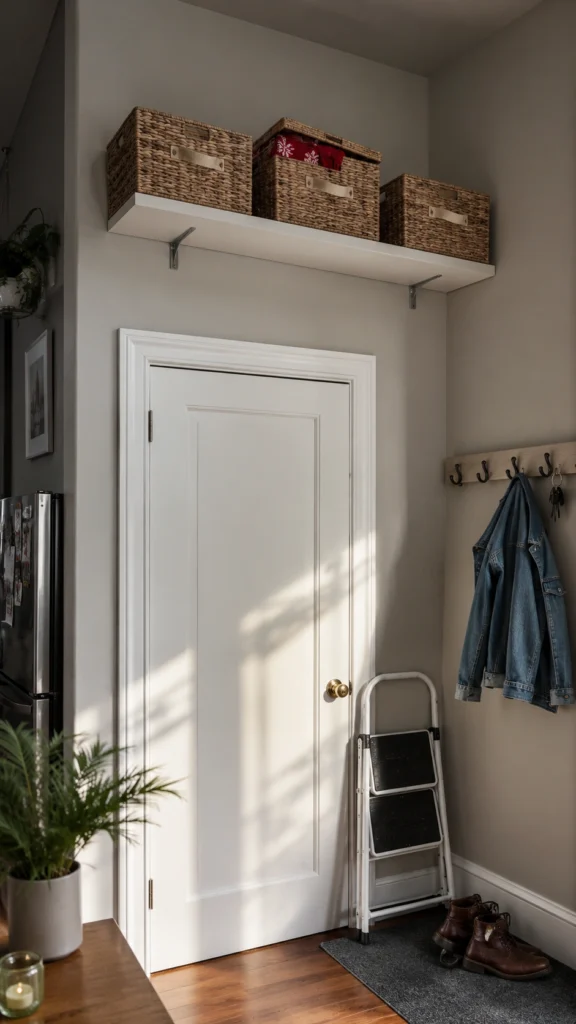
Almost no one uses the strip of wall between the door frame and the ceiling, which is strange, because it’s one of the few surfaces in an apartment with nothing competing for it. A single shelf up there handles the twice-a-year stuff: holiday decorations, spare blankets, the fondue set you keep meaning to use.
Height is actually the advantage. Clutter at seven feet doesn’t register the way clutter at eye level does, especially if you corral everything into a few matching bins so the shelf reads as design rather than overflow. The one honest downside: you’ll need a step stool every time, so don’t put anything up there you reach for monthly.
2. Choose a Coffee Table with Hidden Storage
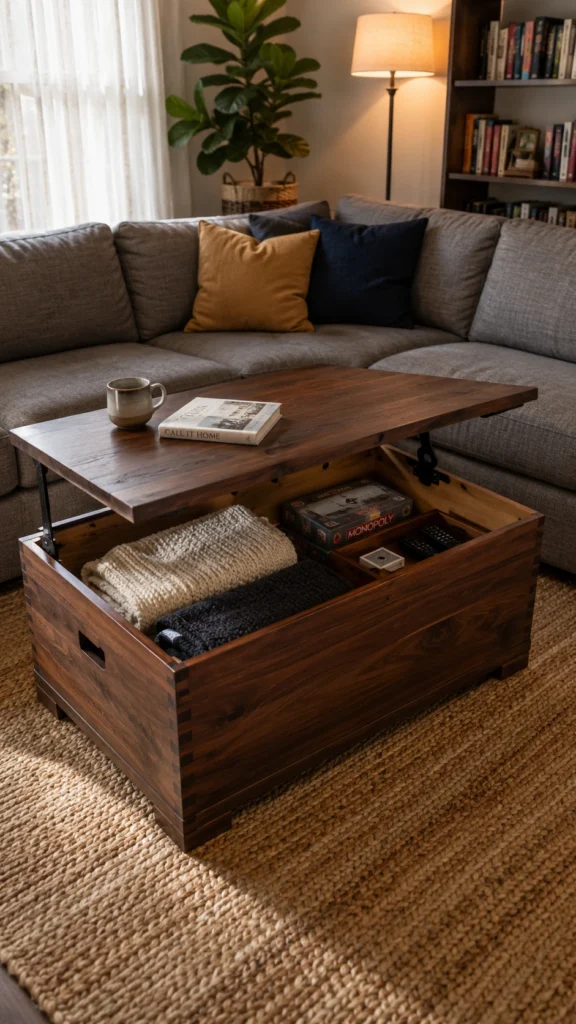
A regular coffee table holds a remote and your feet. A lift-top or trunk-style table holds board games, throw blankets, a laptop, and the tangle of cables you’ve been meaning to sort. Same footprint, several times the function, which is the whole game in a small space.
The choice between the two styles comes down to habit. If you eat or work from the couch, get a lift-top, since the surface rises to lap height. If you mostly need somewhere to bury bulky things like bedding, a trunk style gives you deeper storage. In a studio where the living room is also the office and the guest room, this one piece does a lot of quiet work.
3. Use Nesting Tables That Tuck Away
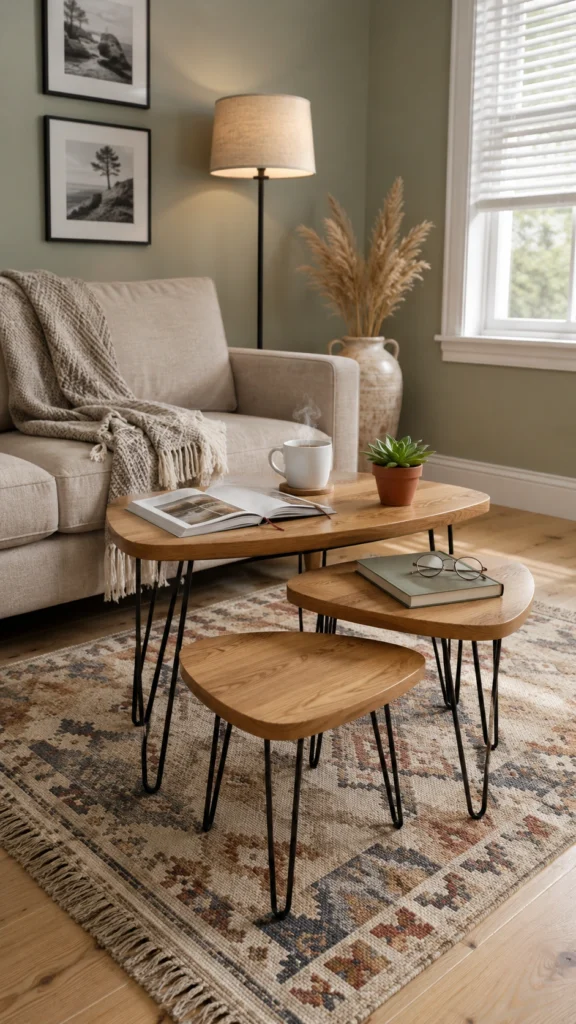
Three separate side tables eat floor space every single day, whether or not anyone’s using them. Nesting tables only spread out when you need them. Pull them apart when friends come over, slide them back into one stack on Monday, and your living room gets its walking room back.
They earn their keep most in rooms under 200 square feet, where every permanent piece of furniture has to justify itself. If the set feels cheap to you, look for mixed materials, wood tops on metal legs, for example. The stack looks deliberate instead of like a budget compromise.
4. Hide Charging Stations Inside Decorative Boxes
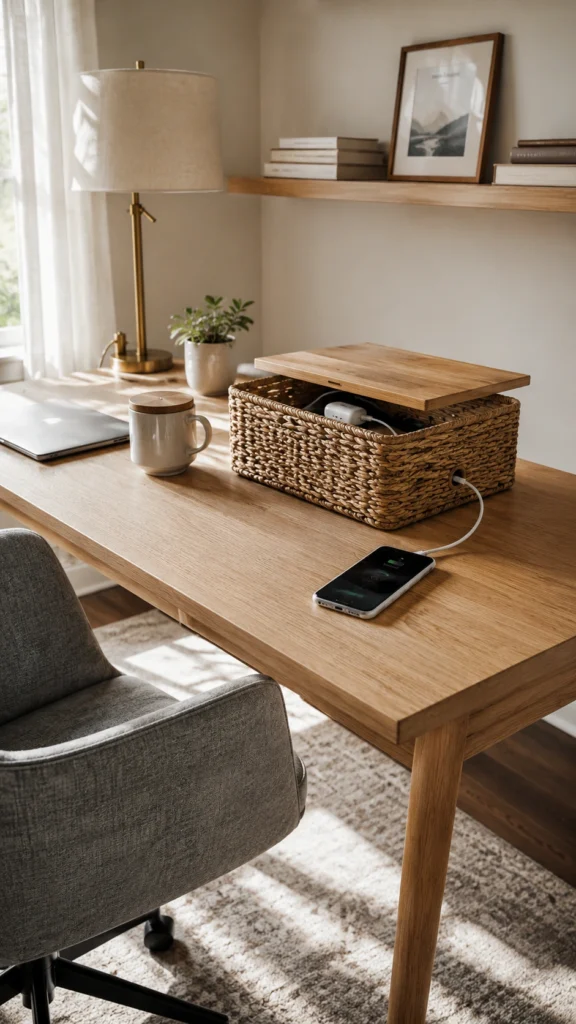
Cable clutter has an outsized effect on how cramped a room feels, probably because it sits on the surfaces you look at most. The fix is almost embarrassingly simple: take a wooden or woven box, drill a hole in the back, feed a power strip through, and charge everything inside with the lid closed.
Purpose-built charging boxes exist, but a $15 craft store box does the same job. One thing people skip and then regret is ventilation. Power strips and charging phones generate heat, so cut a second hole or pick a box with gaps in the weave rather than a sealed one.
5. Utilize the Space Behind the Couch with a Narrow Console Table
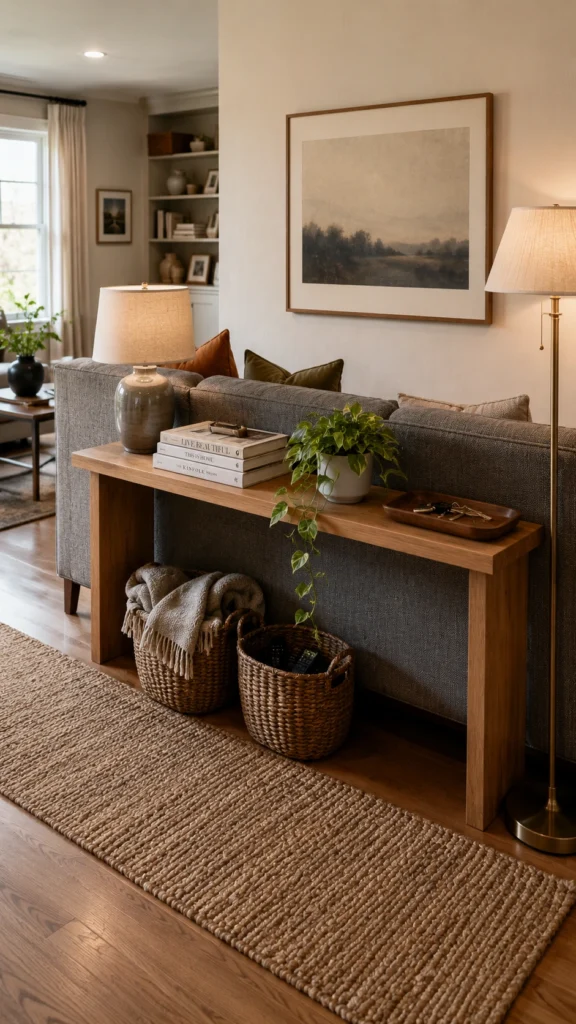
This one only works if your couch floats in the room or can pull a few inches off the wall, so check that first. If it does, a slim console behind it gives you a surface for lamps, books, and drinks with almost no visible bulk, because the couch hides most of the table.
Two measurements matter: keep the console no taller than the couch back and no deeper than about 12 inches. Go bigger and you’ve just added furniture instead of storage. A couple of small baskets underneath will swallow the remotes and chargers that otherwise live on the cushions.
6. Install Shelves Above the Headboard
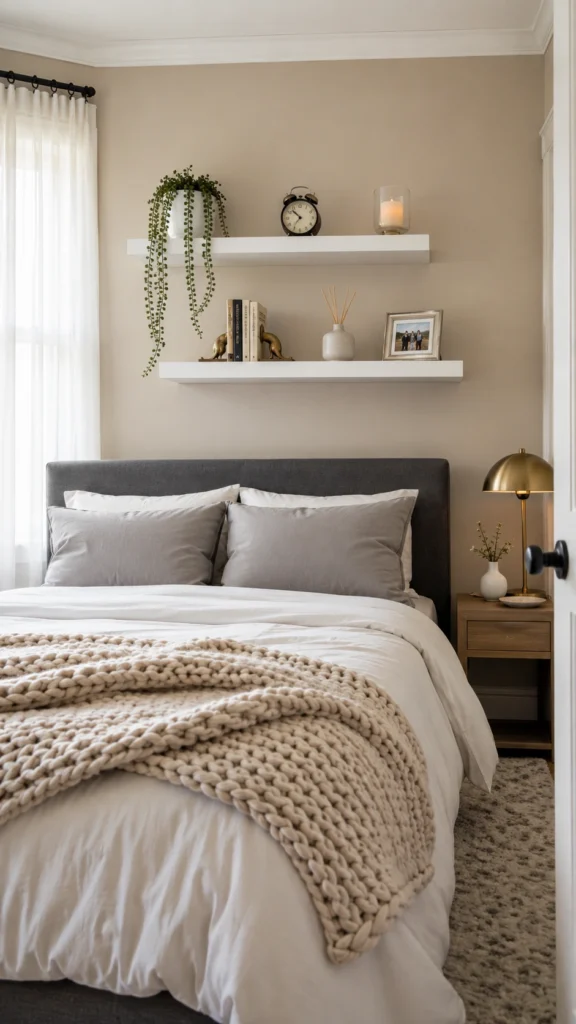
In a lot of small bedrooms, the bed touches three walls and nightstands simply don’t fit. The wall above the headboard can take over that job. One or two floating shelves handle books, a small plant, a clock, and whatever else used to crowd the mattress edge.
Mount them at least 24 inches above the headboard so you can sit up without checking first. And be picky about what goes up there. Paperbacks falling on you at 2 a.m. is a bad moment; ceramics falling on you is an emergency room story. Keep it light.
7. Roll T-Shirts Instead of Folding Them
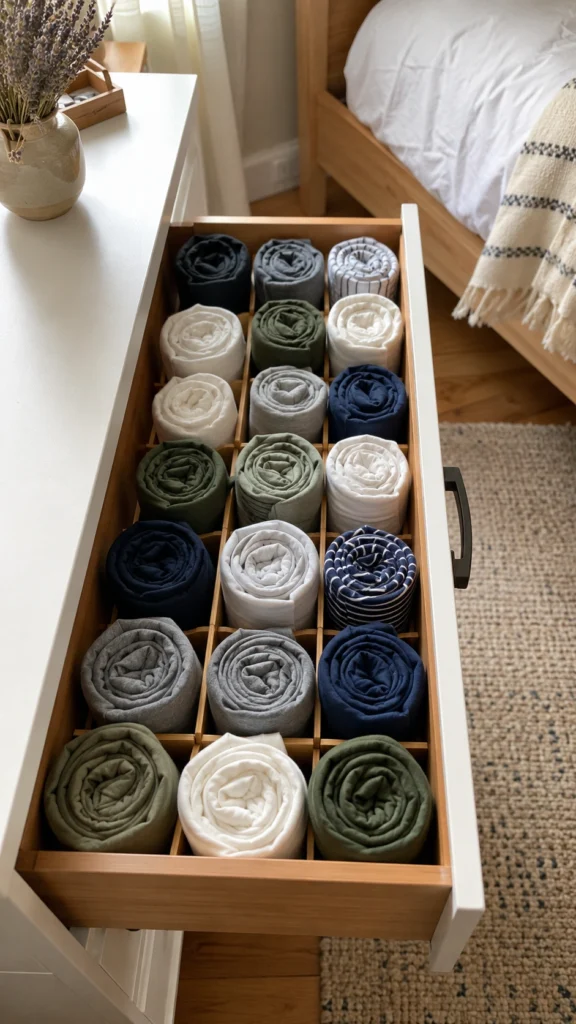
Rolled shirts take up roughly half the space of flat-folded stacks. That sounds like an exaggeration until you try it with one drawer: 20 to 25 rolled tees fit where about a dozen folded ones lived. The reason is simple geometry. Rolls stand vertically, so you use the drawer’s full depth instead of piling everything on top of itself.
You also see every shirt at once, which quietly ends the habit of wearing the same five because the rest are buried. Cheap drawer dividers help once the drawer gets half empty and the rolls start flopping over. The same method works for gym clothes, pajamas, and kids’ clothing.
8. Use Slim Velvet Hangers
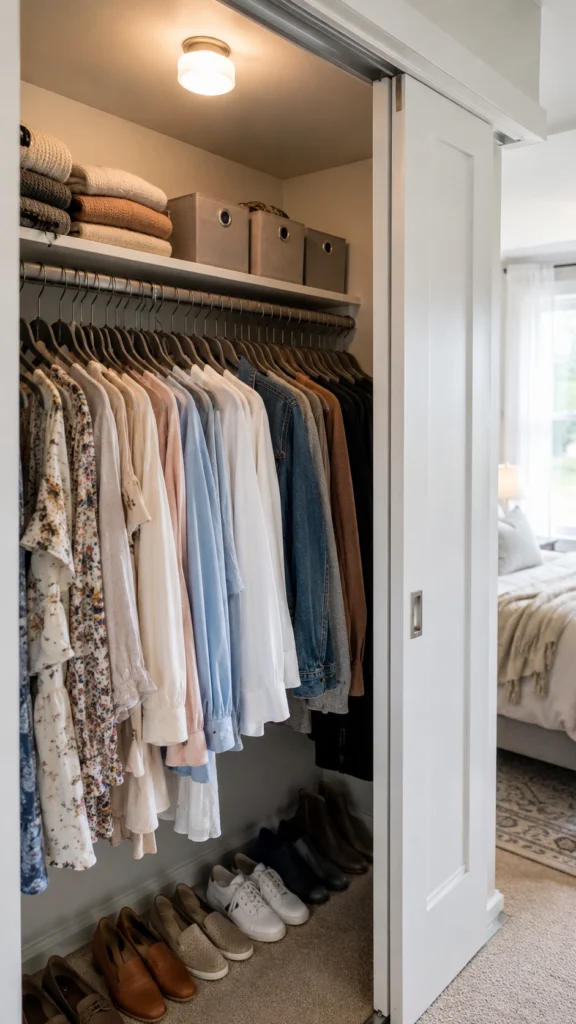
Standard plastic hangers run about half an inch thick. Velvet ones measure roughly 0.2 inches. Multiply that difference across a packed closet rod and you get room for 30 to 50 percent more clothing without touching the closet itself. The velvet flocking also grips silky tops that used to slide onto the floor, a problem plastic never solved.
The trick is committing. Buy a bulk pack of 50, swap everything at once, and donate the old hangers. A closet with mixed hanger types loses most of the space savings and always looks messier than it is. For anyone with one small closet and a full wardrobe, this is probably the best value on the entire list.
9. Use Shelf Risers to Double Shelf Capacity
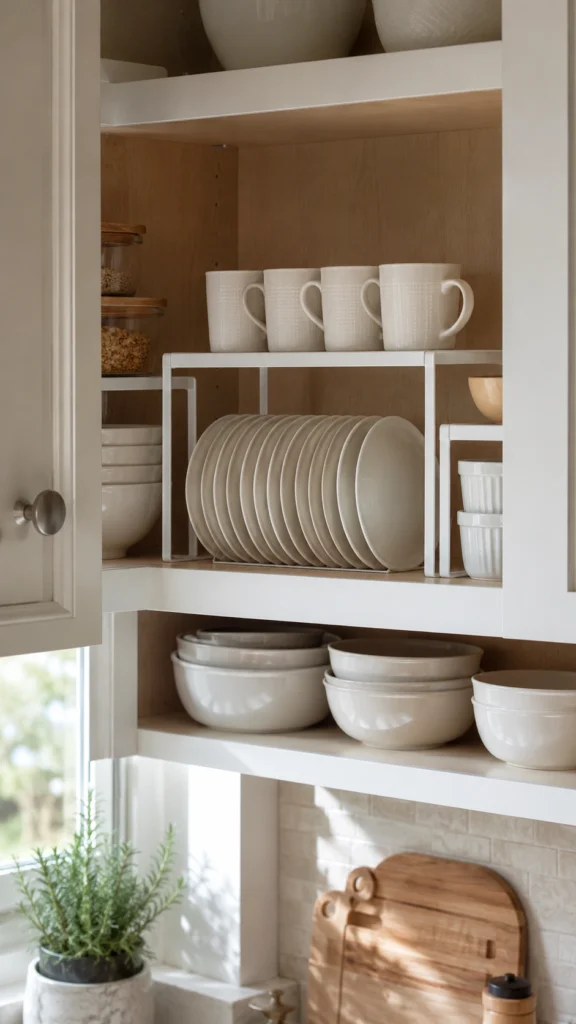
Cabinet shelves usually sit 12 to 15 inches apart. Plates and mugs need 5 or 6. That gap of wasted vertical air exists in almost every kitchen, and a shelf riser splits it into two usable layers for $8 to $15, no installation required.
Measure before you buy, though. Plenty of risers go back to the store because someone guessed at shelf depth or forgot to check the clearance under the shelf above. Get those two numbers first and the whole project takes five minutes.
10. Install Magnetic Knife Strips
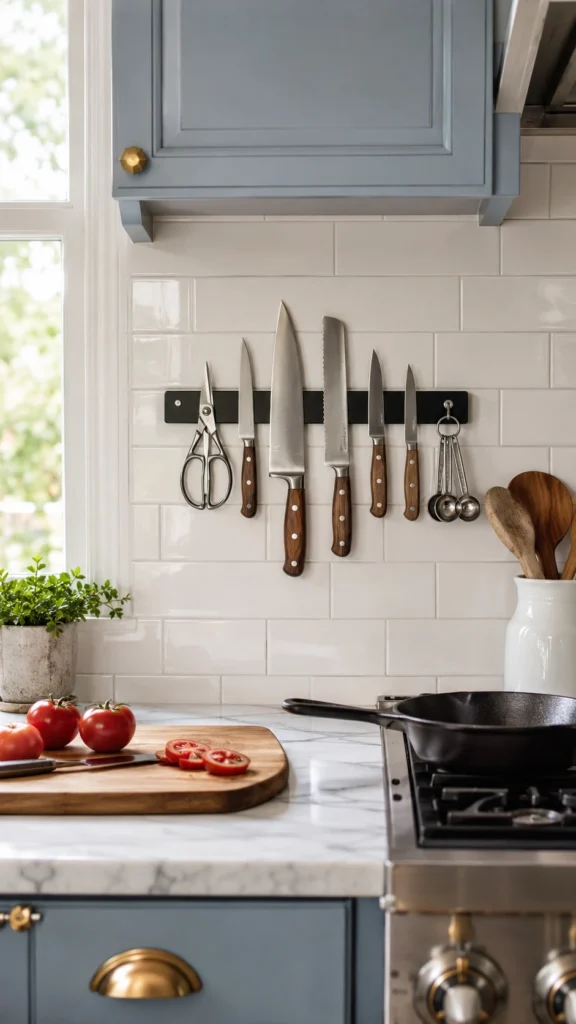
A knife block takes up 8 to 10 inches of counter depth. In a kitchen with maybe six feet of counter total, that’s a real tax. A magnetic strip moves the knives to the wall, and as a bonus, the blades stay sharper because they stop knocking against each other the way they do loose in a drawer.
Placement matters more than people expect. Mount it on the backsplash near your prep zone, not above the stove, where cooking grease coats everything within reach. Once it’s up, you’ll find it holds scissors, metal measuring spoons, and bottle openers too, which can empty most of a junk drawer for around $12.
11. Store Food in Stackable Square Containers
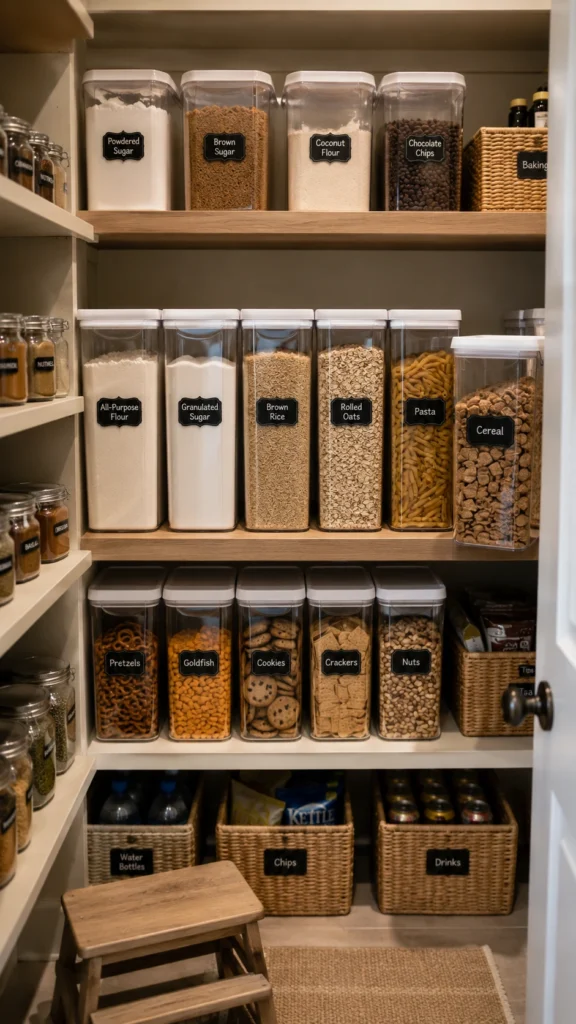
Restaurant kitchens use square containers almost exclusively, and the reason applies directly to your pantry: round containers waste the corners of every shelf they sit on. Square and rectangular ones nest edge to edge with no gaps, which recovers somewhere around 20 to 25 percent of the space.
Decant flour, rice, pasta, and cereal out of their oversized original packaging and label everything. One caution: stick to a single brand and system so every lid fits every base. A drawer of mismatched containers and orphaned lids is its own storage problem, and everyone who has one knows it.
12. Use Drawer Peg Systems for Plates and Bowls
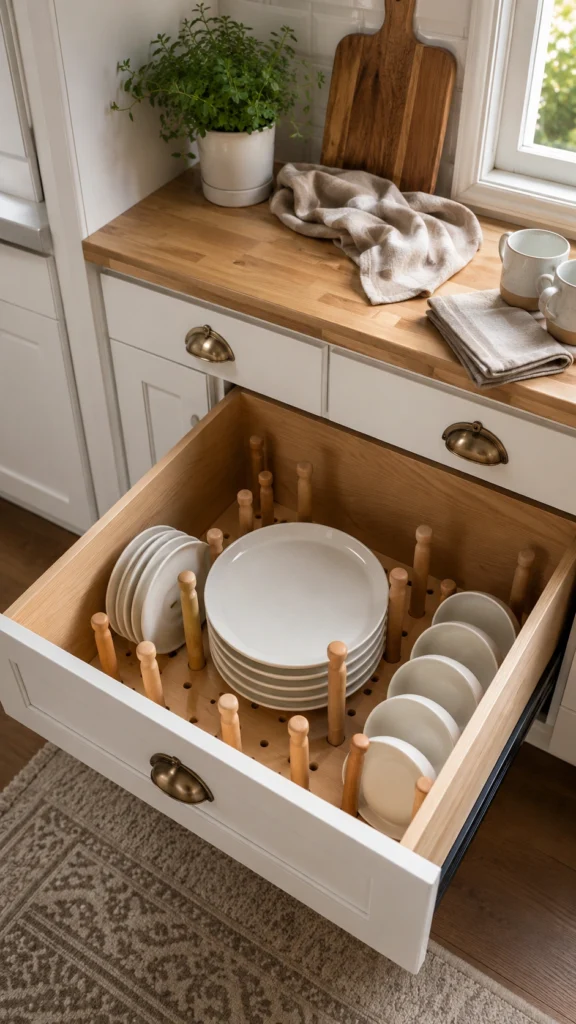
Plates in a deep drawer sounds like a chipping hazard, and without support, it is. A pegboard base with movable dowels changes that. The pegs lock each stack in place so nothing slides when the drawer opens, and suddenly your dishes live down low where they’re easy to grab.
The real payoff is what it frees up: upper cabinets can hold food, which you reach for far more often than serving bowls. Kitchen designers spec this in expensive custom builds, but drop-in versions run $20 to $40 and work in any drawer deep enough for a stack of plates.
13. Install a Narrow Shelf Beside the Vanity
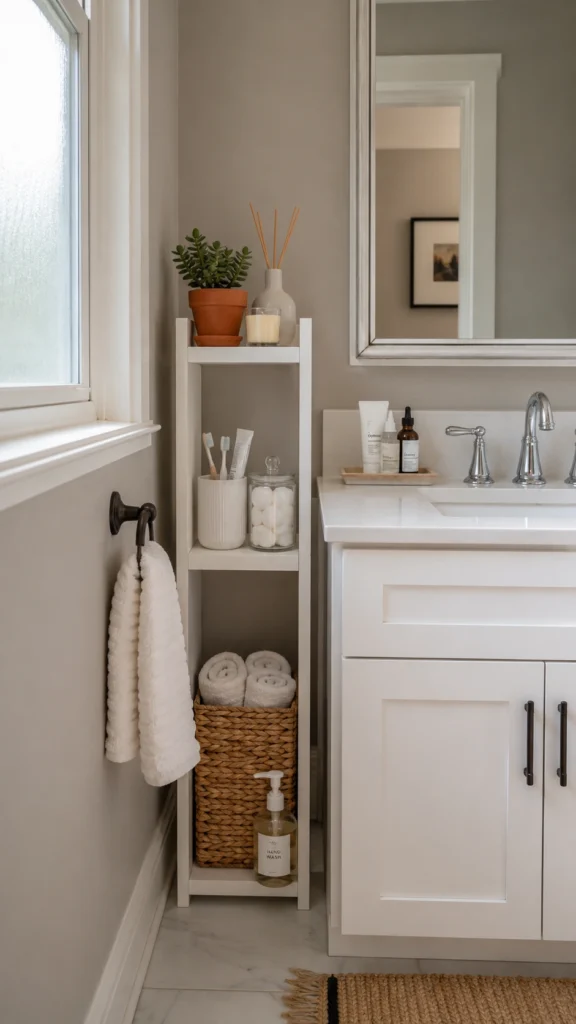
Small-apartment bathroom vanities rarely offer more than a foot of usable counter, and skincare routines have a way of outgrowing that fast. A skinny shelf unit, even one just six inches wide, slides into the gap beside the vanity and holds what the counter can’t.
Renters who can’t drill should look at slim rolling carts instead. They pull out for cleaning and come along at lease end. Whichever you choose, style the top shelf and let the lower ones do the practical work. Guests only ever notice eye level.
14. Install Corner Shelves
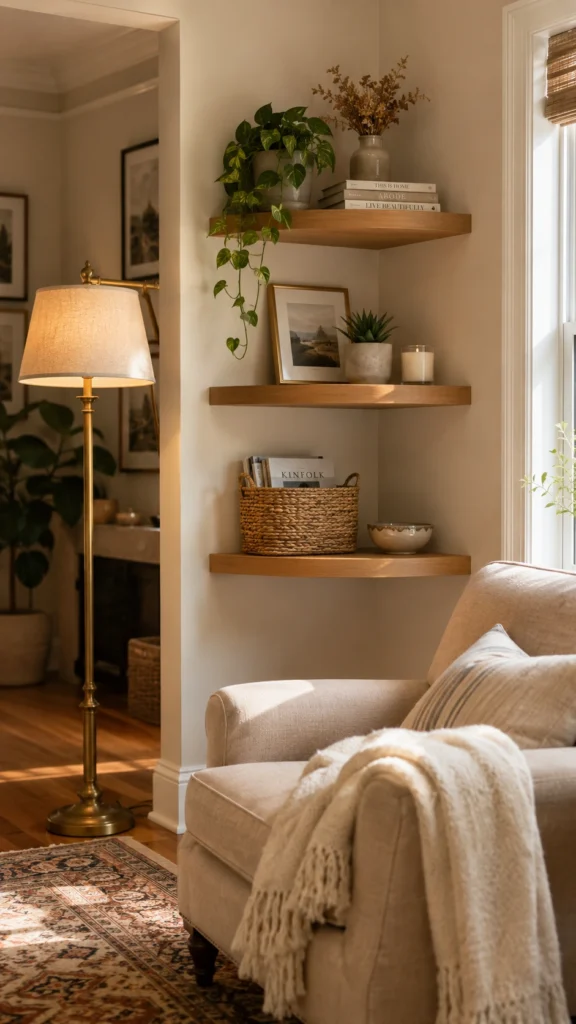
Corners might be the most consistently ignored space in any apartment. Floors get furniture, walls get art, and the angles where they meet get nothing. Floating corner shelves fix that in living rooms, bedrooms, bathrooms, and that awkward kitchen corner where no appliance fits.
The quarter-circle radial style looks noticeably cleaner than two straight shelves jammed together at an angle, and it’s worth the small price difference. Stack three or four vertically and you’ve essentially built a corner bookcase without giving up any floor.
15. Use Hollow Side Tables with Removable Tops
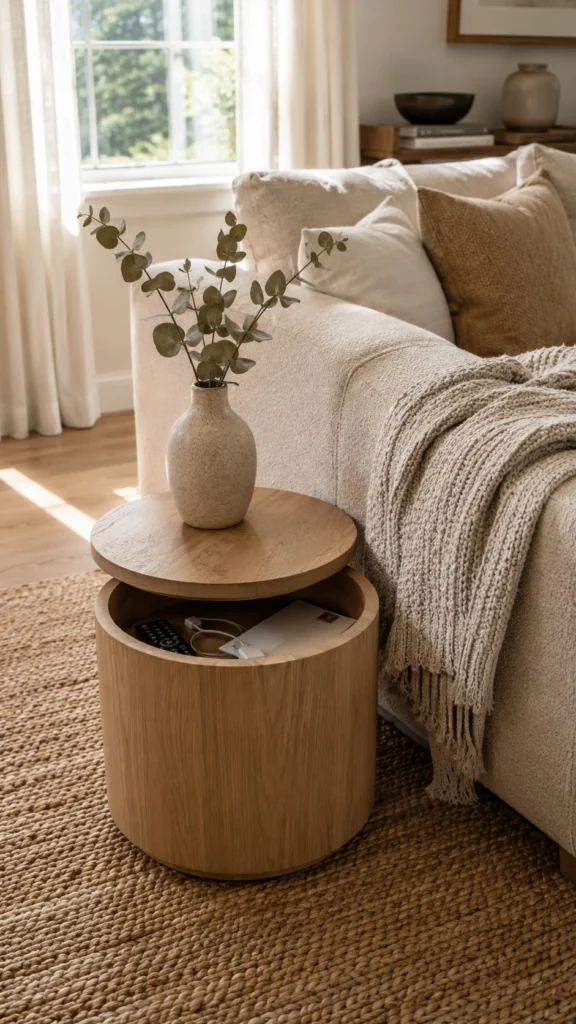
Everyone has a version of the pre-guest panic tidy, where the loose clutter of the week needs to vanish in ten minutes. A side table with a lift-off lid is built for exactly that. Chargers, remotes, the knitting project, the mail pile: drop them in, replace the top, done.
Drum and cube styles hold the most, while a standard leggy side table holds precisely nothing. The one habit to watch is letting the table become a permanent junk drawer. It works best as short-term holding for things you use weekly, not a place items go to be forgotten.
16. Hide Wi-Fi Routers Inside Ventilated Baskets
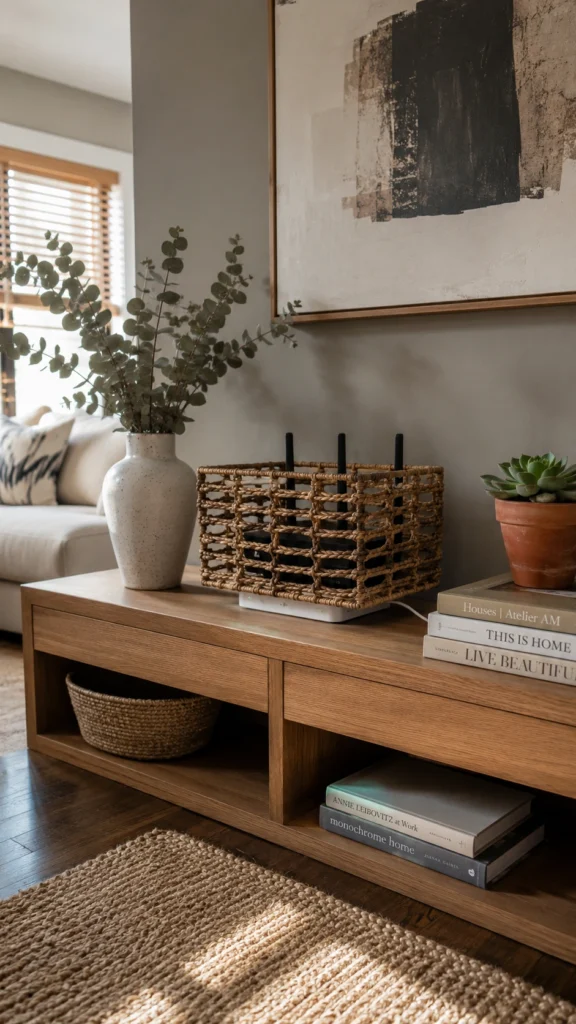
Routers always end up in the most visible spot in the room, because that’s where the cable jack happens to be. An open-weave basket solves the eyesore without hurting the signal, and the shelf underneath goes back to looking like part of the room.
The weave is the whole point, not a style choice. A solid box traps heat, and an overheating router throttles performance or dies early. Leave breathing room inside, don’t stack anything on top of the unit, and keep the antennas upright if yours has them.
17. Use Desktop Drawer Organizers
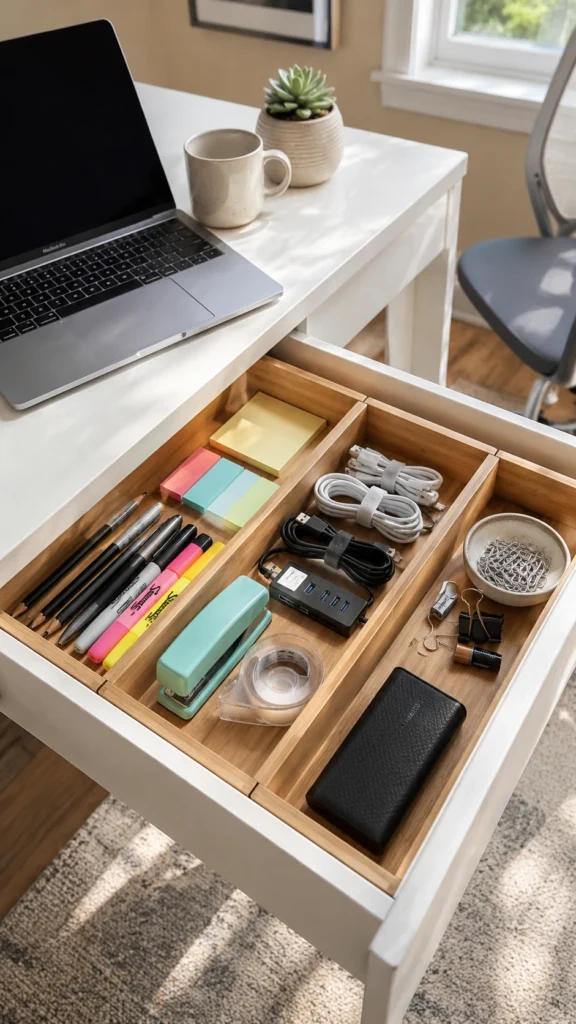
A messy desk drawer holds maybe 60 percent of what an organized one does, because loose items pile in mounds instead of packing flat. Modular trays give pens, cables, sticky notes, and batteries their own zones, and the difference in capacity is immediate.
Adjustable bamboo or plastic dividers beat fixed-slot organizers, since your stuff changes and fixed slots don’t. If you’re not ready to spend money on the inside of a drawer, cut-down cereal boxes wrapped in contact paper do the same job well enough to be slightly annoying to the companies selling the real thing.
18. Slide Rolling Bins Under the Bed
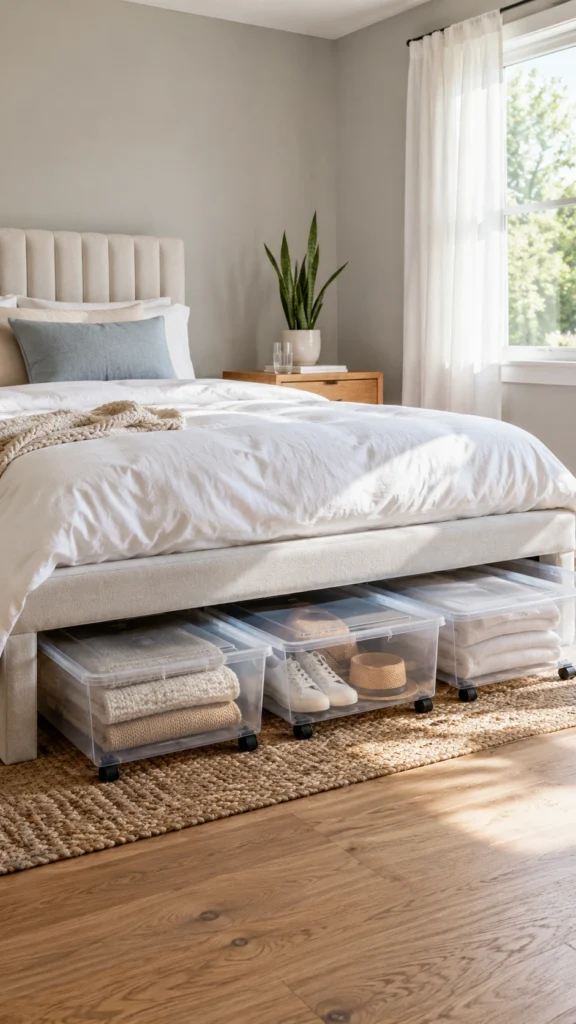
The void under a standard bed frame holds roughly 8 to 12 cubic feet, close to a dresser’s worth of capacity, and most people store nothing there but dust. Low-profile bins fill it with shoes, off-season clothes, or spare linens.
Insist on wheels. Bins with only handles get shoved to the back once and never come out again, which turns your storage into a graveyard. Clear lids help for the same reason, since you shouldn’t have to drag out three bins to find the winter coats. If your frame sits too low for bins, risers lift it 3 to 6 inches for about $20.
19. Hang an Over-the-Door Organizer for More Than Shoes
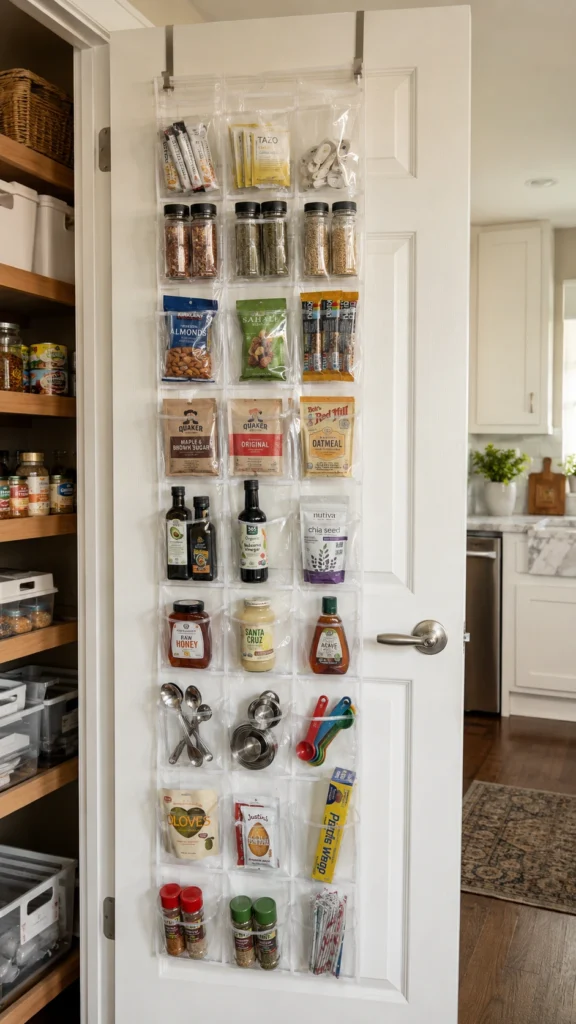
The clear-pocket shoe organizer might be the most underused product in home storage, mostly because the name limits people’s imagination. Hang one inside the pantry door for snacks and spices, the bathroom door for toiletries, the closet door for accessories, or the entry door for gloves and leashes. Every door gains 20 to 24 pockets without a single hole in the wall.
Choose clear pockets over fabric ones. Visibility is the entire mechanism here; things you can’t see get forgotten and then bought again. For renters whose landlords treat every nail hole as a crisis, this is about as good as no-drill storage gets.
20. Add Tension Rods Under the Kitchen Sink
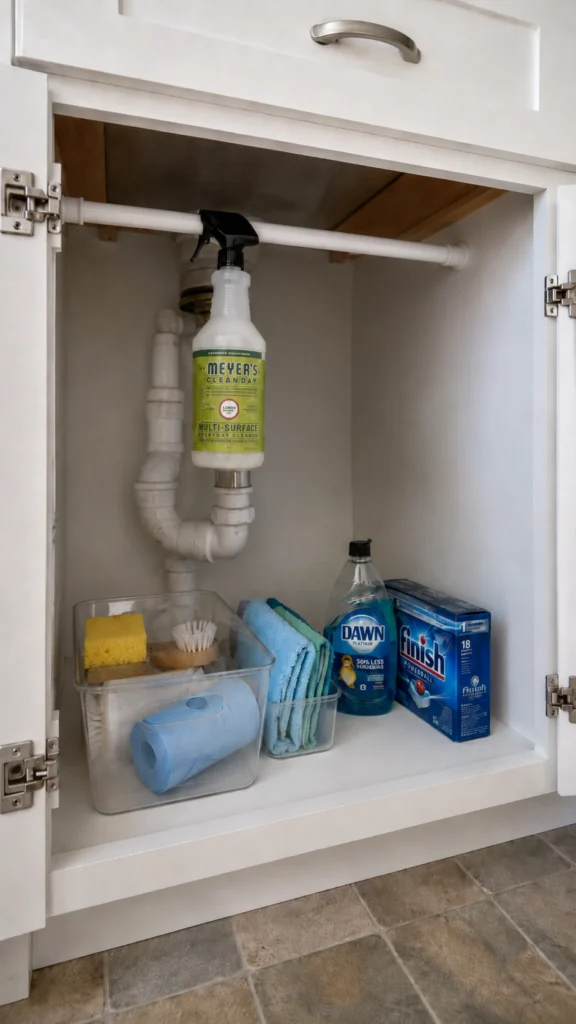
The cabinet under the sink is where cleaning bottles go to form a pile. A short tension rod across the upper part of the cabinet fixes it: hang the spray bottles by their trigger heads and the entire floor of the cabinet opens up for a bin of sponges, trash bags, and refills.
Six dollars, two minutes, no tools. One caveat: tension rods can slip on very slick cabinet walls under heavy load, so keep the rod for bottles and let the heavy stuff sit below. A second rod, mounted vertically between shelves elsewhere, makes a decent divider for cutting boards and baking sheets.
21. Vacuum-Seal Off-Season Bedding and Clothes
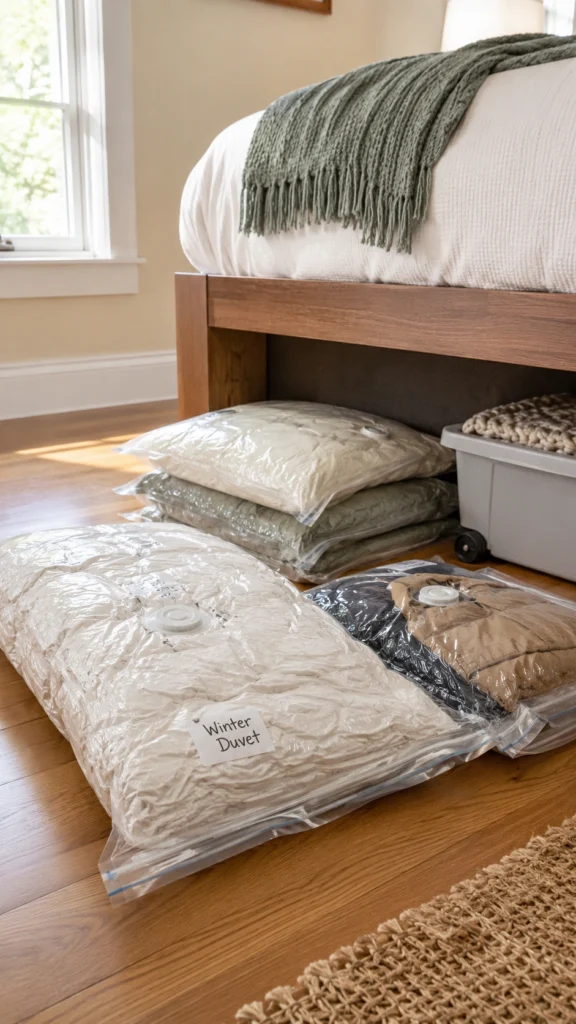
A winter duvet compresses to about a quarter of its size in a vacuum storage bag, and puffer jackets, spare pillows, and bulky sweaters shrink almost as dramatically. Half your closet is probably occupied by things you won’t touch for six months, and this is how you get it back.
The flattened bags slide under the bed or up onto that shelf above the door from earlier. Notice how several of these small apartment storage hacks feed each other; one creates the space another one fills. Just don’t leave down items compressed for more than a season, because the fill loses loft over time. Give duvets a yearly fluff break.
22. Mount a Fold-Down Wall Desk
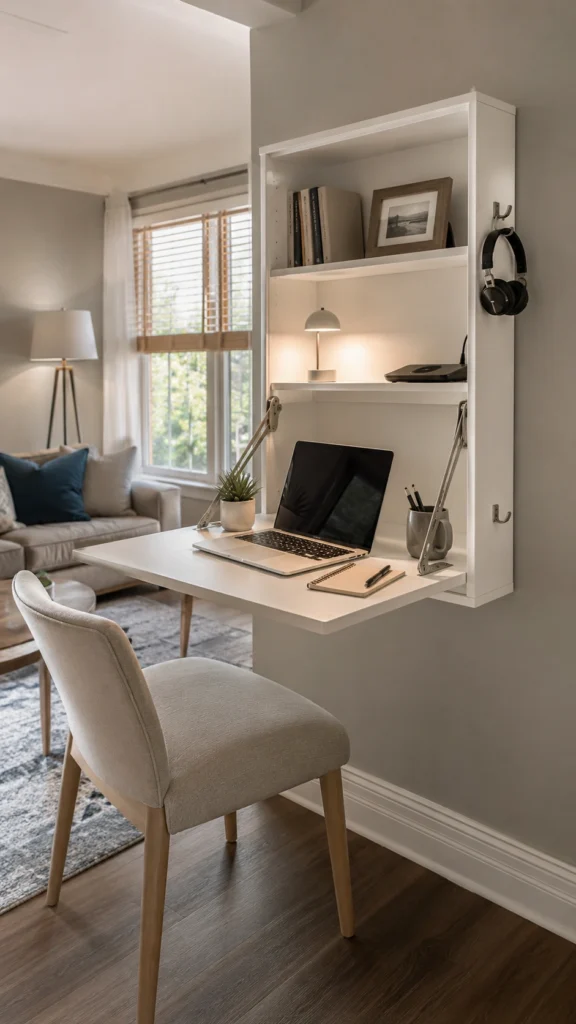
A full desk permanently claims 10 to 15 square feet. A fold-down wall desk claims zero outside working hours. In a studio, that’s often the difference between having a living room and having an office you also sleep in.
Many models include interior shelving for a laptop and supplies, so closing the desk also puts the office away, which matters more for your sanity than it sounds. The main limitation is surface size. If your work involves dual monitors or spreads of paper, a fold-down probably won’t cut it, and hack #2 or #5 might serve you better.
23. Hang a Pegboard for Vertical Everything Storage
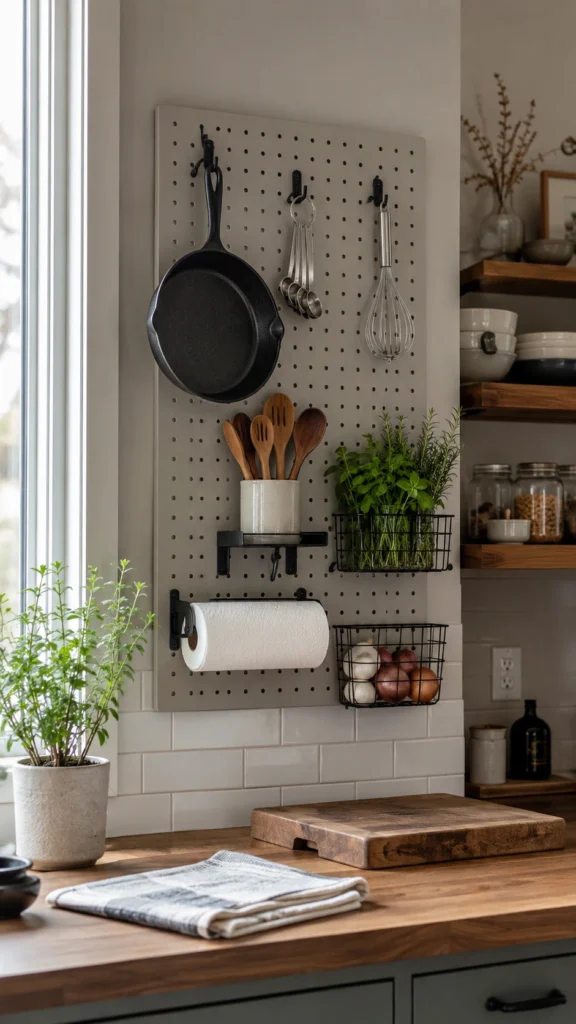
Pegboards left the garage years ago, and it’s a little surprising more apartments haven’t caught on. In a kitchen, one board holds utensils and pans. In an entryway, keys and bags. Above a desk, supplies and headphones. Because the hooks and shelves rearrange in seconds, the board adapts every time your stuff changes, which fixed shelving never does.
A single 2×4-foot board replaces roughly a drawer unit’s worth of storage using zero floor space. Paint it the same color as the wall and the board disappears while the items on it read as intentional display.
How to Choose Which Small Apartment Storage Hacks to Try First
Trying all 23 in one weekend is how organizing projects die. Pick based on whatever irritates you most right now:
- Cluttered counters and surfaces: the charging box (#4), knife strip (#10), and hollow side table (#15).
- Overstuffed closet: velvet hangers (#8), rolled shirts (#7), and vacuum bags (#21).
- Kitchen chaos: shelf risers (#9), square containers (#11), and the under-sink tension rod (#20).
- No floor space left: the over-door shelf (#1), pegboard (#23), and fold-down desk (#22).
Finish one zone completely before starting the next. A fully sorted kitchen keeps you motivated in a way that five half-finished projects never will.
FREQUENTLY ASKED QUESTIONS
What is the cheapest storage hack for a small apartment?
The under-sink tension rod, at around $6 and two minutes of effort. Shelf risers come in close behind at $8 to $15 and double your cabinet capacity without tools. Both pay for themselves in usable space almost immediately.
Which storage hacks work in a rental without drilling?
More than you’d think. Tension rods, over-the-door organizers, shelf risers, rolling under-bed bins, drawer organizers, nesting tables, and storage furniture all leave zero marks. For shelving, removable adhesive systems can work, but check the weight rating carefully before trusting one with anything breakable. They fail quietly and all at once.
How do I store clothes in an apartment with one tiny closet?
Combine three of these hacks. Velvet hangers fit 30 to 50 percent more on the rod, rolled shirts roughly double drawer capacity, and vacuum bags shrink the off-season half of your wardrobe into flat packages under the bed. Together, that combination often makes a second closet unnecessary.
Do storage ottomans and hidden-storage furniture actually hold much?
More than most people expect. A trunk-style coffee table holds about as much as two dresser drawers, and a storage ottoman swallows four to six throw blankets. The honest catch is that hidden storage hides things from you too, so use it for items you grab weekly, like blankets and games, rather than anything important enough to lose.
What should I declutter before buying any storage products?
Purge before you purchase. Donate clothes you haven’t worn in a year, toss expired pantry items, and recycle cables for devices you no longer own. People who declutter honestly tend to discover they need about half the bins they planned to buy, which saves money and shelf space in the same move.
Final Thoughts
If there’s one idea worth taking from this list, it’s this: most apartments store everything at two heights, eye level and floor level, and waste everything in between. Walls, corners, door backs, under-bed voids, and hollow furniture hold an enormous amount of capacity that rent is already paying for.
Start with the tension rod or the shelf risers. Both cost under $15, need no tools, and finish in minutes, and there’s something about watching one cabinet transform that makes the rest of the apartment start looking like a solvable puzzle instead of a lost cause.
The square footage isn’t going to change. How much of it actually works for you can change this week.



Pingback: 22 Small Apartment Nursery Ideas for Tiny Spaces - Caliora Living
Pingback: 24 Fall Coffee Table Decor Ideas on a Budget You'll Love - Caliora Living
Pingback: 25 Small Apartment Living Dining Combo Ideas to Copy - Caliora Living
Pingback: 17 Awesome Fall Console Table Decor Ideas That Impress Guests - Caliora Living
Pingback: 25 Fall Decor Ideas for Apartments That Look Expensive - Caliora Living
Pingback: 20 Beautiful Fall TV Stand Decor Ideas for a Cozy Living Room - Caliora Living
Pingback: 25 Brilliant Ways to Organize a Small Apartment and Save Space - Caliora Living