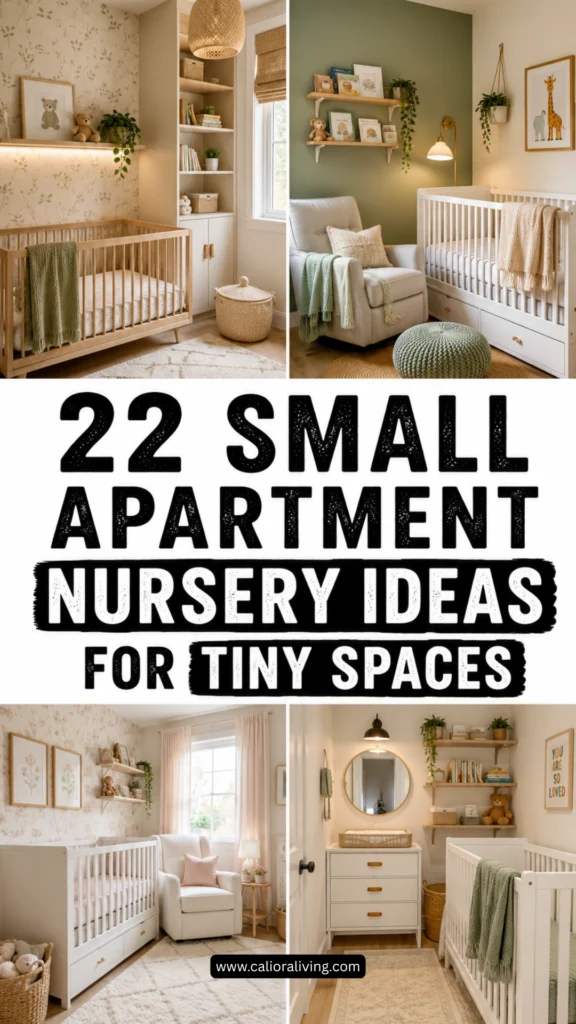

You measured the spare room, and it’s basically a large closet with a window. There’s a baby coming, and somehow a crib, a place to change diapers, storage for a mountain of tiny clothes, and a chair for you all have to fit in there. It feels impossible.
It isn’t. A small room can hold everything a newborn needs and still feel calm rather than crammed. The difference comes down to what you put in, where you put it, and what you’re willing to leave out. Here are 22 small apartment nursery ideas that hold up in real square footage, so you can walk to the crib at 3 a.m. without cracking a shin on a dresser.
1. Plan Your Nursery Layout Before Buying Furniture
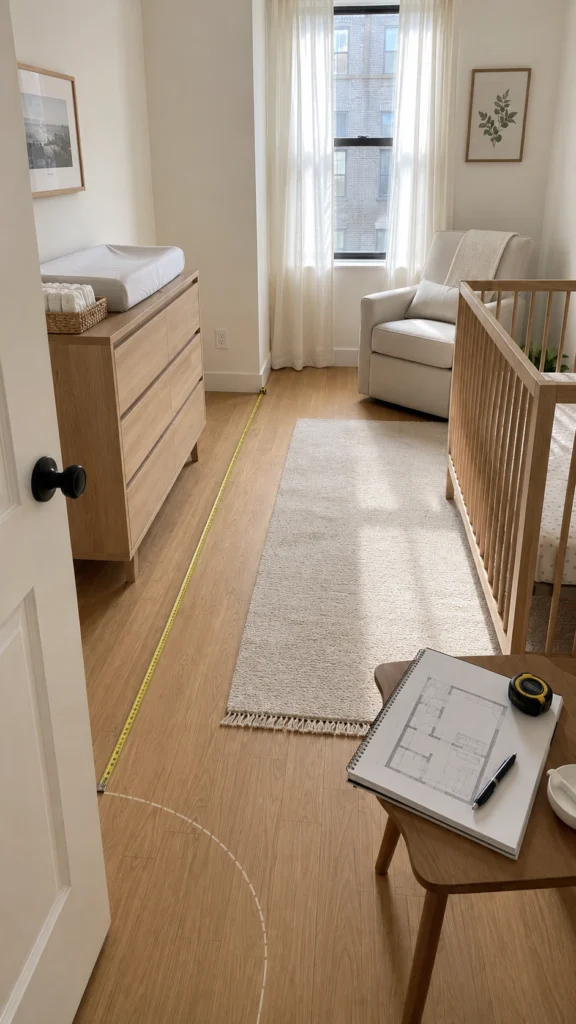
The most expensive nursery mistakes happen before anything gets assembled. Someone falls in love with a dresser online, it arrives, and it turns out to block the closet door.
Measure first. Sketch the room on paper and mark the windows, door swing, outlets, and how far the closet opens. Place the crib in your drawing before anything else, since it’s the biggest piece and everything works around it. Leave yourself roughly 30 inches of clear floor in front of wherever you’ll change diapers, because you’ll be doing it one-handed with a wriggling baby, and you need room to stand.
2. Install Wall-Mounted Lighting to Free Up Surface Space
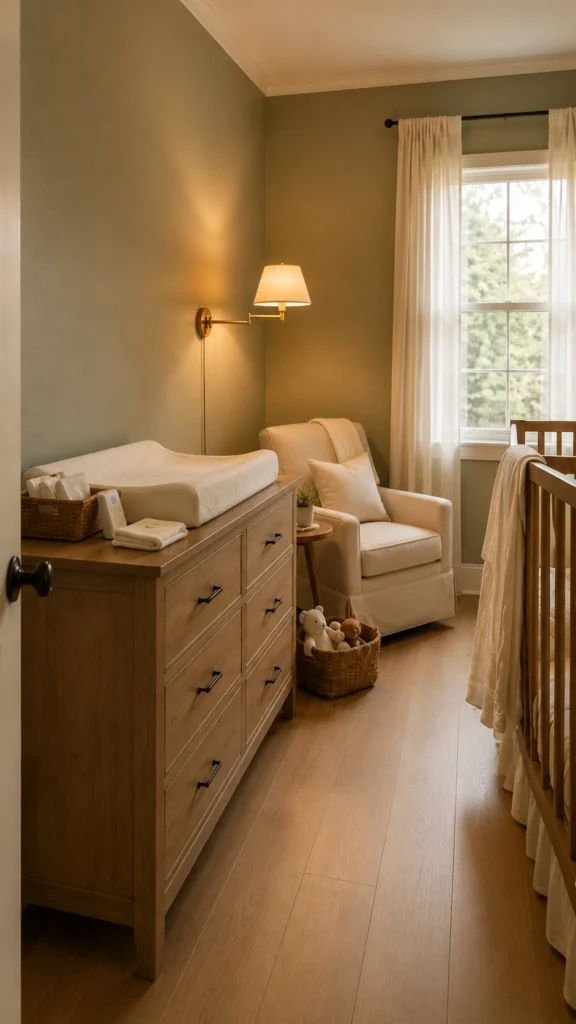
Table lamps take up the exact spots you need for wipes, burp cloths, and a phone. Put the light on the wall instead.
A plug-in swing-arm sconce next to the chair gives you soft, aimable light for night feeds and keeps the dresser top clear for the things you actually reach for at 2 a.m. Use a dimmable warm bulb. Bright cool light snaps a drowsy baby wide awake, which is the opposite of what you want at that hour.
3. Create Custom Storage Solutions for Better Organization
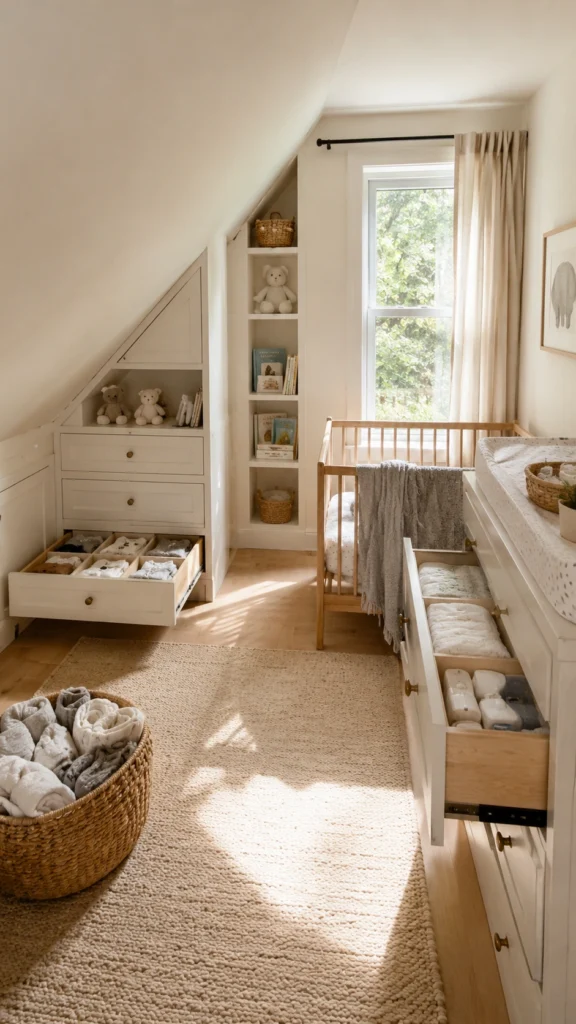
Odd rooms rarely match store-bought furniture, and small rooms are almost always odd. A narrow shelf built into a dead corner, a low unit fitted under a sloped ceiling, or drawer dividers cut to your dresser will pull real capacity out of inches that off-the-shelf pieces waste.
In a tight room, going up beats going wide, because floor space is the thing you’re short on, not wall space.
Related reading: 23 Small Apartment Storage Hacks
4. Bring Natural Materials and Greenery into the Nursery
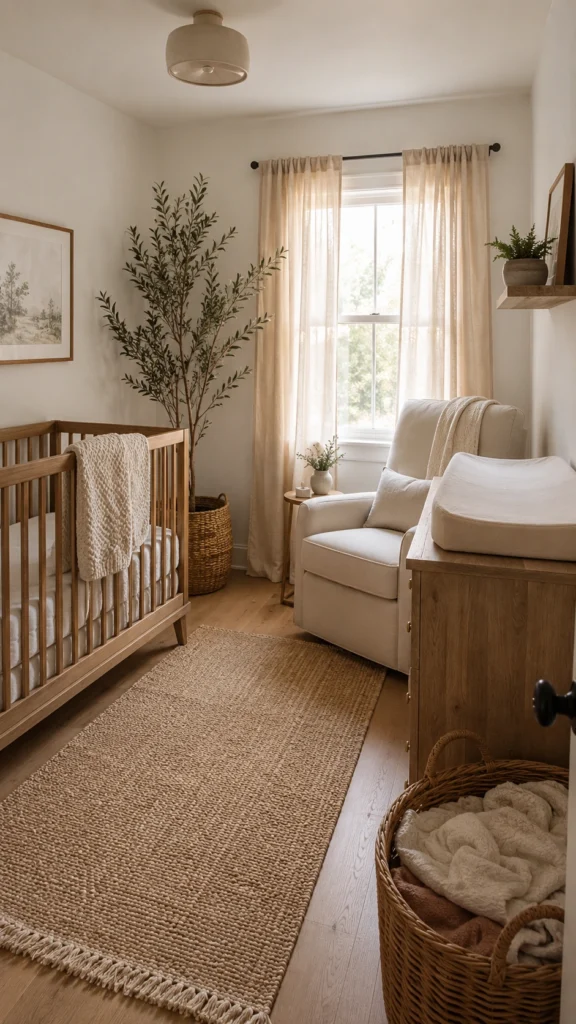
You’re going to spend hours in this room at odd times of night, so it shouldn’t feel like a hospital ward. Wood tones, a woven basket, cotton textiles, and one plant warm it up fast. A rattan basket for blankets earns its keep as both storage and decor.
Keep any real plant well out of reach, or use a faux stem up high. Pothos looks nice but is toxic if a curious toddler decides to taste it, so placement matters more than the plant you pick.
5. Select a Color Palette That Makes the Room Feel Bright and Calm
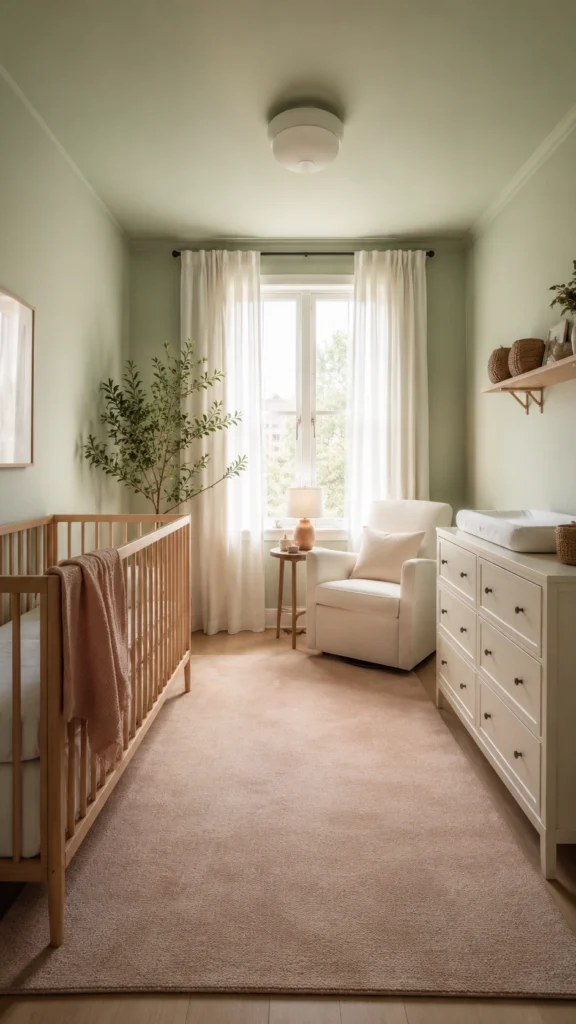
Light, soft colors bounce daylight around and make a tight room read bigger. Warm white, gentle sage, soft clay, or a pale blue open a space up. Deep saturated walls do the opposite and pull the room in on itself.
Two or three colors total is plenty. If you paint the ceiling the same light shade as the walls, the line where they meet blurs and the room feels taller than it is.
6. Add Playful Design Elements That Spark Joy and Imagination
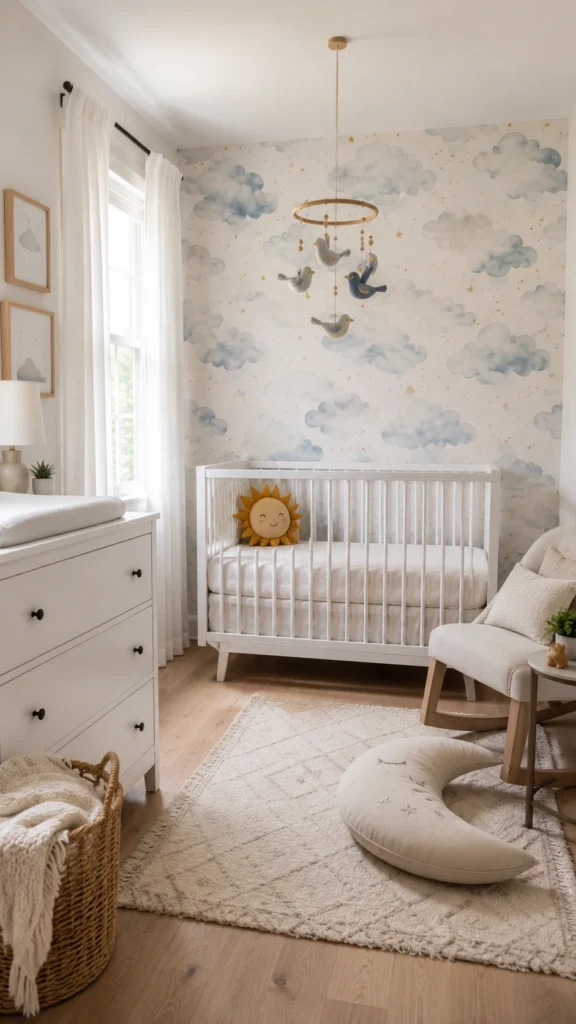
A nursery shouldn’t read like a beige waiting room. It also shouldn’t read like a toy store exploded. The sweet spot is one or two playful moments: a cheerful mobile, a shaped cushion, or a single wall of fun wallpaper behind the crib.
One statement piece looks like a design choice. Five competing ones look like clutter. Pick your one thing and let it win.
7. Introduce a Colorful Theme to Brighten the Nursery
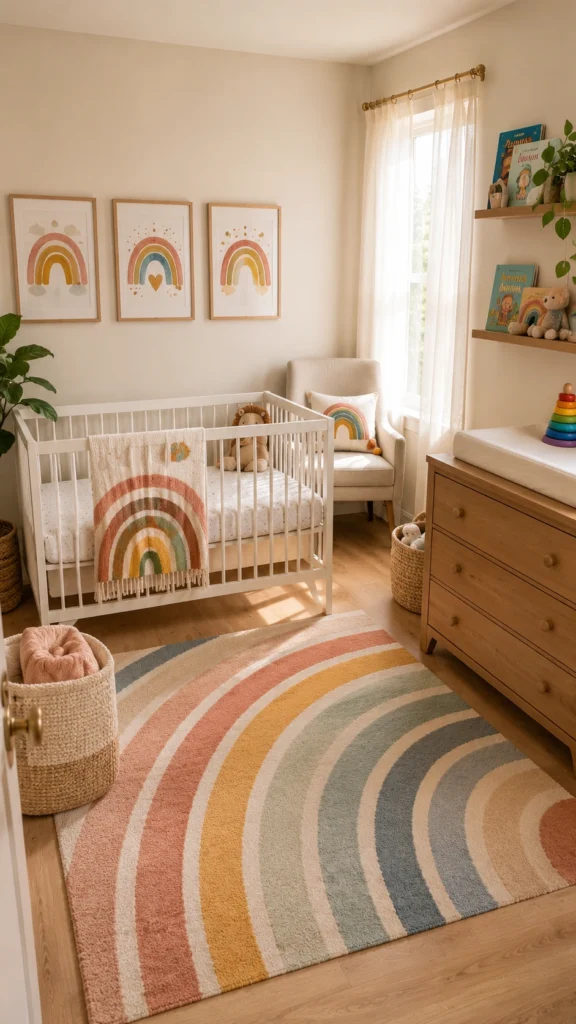
If all-neutral feels flat to you, choose a loose theme and let color carry it. A soft rainbow, a garden feel, a gentle safari. None of these need much square footage.
Keep the walls calm and bring the theme in through removable, low-cost pieces like art, bedding, and a rug. This matters more than it seems. Around age two your newborn theme will feel babyish to a toddler, and swapping a rug and a few prints is a lot cheaper than repainting. This approach fits parents who want character now but expect to refresh the look in a couple of years.
8. Prioritize Essential Nursery Items Over Decorative Extras
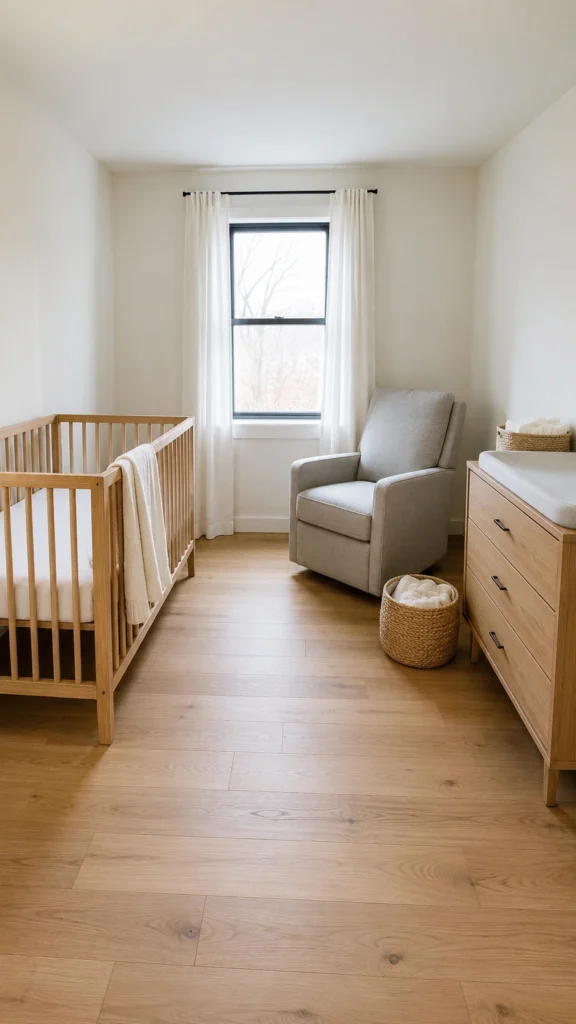
Newborns need surprisingly little: a safe place to sleep, a spot to change them, storage for supplies, and somewhere for you to sit. That’s the real list. A crib, a dresser with a changing pad on top, and a comfortable chair cover it.
Buy those four things well. Add decor afterward, and only if the room still has space to breathe.
9. Keep Furniture and Decor in Scale with the Room Size
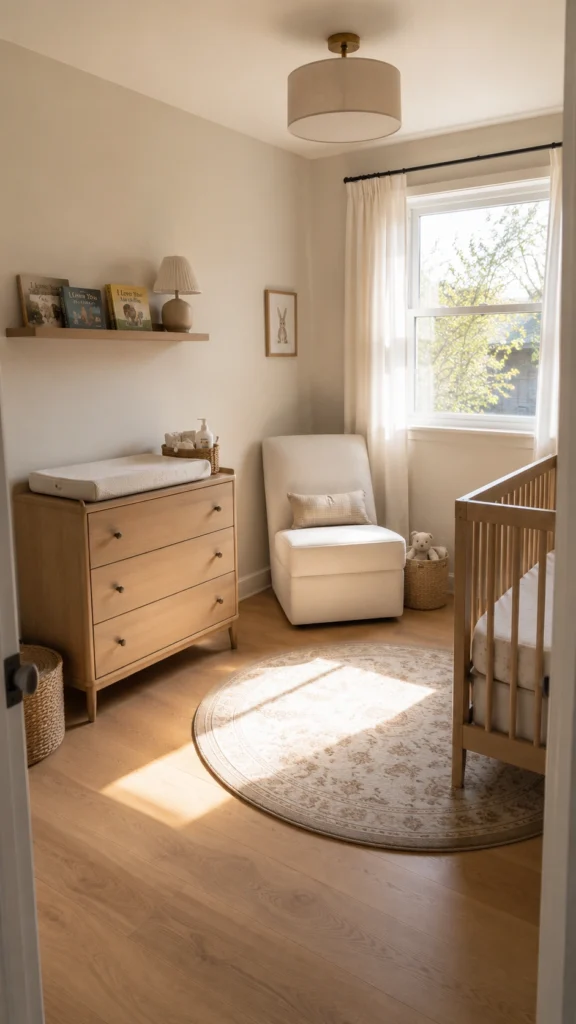
A gorgeous oversized armoire will swallow a small nursery whole. Choose lower, slimmer pieces so nothing overwhelms the room. When wall space is tight, a compact three-drawer dresser usually works better than a wide six-drawer one, even though it holds less.
The photo that sold you on a piece was probably shot in a 200-square-foot suburban nursery. Match the furniture to your actual room, not to the picture.
Related reading: 22 Small Apartment Furniture Ideas
10. Design a Shared Nursery That Comfortably Fits Two Babies
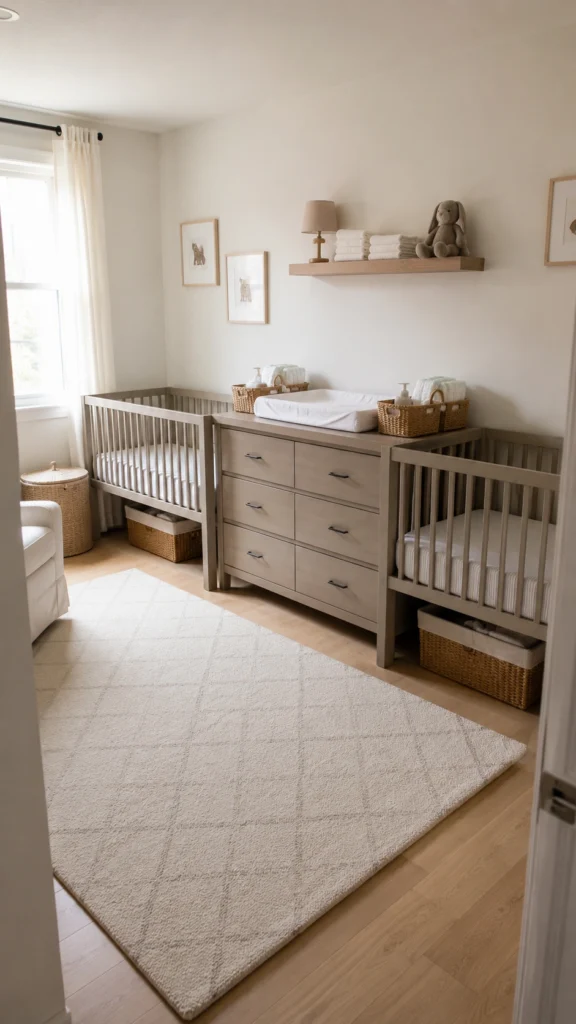
Twins, or two under two, in a small room? It works more easily than people expect, because babies share almost everything.
Line two cribs along the same wall, or tuck them into a corner arrangement with one dresser between them. You need a single changing station and one hamper, not two of each. The common mistake is doubling up on the large items. Two of every big piece fills the floor fast, and your babies genuinely do not care whose wipes are whose.
11. Use Floating Shelves to Display Books, Toys, and Decorations
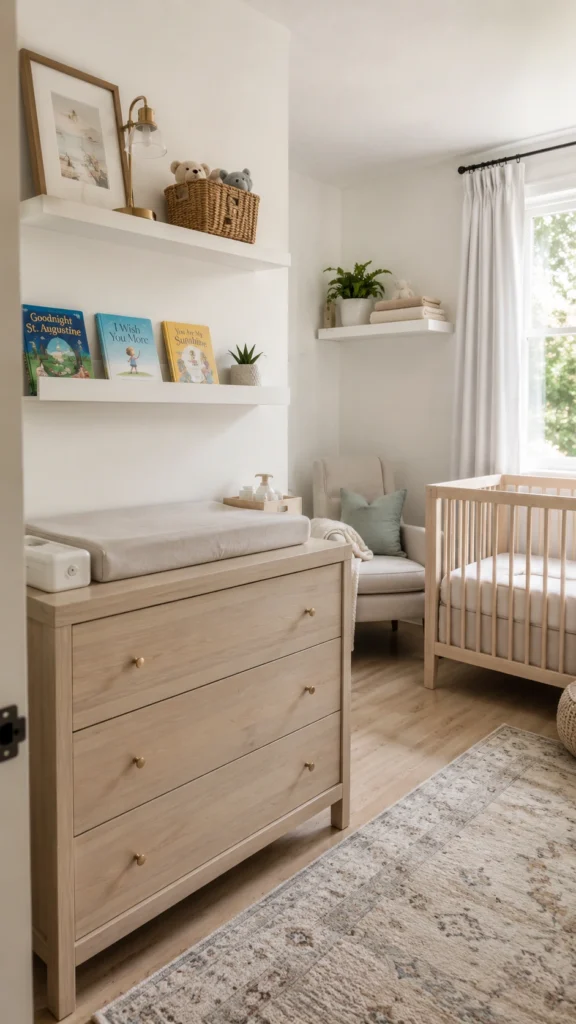
Floating shelves turn a blank wall into working storage without costing you a single inch of floor. Mount a couple above the dresser for board books, a small lamp, or framed prints. Front-facing picture ledges show off book covers and, later, sit low enough for your kid to reach on their own.
Anchor them into studs, not just drywall. And keep anything heavy off the shelf directly above the crib, for obvious reasons.
Related reading: 20 Small Apartment Storage Ideas and Solutions
12. Skip Non-Essential Furniture to Keep the Room Open
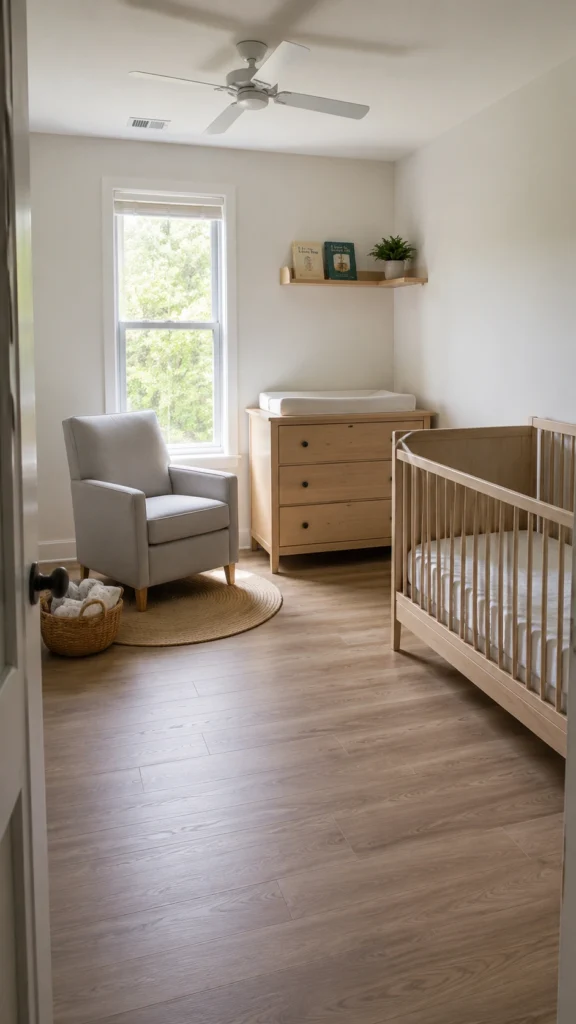
Every piece you leave out is floor space you keep. You probably don’t need a toy chest and a bookcase and a separate bookshelf when a few floating shelves handle all of it.
Ask one question of each item: does it earn its footprint? Open floor keeps a small nursery calm, and it gives your baby room to roll, scoot, and eventually toddle around without an obstacle course.
Related reading: 22 Small Apartment Space-Saving Ideas
13. Maintain a Clutter-Free Nursery for a Peaceful Environment
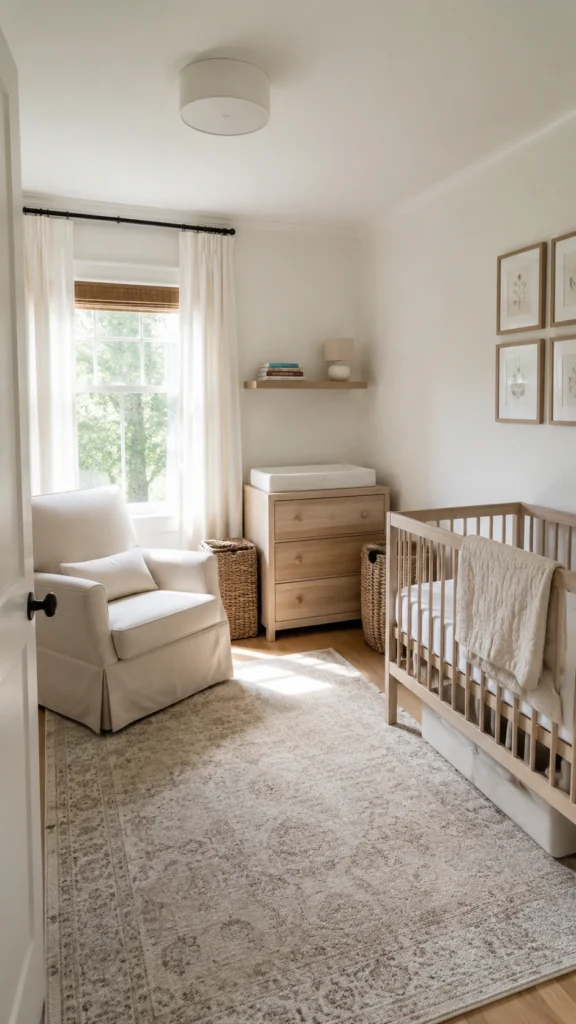
Babies accumulate stuff at a rate that will genuinely surprise you. A tidy room lowers your stress, and you’ll have plenty of that from other directions.
Give every item a home and use closed bins for the visual noise. A five-minute reset each night keeps the mess from compounding. Closed baskets sitting on open shelves are the workhorse here. They hide the chaos while keeping supplies within arm’s reach.
Related reading: 24 Small Apartment Organization Hacks
14. Add a Soft Area Rug to Create a Warm and Comfortable Space
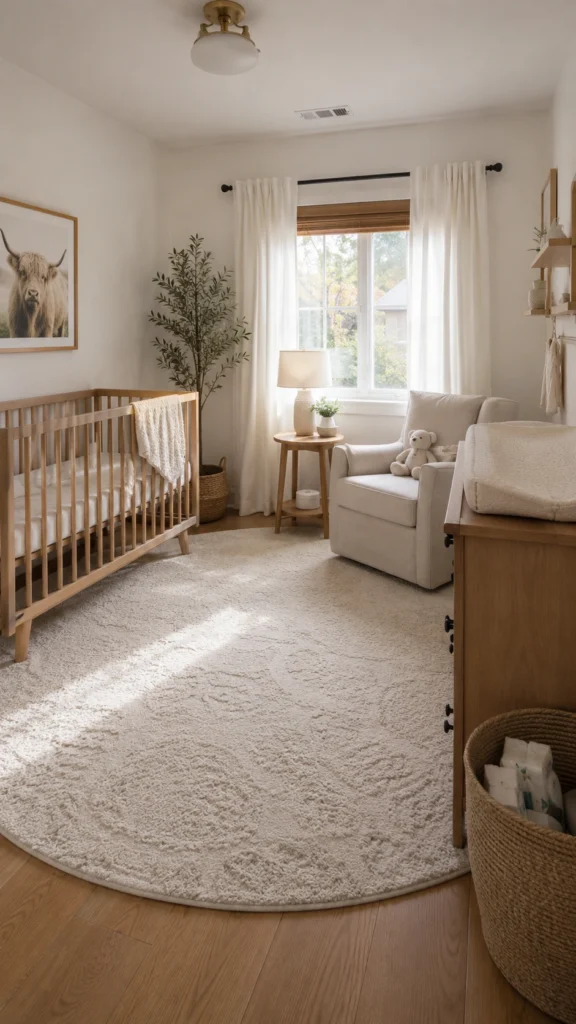
A plush rug does three jobs in a small room. It softens the space, muffles sound, and gives you a comfortable spot for tummy time and, later, play. It also visually defines the room and makes it feel finished.
Go low-pile and washable. Spills, spit-up, and stains you can’t identify are all coming. A round rug can also soften a boxy room and fit better around furniture crowded into corners.
15. Decorate the Walls with Artwork That Adds Personality
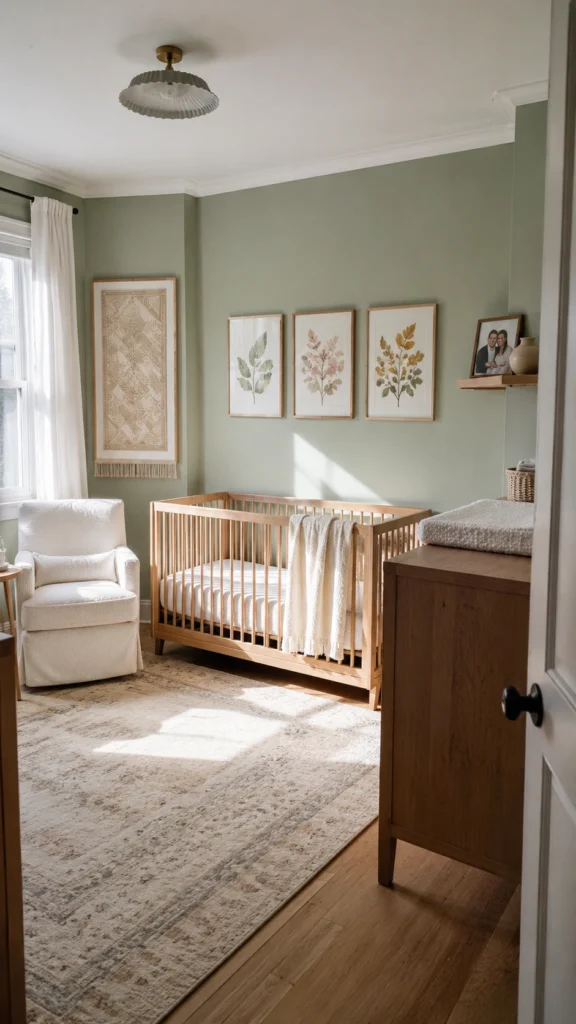
Blank walls are your best free real estate. Hang a small cluster of prints, one larger piece over the crib, or a fabric wall hanging that adds softness and absorbs a bit of sound.
Art pulls the eye upward, which makes ceilings feel taller in a snug room. Hang it at your eye level rather than the baby’s, so it works as decor for everyone who walks in, not just the person lying in the crib.
16. Decorate with an All-White Color Scheme for a Clean, Airy Feel
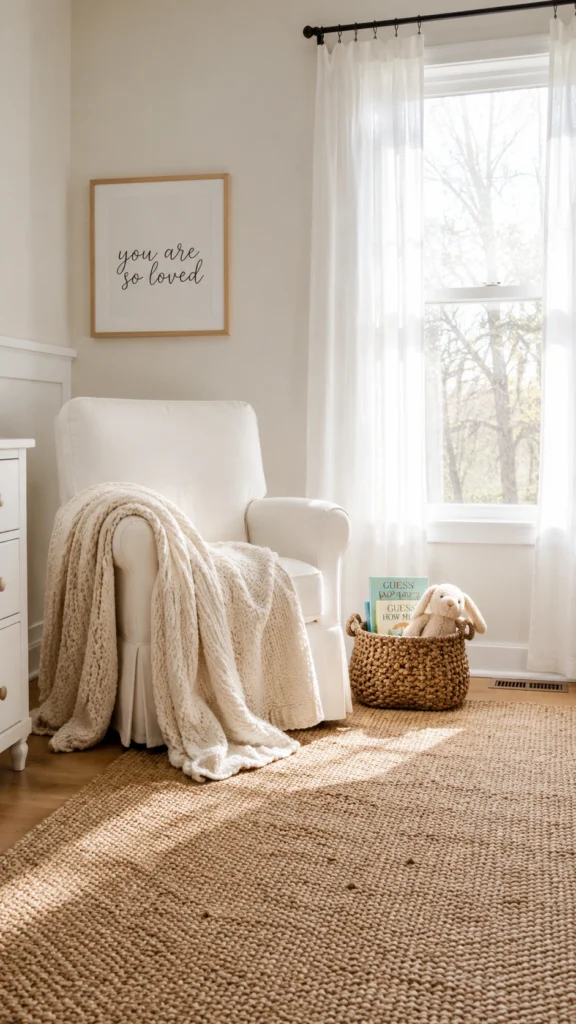
White walls, white furniture, and pale textiles reflect light and make the tiniest room breathe. The risk is that it goes flat and clinical.
Texture fixes that. Layer in a chunky knit blanket, a woven basket, and a soft rug so the whiteness has something to catch on. Reach for warm whites over stark cool ones, since a bright cool white leans more toward a doctor’s office than a nursery.
17. Arrange the Nursery to Take Advantage of Natural Light and Views
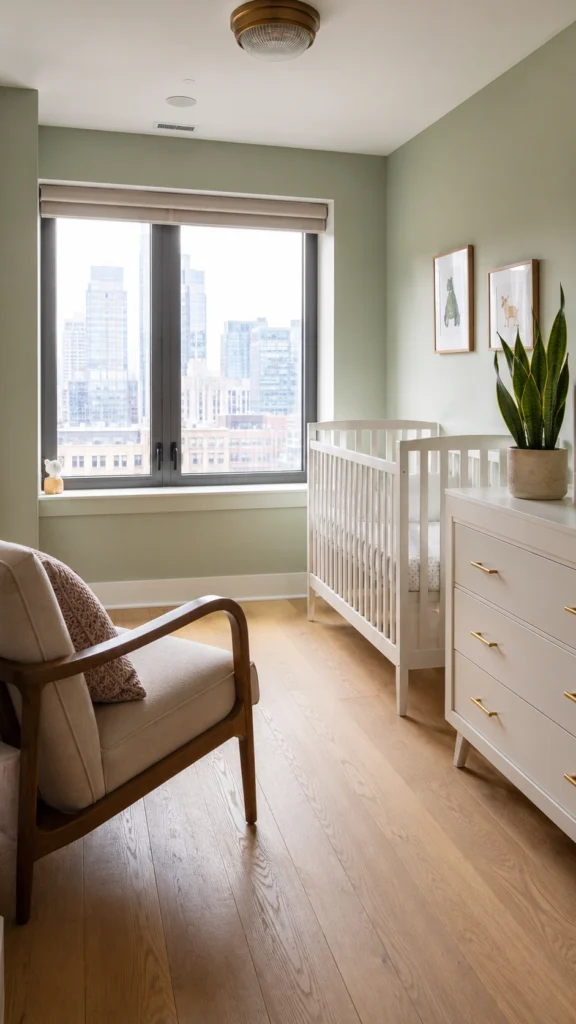
Daylight makes a small room feel bigger, and it lifts your mood on the long stretches when you’re stuck inside with a newborn. Don’t waste it.
Keep the window clear instead of parking a tall dresser in front of it, and set the chair where you can catch some light during day feeds. Keep the crib out of direct sun and well away from any cords. Then add blackout shades so naps happen in the dark even when it’s bright outside. Bright days, dark sleep, on demand.
Related reading: 15 Small Apartment Ideas That Make Tiny Spaces Feel Stylish and Bigger
18. Design a Cozy Reading Corner for Storytime and Learning
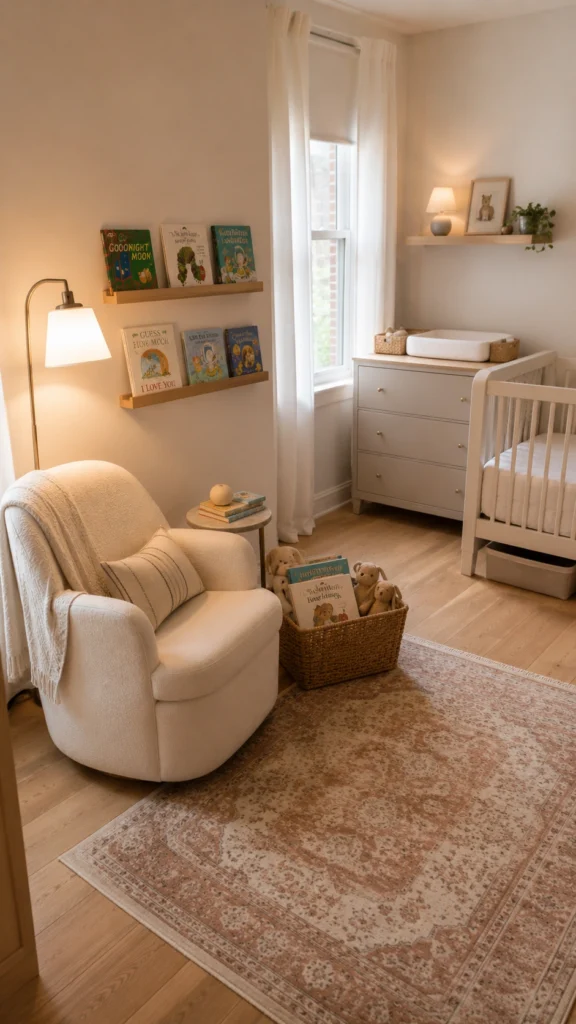
You don’t need a whole nook. You need a comfortable chair, decent light, and a few books within reach.
Tuck a compact chair into a corner with a picture-ledge shelf beside it, and you’ve built a reading spot that grows alongside your kid. This is the corner that does the emotional work of the room, so if you’re going to make one thing genuinely comfortable, make it this. A slim floor lamp and a front-facing book ledge turn almost any corner into storytime central.
Related reading: 22 Cozy Small Apartment Decorating Ideas
19. Use Curved Furniture and Rounded Decor for a Softer Look
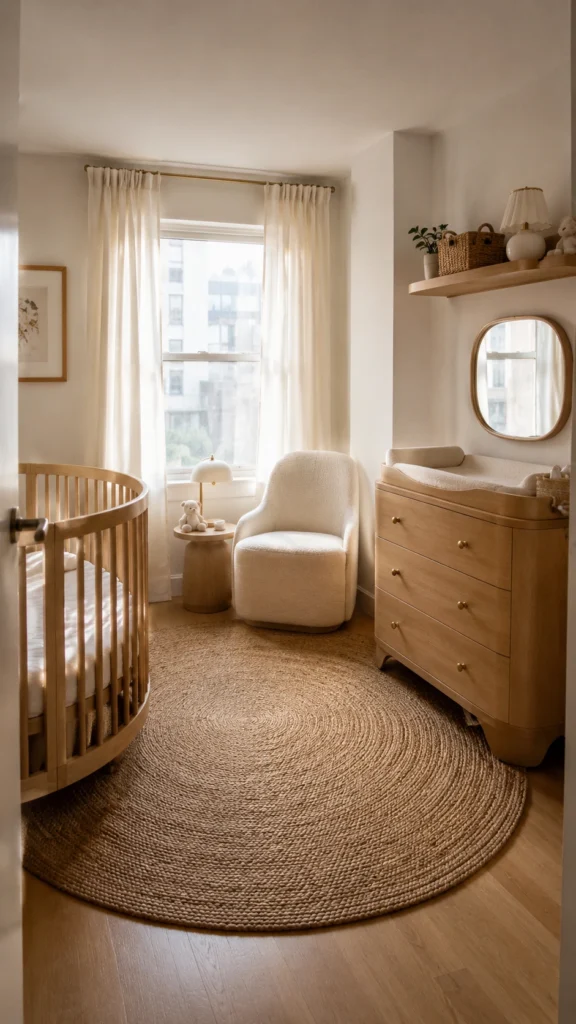
Rounded edges do two things at once. They soften the look of a boxy little room, and they’re safer once your baby starts pulling up and bumping into everything at head height.
Look for a round rug, a curved dresser, an arched mirror, or a scalloped light. There’s a practical bonus too: with no sharp corner jutting into the walkway, it’s easier to route around a curved piece in a tight space.
20. Create a Strong Focal Point to Make the Room Feel Organized
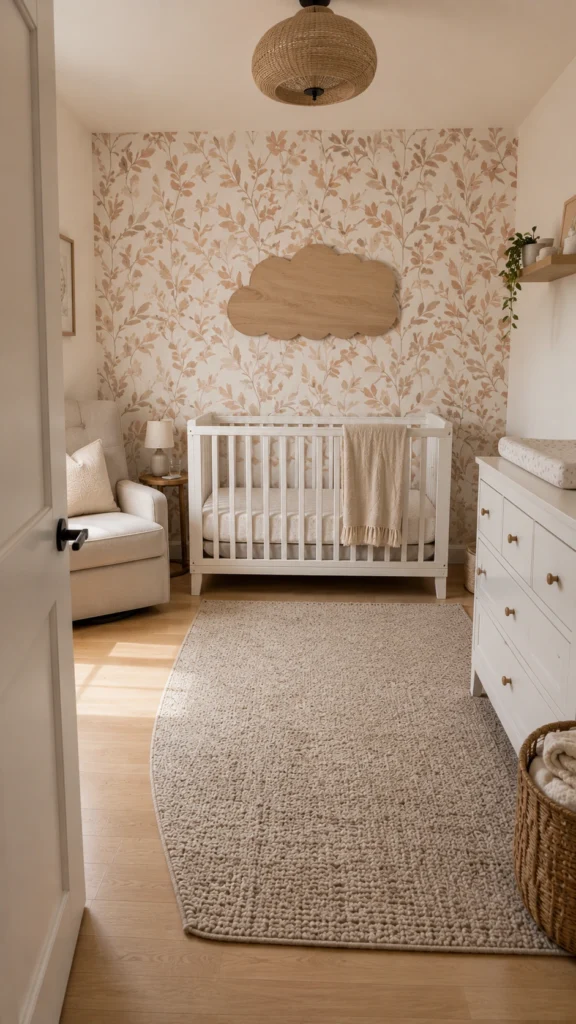
Give the eye one clear place to land, and the whole room reads as intentional even when it’s packed. In a nursery, the crib wall is the obvious choice. Dress it up with wallpaper, a paint accent, or a piece of art above it.
Anchor that focal point on the largest visible wall and keep everything else quiet around it. A single strong focus does more for a busy small room than a dozen small decorative touches ever will.
21. Embrace a Simple, Minimalist Nursery Design That Feels Peaceful
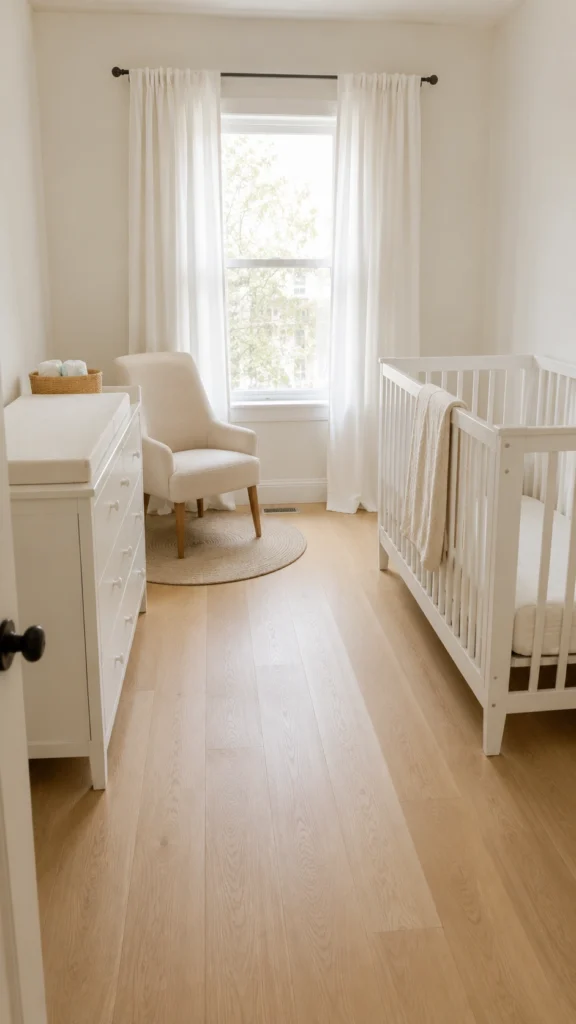
In a tiny nursery, less genuinely does work better. Fewer things to trip over at night, fewer surfaces collecting dust, fewer decisions when you’re running on no sleep.
Choose a calm palette, a handful of quality pieces, and plenty of hidden storage. Then stop before you overdo it. Restraint is worth the most when the whole room is barely bigger than the crib.
22. Pick a Compact Nursery Chair Instead of a Bulky Rocking Chair
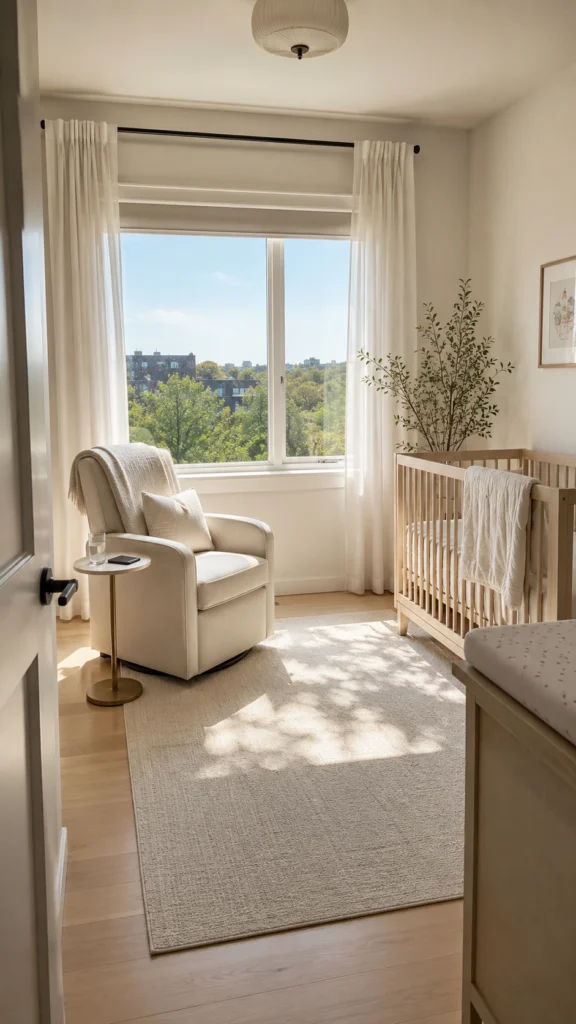
A traditional rocker is lovely, and it can eat a third of a small nursery on its own. That’s a rough trade in a room this size.
A slim upholstered chair or an armless glider gives you comfortable seating for feeds without the giant footprint, and it keeps the walkway clear. If your chair ends up taking more room than the crib, that’s a sign to size down. A wall-hugging glider or a small accent chair keeps the room usable while still giving you somewhere to sit and rock.
Recommended Blogs
- 23 Small Apartment Design Ideas
- 21 Small Apartment Bedroom Ideas
- 23 Small Apartment Storage Hacks
- 22 Small Apartment Furniture Ideas
- 22 Cozy Small Apartment Decorating Ideas
Final Thoughts
A small nursery forces you to be choosy, and that turns out to be the whole advantage. Plan the layout first, keep every piece in scale, and lean on your walls for storage, and a room the size of a closet will feel calm, bright, and ready for a baby.
If you do nothing else this week, sketch the room to scale and place the crib on paper. That one step tells you what actually fits and what doesn’t, and everything else gets easier once the crib has a home. Your baby will never know how many square feet they had. They’ll only feel whether the room is calm, and so will you.
Frequently Asked Questions
How small can a nursery actually be?
Around 40 to 50 square feet is workable if you plan it carefully. Fit a crib, a dresser with a changing pad on top, and a compact chair, then handle everything else with wall storage. Layout matters far more than raw size.
Do I really need a changing table?
No. A dresser with a securely attached changing pad on top saves space and stays useful for years after the diaper stage ends. You get storage and a changing surface in one footprint instead of buying a piece that’s useless by age two.
What’s the best way to add storage to a tiny nursery?
Build upward. Floating shelves, over-the-door organizers, under-crib bins, and closet dividers add capacity without touching the floor. Closed baskets keep the whole thing looking tidy while hiding the daily clutter.
Can two babies share a small nursery?
Yes. Line two cribs along one wall and share a single dresser, changing station, and hamper between them. Sharing the large items is what keeps the floor open and the room functional.
What colors make a small nursery feel bigger?
Light, warm neutrals like soft white, pale sage, and gentle clay reflect daylight and open the space up. Paint the trim and ceiling a similar light shade to blur the edges and lift the room.