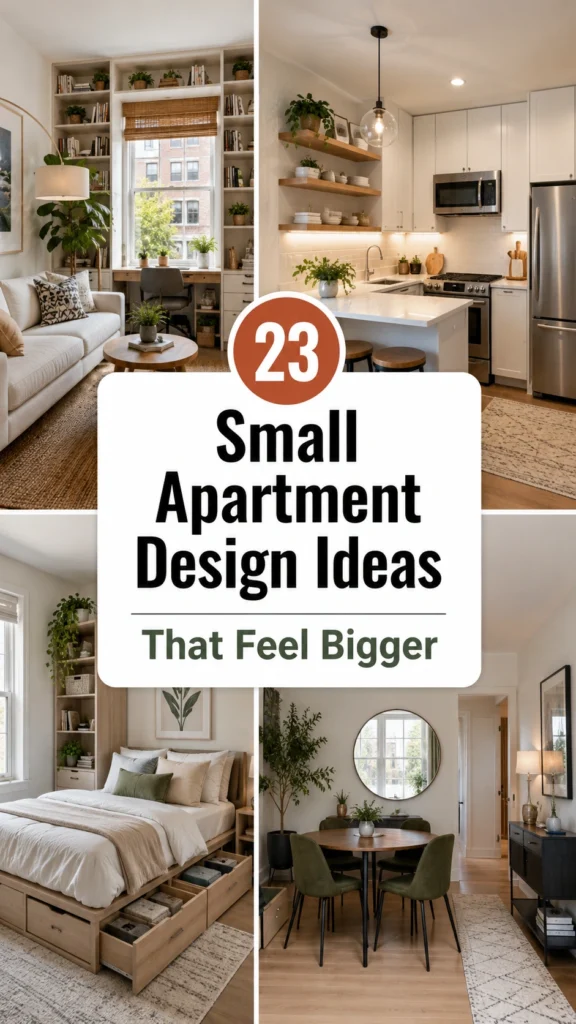

Stand in your doorway and look at your living room. If your eye stops three feet in because a sofa, a bookcase, and a laundry basket are all fighting for attention, the problem probably isn’t your lease. Most small apartments feel cramped because of arrangement, light, and color, and all three are fixable without moving a single wall.
These 23 small apartment design ideas cover mirrors that double your daylight, furniture that earns its footprint twice over, and layouts that keep your eye moving instead of stopping. You could apply two or three of them this weekend for under $100.
1. Create More Space with a Backlit Round Mirror Feature Wall
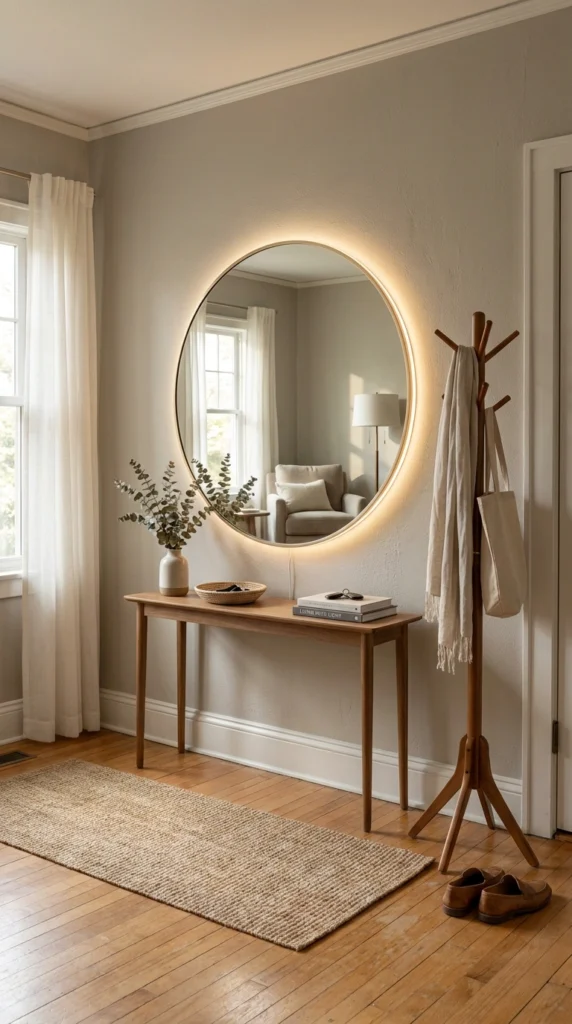
A backlit round mirror handles two jobs at once. The glass reflects light and doubles the visual depth of the room, while the soft LED glow behind it adds ambient lighting without a lamp taking up floor space. Hang it opposite your window and daylight bounces into the corner that never sees any.
Round shapes also calm down all the hard rectangles a small apartment is full of: the doorframes, the TV, the bookcase. The entryway is my favorite spot for one. The reflection greets you the second you walk in and makes the whole place feel deeper from the door.
Size matters more than people expect. A 36-inch mirror reads as a deliberate design choice. A 16-inch mirror reads as something left over from the bathroom.
2. Replace a Coffee Table with a Multifunctional Ottoman
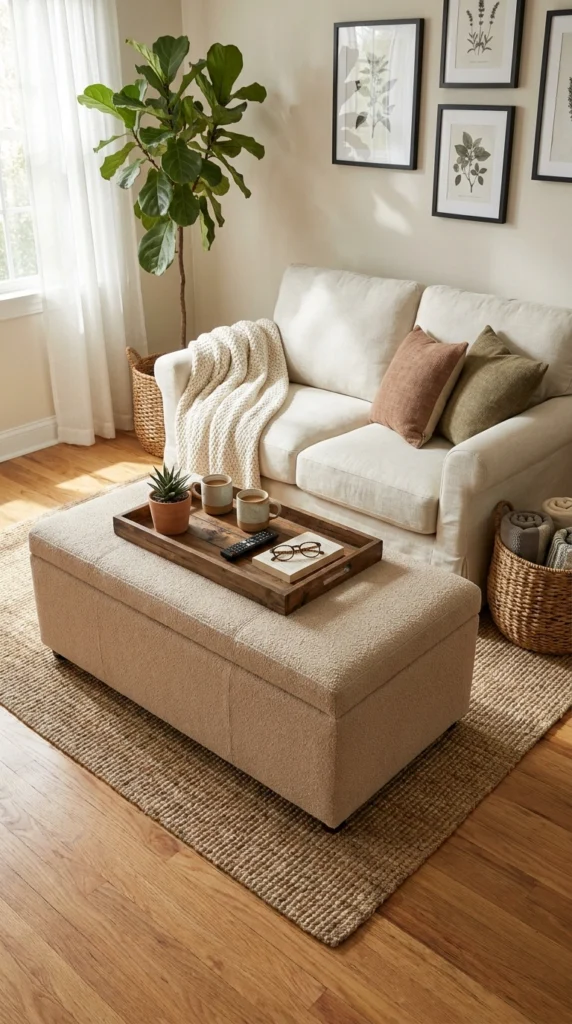
If I had to pick one furniture swap for a small living room, this is it. A storage ottoman gives you a coffee table, a footrest, extra seating, and a hidden bin for blankets in a single footprint. Four functions, one piece. In a living room under 150 square feet, that math beats almost anything else you can buy.
Set a wooden tray on top and you get a stable surface for drinks and remotes. When friends come over, the tray slides off and you have a seat for one more person.
3. Turn an Unused Corner into a Cozy Reading Nook with Vertical Plants
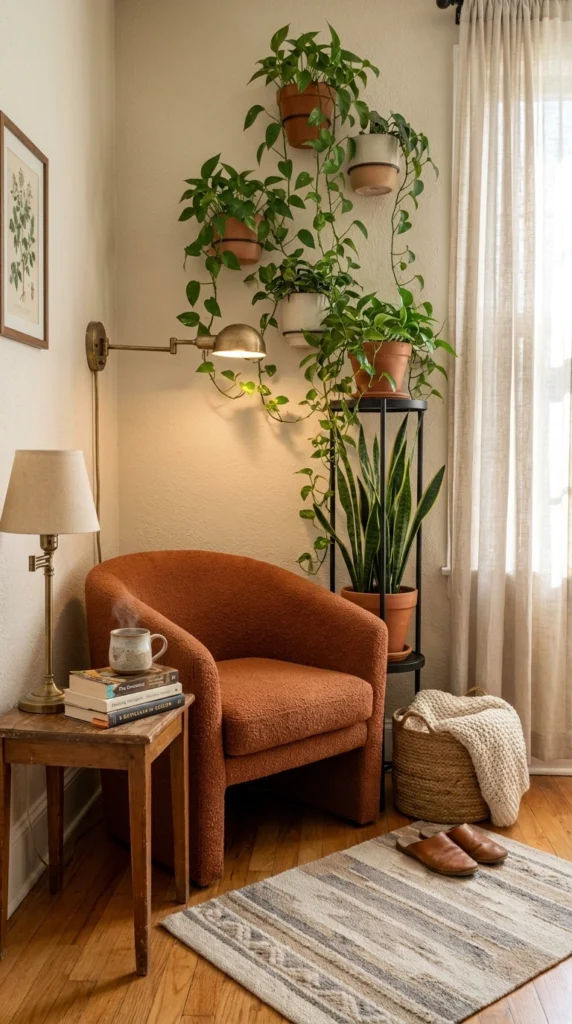
Every apartment has one dead corner, usually behind the sofa, collecting a gym bag and dust. Put it to work. A compact armchair, a wall-mounted reading light, and a tall plant stand or wall-mounted planters climbing upward turn it into a destination. The vertical greenery pulls your eye up, which makes the ceiling feel higher too.
Pothos and snake plants handle low light well, so a dim corner isn’t a dealbreaker.
One thing people get wrong here: they use a floor lamp instead of a wall-mounted light. The lamp base eats the exact floor space the nook was supposed to save.
4. Design a Calm Retreat with an Oversized Leaning Mirror and Accent Chair
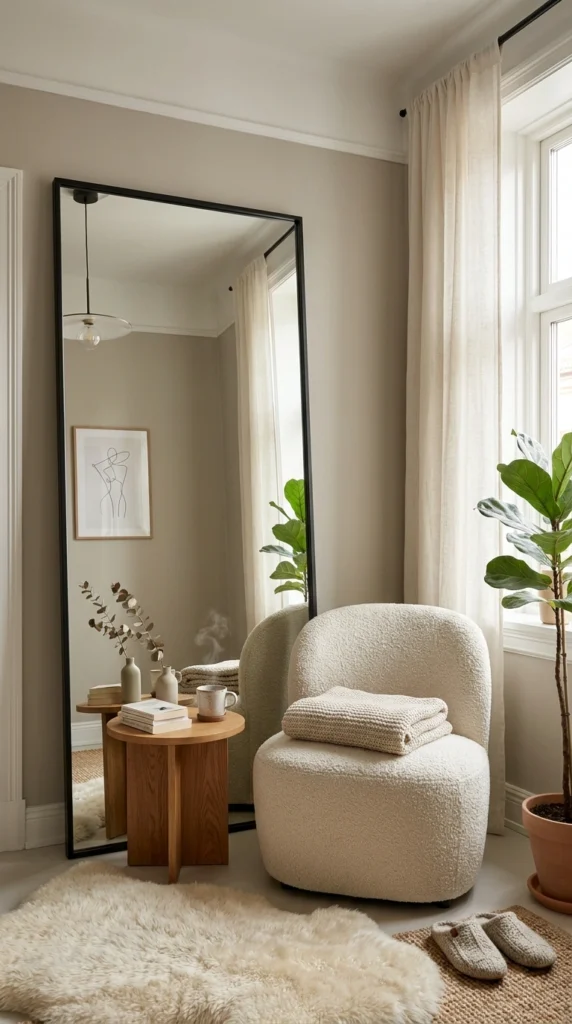
An oversized floor mirror leaned against the wall adds instant depth without a single drill hole, which your landlord and your security deposit will both appreciate. Pair it with one comfortable accent chair and a small side table and you have a quiet zone that feels curated rather than crammed.
The lean itself does real work. An angled mirror reflects both the floor and the ceiling, stretching the room in two directions. A flat wall-hung mirror only shows you whatever sits directly across from it.
Aim the reflection at a window or a light fixture. A mirror that reflects your cluttered bookshelf just gives you two cluttered bookshelves.
5. Build a Vertical Display Shelf with Stylish Storage
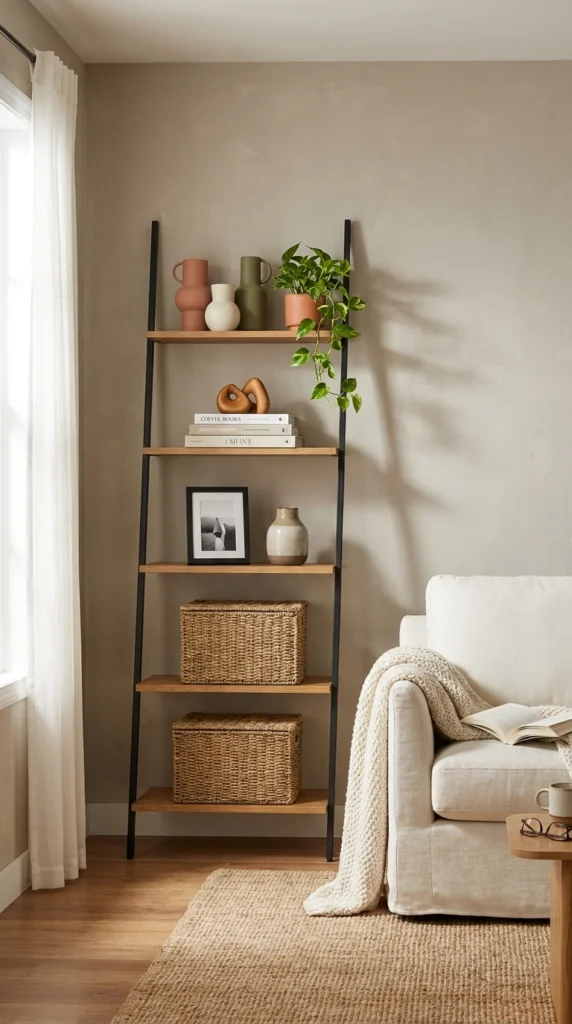
When you can’t build out, build up. A tall, narrow shelving unit uses maybe two square feet of floor while giving you five or six levels of storage. Display pieces go on the upper shelves. Woven baskets on the lower shelves hide the chargers, receipts, and other visual noise.
Restraint is the whole trick. Leave about a third of each shelf empty so the unit looks styled rather than stuffed. A packed shelf reads as clutter no matter how nice the objects are.
On a budget, a ladder shelf beats a bookcase. It costs less, weighs less, and its open back keeps the wall visible behind it, which keeps sightlines clear.
6. Install Floating Shelves Above Your Sofa for Extra Storage
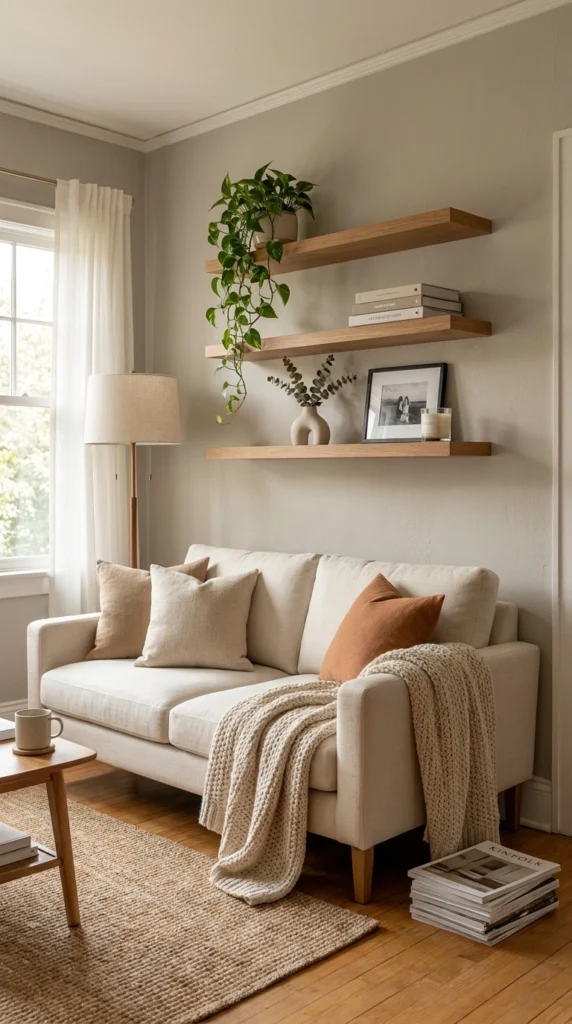
The wall above the sofa is prime real estate, and most people leave it empty or hang one lonely print there. Two or three floating shelves hold books, small plants, and framed photos without touching your floor plan at all.
Mount the lowest shelf at least 10 inches above the sofa back so nobody stands up into it, and keep heavier items directly over the wall studs.
Paint or buy the shelves in your wall color. They visually disappear, the objects look like they’re floating, and the room stays open.
7. Maximize a Narrow Studio with an Open Kitchen and Streamlined Layout
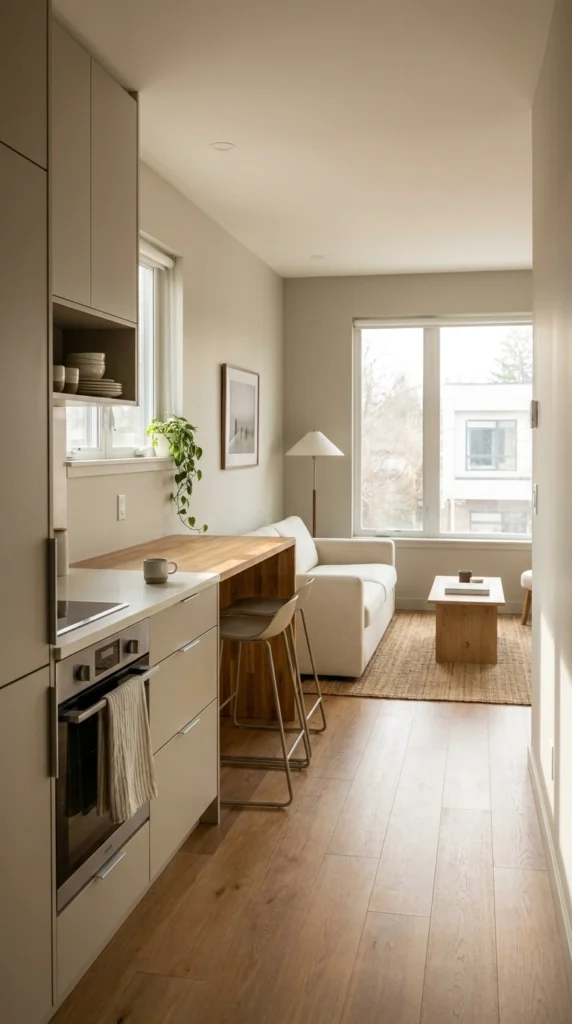
In a narrow studio, every wall and bulky divider chops the space into slivers. An open kitchen with a slim counter or peninsula keeps the sightline running from your front door to your window, and that uninterrupted view is what makes a narrow space feel long instead of tight.
Keep the kitchen palette consistent with the living area so the whole studio reads as one continuous room. In my experience, matching cabinet fronts and wall colors do more for flow than any single furniture purchase, especially in studios under 400 square feet where the kitchen runs along one wall.
8. Fit a Round Dining Table into a Small Apartment Without Crowding
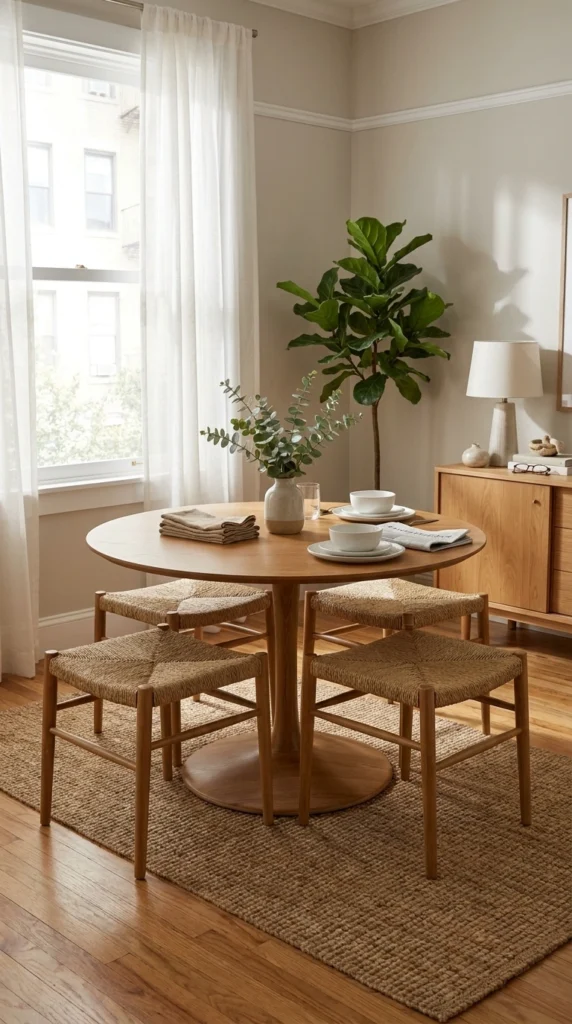
Anyone who has squeezed sideways past a rectangular table in a tight apartment knows the corners always win. A round table removes them entirely, improves traffic flow, and seats the same number of people in less space. A 36-inch round comfortably handles four and tucks into a corner a rectangle never could.
Go with a pedestal base rather than four legs. Edge legs block chairs and knees, while a center pedestal lets seats slide fully underneath between meals. Skip chairs with arms for the same reason. Armless chairs disappear under the table and give you your walking room back.
9. Decorate with Warm Natural Wood and Neutral Textures
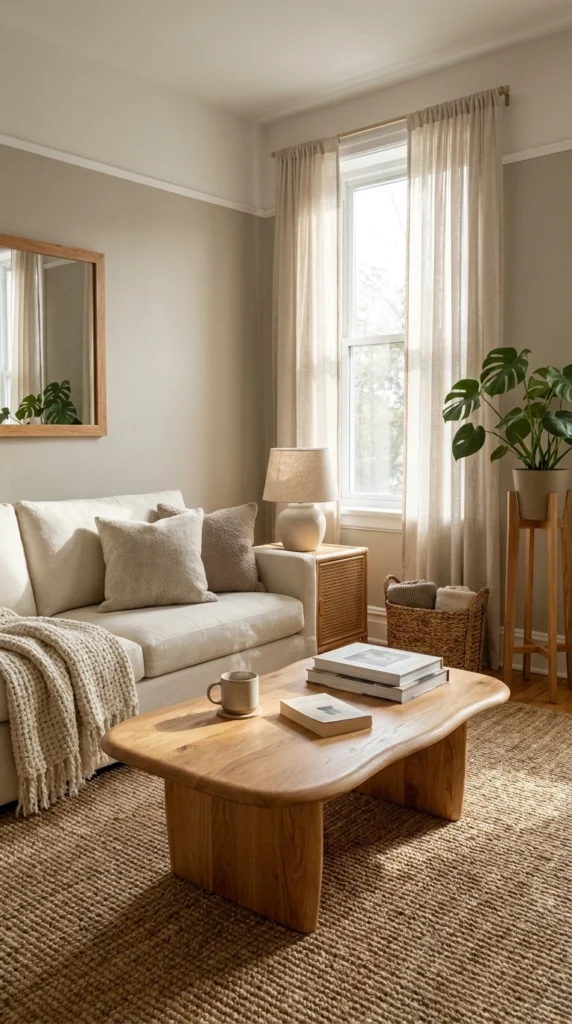
Small spaces painted in cool grays turn sterile fast. Warm oak, walnut, or rattan mixed with linen, wool, and boucle makes a compact apartment feel inviting without adding visual noise, and neutrals let your eye travel across the room instead of stopping at every loud color.
Layering carries this look. A jute rug under a linen sofa next to an oak side table gives you three textures in one sightline, and texture adds interest where color would add clutter.
Cap yourself at two wood tones. Three or more starts looking accidental, like the room was furnished from three different apartments.
10. Arrange Living Room Furniture to Make a Small Apartment Feel Larger
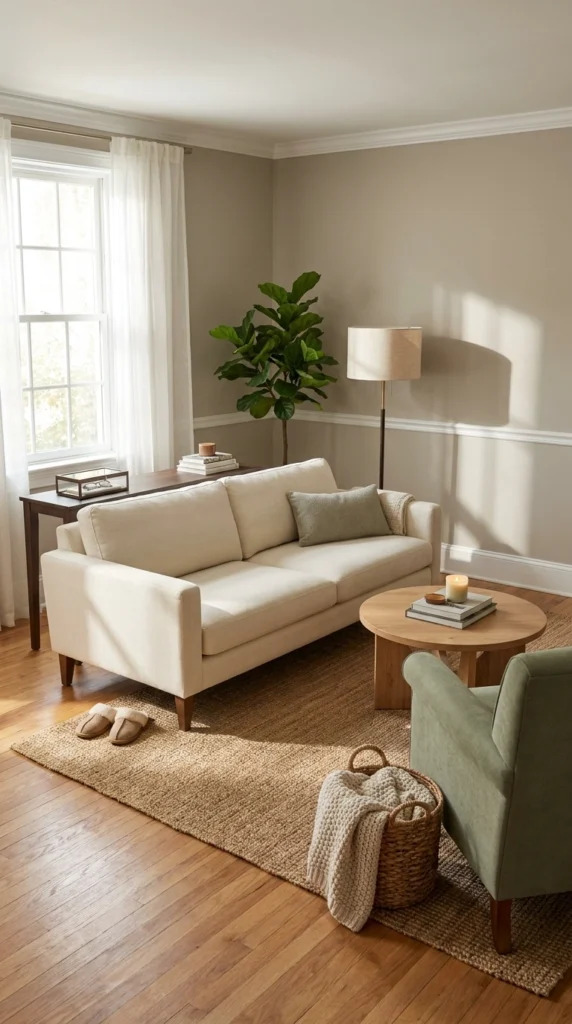
Placement changes how big a room feels more than the furniture itself. Pull your sofa a few inches off the wall, float a slim console behind it, and the room suddenly has depth. Pushing everything against the walls actually draws attention to how small the middle of the room is.
Leave 30 inches for walkways so paths never pinch. Keep everything square to the walls, since diagonal furniture wastes corner space you can’t afford to lose. Face your seating toward the window rather than away from your best light. And use one large rug instead of two small ones so the whole zone reads as a single area.
11. Design a Floating TV Wall with Open Shelving
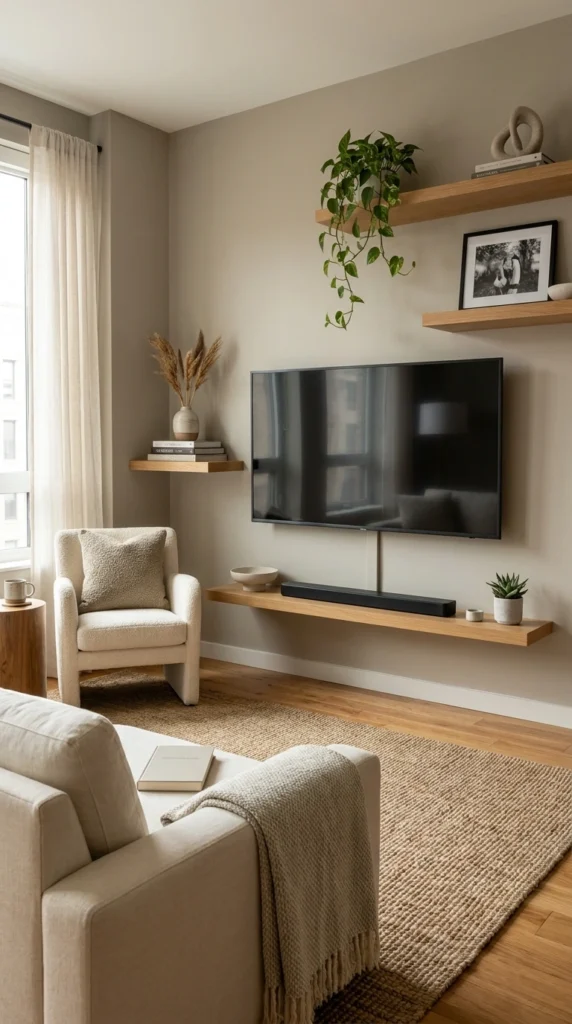
A wall-mounted TV with floating shelves around it removes the media console entirely, and that reclaimed floor space lightens the whole room. Run a cable raceway painted to match your wall and the setup looks built-in rather than bolted on.
Keep the shelving asymmetrical but balanced. One long shelf below the TV with two staggered shelves beside it looks designed. A perfect grid around the screen looks like a furniture showroom.
If your rental forbids wall mounting, a slim ladder-style media stand keeps the open, leggy look with zero drilling.
12. Use Floor-to-Ceiling Cabinets to Hide Storage
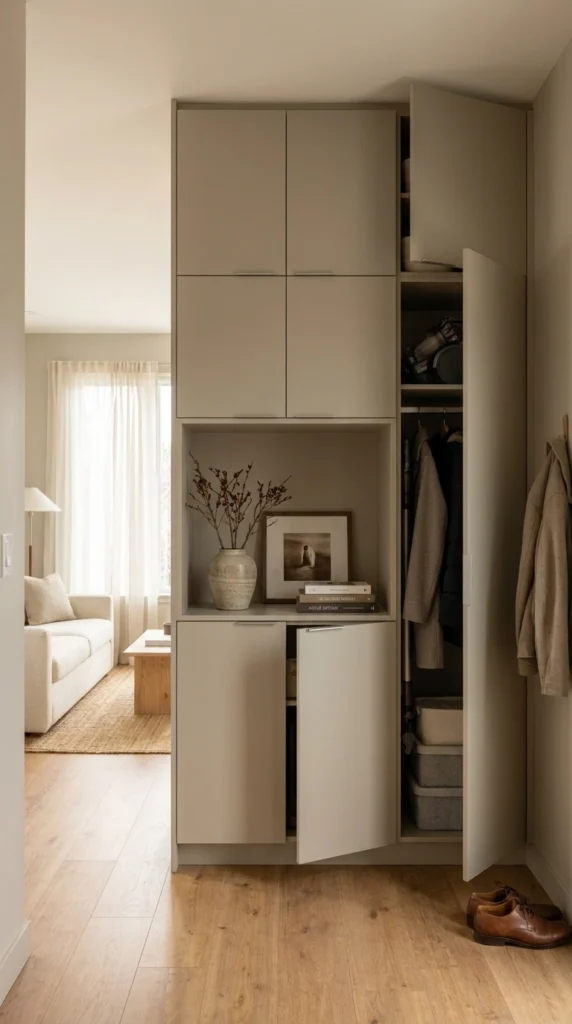
This one sounds backwards, but bigger cabinets can make a room feel bigger. Floor-to-ceiling built-ins painted the same color as your walls read as wall, not furniture, while swallowing your vacuum, winter coats, and the air fryer you use twice a year. One tall cabinet wall often replaces a dresser, a shoe rack, and two loose storage bins, so the rest of the room stays clear.
Flat, handle-free fronts make or break the effect. Every knob and visible seam reminds your brain that a large object is standing in the room. Push-to-open doors keep the surface clean. Entryways and bedroom walls, where clutter piles up fastest, benefit most.
13. Personalize a One-Bedroom Apartment Without Visual Clutter
You can have personality without chaos. Concentration is the trick: group your personal items into a few deliberate moments instead of scattering them everywhere. One gallery wall beats fifteen frames spread across every surface. One shelf of travel souvenirs beats trinkets on every windowsill.
Editing is the real skill, and it’s a skill most of us avoid. Rotate pieces seasonally so everything on display actually gets noticed, and store the rest. When styling surfaces, groups of three objects at varying heights work reliably. Stop there.
14. Choose Sustainable Materials for a Warm, Timeless Apartment
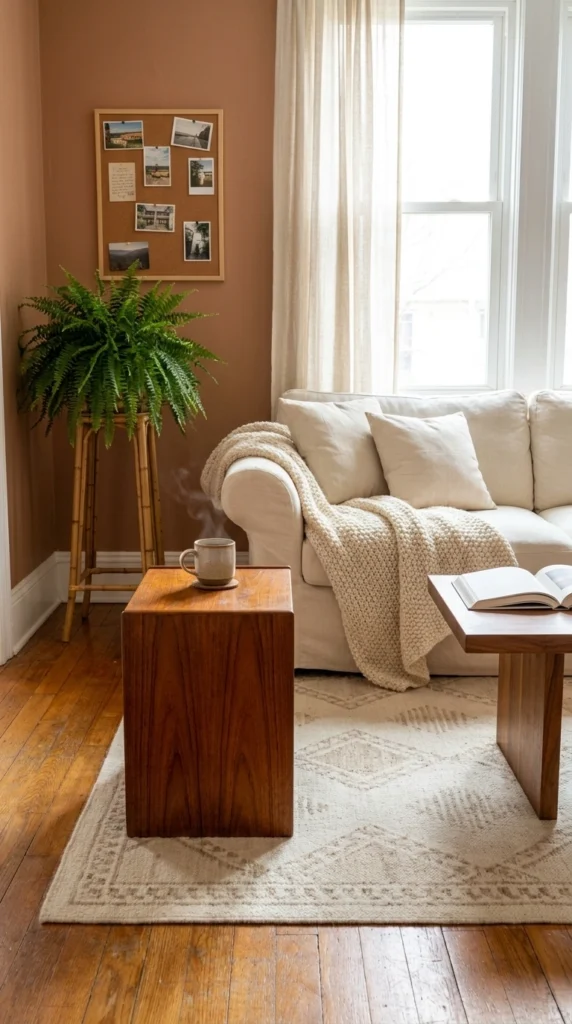
Solid wood, wool, cork, bamboo, and stone age gracefully in a way particleboard never will, and in a small apartment you sit close to every surface, so quality shows. Secondhand solid-wood pieces on Facebook Marketplace often cost less than new flat-pack furniture and outlast it by decades. People who make the switch usually notice the difference within a year, right around the time a flat-pack shelf starts to sag.
Sustainable materials also tend toward calm, natural palettes, which suit small spaces. A cork board, a wool throw, and a vintage teak side table warm up a room without shouting. If money is tight, refinish one thrifted piece instead of buying new. Sandpaper and Danish oil run about $25 total.
15. Use Symmetrical Furniture Placement to Balance a Small Living Room
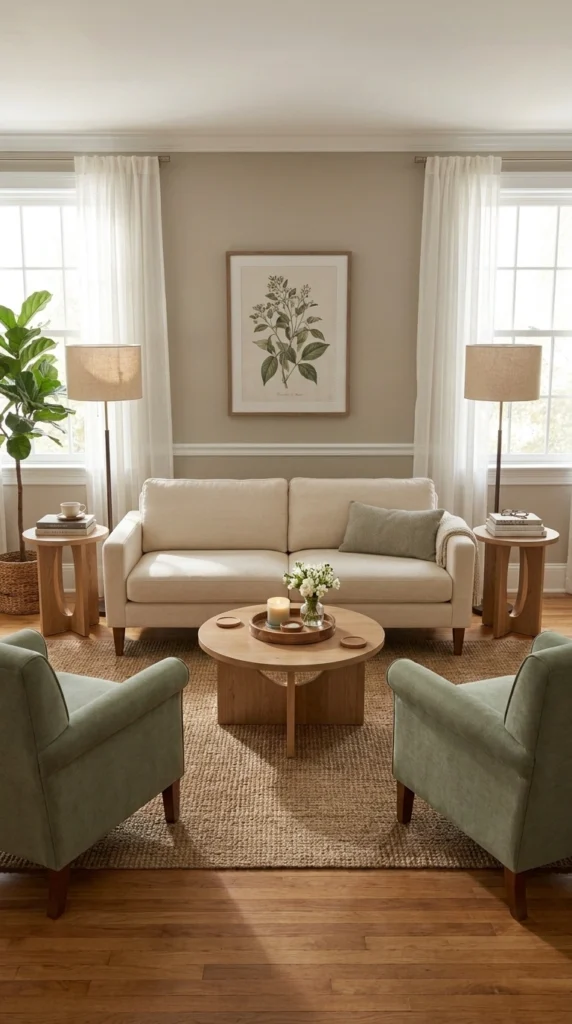
Symmetry calms a room down. Two matching lamps flanking your sofa, or a pair of identical chairs facing it, gives your eye a predictable rhythm, and predictable reads as spacious. Asymmetry in a small room often reads as clutter even when everything is perfectly tidy.
You don’t need to mirror the whole space, though. Anchor the room with one symmetrical moment, like matched sconces or paired side tables, and let everything else stay relaxed. Full symmetry in a tiny room feels stiff, closer to a hotel lobby than a home.
16. Separate Studio Sleeping and Living Zones Without Walls
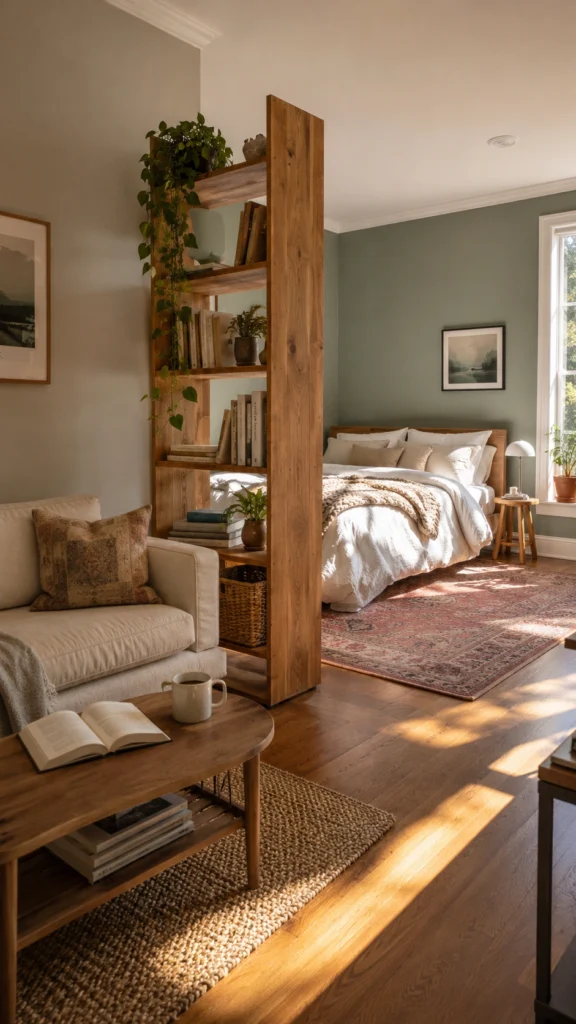
Walls eat space. Zones don’t. Define your sleeping area with a change your eye registers instantly: a large rug under the bed, a different wall color behind the headboard, or an open bookshelf standing perpendicular to the wall. Each one signals “new room” without blocking any light.
Open shelving works especially well because it stores things while letting light pass through. Curtains on a ceiling track are the budget option, and you can pull them shut when guests stay over.
If your bed sits in full view of the front door, fix that zone first. It’s the first thing anyone notices when they walk in.
17. Paint Your Walls and Trim the Same Light Color
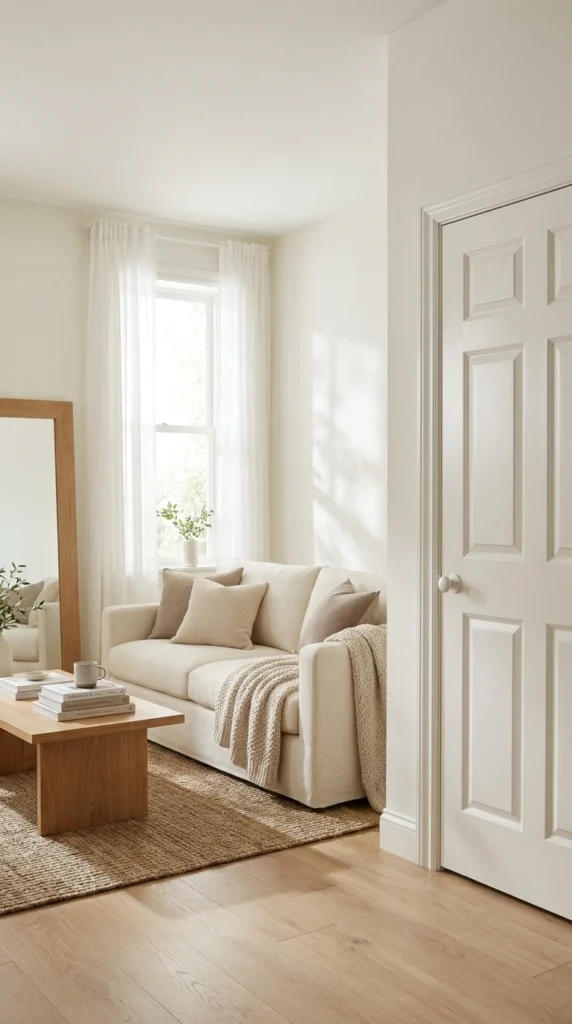
Contrasting trim draws crisp lines around every wall, and those lines tell your eye exactly where the room ends. Painting walls, trim, and even doors the same soft white or warm greige erases the boundaries, so the room becomes harder to measure at a glance. It feels noticeably larger as a result.
Designers call this color drenching, and it costs nothing extra since you’re painting anyway. Use the same color in three finishes, matte on walls, satin on trim, semi-gloss on doors, and the room stays subtle without going flat.
18. Swap Heavy Curtains for Sheer Floor-to-Ceiling Panels
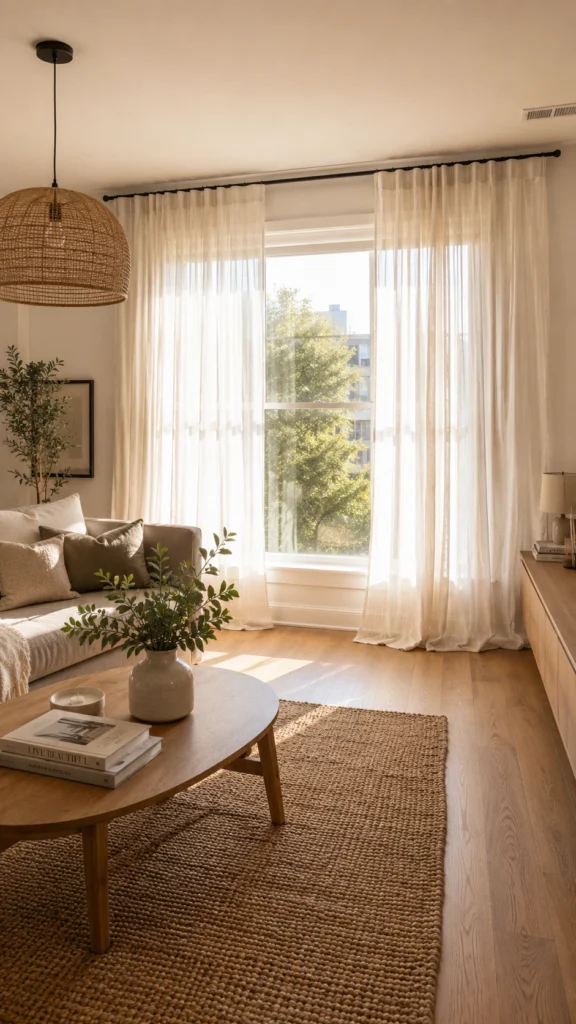
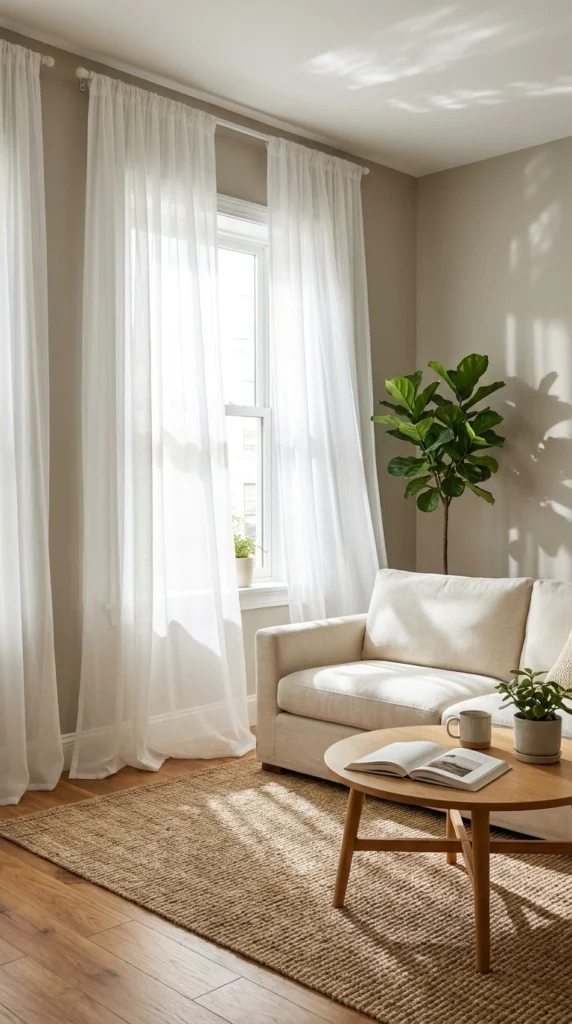
Thick, dark curtains shrink windows and block the daylight a small apartment badly needs. Sheer panels hung from just below the ceiling let light flood through while still softening the window. Mount the rod about 6 inches above the frame and 8 inches past each side, and both the window and the ceiling look bigger.
Need darkness for sleeping? Layer a blackout roller shade inside the frame behind the sheers. Airy by day, dark by night.
Go white or ivory rather than gray. Lighter fabrics glow when sunlight hits them, and that glow carries soft light deeper into the room.
19. Choose Furniture with Exposed Legs
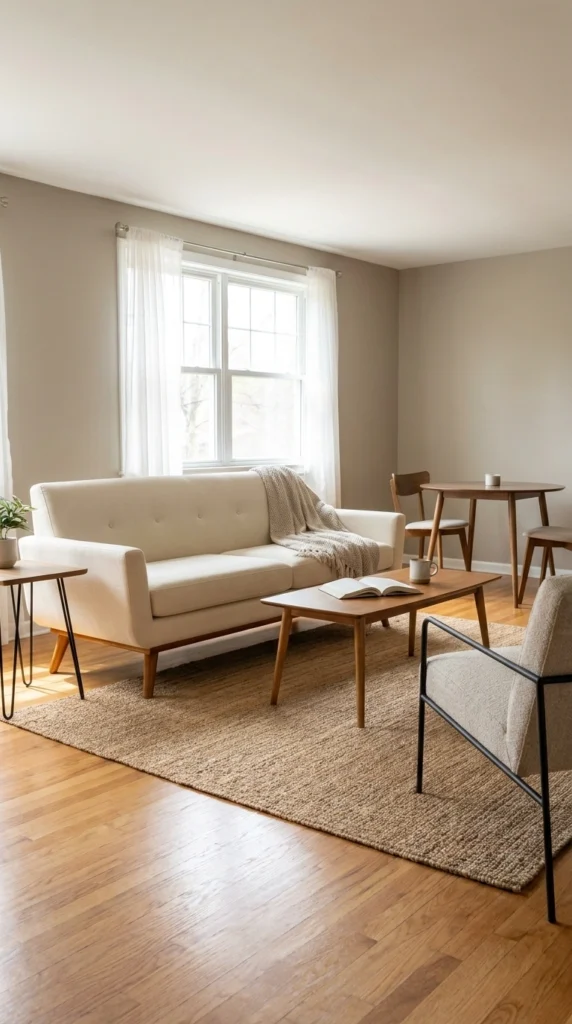
Sofas and beds that sit flush on the floor look heavy and eat visual space. Pieces raised on slim wooden or metal legs let light pass underneath, and the visible floor beneath them makes the whole room read as larger. Mid-century styles do this well, which partly explains why they dominate city apartments.
You only need to apply this rule to your three biggest pieces: sofa, bed, and dining table. Get those right and the smaller items barely matter.
One warning: the temptation to stuff storage bins under a leggy sofa is strong, and giving in cancels the entire effect. Visible clutter under furniture reads worse than a solid base would.
20. Use One Large Low-Pile Rug Instead of Several Small Ones
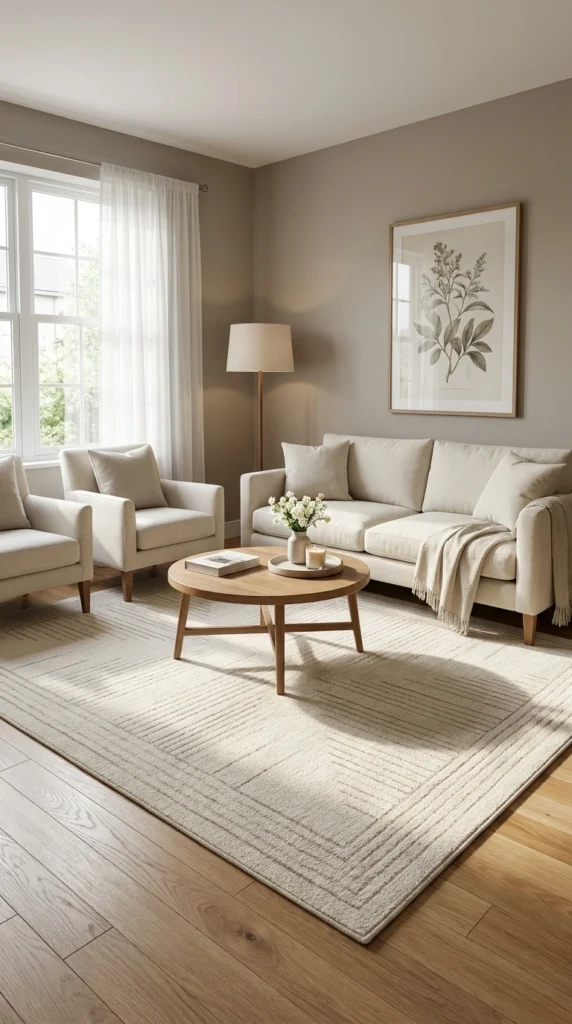
Small rugs chop your floor into patches, and every patch fragments the room a little more. One large rug that fits under the front legs of all your seating pulls the furniture into a single unified zone and visually stretches the floor. Low pile keeps the surface smooth and doors swinging freely.
When in doubt, size up. An 8×10 in a small living room almost always beats a 5×7, because a rug floating in the middle of the floor looks like a bath mat that wandered off.
Buy the rug early, too. Most people leave it for last, then spend months hunting for one that matches everything else. The rug sets the room’s footprint and palette, so let it lead.
21. Add a Fold-Down Wall Desk for a Disappearing Workspace
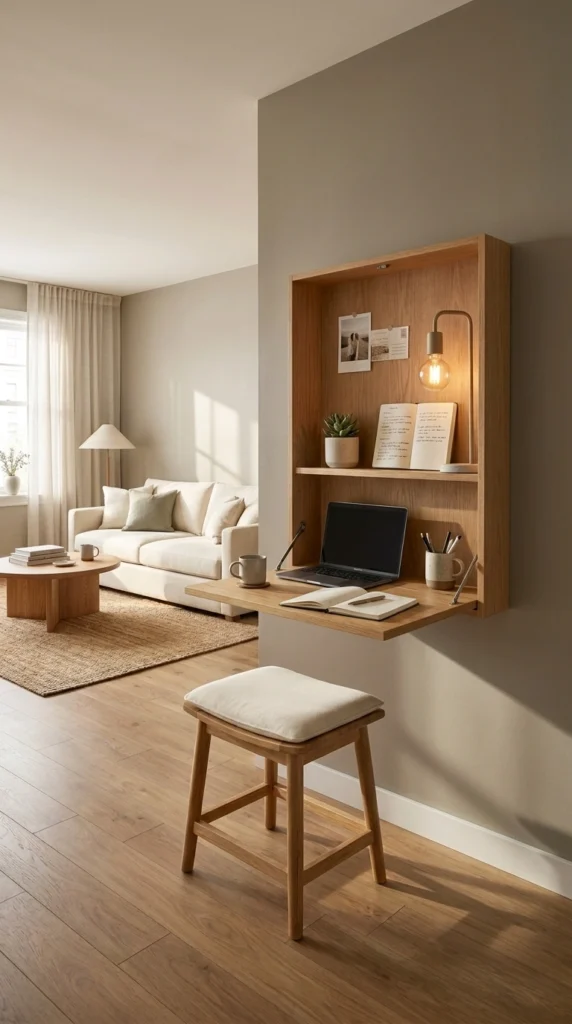
Working from home in a small apartment usually means the dining table becomes a permanent office, and few things shrink a space like yesterday’s spreadsheets staring at you during dinner. A fold-down wall desk gives you a full workstation that vanishes into a slim wall cabinet the moment you close your laptop.
Most models are only 4 to 6 inches deep when closed, and many include interior shelves for chargers and notebooks. Pair it with a stool that tucks completely underneath, and remote work stops claiming your whole apartment.
22. Light Every Corner with Layered Wall Sconces
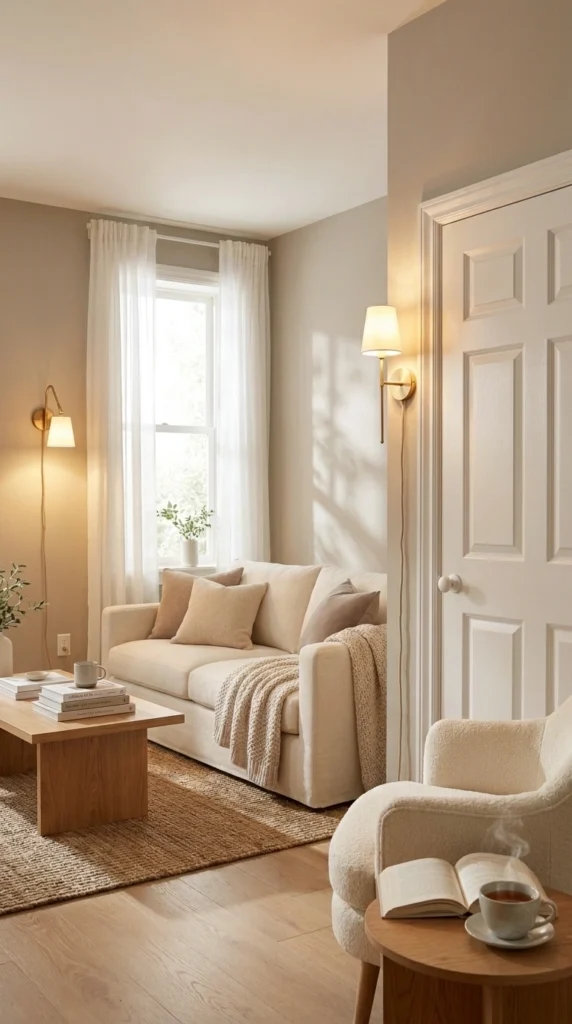
One ceiling fixture leaves your corners in shadow, and shadowed corners visually shrink a room. Plug-in wall sconces fix this without an electrician. Place one in the reading corner, one by the bed, and one near the entry, and the room gains depth because your eye can finally see all of it.
Warm bulbs around 2700K keep the light cozy instead of clinical, and dimmable versions shift from bright mornings to relaxed evenings. Plug-in sconces with fabric cord covers run $30 to $60 and need zero wiring, which makes this one of the cheapest upgrades on this list relative to its impact.
23. Pick Glass or Acrylic Pieces That Take Up Zero Visual Space
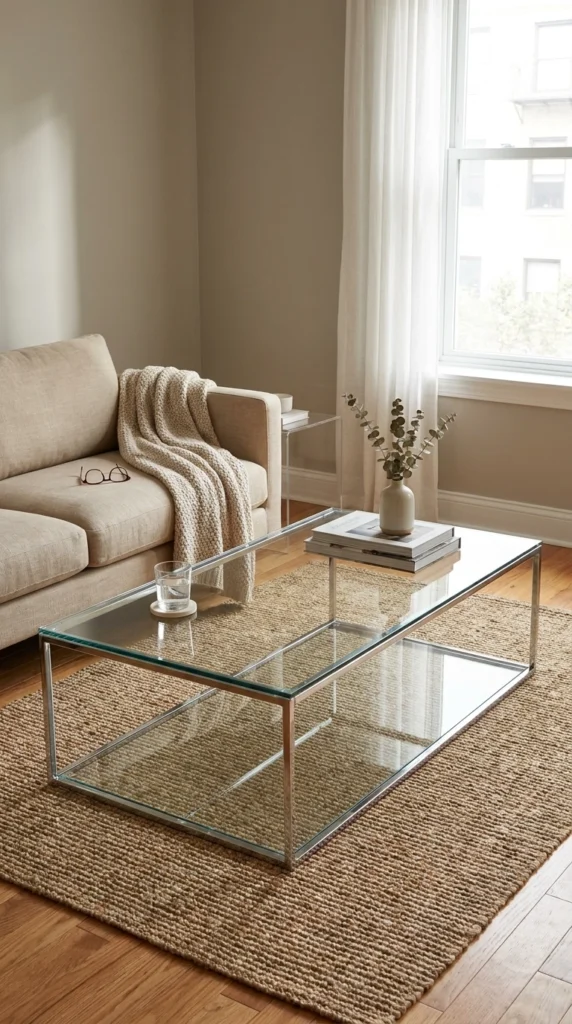
A glass coffee table or acrylic console does its job while barely registering to the eye. In a small apartment, visual weight matters as much as physical size, and you can see straight through these pieces to the rug and floor beyond, so the room keeps its open sightlines even with the furniture in place.
Save the transparency for secondary furniture, though. Your sofa and bed should feel solid and grounding. Side tables, desks, and consoles can go clear. One or two transparent pieces per room is plenty; an apartment full of acrylic starts feeling like a furniture store display case.
Frequently Asked Questions
What colors make a small apartment look bigger?
Soft whites, warm greige, and pale earth tones reflect the most light and keep sightlines smooth. Paint walls and trim the same color for the strongest effect. If you want depth, bring darker tones in through textiles and decor rather than walls. Swapping a navy throw pillow takes seconds; repainting a navy accent wall takes a weekend.
How do I make a studio apartment feel like separate rooms?
Skip walls and use visual zoning. A large rug under the seating area, an open bookshelf beside the bed, or a curtain on a ceiling track each signals a separate zone while letting light travel across the whole space. Keep one consistent wall color throughout so the studio still reads as one open room.
What furniture should I avoid in a small apartment?
Skirted sofas, bulky sectionals with chaise arms, rectangular dining tables with corner legs, and anything oversized that only does one job. These pieces block sightlines, pinch walkways, and hide the floor. Exposed legs, rounded edges, and multifunctional pieces like storage ottomans serve you better.
How much does it cost to make a small apartment feel bigger?
You can start free: rearrange the furniture, pull the sofa off the wall, clear your surfaces. For under $200, add a large leaning mirror, sheer curtains hung high, and two plug-in sconces. Bigger moves like floor-to-ceiling cabinets or a fold-down desk run $300 to $1,500, and renters can skip those entirely.
Final Thoughts
If you strip these 23 small apartment design ideas down to their common thread, you get three words: light, sightlines, multifunction. Bounce more daylight around with mirrors and sheers. Keep your eye moving with leggy furniture and unified color. Make every piece do at least two jobs.
The single highest-impact move costs nothing: pull your sofa off the wall tonight and clear one cluttered surface. Once you see how much that changes the room, the mirror, the curtains, and the rest will follow on their own.
The square footage on your lease is fixed. How big the place feels is entirely up for negotiation.