
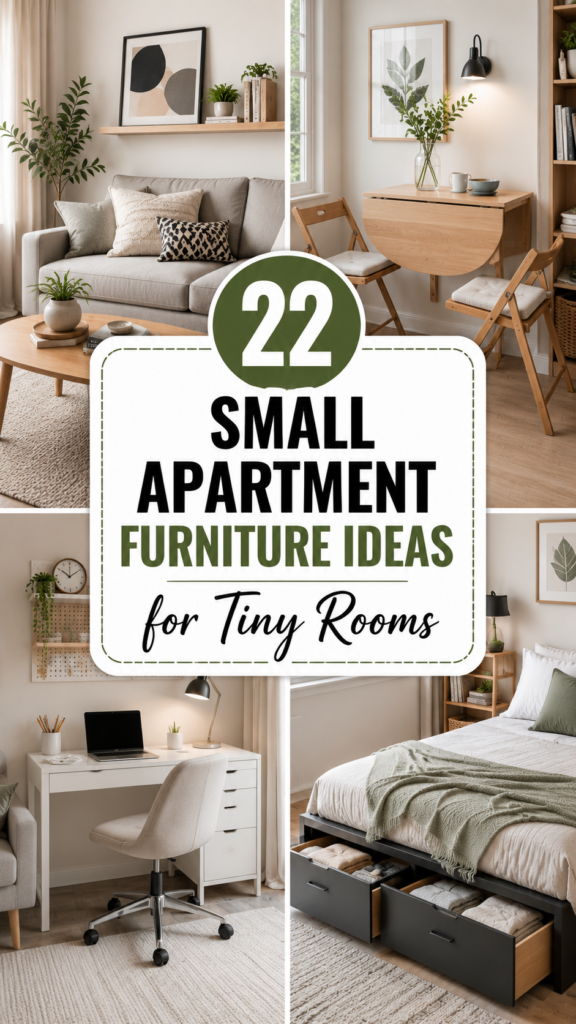

Four hundred square feet sounds manageable until you try to fit an actual life into it. The sofa claims one corner, the bed claims another, and the only open floor left is the strip you use to reach the fridge. Most people blame the apartment. In my experience, the furniture deserves more of the blame. A sofa that only seats people, a bed that only sleeps you, and a coffee table that only holds coffee waste space you can’t afford to give up.
The 22 small apartment furniture ideas below cover every room you have: living room, bedroom, entryway, bathroom, even the balcony you keep ignoring. Each one folds away, handles more than one job, or makes the room read larger than it measures. You don’t need all of them. Two or three well-chosen pieces change how a small apartment feels within a week.
1. C-Shaped Side Table That Slides Under the Sofa
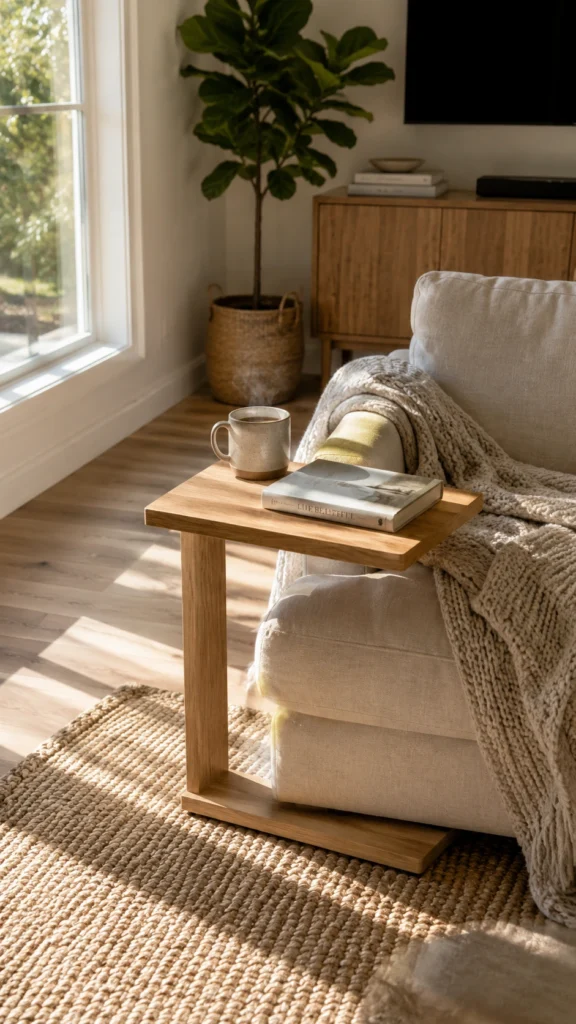
If you eat dinner or answer emails from the couch most nights, this is the cheapest quality-of-life upgrade on this list. A C-shaped side table has a flat base that slides under your sofa, so the tabletop sits directly over your lap. No hunching over a coffee table, no plate balanced on a cushion.
The reason it works in a tiny room is simple: it borrows space your sofa already occupies, so it adds nothing to the room’s footprint. Look for one at least 24 inches tall so it clears most armrests and cushions, and check your sofa’s clearance before you order. Couches that sit flush to the floor leave nowhere for the base to slide, and that mistake produces a lot of returns.
2. Modular Sectional With Movable Pieces
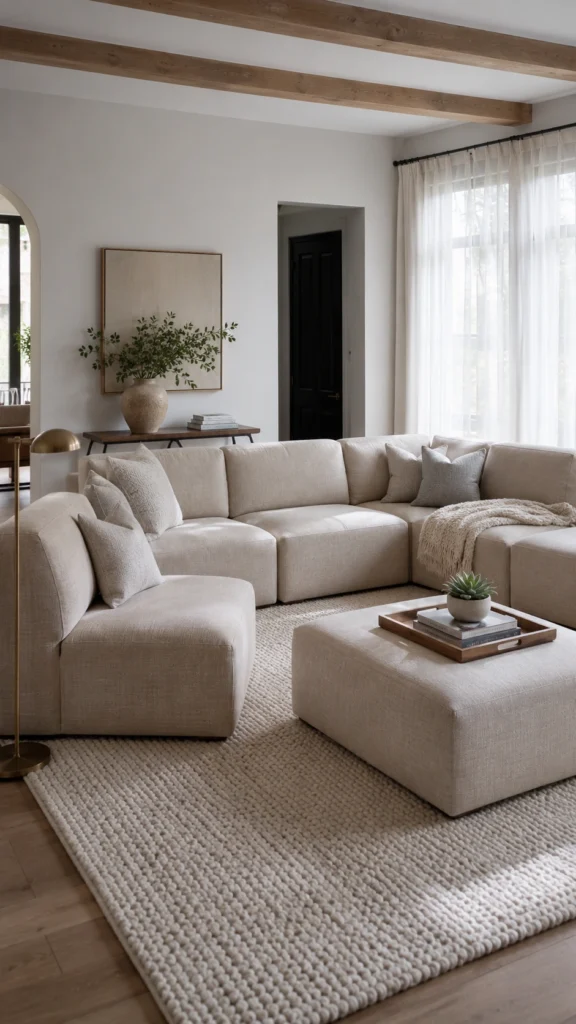
A fixed sectional locks you into one layout until you sell it. A modular one breaks into separate armless chairs, corner units, and ottomans, so you can run an L-shape for movie nights, split it into two facing loveseats when friends stay over, or pull one seat off to the window as a reading chair. For renters who move roughly every year, that flexibility matters more than any fabric swatch.
One detail worth paying extra for: removable, washable covers. In a small space, every spill lands on the same sofa, and spot-cleaning the same cushion for the fourth time gets old.
3. Extendable Bookshelf That Grows With Your Collection
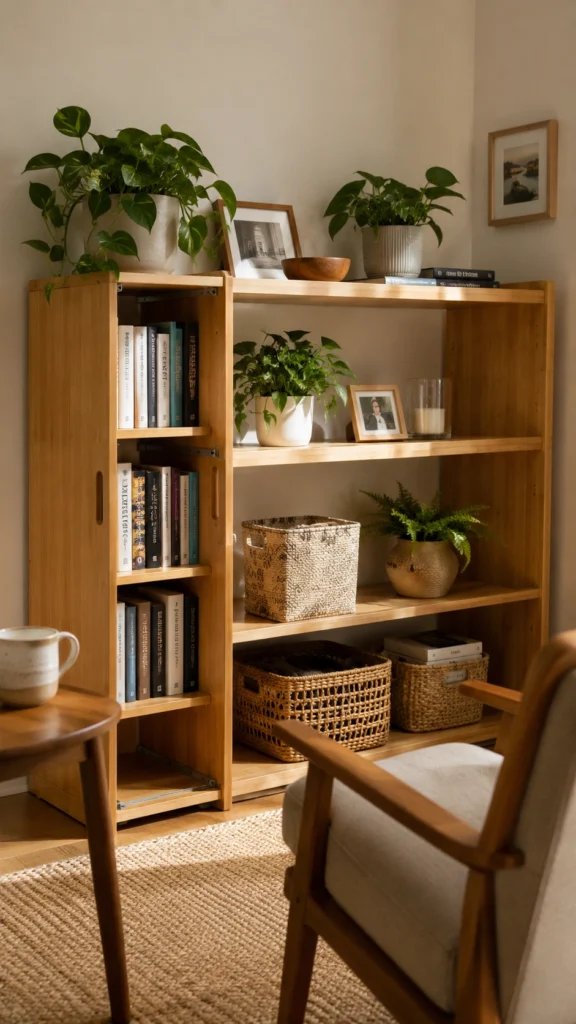
Why buy storage for books you don’t own yet? A fixed six-foot bookcase sits half empty for its first year while blocking wall space the entire time. An extendable bookshelf solves that with a sliding frame: start it at 24 inches in a tight corner, then widen it toward 40 as your shelves fill.
Renters get a second benefit. The whole thing collapses small for the moving truck, which you’ll appreciate on the third flight of stairs.
4. Flip-Top Entry Bench With Shoe Compartments
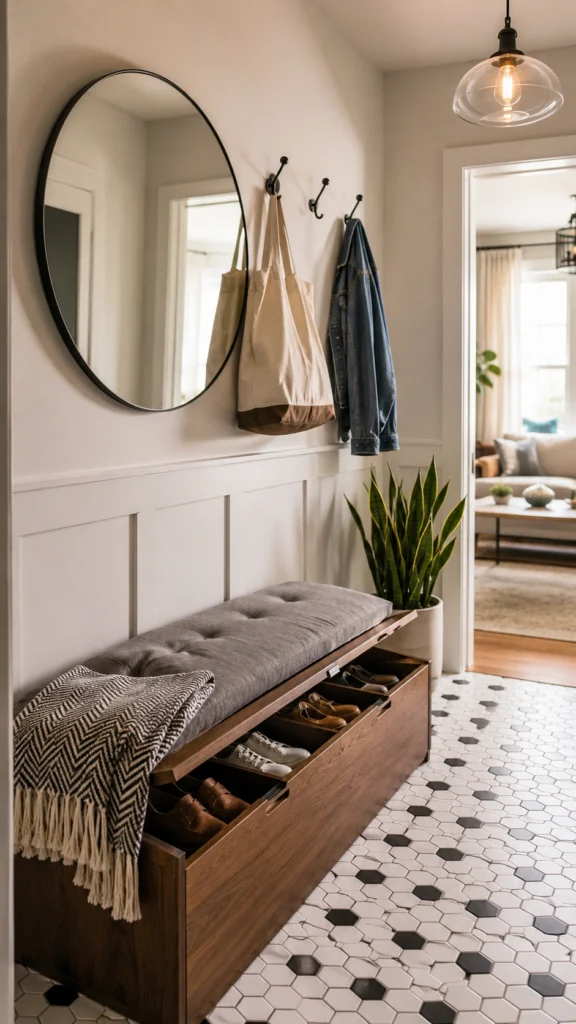
Picture your entryway at 7:55 on a workday morning. If that image includes someone digging through a pile for a missing left sneaker, this bench earns its spot first. You get a seat for pulling shoes on, plus a lid that flips open to reveal divided compartments, one slot per person for everyday pairs.
The dividers do more work than the lid. A single open bin becomes a shoe pit within a week, while separate compartments keep pairs together without anyone trying. Add a slim cushion on top and the bench doubles as extra seating when guests show up.
5. Modular Shelving System You Can Reconfigure
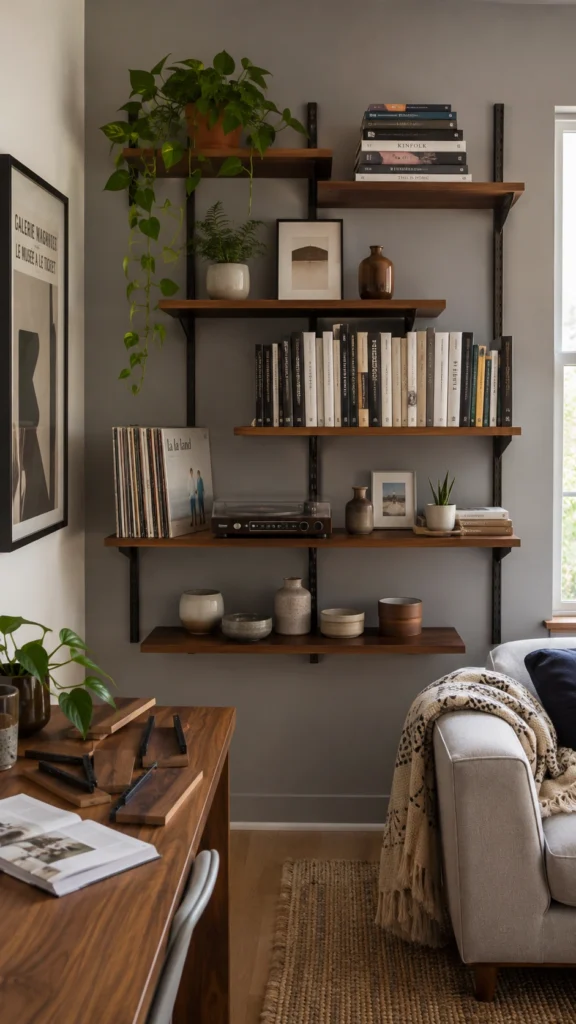
Fixed wall units force your belongings to fit their layout. Modular shelving flips that: standardized cubes, panels, or track-mounted shelves rearrange whenever your needs change. This year the unit holds books and a printer. Next year, half of it becomes a bar section and a plant shelf. Track-and-bracket systems even let you change shelf heights in minutes without new holes in the wall, which your landlord will appreciate as much as you do.
On a tight budget, stackable wooden crates do most of the same job. They run about $15 each at craft stores and rearrange endlessly.
6. Coffee Table With a Reversible Serving-Tray Top
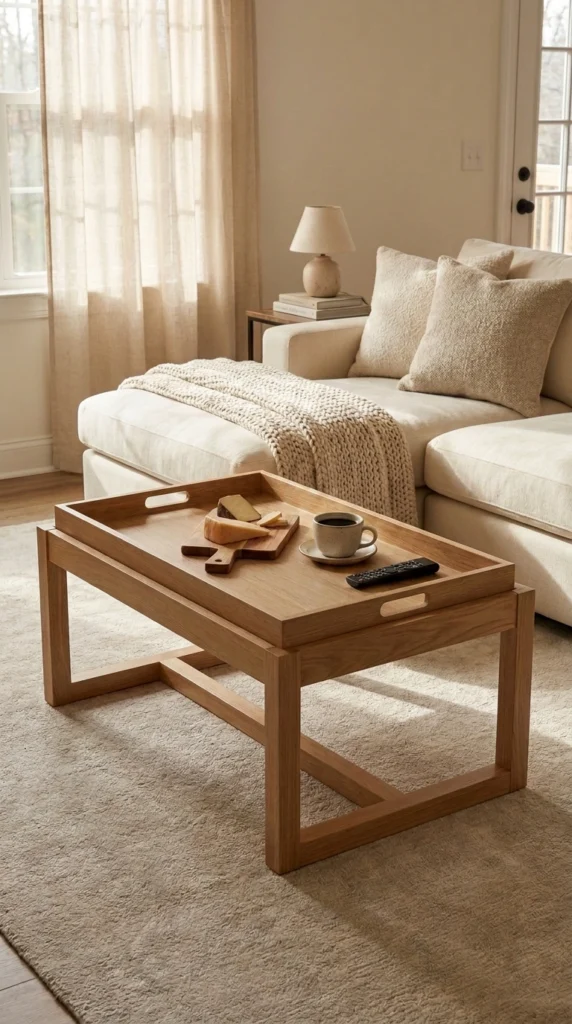
Flip the top over and it becomes a rimmed serving tray you can carry to the sofa, the balcony, or bed. Some versions hide a storage well under the lid as well.
This solves two problems that usually travel together in small apartments: you have no room to store a separate serving tray, and you have no dining table for snacks anyway. If you eat 90% of your meals on the couch, and in 400 square feet most people do, one piece covers both jobs.
7. Entryway Mirror Cabinet With Hidden Shelving
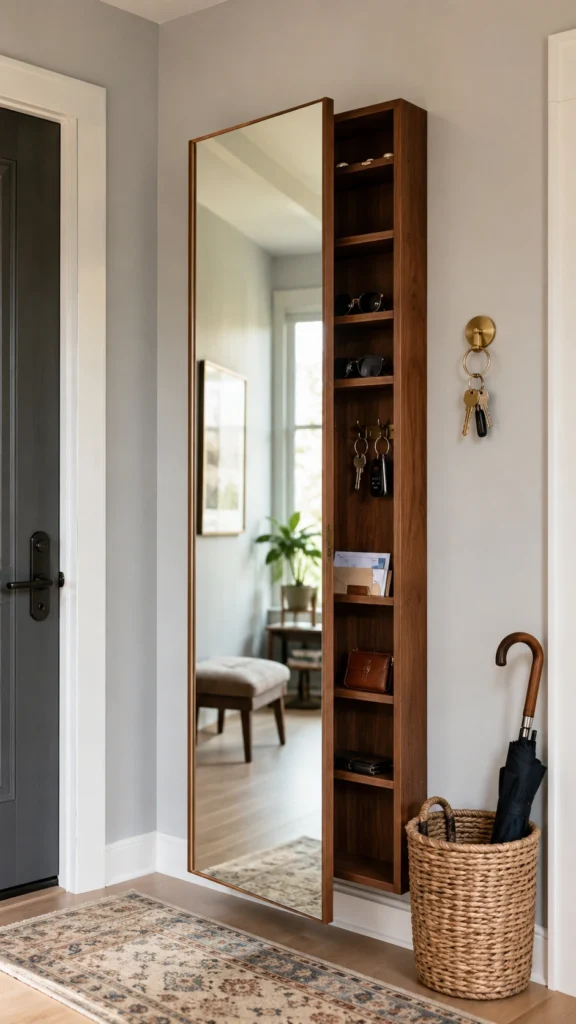
From the front, it reads as a full-length mirror by your door. Open it and you find slim shelves for keys, sunglasses, mail, and the pocket clutter that otherwise settles on your kitchen counter.
The mirror does its own quiet work too. Reflective surfaces near the entry bounce light and make the space read larger, which helps when your “entryway” is really the first three feet of the living room. Mount it so the mirror’s center sits at eye level, roughly 57 to 60 inches from the floor, and you get a last outfit check every time you leave.
8. Floating Corner Cabinet for Bathroom Essentials
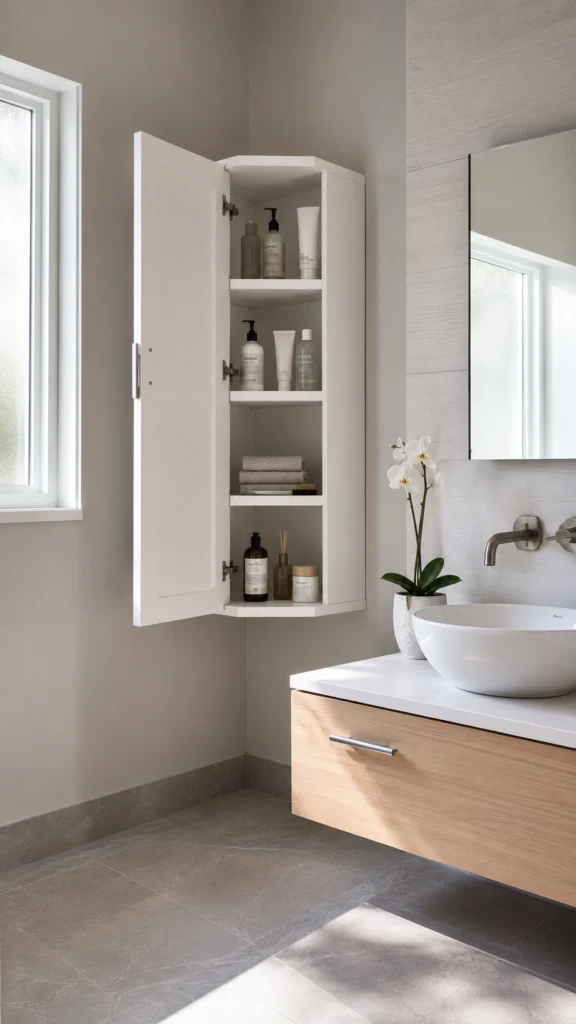
Bathroom corners sit empty in almost every apartment. A floating corner cabinet claims that unused triangle for toilet paper, skincare, and cleaning supplies, all behind a closed door.
Floating beats floor-standing here for one practical reason: you can still mop under it. Floor cabinets in small bathrooms collect grime around their bases, and cleaning around them never stops being annoying. One warning from people who learned the hard way: check the shower door swing before you drill. A cabinet door that bangs the shower glass will bang it forever.
9. Floating Makeup Station With Hidden Drawer
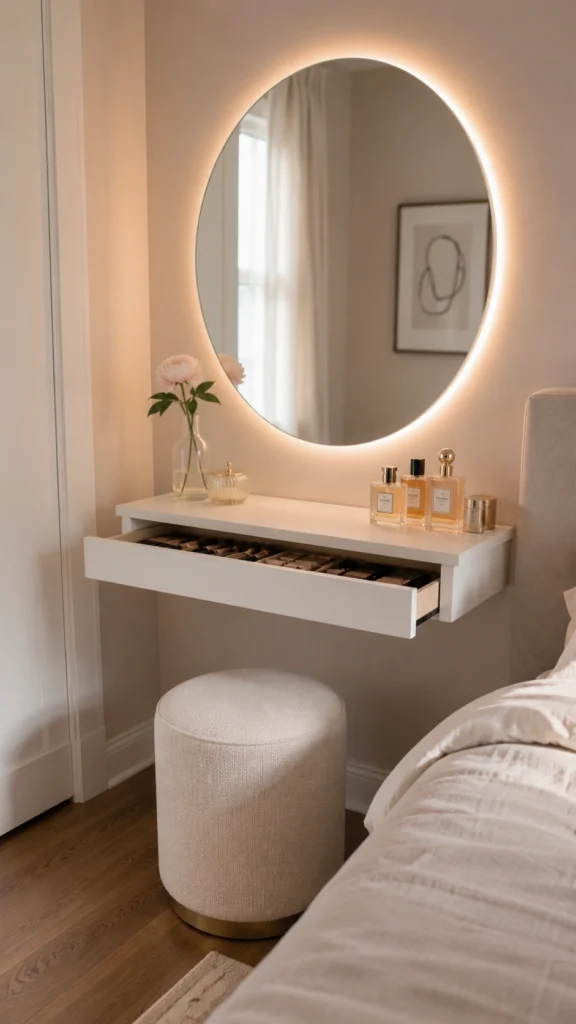
Personally, I’d skip the full vanity in any bedroom under 120 square feet. A floating shelf-style makeup station with a slim hidden drawer gives you a mirror zone, a work surface, and enclosed storage for brushes and palettes in about six inches of wall depth. A traditional vanity needs a two-foot footprint plus chair clearance. This needs none, because you slide any stool under it and push it away when you’re done.
Add a small LED ring light or a wall sconce beside it. Overhead bathroom lighting casts downward shadows that make even careful makeup look off.
10. Mobile Sideboard With Locking Caster Wheels
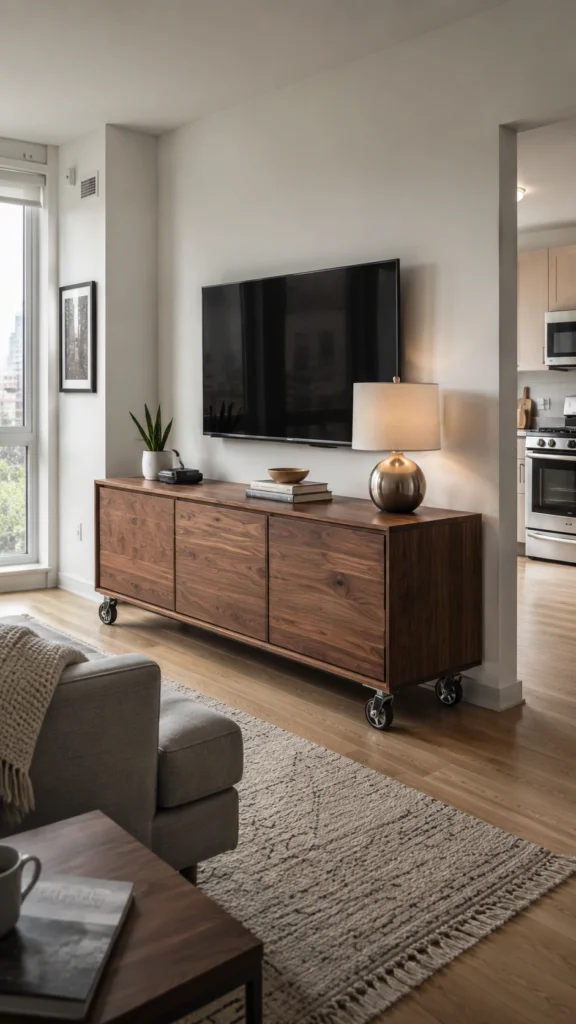
In a studio, one room plays four roles, and a sideboard on locking casters is one of the few pieces that keeps up. It stores dishes, linens, or office supplies like any cabinet, but rolls beside the table for dinner parties, then over to the living area as a media console, then locks in place so it stays put.
The locking part is non-negotiable. Combine free-rolling casters with a slightly uneven rental floor and you’ll find the cabinet a few inches from where you left it, every single day.
11. Choose the Right Rug Size for Every Seating Area
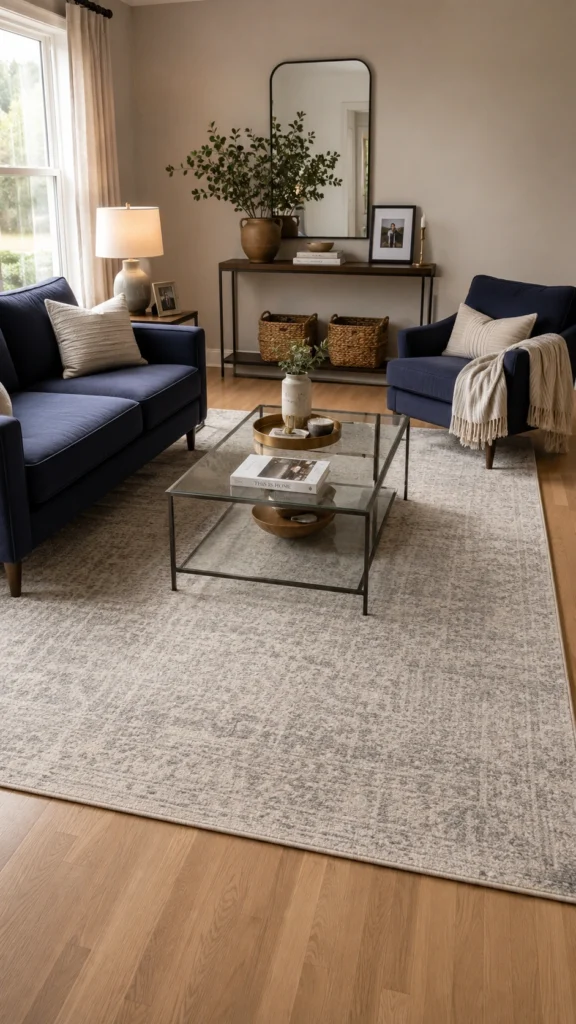
Here’s the part most people get backwards: a bigger rug makes a small room look larger. A small rug floating in the middle of the floor chops the room into fragments, while a properly sized one pulls the furniture into a single defined zone.
The working rule for seating areas:
- The front legs of every sofa and chair sit on the rug, at minimum.
- Leave 8 to 12 inches of bare floor between the rug edge and the walls.
- In most small living rooms, that means a 5×8 or 6×9, not the 4×6 you were eyeing.
The most common mistake is buying a rug the same size as the coffee table. That postage-stamp arrangement shrinks the entire room.
12. Furniture With Exposed Legs
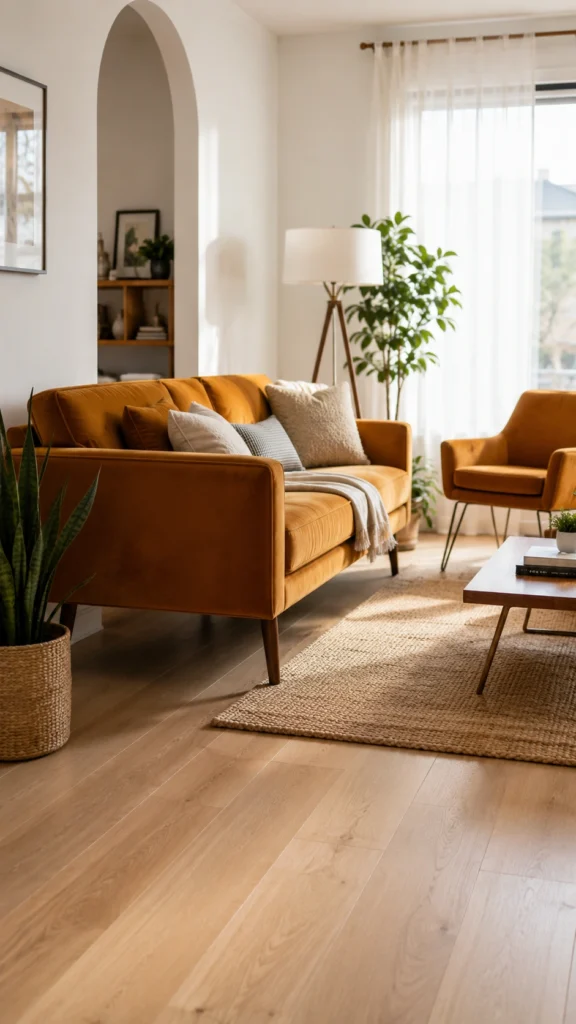
Interior designers talk about visual weight, and in a tiny room it makes a real difference. Sofas, chairs, and beds raised on visible legs let light and sightlines pass underneath, and your eye reads that visible floor as extra space. Skirted, boxy pieces that sit flush to the ground read as solid mass. Mid-century furniture nails this, which partly explains why it dominates every small-space Pinterest board.
You don’t have to sacrifice the space underneath, either. Flat under-sofa storage boxes keep the open look while quietly using every inch below the frame.
13. Compact Wardrobe With Pull-Out Accessory Organizers
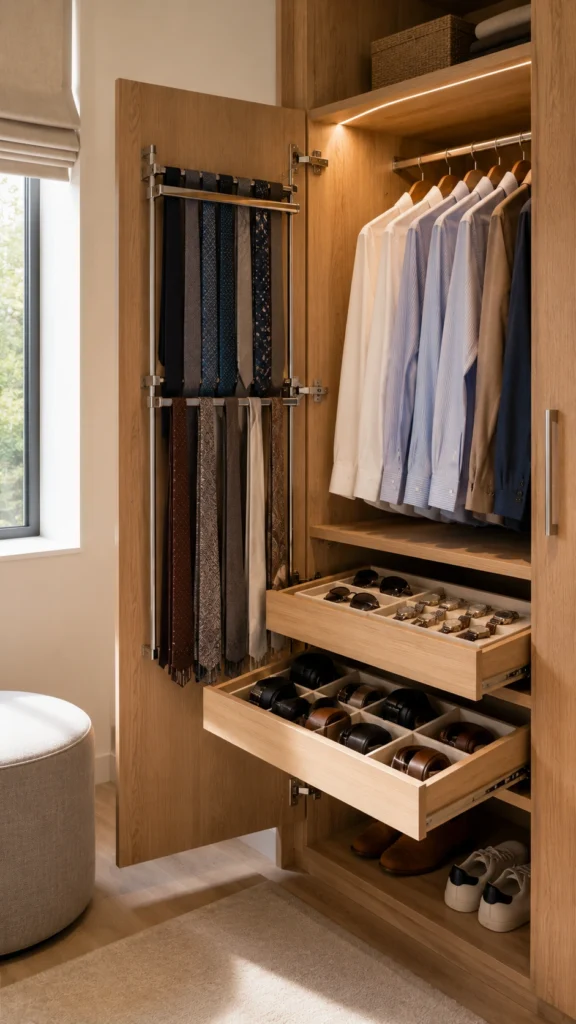
Most closet space gets wasted vertically. Accessories dumped in a bin use maybe a tenth of a shelf’s height, while slim pull-out trays stack five layers in the same space. That’s why a compact wardrobe with built-in trays, tie racks, and jewelry drawers stores roughly double what a plain hanging rod manages at the same width. Belts, scarves, and watches each get a slot instead of forming one tangled pile.
Before buying new furniture, though, try retrofitting your existing wardrobe with $20 pull-out drawer organizers. That upgrade alone often solves the problem.
14. Fold-Out Wall Bed With an Integrated Sofa
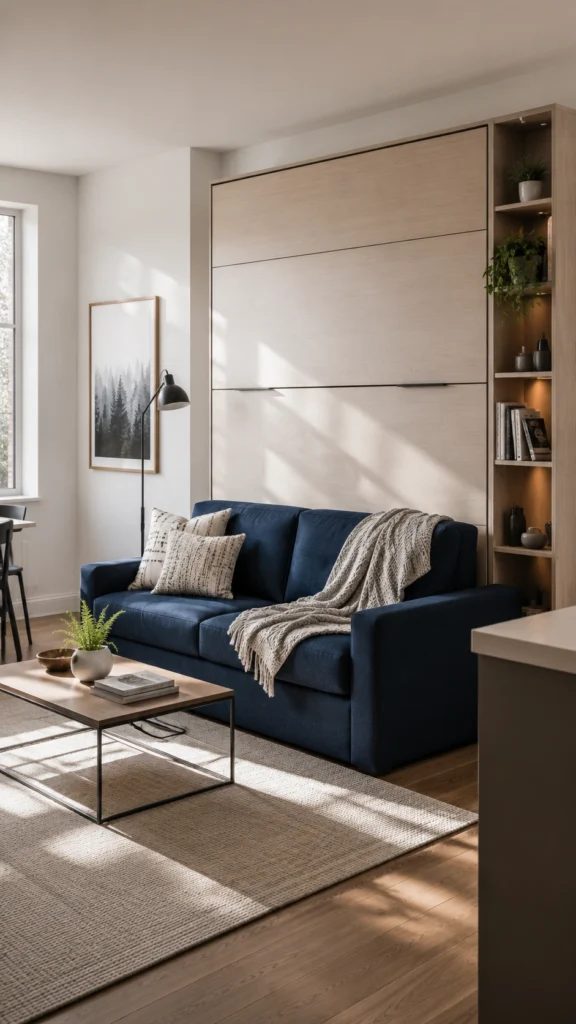
If I had to pick a single upgrade for a studio, this would be it. The modern wall bed folds down over a built-in sofa, and the hinge geometry means you don’t even remove the cushions first. Real living room by day, real queen mattress by night.
Compare that to a sleeper sofa, which gives you a mediocre couch and a worse bed. Quality wall bed units start around $2,000, which stings until you remember they replace two full-size pieces of furniture. For studios under 500 square feet, the math usually works out in the wall bed’s favor.
15. Foldable Dining Chairs Stored on Wall Hooks
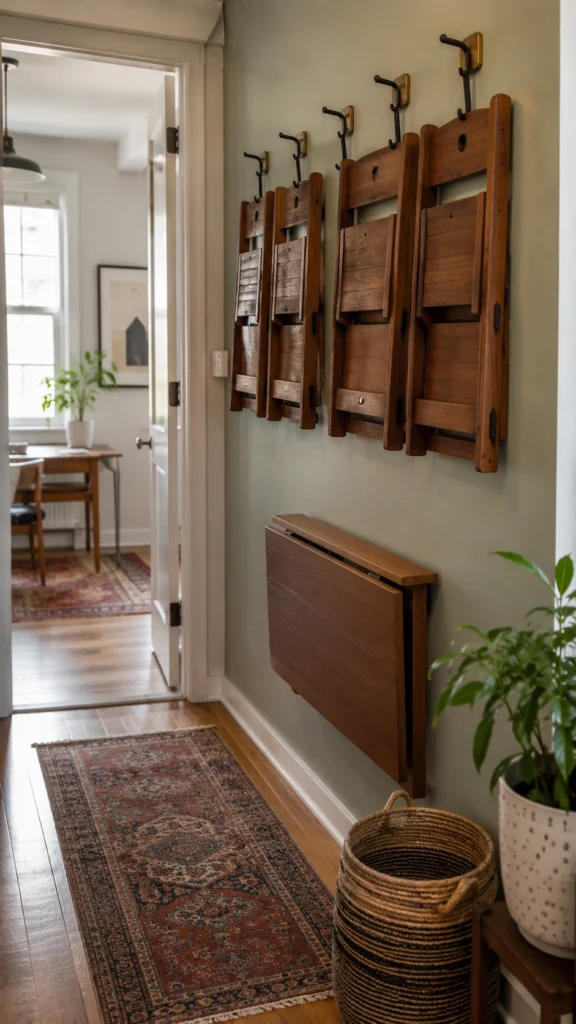
Guests visit maybe twice a month, so guest seating shouldn’t occupy prime floor space the other 28 days. Flat-folding chairs hang from sturdy wall hooks, Shaker-style, when nobody’s using them. Four chairs that would swallow 12 square feet of floor now occupy a strip of wall behind a door or down a hallway.
Buy them in one matching color and hang them in a neat row. Done well, the arrangement reads as intentional wall decor, and people will compliment it without realizing it’s storage.
16. Balcony Storage Bench With Weather-Resistant Cushion
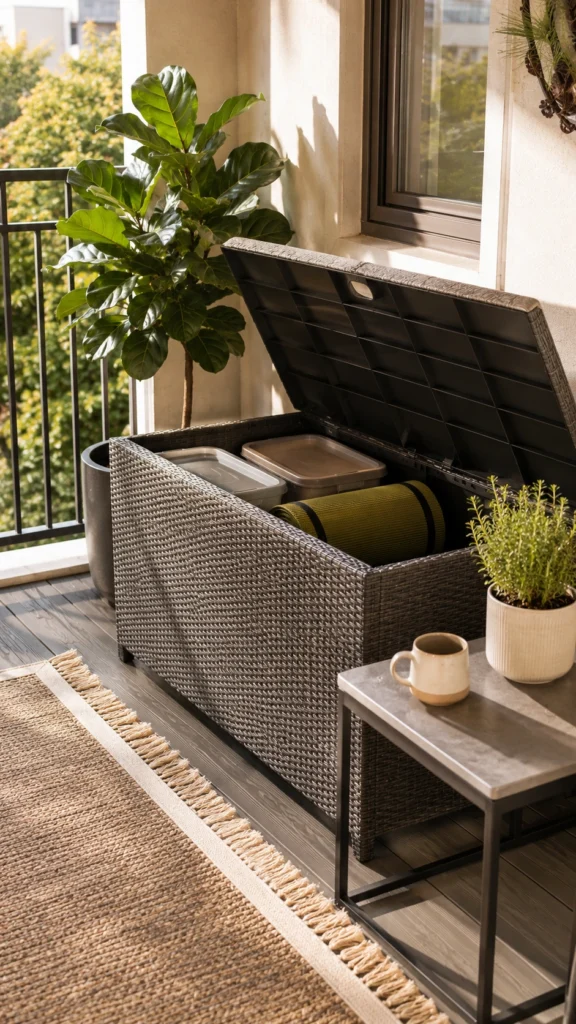
Every cubic foot you move outside is a cubic foot you reclaim inside. That’s the entire strategy behind an outdoor storage bench: the hollow interior swallows bulky off-season items like holiday decorations, camping gear, and the air mattress you inflate once a year, while the top gives your balcony an actual place to sit.
Don’t skip the weather rating. Choose a bench labeled all-weather resin or weatherproof, and keep any fabric inside sealed plastic bins within it. Humidity gets into everything eventually, and a mildewed cushion is unsalvageable.
17. Narrow Hallway Console With Flip-Down Storage Bins
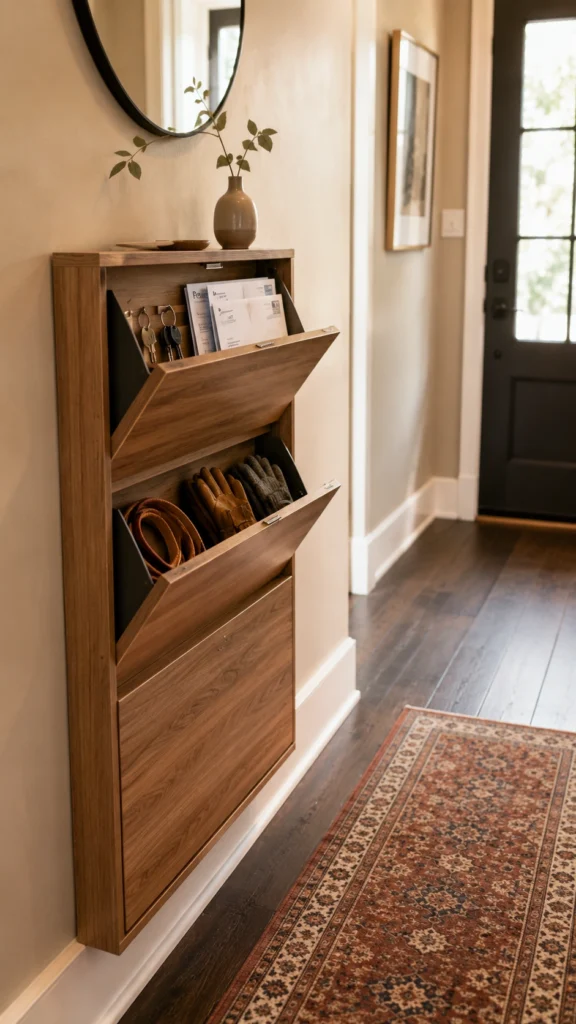
Standard consoles run 15 to 18 inches deep, which blocks half of a narrow rental hallway. A slim console with flip-down bins runs just 6 to 8 inches deep yet still hides gloves, dog leashes, and mail behind tilting front panels.
The flip-down mechanism is the whole trick. Regular drawers need pull-out clearance a tight hall doesn’t have, while tilting bins open downward into space that’s already free. Hang a mirror above it and the corridor feels wider on top of everything else.
18. Wall-Mounted Drop-Leaf Dining Table
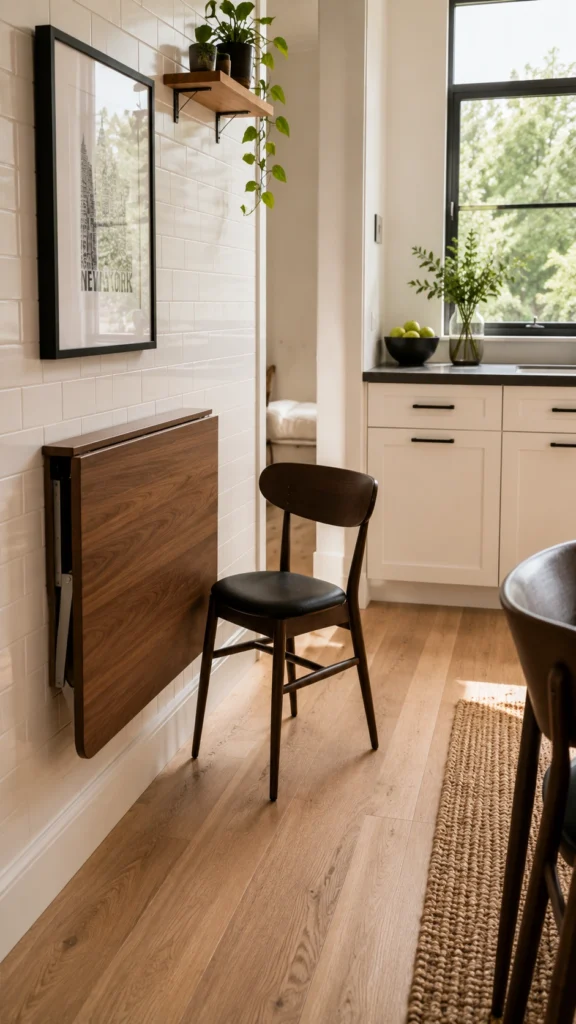
A permanent dining table in a tiny apartment sits empty 22 hours a day while blocking your main walkway. A wall-mounted drop-leaf table exists only when meals do: lift the leaf, swing the support into place, and you have a real surface for two in about five seconds. Folded flat, it sticks out barely three inches.
Pick a model rated for at least 50 pounds and anchor it into wall studs, not just drywall. Most people end up using it as a standing desk too, and it needs to survive elbows, not just plates.
19. Nesting Side Tables That Tuck Away After Guests Leave
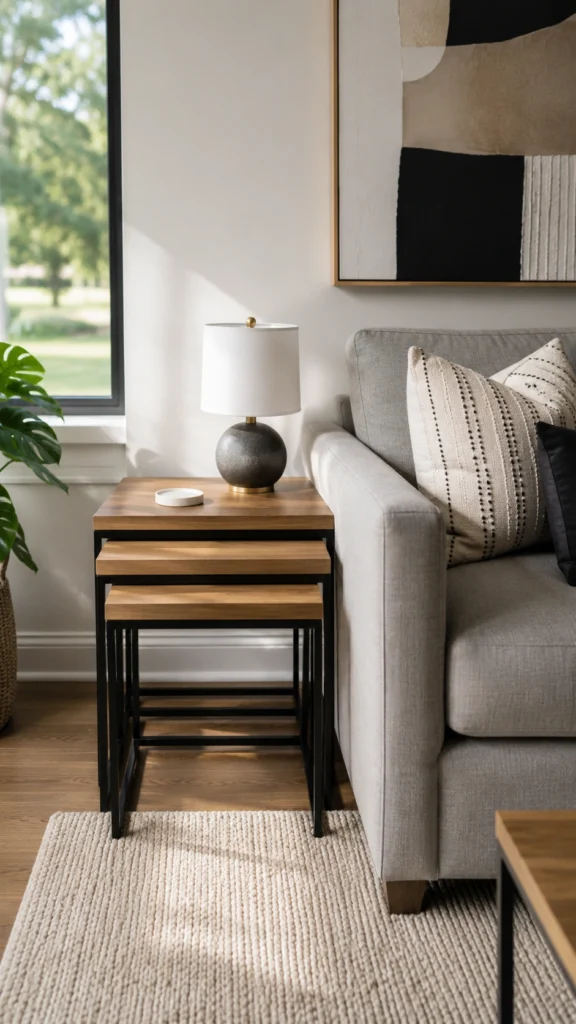
Three separate side tables permanently occupy three floor spots. Nesting tables, a set of two or three in graduating sizes, occupy one spot and expand on demand. Company arrives, you fan them out so everyone has a drink surface. Company leaves, they stack back into a single footprint.
Mix materials within the set, say a wood top with black metal legs, so the stacked version looks like a deliberate design choice rather than clutter management.
20. Storage Ottoman That Works Three Jobs at Once
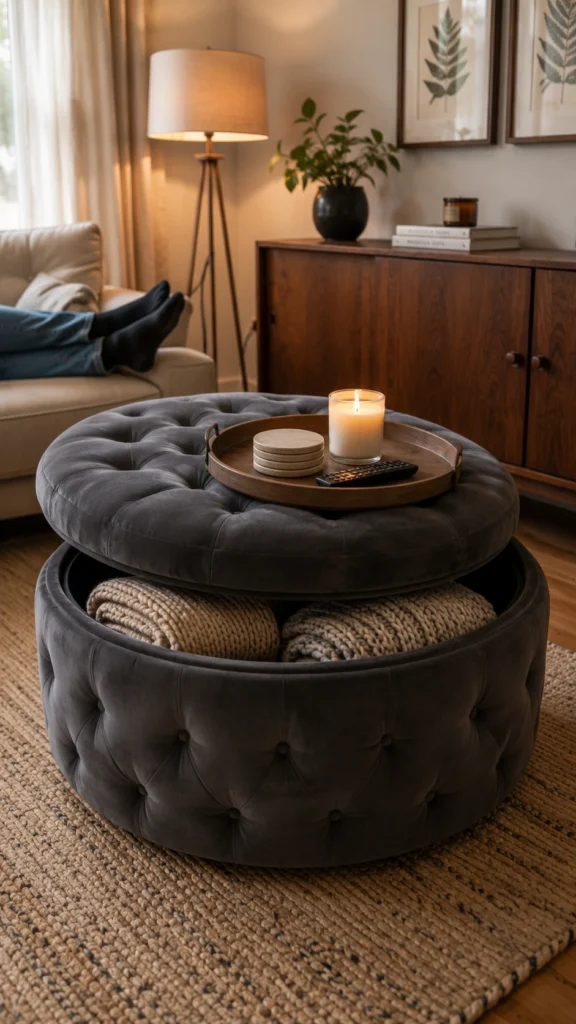
Anyone who has caught a shin on a wooden coffee table corner at midnight understands why soft edges matter in tight walking paths. A quality storage ottoman forgives that mistake, and it does plenty else: footrest, coffee table when you add a tray, seat for an extra guest, and hidden storage for blankets or board games inside the hollow base. Four functions from roughly four square feet.
In living rooms under 120 square feet, where a hard coffee table and a spare chair won’t both fit, this is usually the smarter buy.
21. Loft Bed With a Desk Nook Underneath
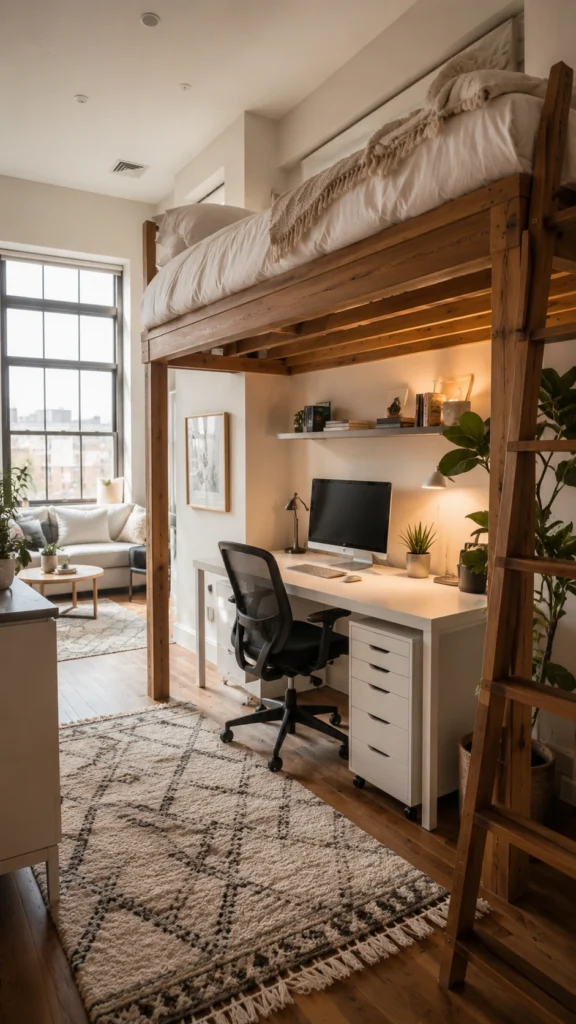
Working from home in a studio means your bed and your office stare at each other all day, and that arrangement wears on you faster than you’d expect. A loft bed fixes it vertically. Raising the mattress five to six feet off the floor opens the space below for a full desk setup, a reading chair, or a mini closet, separating the sleep zone from the work zone without adding a wall.
One measurement decides everything: ceiling height. You need roughly 8-foot ceilings at minimum to sit up in bed comfortably. Check that number before you fall for one online.
22. Headboard With Built-In Shelves and Charging Station
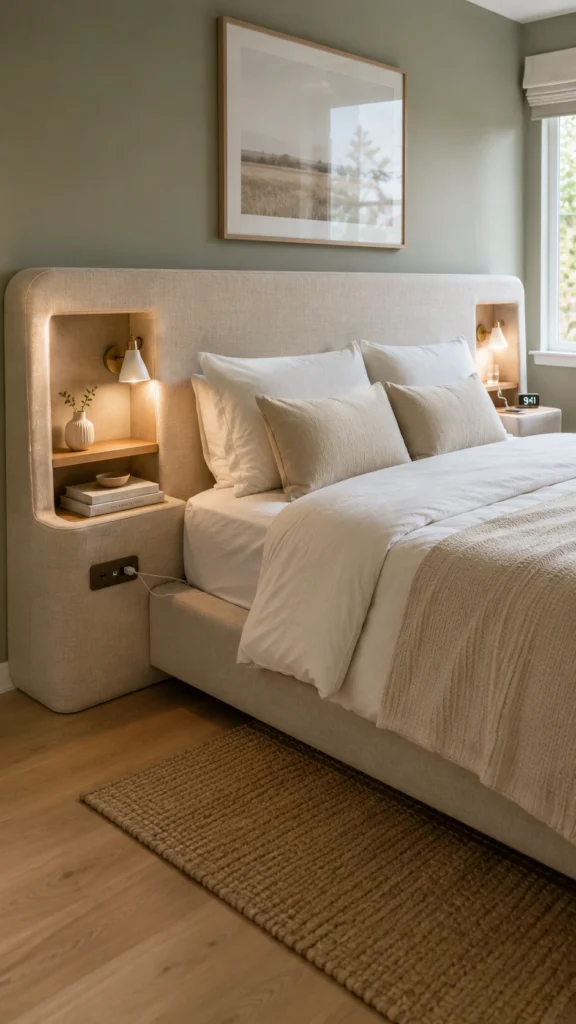
Two nightstands eat about six square feet in a bedroom that probably can’t spare two. A storage headboard recovers all of it. Shelving, cubbies, and USB charging ports sit built into the frame behind your pillows, so your book, phone, water glass, and lamp stay within arm’s reach while the floor beside the bed stays completely clear. In my opinion, it’s the single best furniture swap for a small bedroom.
One caveat: if you’re not naturally tidy, choose enclosed cubbies over open shelves. Open shelving at eye level puts your clutter on permanent display.
How to Pick Small Apartment Furniture Ideas That Fit Your Space
Twenty-two options is a lot, and buying all of them defeats the purpose. Here’s how to narrow the list without regret.
Match Small Apartment Furniture Ideas to Your Worst Bottleneck
Start where the pain is loudest. If your entryway is a shoe avalanche, the flip-top bench (#4) or mirror cabinet (#7) earns its spot first. If you sleep and work in one room, the wall bed (#14) or loft bed (#21) fixes more than any accessory ever will.
Measure Before You Buy Anything
Grab painter’s tape and outline the furniture’s footprint on your actual floor, then live with the tape for two days. This habit costs about $4 and five minutes, and it prevents most of the “it looked smaller online” returns people make. You’d be surprised how often the taped rectangle kills a purchase you were sure about.
Follow One Simple Priority Order
When in doubt, buy in this order:
- Pieces that fold or disappear (wall bed, drop-leaf table, hanging chairs)
- Pieces that multitask (storage ottoman, mobile sideboard, storage headboard)
- Pieces that visually expand the room (exposed legs, bigger rug, mirrors)
Function first, illusion second. A room that merely looks big but doesn’t work is still frustrating, just prettier about it.
FREQUENTLY ASKED QUESTIONS
What furniture makes a small apartment look bigger?
Pieces with exposed legs, glass or acrylic surfaces, and low profiles do the most visual work. They let light travel through the room and keep sightlines open to the floor and walls. Pair them with a properly sized rug and a large mirror near the entry, and most rooms read noticeably larger without changing a single wall.
Should you buy a sofa bed or a wall bed for a studio apartment?
A wall bed wins on comfort, and a sofa bed wins on price. Sofa beds start around $500 but put you on a thin fold-out mattress with a bar under your back. Wall beds with integrated sofas run $2,000 and up, yet hold a real mattress you’d actually choose. If you sleep on it nightly, spend up. If it’s for occasional guests, the sofa bed does the job.
How do you arrange furniture in a tiny living room?
Float the sofa a few inches off the wall, anchor the seating zone with a rug that fits under all the front legs, and keep one clear walking path of at least 30 inches through the room. Pushing everything against the walls seems logical, but it creates a waiting-room layout with dead space in the middle. Counterintuitive, and it works.
What is the best multifunctional furniture for small spaces?
Storage ottomans, drop-leaf tables, and storage headboards give you the biggest return per dollar. Each replaces two or three single-purpose pieces, and none requires installation beyond basic wall anchoring. Start with whichever room frustrates you most, then expand from there.
How much should you spend on small apartment furniture?
Spend the most on pieces you touch daily: your bed, your sofa, your desk chair. Cheap versions of those wear out fast and cost you sleep or posture in the meantime. Save on occasional pieces like nesting tables, wall hooks, and storage bins, where a $30 option performs nearly as well as a $150 one.
Final Thoughts
Every small apartment furniture idea on this list comes back to one principle: each piece should earn its floor space twice. A bench that also stores shoes. A headboard that replaces two nightstands. A table that disappears into the wall when dinner ends. That’s how 450 square feet starts functioning like 650.
You don’t need to overhaul everything this weekend, and you shouldn’t try. Pick the one idea that targets your most annoying daily friction, whether that’s the shoe pile by the door or the laptop balanced on a couch cushion. Solve it, enjoy the win, then move to the next.
Your apartment stopped growing the day you signed the lease. Your furniture can still get smarter.



Pingback: 22 Small Apartment Nursery Ideas for Tiny Spaces - Caliora Living