
My apartment had a living room that measured 10 by 11 feet. I crammed a full-size sofa, two armchairs, and a coffee table the size of a kiddie pool into it, then wondered why I felt stressed every time I sat down. Sound familiar? After three apartments and a lot of trial and error, I figured out that small living rooms don’t need more stuff. They need smarter choices. Here are 12 small living room ideas for apartments that actually work, tested by me and my long-suffering security deposits.
1. Buy a Sofa With Legs
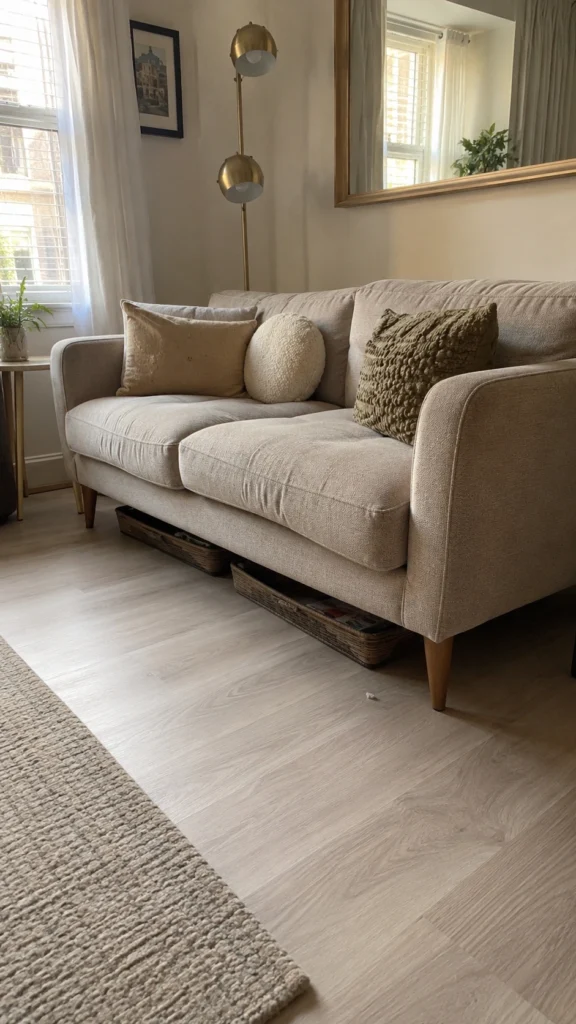
A sofa that sits flat on the floor blocks sightlines and makes the room read smaller. A sofa raised on 5 to 7-inch legs lets you see the floor underneath, and a visible floor makes any room feel bigger. I swapped my boxy, skirted couch for a mid-century style loveseat with tapered wooden legs, and the room instantly felt less stuffed.
Ever notice how hotel lobbies almost always use legged furniture? They know this trick. Bonus: you can store flat bins under there for blankets or board games.
2. Hang Your Curtains High and Wide
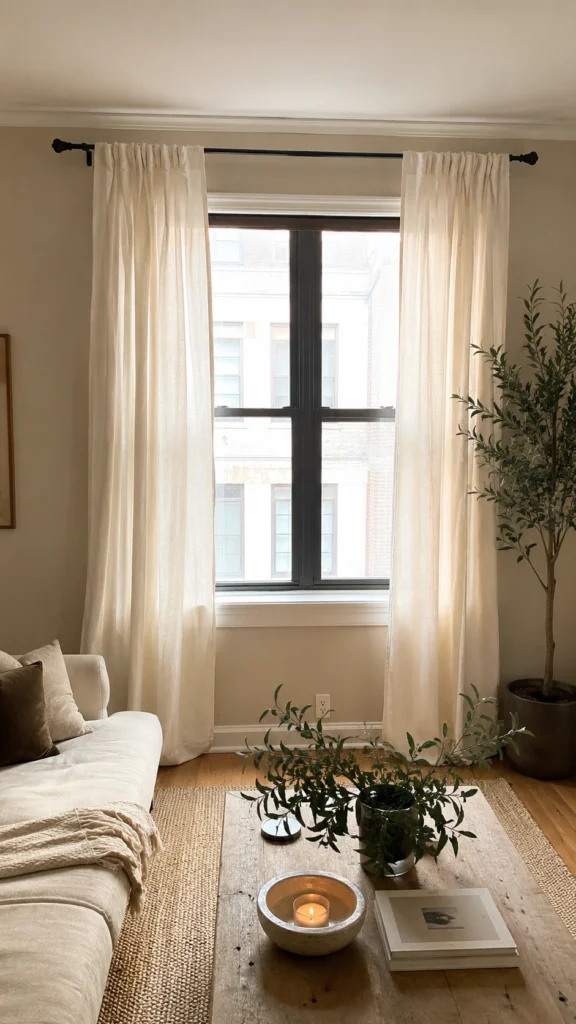
Most people mount the curtain rod right at the top of the window frame. Wrong move. Mount the rod 4 to 6 inches below the ceiling and extend it 8 to 12 inches past the window on each side. Your ceilings look taller and your windows look wider, and the curtains barely cover any glass when open.
Stick with floor-length panels in a light fabric like linen or cotton. Short curtains in a small living room look unfinished, IMO.
3. Get a Bigger Rug, Not a Smaller One
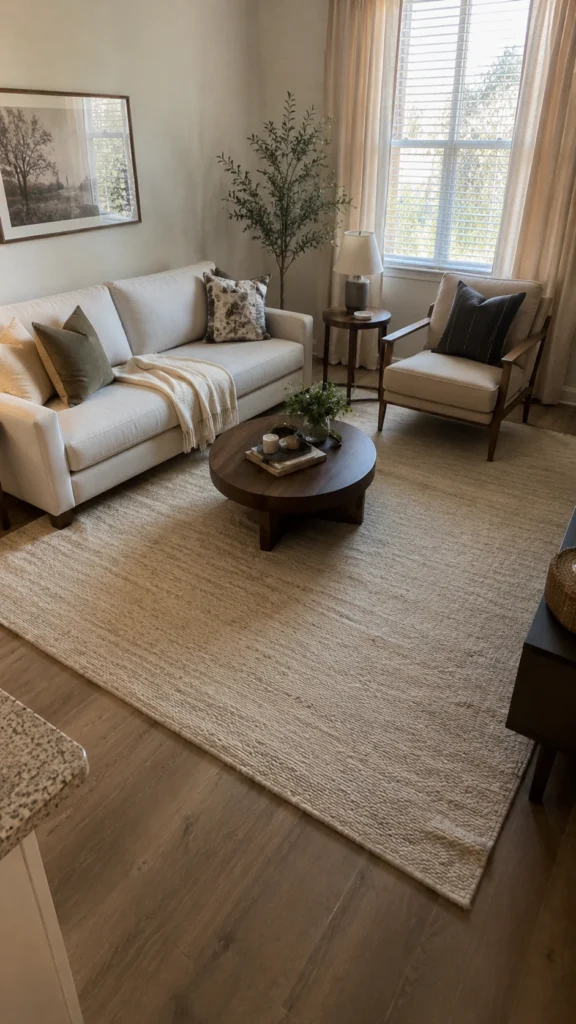
This one feels backwards, but hear me out. A tiny 4×6 rug floating in the middle of the room chops the floor into pieces and makes everything feel cramped. An 8×10 rug that fits at least the front legs of every seat ties the room together and makes the floor plan read as one large zone.
My quick sizing rules:
- Leave 8 to 18 inches of bare floor between the rug edge and the walls
- Front legs of the sofa and chairs should sit on the rug
- When in doubt, size up
I once bought a 5×7 rug to “save money.” It looked like a bath mat. Lesson learned.
4. Use Mirrors Opposite or Beside Windows
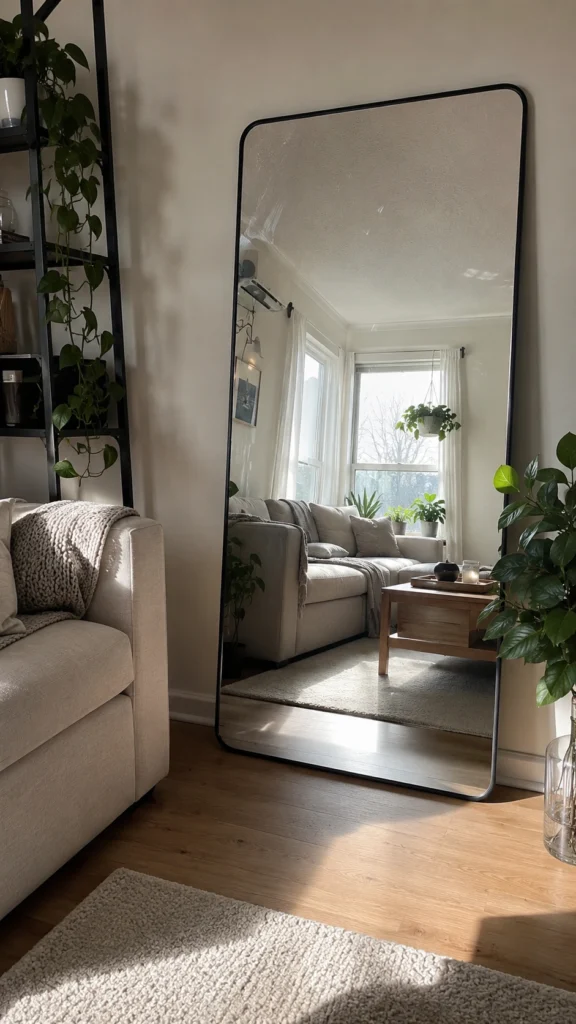
A large mirror bounces daylight around the room and doubles the view. Hang a mirror that’s at least 30 inches wide directly across from or perpendicular to your brightest window. A leaning floor mirror works too, and you don’t even need to drill into the wall, which your landlord will appreciate.
Skip the wall of tiny decorative mirrors, though. One big mirror looks chic. Twelve small ones look like you’re running a discount funhouse.
5. Go Vertical With Storage and Shelving
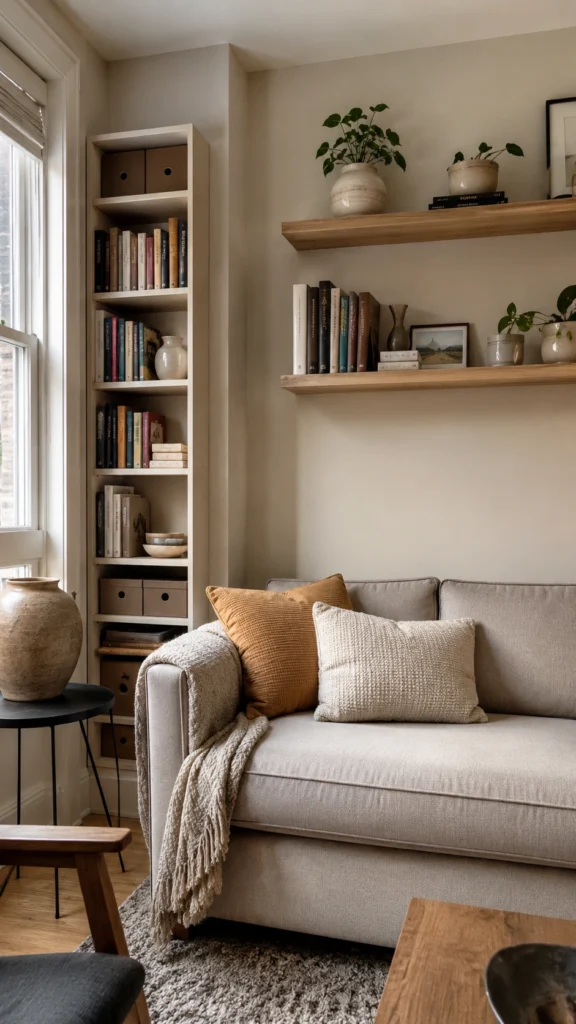
Apartments rarely give you floor space, but most of them give you 8 feet of wall height that nobody uses. Tall, narrow bookcases and floating shelves pull your eye upward and free up the floor. A 72-inch bookcase holds roughly twice what a 36-inch console does while using the same footprint.
Try these:
- Floating shelves above the sofa for books and plants
- A tall, narrow étagère in a corner instead of a wide cabinet
- Wall-mounted media units instead of a chunky TV stand
I mounted my TV and added two floating shelves below it. That move alone reclaimed about 6 square feet of floor.
6. Pick Furniture That Does Two Jobs
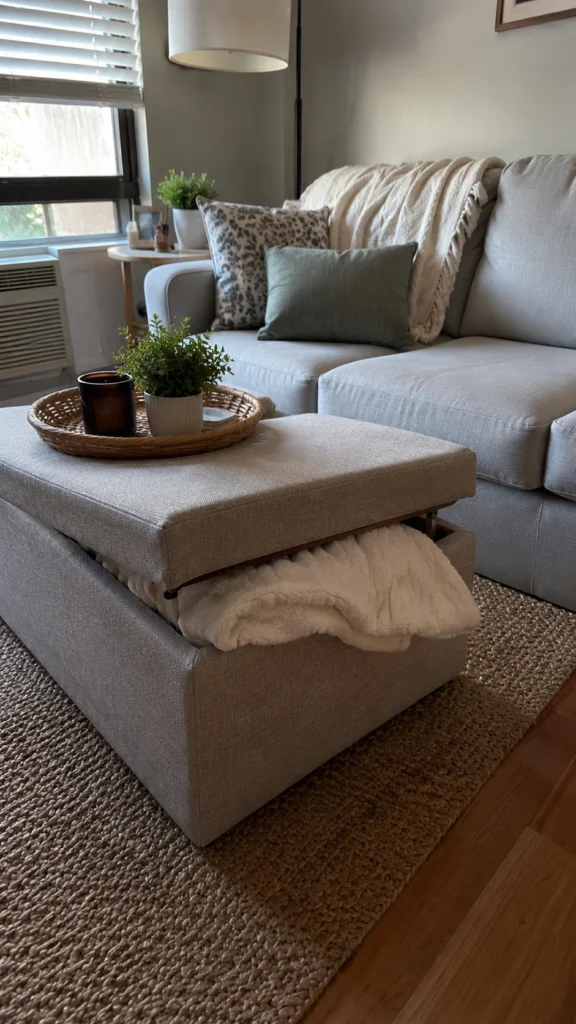
In a small apartment living room, every piece needs to earn its spot. Why own a coffee table that only holds coffee when you could own one that hides your clutter too?
My favorite double-duty picks:
- Storage ottoman: coffee table, footrest, and blanket bin in one
- Nesting tables: pull them apart for guests, stack them when alone
- Sleeper sofa or daybed: instant guest room
- Console table behind the sofa: desk by day, bar by night
FYI, the storage ottoman is the single best 90 dollars I’ve spent on furniture. It currently hides three throw blankets and a shameful number of remote controls.
7. Stick to a Light, Layered Color Palette
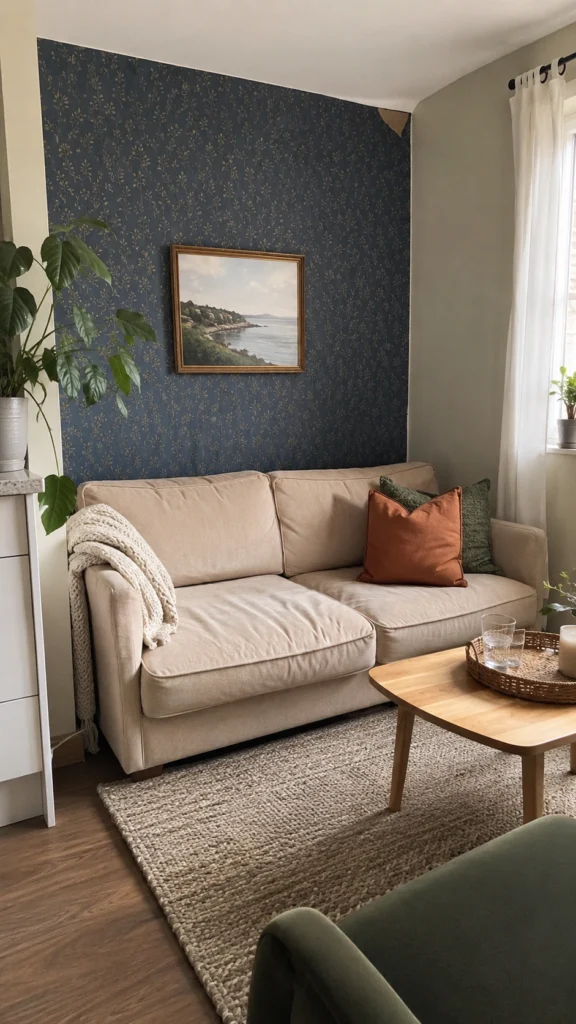
Dark walls can work in big rooms with tons of light. In a 120-square-foot apartment living room, they usually just close the space in. Paint the walls a warm white, soft greige, or pale sage, then add depth with textiles and decor in two or three deeper accent shades.
Want Color Without Shrinking the Room?
Paint one wall, usually the one behind the sofa, in a richer tone like terracotta or navy. The single accent wall adds personality while the lighter walls keep the room open. Renters can fake this with peel-and-stick wallpaper, which I’ve installed and removed twice with zero deposit drama.
8. Layer Three Sources of Light
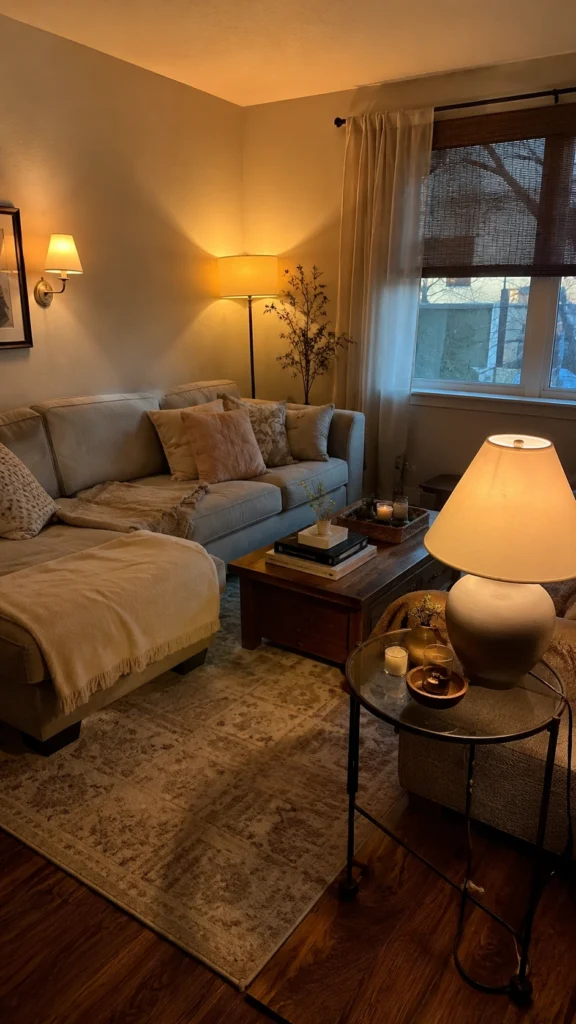
One sad ceiling fixture makes any room feel flat and small. Aim for at least three light sources at different heights: a floor lamp, a table lamp, and either a ceiling light or wall sconce. Plug-in sconces cost around 30 to 50 dollars and need zero hardwiring, which makes them perfect for rentals.
Warm bulbs in the 2700K range make the room feel cozy at night. Cool blue-white bulbs belong in dentist offices, not your living room. 🙂
9. Float Your Furniture Away From the Walls
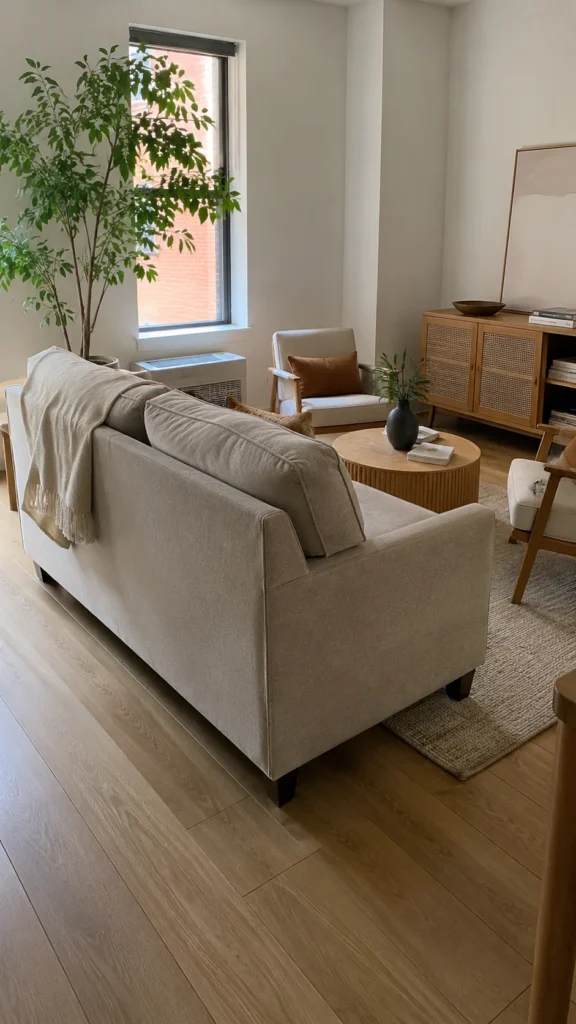
Shoving every piece of furniture against the wall seems logical in a small space. It usually backfires. Pull the sofa even 4 to 6 inches off the wall and angle chairs toward it to create a defined conversation zone. The little gap behind the furniture creates depth, and the room stops looking like a waiting area.
In a studio, floating the sofa also works as a room divider. Mine separates my “living room” and “bedroom,” and yes, the quotation marks are doing heavy lifting there.
10. Choose Pieces With Slim Profiles and Open Frames
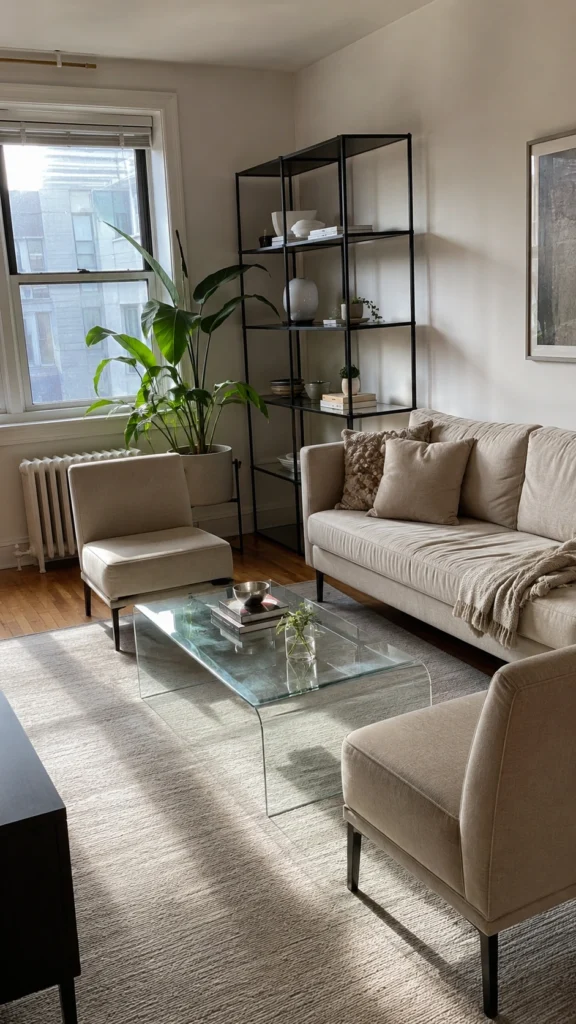
You don’t always need less furniture. You need furniture that takes up less visual weight. Armless chairs, glass or acrylic coffee tables, and open-frame metal shelving let light pass through and around them, so the room feels open even when it’s fully furnished.
Compare a 90-inch overstuffed sectional with a 72-inch track-arm loveseat plus one accent chair. Same seating count, but the second setup leaves you actual walking paths. Wild idea, I know: being able to walk through your own living room without bruising a shin.
What “Slim Profile” Actually Means
Look for track arms instead of rolled arms, seat depths around 21 to 23 inches, and backs under 34 inches tall. Those few inches add up fast in a room where every inch counts.
11. Edit Hard and Hide the Rest
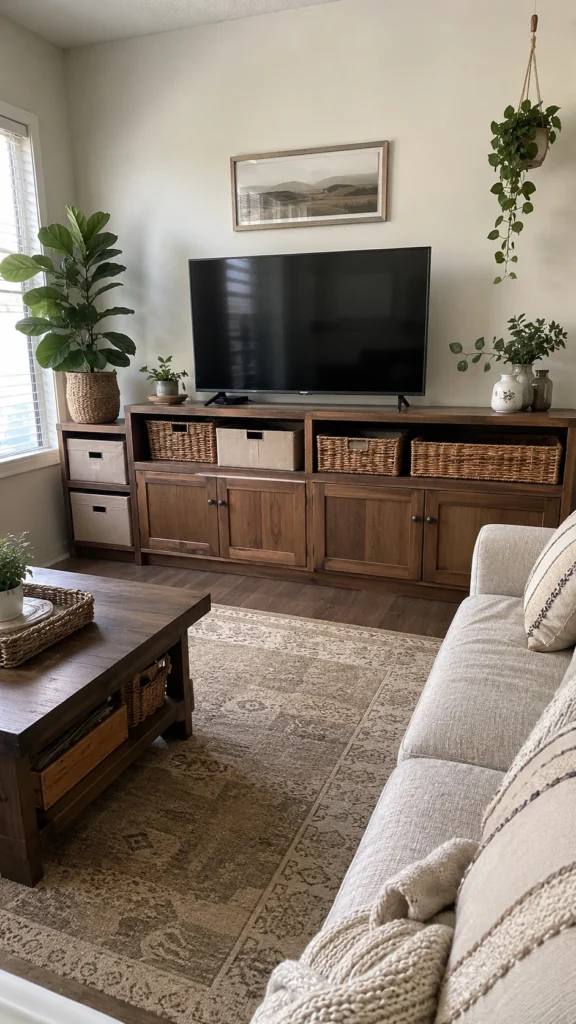
Clutter shrinks a small living room faster than any furniture mistake. Keep surfaces 70 percent clear and give every loose item a closed home. Baskets, lidded boxes, and cabinets with doors beat open bins because your eye reads a closed surface as calm.
My monthly routine: I pull everything off the coffee table and shelves, then only put back what I actually use or genuinely love. Everything else goes in a donation bag. Do I miss the four candles I never lit? Not even slightly.
12. Add Texture and Plants for the Cozy Factor
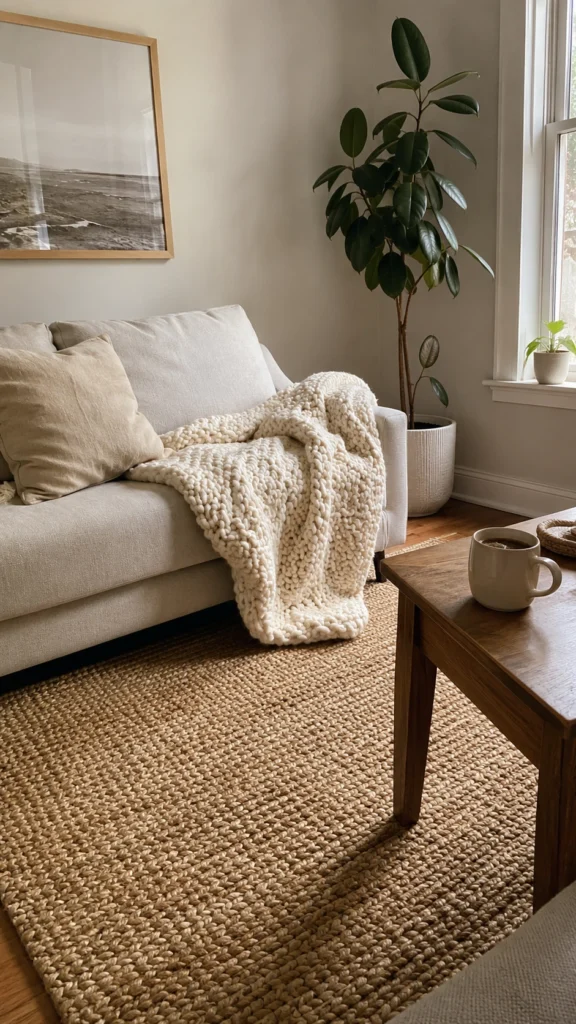
Open and airy can drift into cold and empty if you stop here. The cozy part of “cozy, chic, and open” comes from layers. Mix at least three textures: a chunky knit throw, a linen pillow cover, a jute rug, a wood side table. Then add greenery.
Easy plants for apartment light levels:
- Pothos: survives neglect, trails beautifully off a shelf
- Snake plant: handles dark corners
- Rubber plant: adds height without width
One tall plant in a corner fills dead space and costs less than another piece of furniture. My rubber plant has outlived two couches and at least one questionable relationship.
Wrapping It Up
Small living rooms reward strategy over square footage. Raise your furniture on legs, hang curtains high, size up the rug, and bounce light around with mirrors. Build storage upward, make every piece multitask, and keep the palette light while you layer in texture and plants for warmth. Then edit ruthlessly, because no design trick survives a coffee table buried under junk mail.
Pick two or three of these small living room ideas and try them this weekend. Start with the cheap ones, like rearranging your layout or moving the curtain rod, before you spend a dime on new furniture. Your apartment living room can feel cozy, chic, and open all at once. And if your storage ottoman ends up hiding a pile of unfolded laundry during a party, I promise I won’t tell anyone.
FREQUENTLY ASKED QUESTIONS
1. What size rug should I buy for a small apartment living room?
Go bigger than you think. An 8×10 rug works for most apartment living rooms as long as the front legs of your sofa and chairs sit on it. Leave 8 to 18 inches of bare floor between the rug edge and the walls. A tiny rug floating in the middle of the room chops up the floor and makes everything feel cramped.
2. What colors make a small living room look bigger?
Light, warm tones like soft white, greige, and pale sage reflect the most light and keep the room open. Want personality? Paint one accent wall in a deeper shade like terracotta or navy, or use peel-and-stick wallpaper if you rent. Save the dark, moody walls for rooms with more square footage and more windows.
3. How do I make a small living room cozy without cluttering it?
Layer textures instead of adding objects. Mix at least three, like a chunky knit throw, a linen pillow, and a jute rug, then add one or two plants for life. Keep surfaces about 70 percent clear and store loose items in closed baskets or cabinets. Cozy comes from warmth and texture, while clutter just adds stress.
4. Should I push all my furniture against the walls in a small space?
No, and this surprises most people. Pull the sofa 4 to 6 inches off the wall and angle chairs toward it to create a real conversation zone. The gap behind the furniture adds depth, and the room no longer looks like a doctor’s waiting area. In a studio, a floated sofa even doubles as a room divider.