
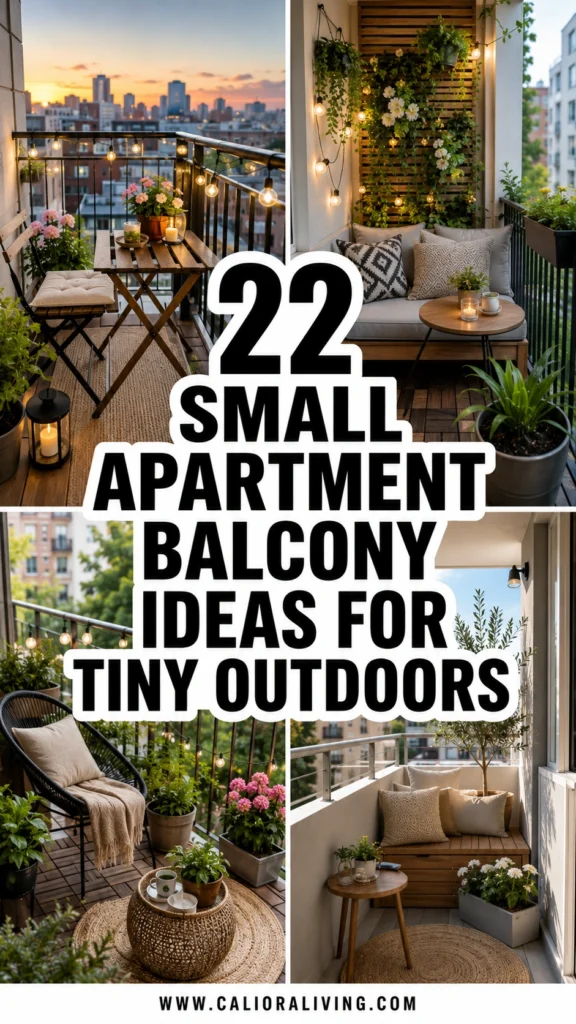

Most apartment balconies look the same: 4×6 feet of bare concrete, one plastic chair, and a direct view of a neighbor’s drying rack. You pay rent on that square footage every month, so it should earn its keep. The upside of a tiny balcony is speed. Three or four smart choices cover the entire space, which means it transforms faster than any room inside your apartment.
This guide covers 22 small apartment balcony ideas that hold up in real rental conditions. No drilling, no landlord disputes, no pretending you have a rooftop terrace. You’ll find furniture, plants, lighting, privacy fixes, and the finishing touches that make everything read as one space.
How to Plan Small Apartment Balcony Ideas Before You Buy Anything
Give yourself ten minutes before you shop. A little planning keeps you from buying a loveseat that blocks your own door.
Measure Your Tiny Balcony First
Write down the length, width, and railing height. Most apartment balconies run between 4×6 and 5×10 feet, and furniture that photographs small online often eats half of that. Leave at least a 24-inch walking path between the door and your seating, or you’ll sidestep past your own chairs every time you step outside.
Check Your Lease for Balcony Rules
Some buildings ban grills, restrict what hangs over the railing, or prohibit anything attached to walls. Read your lease before ordering a single planter, and if the language is vague, one email to your property manager settles it. That email costs nothing. A violation notice usually doesn’t.
Pick Small Apartment Balcony Ideas That Layer Together
Balconies that look pulled together follow one formula:
- Something on the floor: a rug, deck tiles, or turf
- Somewhere to sit: a bistro set, bench, or floor cushions
- Something vertical: string lights, railing planters, or a screen
Cover those three layers and even a 4×6 slab reads as an outdoor room. The formula also protects you from the most common tiny-balcony mistake: buying seven cute things that all sit at knee height, which leaves the space cluttered instead of layered.
One more thing before the list. Be honest about how you’ll actually use the space. If mornings are your balcony time, prioritize seating with a small surface nearby. If you wind down out there in the evening, put your budget into lighting and soft textiles first. If plants are the whole point, vertical solutions come before anything else. The ideas below cover all three, so pick the ones that match your routine.
1. A Folding Bistro Set
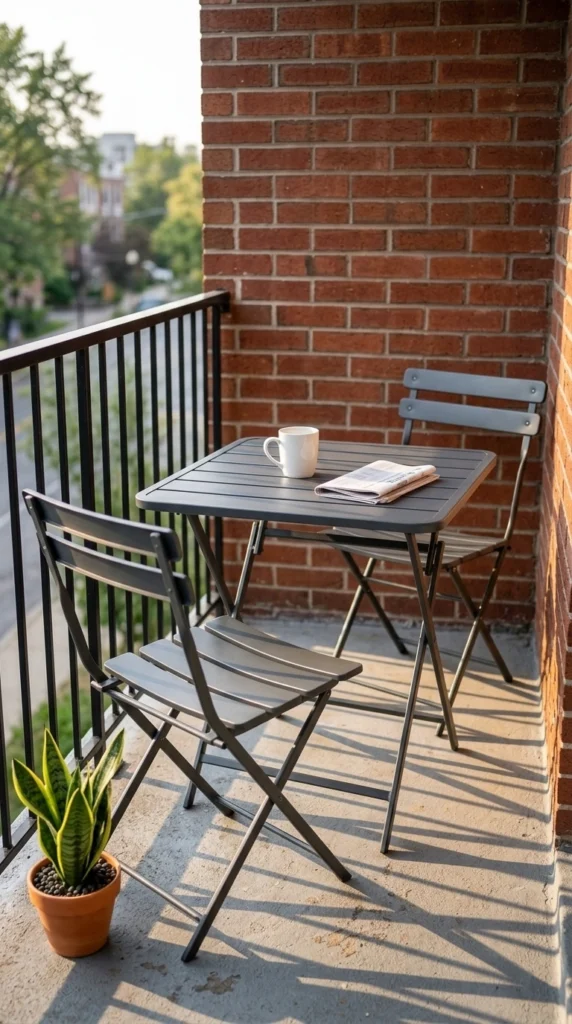
If you own zero balcony furniture, start here. A folding table with two chairs gives you a place for coffee and dinner outside, and the set folds flat against the wall when you need the floor back. Choose a slatted metal top so rain drains instead of pooling. Wood-slat versions look warmer but need oiling once a year; powder-coated steel needs nothing beyond a wipe-down. A set that survives several seasons runs $60 to $150, and it earns its footprint on any balcony at least 4 feet deep where two people want to sit and eat.
2. An Outdoor Rug to Ground the Space
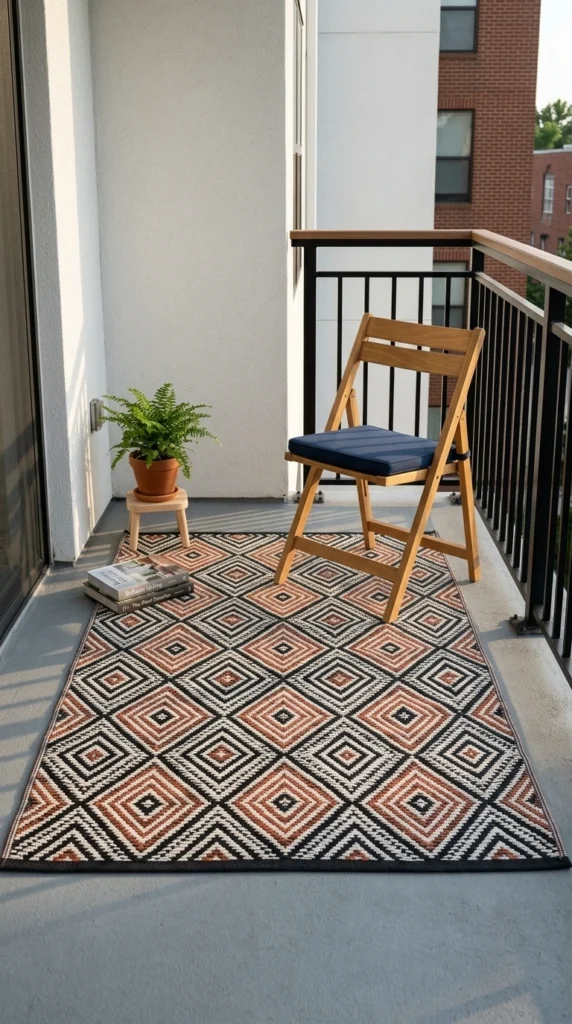
Bare concrete keeps a balcony feeling unfinished no matter what you put on it. A 5×7 reversible polypropylene rug costs $25 to $40, hoses clean, and immediately defines the area as a room rather than a ledge. Go for a pattern with some visual texture. Solid light colors show every footprint and every bird-related incident. Match one color in the rug to your cushions and the whole setup looks intentional instead of assembled from clearance bins. Roll it up in winter and it lasts years.
3. Warm White String Lights
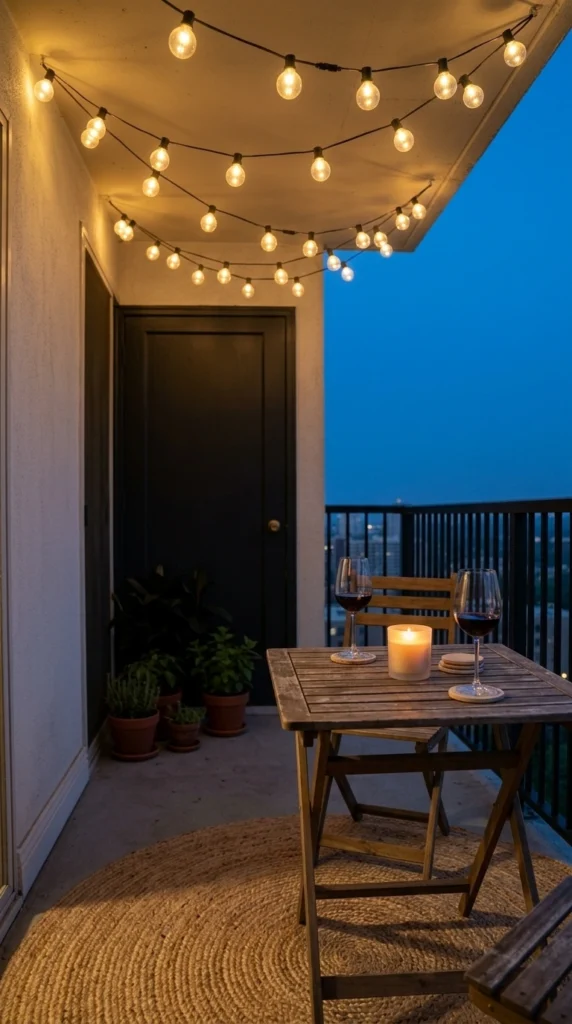
Per dollar, nothing changes a balcony’s mood faster. A $20 strand of warm white globe lights (2200K to 2700K) along the railing turns concrete into somewhere you’d rather be at 9 p.m. Solar versions charge during the day and need no outlet. Battery packs with timers switch on at dusk without you thinking about it. One 25-bulb strand covers most standard railings. Skip the color-changing party modes; warm white wins every time. And use zip ties instead of adhesive hooks to attach the strand, because adhesive peels off in summer heat.
4. Railing Planter Boxes
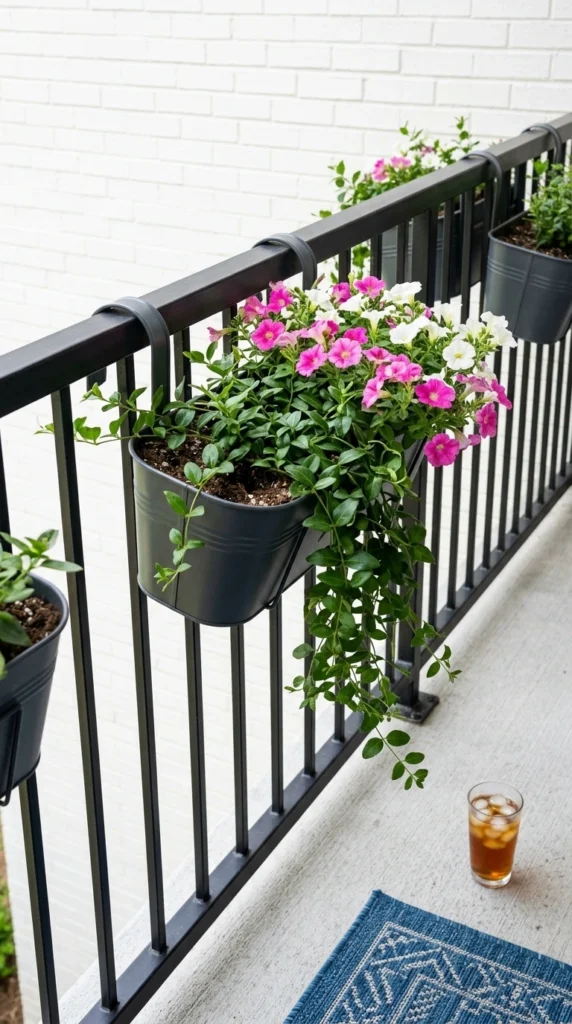
Railing planters hook over the top rail and add a full row of greenery while using zero floor space. Nothing gets drilled, nothing gets damaged, and they lift right off when you move. Fill them with trailing plants like petunias, sweet potato vine, or nasturtiums for that overflowing look. Each planter runs $15 to $30. One caution: check your building’s rules before hanging anything on the outside of the railing. Many landlords require planters on the inside for safety, and nobody living below you wants a pot of geraniums arriving by gravity.
5. A Vertical Garden Panel
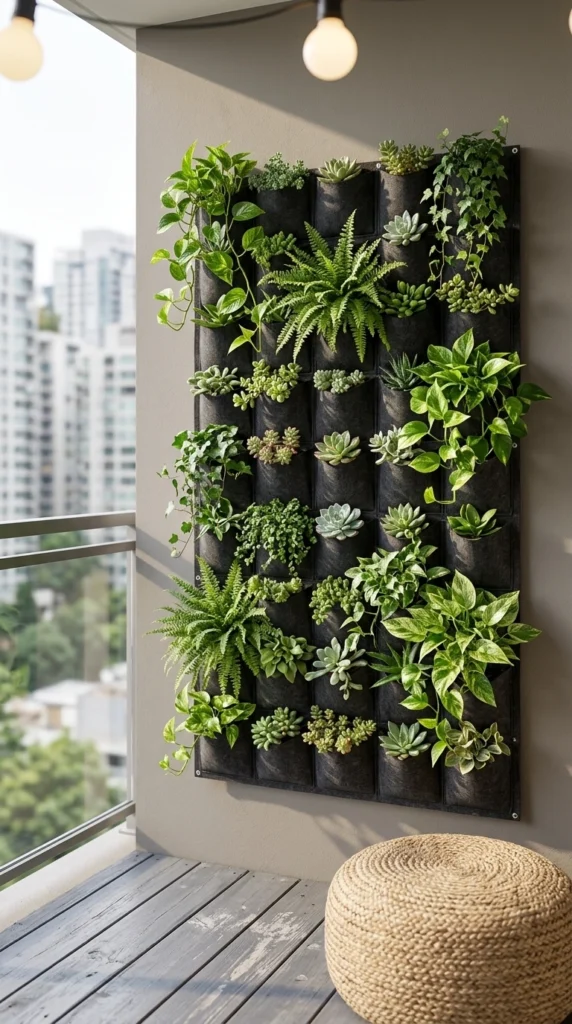
Got one blank wall? That’s the spot. A vertical garden panel turns it into a green feature without touching your floor plan. Living panels with pothos or herbs need regular watering, while faux greenery panels hold their look year-round with zero effort. Either version hides ugly concrete and adds real depth to a shallow space. If budget is tight, a $10 grid panel from a hardware store, leaned against the wall with S-hooks and small potted plants, does 80% of the same job.
6. A Hanging Chair on a Stand
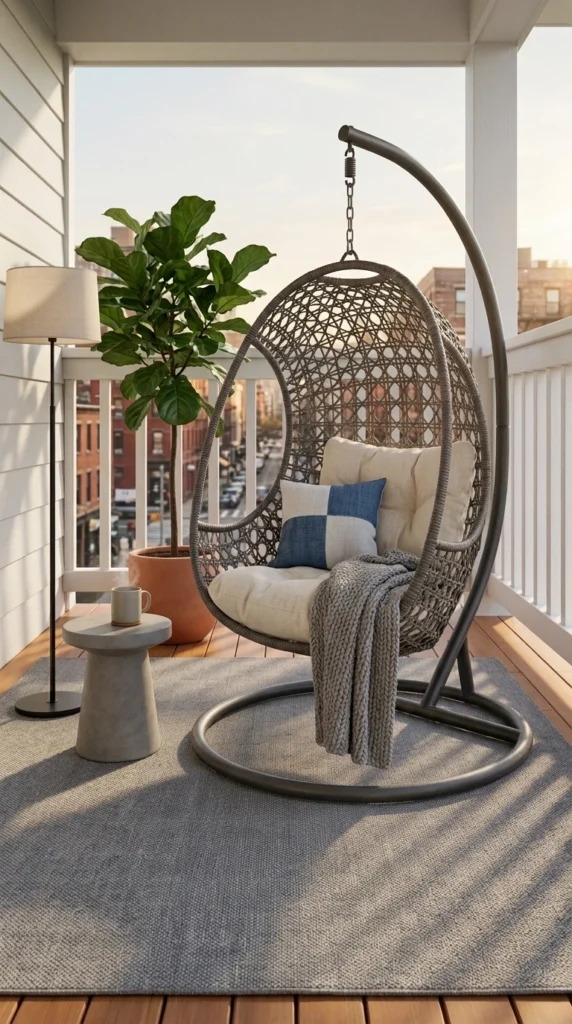
A freestanding egg chair is the most dramatic single seating upgrade a small balcony can handle. The stand needs roughly a 4×4-foot footprint, so this only works on balconies around 5×6 feet or larger, ideally in a corner where the chair can swing slightly without hitting the railing. Because the frame supports itself, you drill nothing and your security deposit stays intact. Add a cushion and a throw, and expect to negotiate with your roommate over turns.
7. Floor Cushions and a Low Table
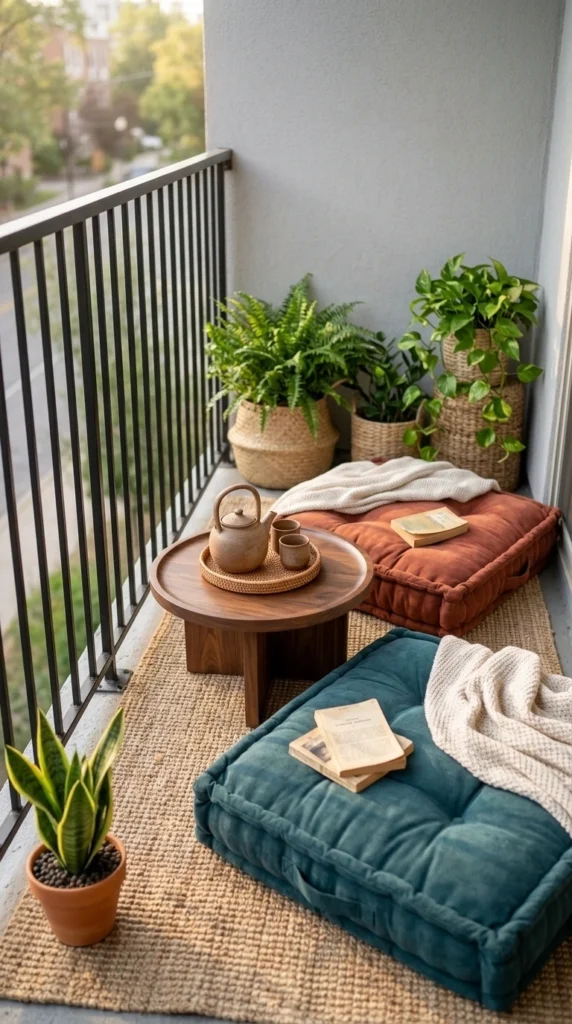
On narrow balconies, my honest advice is to skip chairs entirely. Two weather-resistant floor cushions plus a low table create a lounge setup that fits where standard seating can’t, especially on balconies that are wide but shallow, where chair legs would block the walkway. Buy cushions with removable, washable covers. Outdoor fabric is tough, but city grime is tougher, and you’ll want to bring the cushions inside when rain rolls through anyway.
8. A Storage Bench That Doubles as Seating
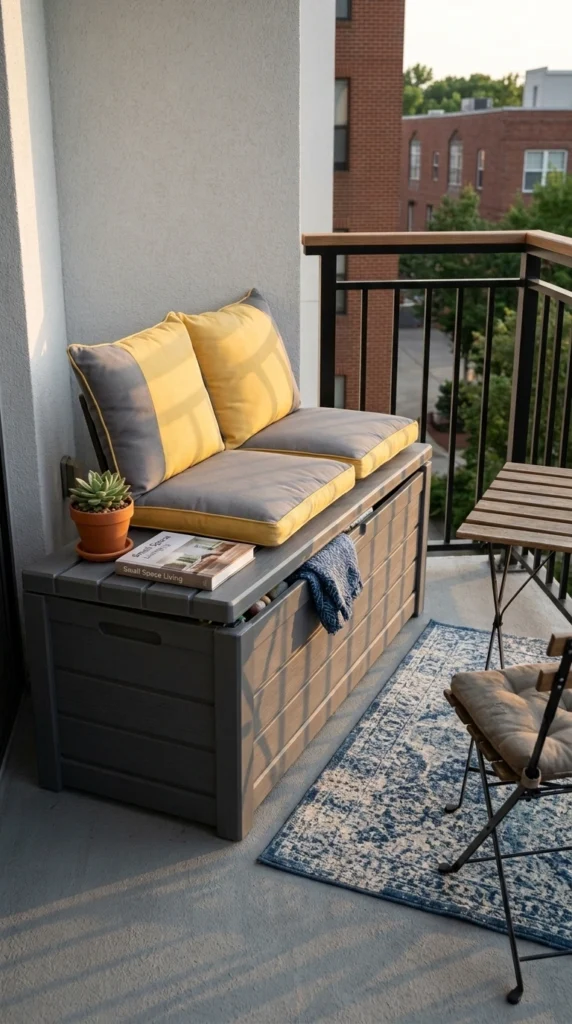
Cushions, gardening tools, the candles you keep meaning to use: all of it needs to live somewhere. A resin deck box with a seat-rated lid solves storage and seating in one 50-inch footprint, starting around $80. Look for a lid rated to hold at least 500 pounds so two adults can sit on it. And resist the urge to use an indoor fabric ottoman out there instead. One rainstorm soaks it through, and mildew follows within the week.
9. Interlocking Deck Tiles Over Concrete
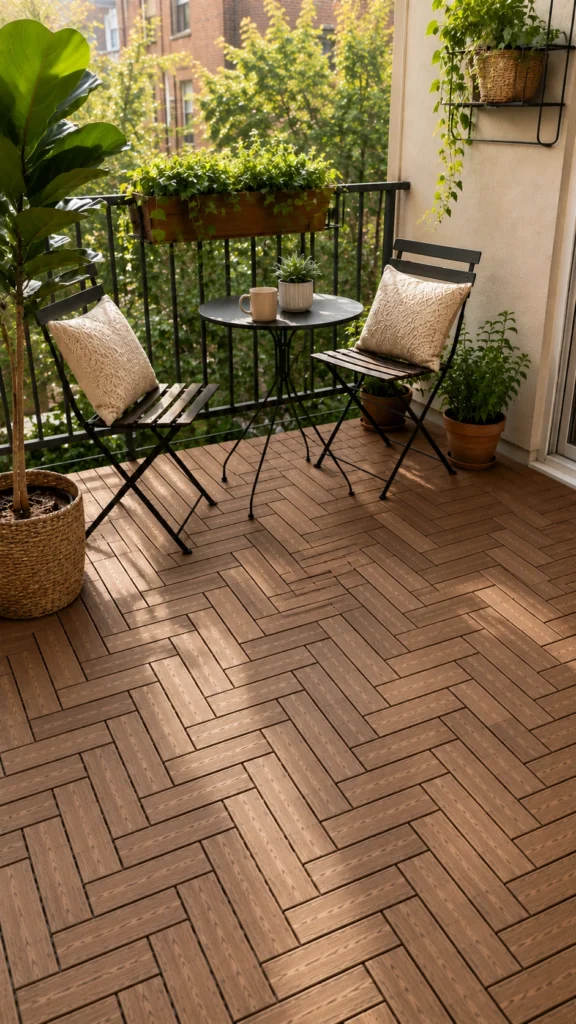
Snap-together wood or composite tiles cover an ugly slab in about 30 minutes with no glue, no tools, and no permanent changes. A 4×6 balcony needs roughly 24 twelve-inch tiles, which costs $60 to $120 depending on material, and every tile lifts out when your lease ends. Composite handles rain better than real acacia, which needs oiling once a year to keep its color. For renters who can’t touch the actual surface but can’t stand looking at gray concrete either, this is the fix.
10. Artificial Turf for a Softer Floor
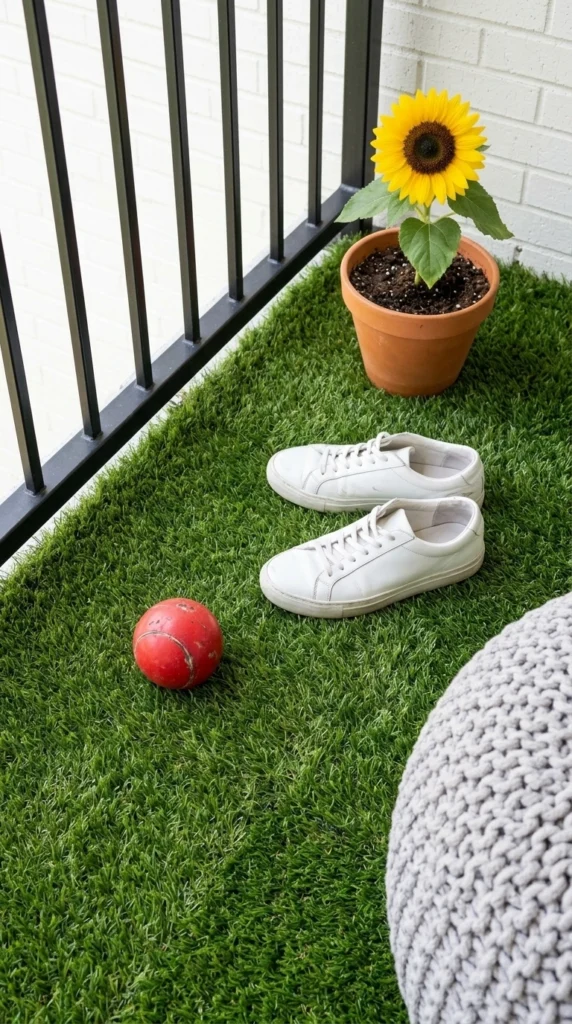
Grass underfoot on the fourth floor is a real option. A cut-to-size turf rug delivers it for $2 to $5 per square foot, drains rain, stays green through every season, and dogs genuinely love it. Choosing between turf and deck tiles comes down to feel: turf is softer and more playful, tiles look more polished and modern. Whichever you pick, choose turf with a drainage backing and lift it every few months to sweep underneath, or debris collects where you can’t see it.
11. A Tiered Plant Stand
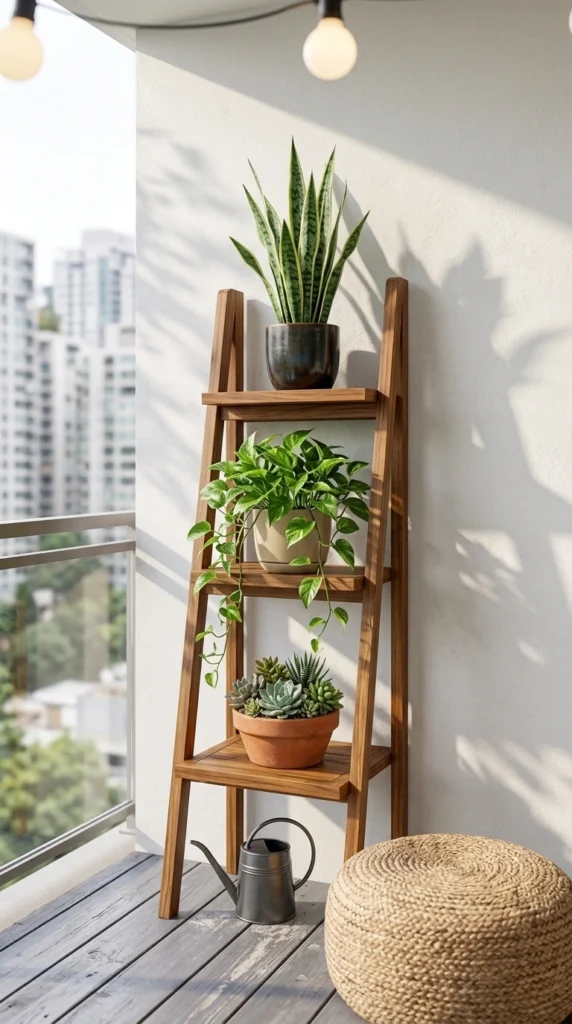
One tiered stand holds five or six plants in the footprint of a single large pot. The height variation adds depth that a flat row of matching pots never manages. Ladder-style stands that lean against a wall use space most efficiently. Put your tallest, most sculptural plant on top and cascade down to small trailing ones. Expect to pay $25 to $60. And when you’re arranging, use odd numbers per tier. Three plants read as natural where two read as staged.
12. Grow Herbs You Actually Cook With
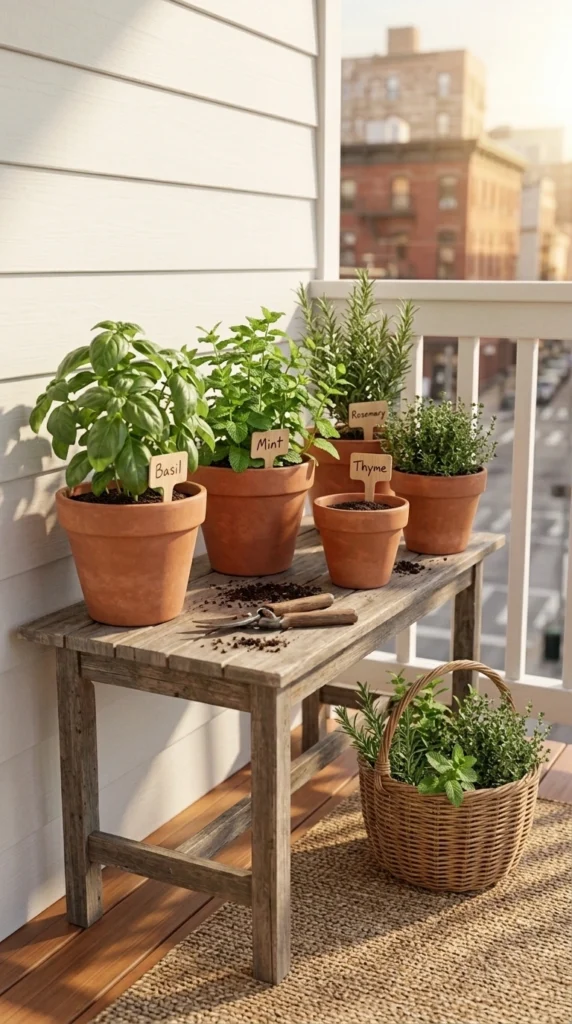
If you cook more than twice a week and get four or more hours of direct sun, herbs pay for themselves fast. A $30 setup of four terracotta pots with basil, mint, rosemary, and thyme covers a full summer of skipped $3 grocery store herb packets. Rosemary and thyme forgive missed waterings, so start with those if you travel often. Give mint its own pot no matter what, because it spreads aggressively and will crowd out anything sharing its soil. Snip what you need for dinner and the plants keep producing.
13. A Trellis with Climbing Plants
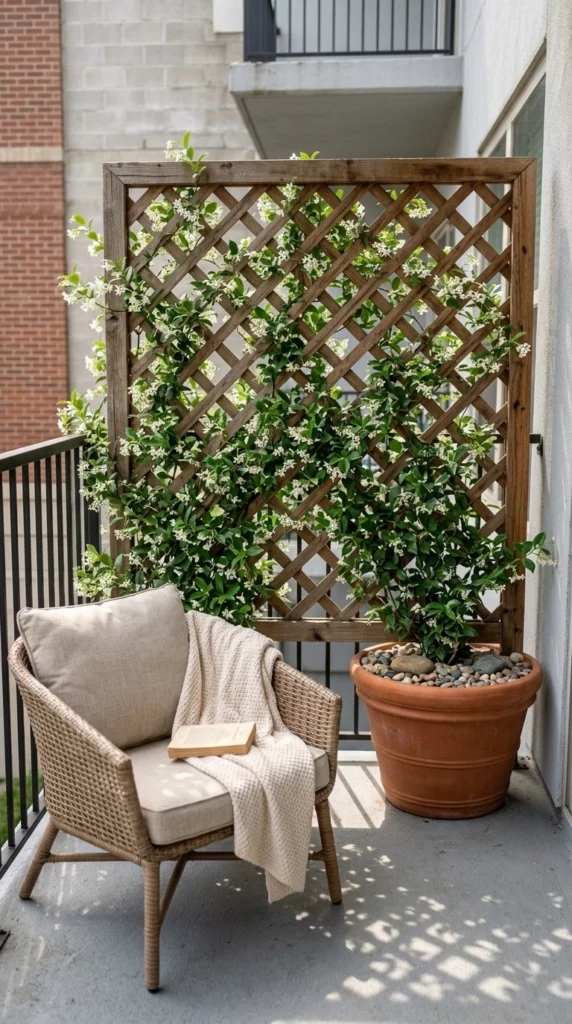
A freestanding trellis in a large planter grows into a living privacy wall over one season. Star jasmine smells incredible, clematis flowers heavily, and mandevilla thrives in heat. Compared with a fixed screen, a trellis takes longer to fill in but looks far better once it does, and it softens the balcony instead of boxing it in. One warning for high floors: a flimsy trellis in steady wind will tip or snap, so buy a sturdy one and weight the planter base with gravel.
14. Bamboo Reed Screening on the Railing
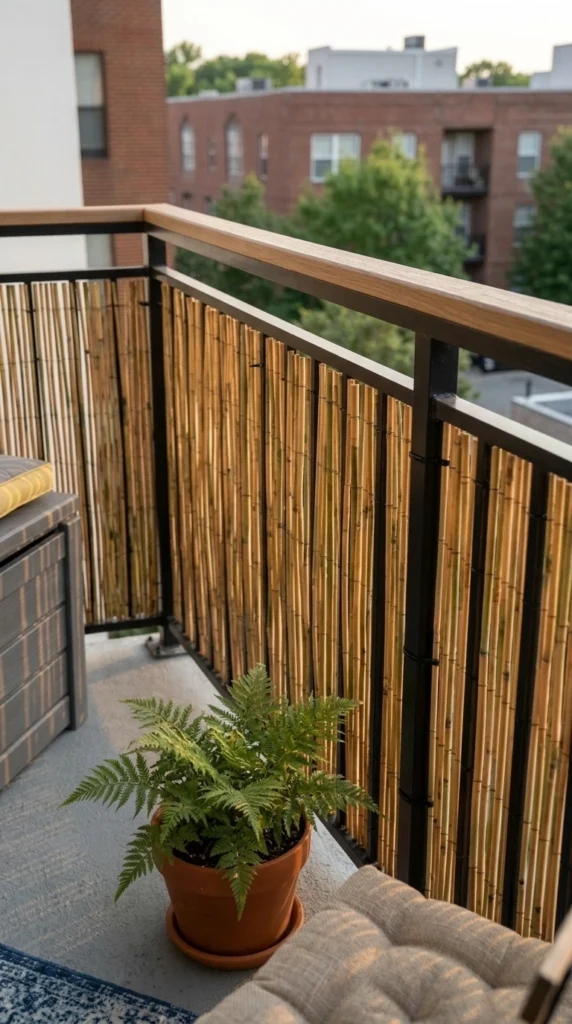
Metal bar railings put you on display for the whole street. A bamboo reed roll zip-tied to the inside of your railing blocks sightlines from below, cuts wind noticeably, and adds warm natural texture for $15 to $30 per roll. It also hides the pots and watering cans you’d rather the neighbors didn’t inventory. Trim the roll to sit half an inch below the top rail. Fitted looks deliberate; draped looks temporary.
15. Outdoor Curtain Panels
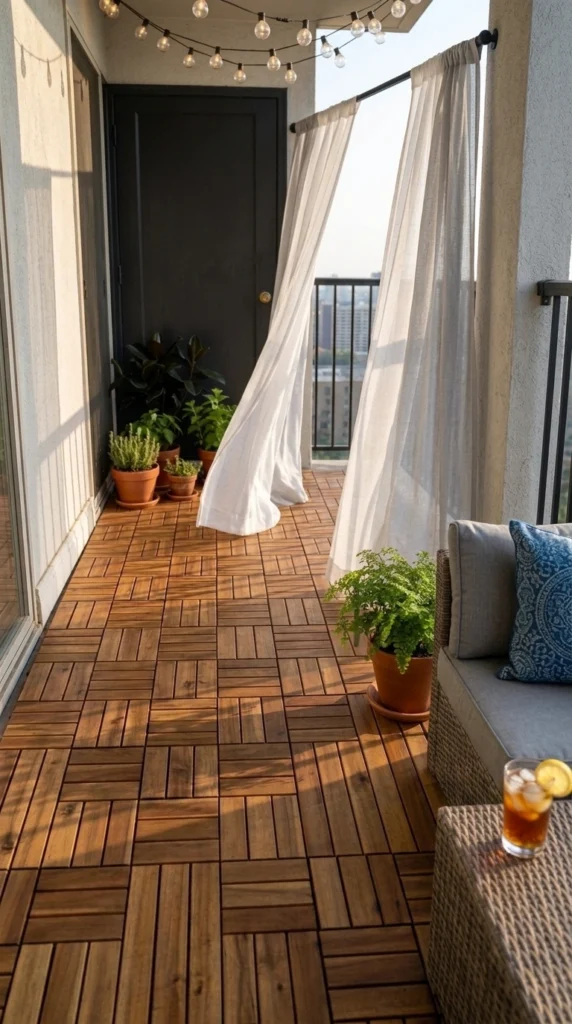
Fabric changes a balcony’s character faster than almost anything else. A tension rod between support columns holds weatherproof curtain panels that block your neighbor’s direct view of your morning routine. Sheer panels filter light and move with the breeze, while heavy canvas panels give near-total privacy and cut wind too. On close-set balconies where you can hear the neighbor’s podcast word for word, curtains make the biggest difference of anything on this list. Two practical notes: you need a ceiling or overhead beam for the rod, and weighted hems keep panels from flapping on gusty days.
16. A Clamp-On Railing Bar Table
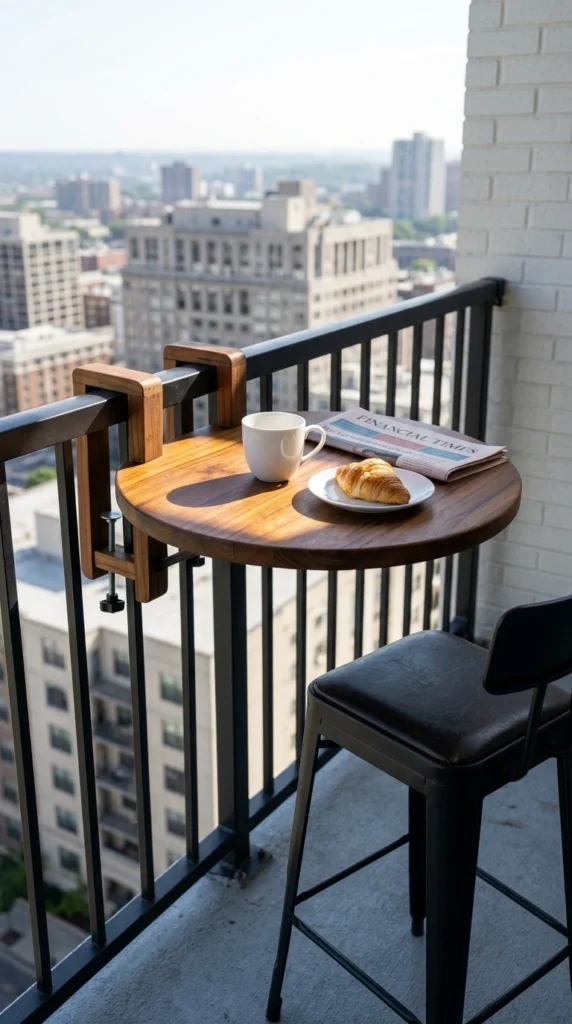
A clamp-on railing table gives you a drink ledge that uses zero floor space and installs in two minutes with hand-tightened screws. Add one tall stool and you’ve built a breakfast counter overlooking the street for under $70. On balconies too narrow for four chair legs, this beats a bistro set outright. Test your railing first, though. The table only holds as steady as the rail it grips, and a wobbly rail means a wobbly coffee.
17. Stackable Stools and Poufs
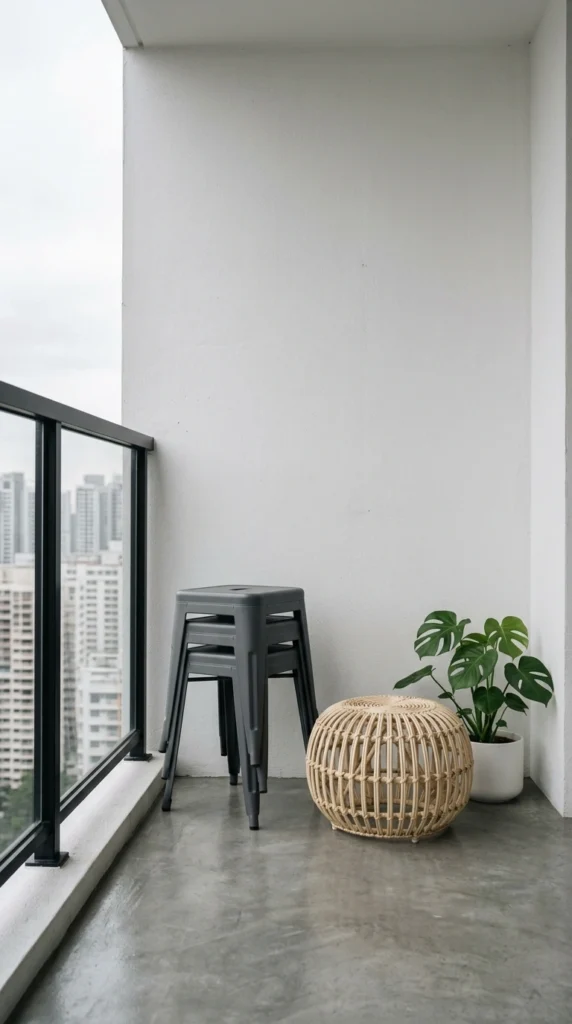
Flexible seating wins in tiny spaces. Two or three stackable outdoor stools work as extra seats when friends visit, side tables the rest of the week, and plant stands in the off-season. Woven poufs do the same job with a softer look. Fixed chairs commit you to one arrangement; stackables adapt to whatever tonight requires, which matters when your total floor space equals one parking spot. On a real budget, a single sealed concrete block with a cushion on top costs about $15 and looks surprisingly deliberate.
18. Solar Lanterns at Different Heights
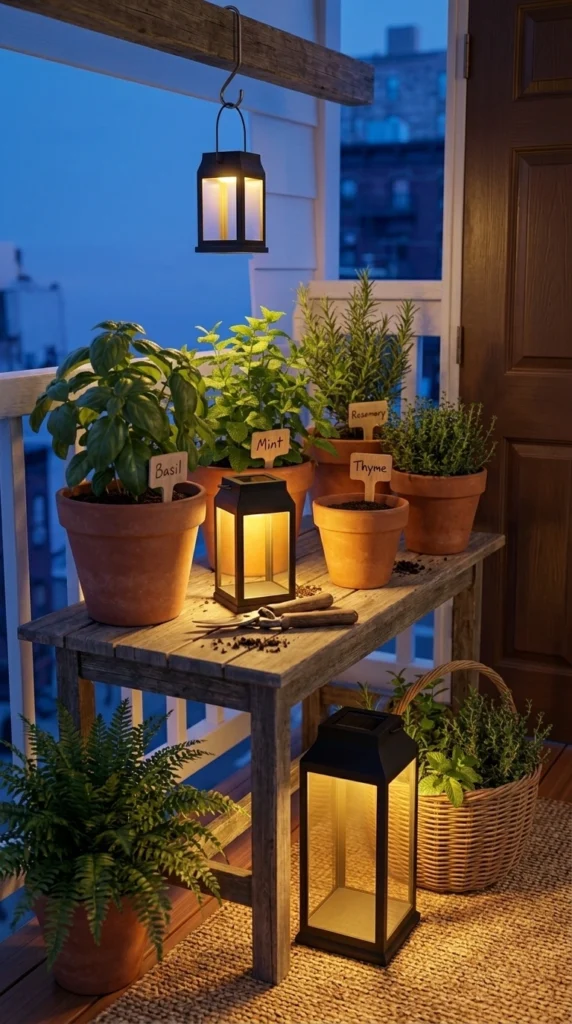
String lights handle the ceiling. Lanterns handle everything below. Cluster three at staggered heights: one on the floor, one on a stool, one hanging from a railing hook. Solar LED versions charge all day, glow all evening, and involve no flames near your building. Layering light at multiple levels is the same technique interior designers use in living rooms, and it works just as well outside. Match the lantern finish to your furniture, black metal with black railings, rattan with wood tones, and the cluster reads as a set rather than three random purchases.
19. A Shade Umbrella or Sail
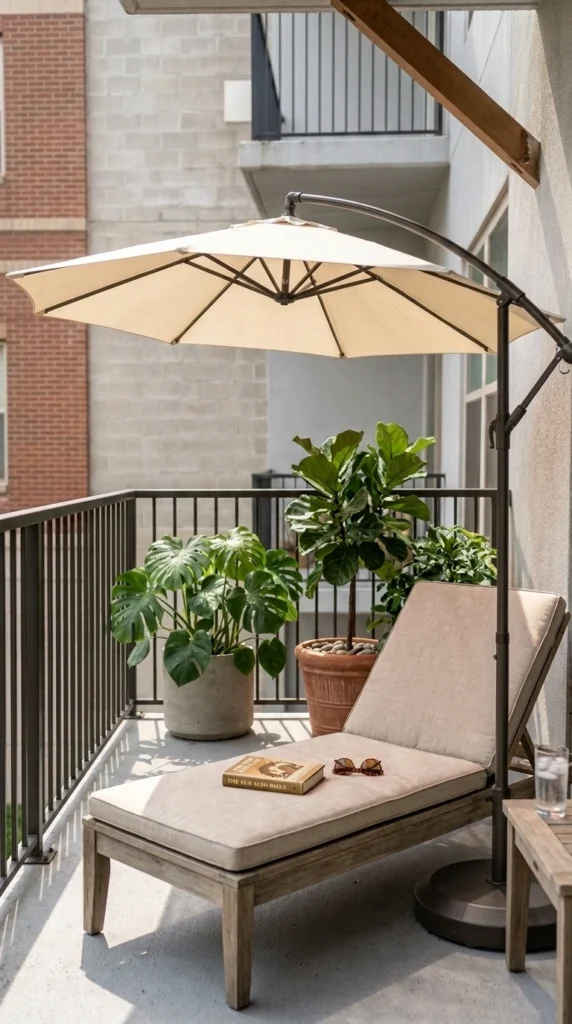
A west-facing balcony in July gets too hot to use by 3 p.m., and shade is the only real fix. A half-round umbrella designed for flat walls covers a small space without a full-size pole eating your floor. A triangular shade sail clipped between the railing and a wall hook covers even more for around $25 to $50. If your balcony faces south or west and gets four or more hours of direct afternoon sun, shade decides whether you use the space in summer or just look at it through the glass.
20. Weatherproof Pillows and a Throw Blanket
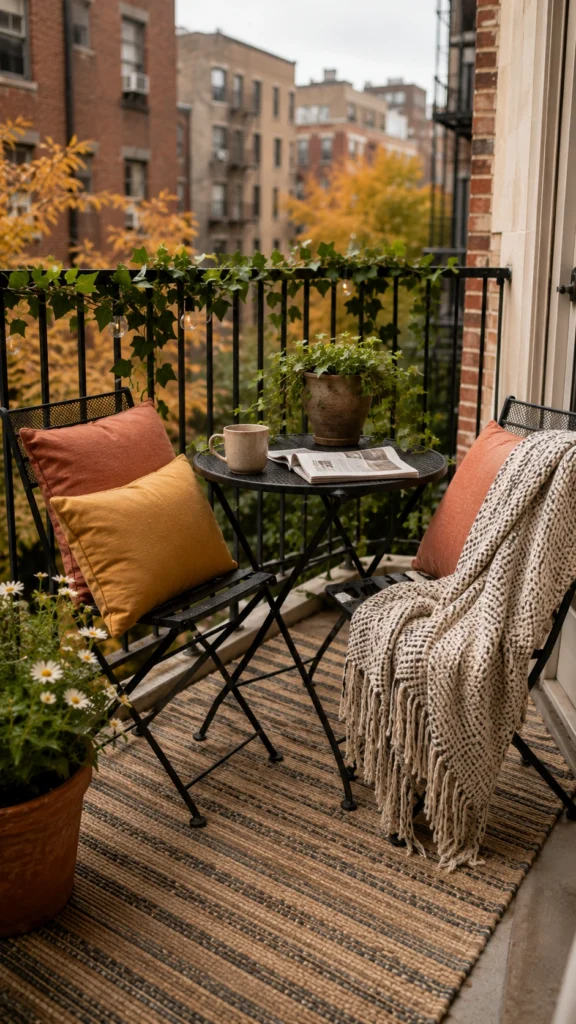
Bare furniture never invites anyone to linger. Two outdoor pillows and one washable throw cost about $40 total and turn the same bistro chair into somewhere you’d stay for a second cup of coffee. Solution-dyed acrylic fabric resists fading and handles light rain without complaint. The throw stretches your balcony season by a solid month on both ends, because a blanket at 55 degrees beats a patio heater you don’t own. One rule: never use indoor pillows outside “just for now.” Mildew doesn’t respect temporary arrangements.
21. An Outdoor-Safe Mirror
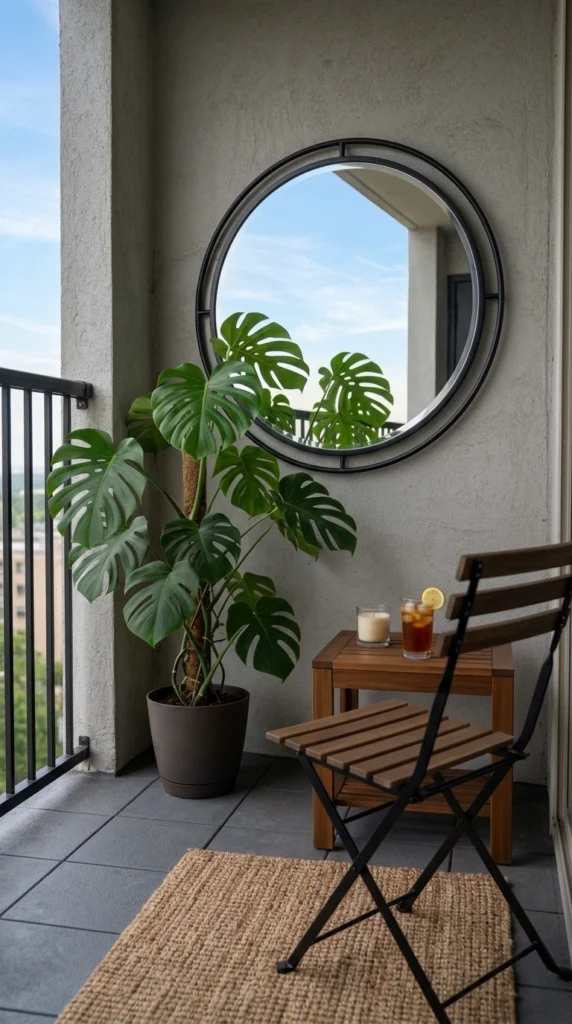
This one sounds odd and works brilliantly. One acrylic or metal-framed outdoor mirror on the back wall bounces light around and visually doubles a cramped balcony. Position it to reflect your plants or the sky, never the neighbor’s window, unless you enjoy awkward waves. Acrylic mirrors weigh little, don’t shatter, and hang from a single removable hook. Designers use this constantly in tiny courtyards, it costs under $50, and it does its best work on dark, north-facing balconies boxed in by other buildings.
22. A Fold-Down Wall Table
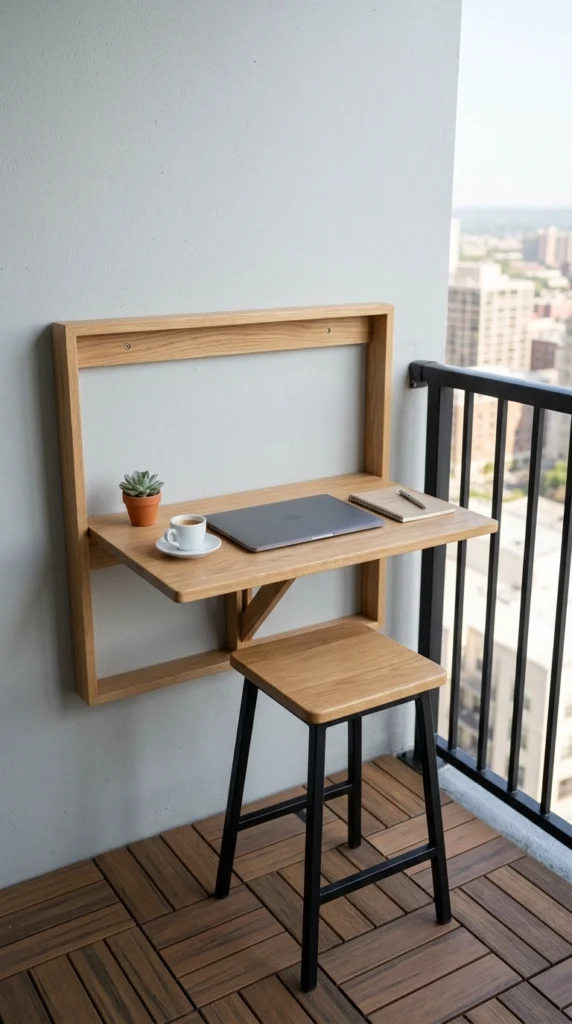
The strongest small-space move on this list: a table that disappears. A fold-down table mounts flat against the wall and drops open only when you need a laptop desk or a dinner spot for one. If your lease bans drilling, a slim console table with a 10-inch depth pushed against the wall accomplishes something similar. Mount the fold-down version at 28 to 30 inches for dining, or at 36 inches to pair with a bar stool from idea #16. Either way, you get a work-from-balcony setup that vanishes for weekend lounging.
5 Mistakes That Shrink a Tiny Balcony
Before the recap, a quick reality check. These five errors show up on small balconies constantly, and each one wastes space or money:
- Buying full-size patio furniture. A standard outdoor sofa runs 78 inches wide. Your balcony is probably 72. Measure twice, order once.
- Filling every square foot. Empty floor space makes a small balcony feel bigger. Aim to leave about a third of the floor visible.
- Mixing five different materials. Teak, black metal, rattan, plastic, and concrete in one 4×6 space reads as chaos. Stick to two materials plus greenery.
- Ignoring wind. Anything lightweight on a fifth-floor balcony eventually goes over the edge or across the floor. Weight your planters, secure your screens, and skip the umbrella if gusts are constant.
- Skipping the floor layer entirely. Furniture on bare concrete never looks finished, no matter how nice the chairs are. The rug goes down first.
Fix these five and even a modest setup outperforms an expensive balcony assembled without a plan.
Frequently Asked Questions
How do I decorate a small apartment balcony on a budget?
Start with the highest-impact, lowest-cost layers: a $30 outdoor rug, a $20 strand of string lights, and $30 of railing planters. That’s $80 for a space that already looks intentional. Add seating next, and check secondhand marketplaces first, since folding bistro sets show up constantly for half of retail price.
What furniture works best on a very small balcony?
Anything that folds, stacks, clamps, or mounts. A folding bistro set, stackable stools, a clamp-on railing table, and a fold-down wall table all clear the floor when you’re not using them. Skip anything with a fixed footprint wider than 30 inches unless your balcony runs deeper than 5 feet.
How do I add privacy without blocking light?
Choose materials that filter rather than seal. Bamboo reed screening lets light through its gaps, sheer outdoor curtains glow instead of darkening the space, and a trellis with climbing jasmine gives you green coverage that still breathes. Solid HDPE screens block the most sightlines but also the most sun, so save those for railings that face direct foot traffic.
What plants survive on an apartment balcony?
Match the plant to your sun exposure, not your Pinterest board. South-facing balconies with 6+ hours of sun handle herbs, petunias, and succulents. Shady north-facing spots want pothos, ferns, and begonias. Wind matters too: pick low, sturdy plants for high floors and weight every pot. When in doubt, snake plants tolerate almost any balcony condition you throw at them.
Do I need my landlord’s permission for these ideas?
For most of them, no. Rugs, furniture, planters on the inside of the railing, and freestanding pieces need zero approval. Ask first about anything that attaches to the building: drilled hooks, mounted tables, and planters hanging over the railing’s outside edge. Many leases also restrict grills and open flames, so read yours before you buy candles with actual wicks.
Final Thoughts
You don’t need a bigger balcony. You need a floor layer, a place to sit, something growing, and light after sunset. Everything else on this list is a bonus you add when the mood or the paycheck allows.
Pick two ideas and start this weekend. A rug and a strand of string lights take twenty minutes to set up, cost less than one dinner out, and change how you feel about your apartment every day after. That concrete slab has been sitting empty long enough. Give it a reason to exist.



Pingback: 20 Fall Basket Ideas for Cozy Autumn Decor You'll Love - Caliora Living