
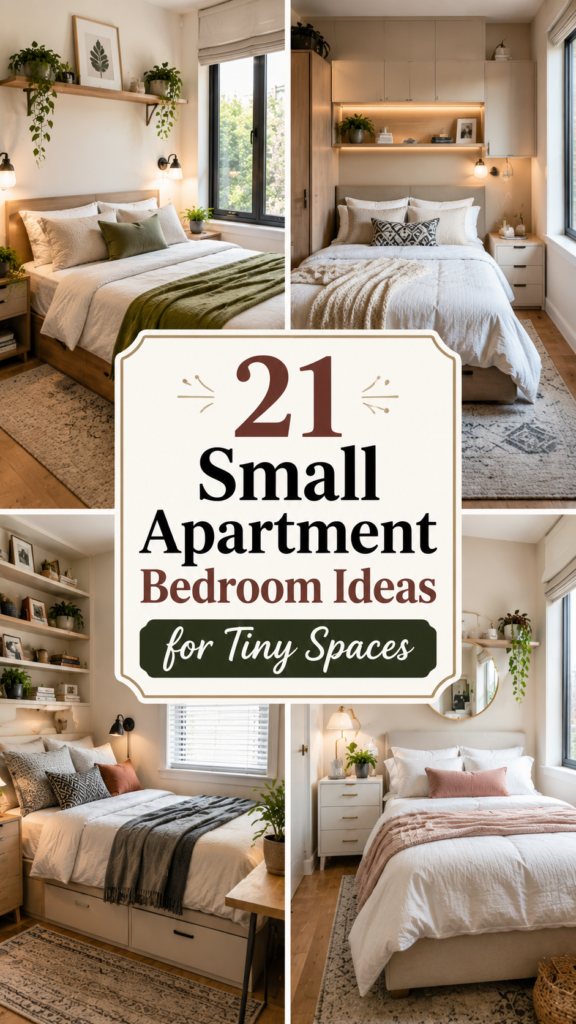

Your bed swallows most of the floor. The “dresser” is a chair buried under laundry. Getting to the window means turning sideways past the corner of the mattress. A small apartment bedroom does this to almost everyone, and the fix rarely involves finding more square footage.
What you actually need is a handful of decisions that pull double duty out of the space you already rent. The 21 small apartment bedroom ideas below do exactly that. They work in real rentals, on ordinary budgets, and none of them require touching a wall you’re not allowed to touch.
Measure your room first. Then start with whatever annoys you most.
1. Raise the Bed on a Loft Frame
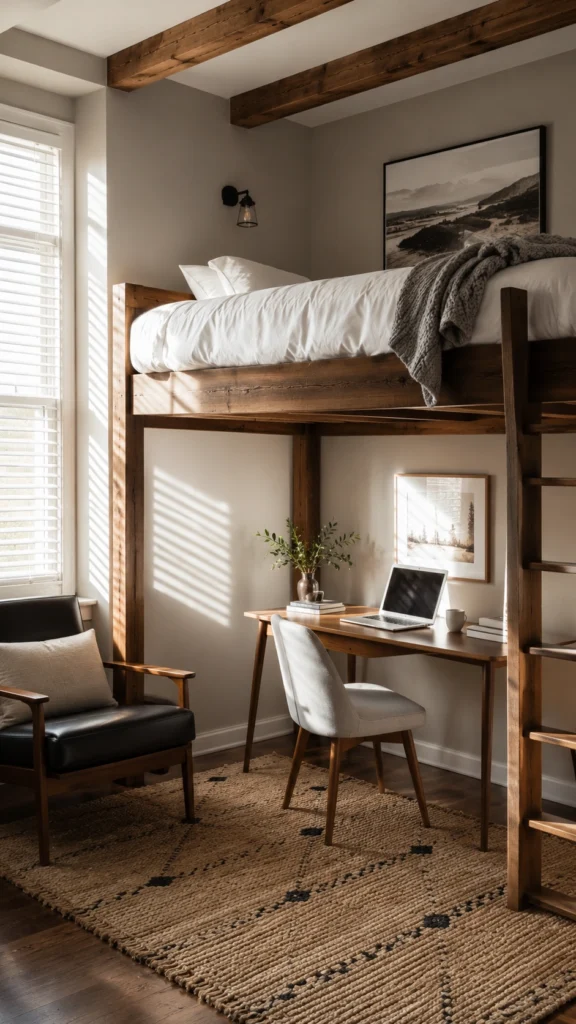
The single biggest patch of unused space in most small bedrooms sits directly under the mattress. A loft frame lifts the bed 5 to 6 feet up and hands that floor back to you, with enough room for a desk, a reading chair, or a full dresser tucked underneath.
The catch is ceiling height. You want 9 feet or more so you can sit up in bed without ducking. Trying this under an 8-foot ceiling is the most common loft-bed regret, and it’s avoidable. Measure for at least 33 inches of clearance above the mattress, and a low-profile mattress under 8 inches thick buys a few of those inches back. Studios and rooms under 100 square feet get the most out of this.
2. Get a Bed Frame With Built-In Drawers
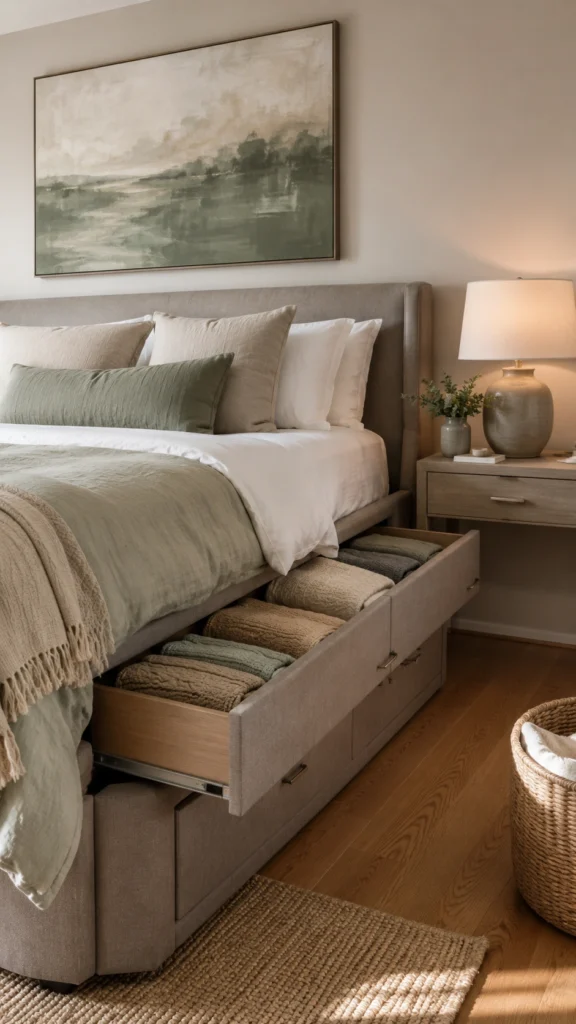
Run the numbers on a storage bed frame and it makes its own case. A queen frame already takes up about 33 square feet. Add two to four drawers inside that same footprint and you’ve replaced a whole dresser for zero extra floor space, roughly 12 square feet you get to keep.
One detail matters more than the rest: buy full-extension drawers. Half-extension ones hide the back third of everything you own, and you’ll forget it exists by spring. Keep off-season clothes and spare bedding in the drawers, and your everyday items in the closet. You’ll open the drawers less often, so the walkway stays clear.
3. Install a Murphy Bed
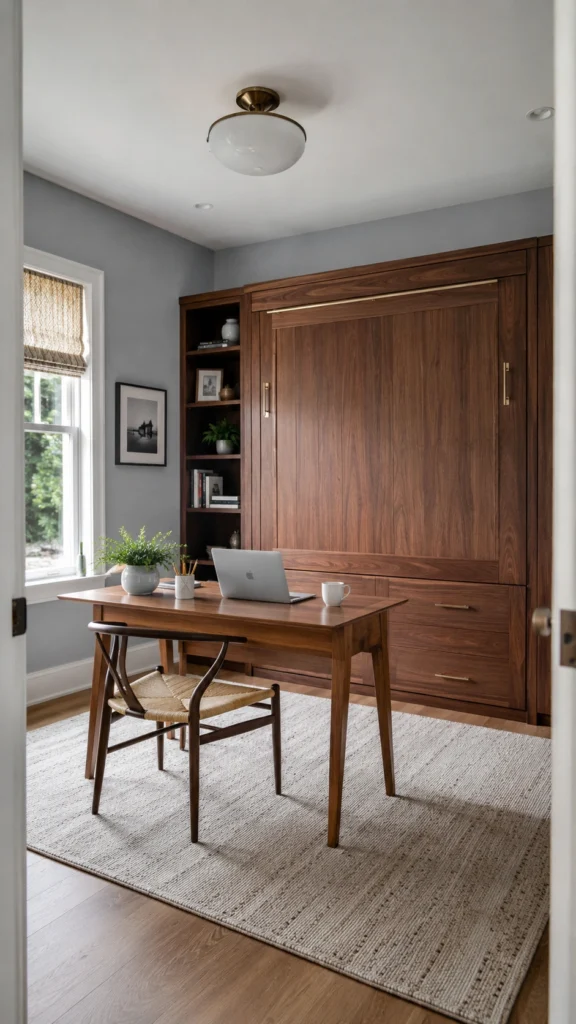
Nothing else turns a bedroom into a working home office as completely as a Murphy bed. It folds flat to the wall during the day, and the better cabinets include built-in shelving, a fold-out desk, and sometimes a sofa. If you work from home and dread a rumpled bed sitting in the background of every video call, this is the fix.
It isn’t cheap, usually $1,200 to $3,000, and that’s the honest downside. If the price stings, a folding futon or a daybed gives you a similar day-to-night switch for under $400. You lose the polish but keep the flexibility, which for a lot of renters is the part that matters.
4. Swap Nightstands for Floating Shelves
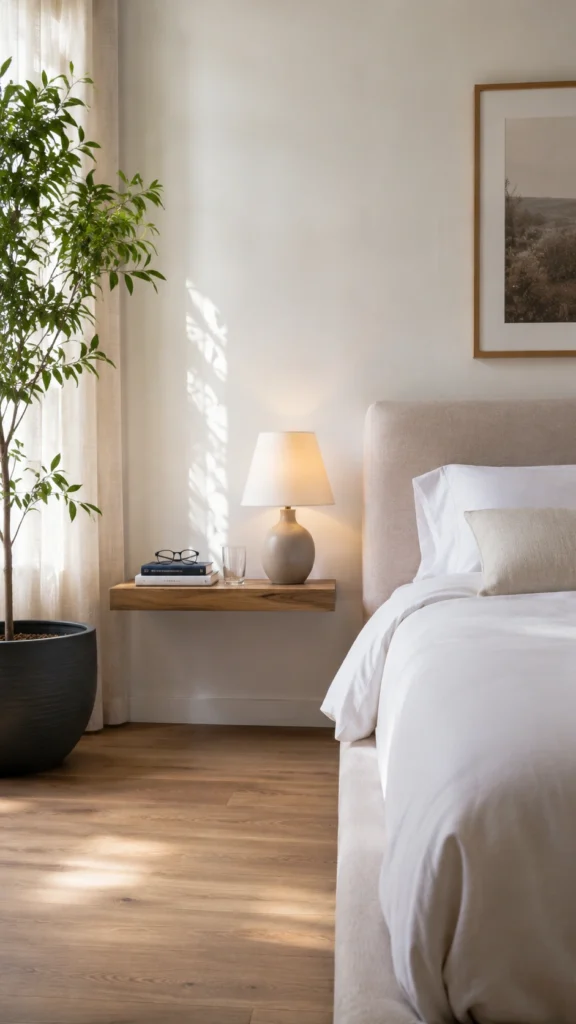
A nightstand quietly claims about 2 square feet on each side of the bed. A floating shelf mounted at mattress height holds the same phone, glasses, book, and small lamp while sitting on zero floor. The room reads as less crowded the moment the legs disappear, and cleaning under the bed gets easier.
Keep the shelf to three things, though. Pile it high and you’ve just moved the clutter up to eye level.
5. Hang a Large Mirror Across From the Window
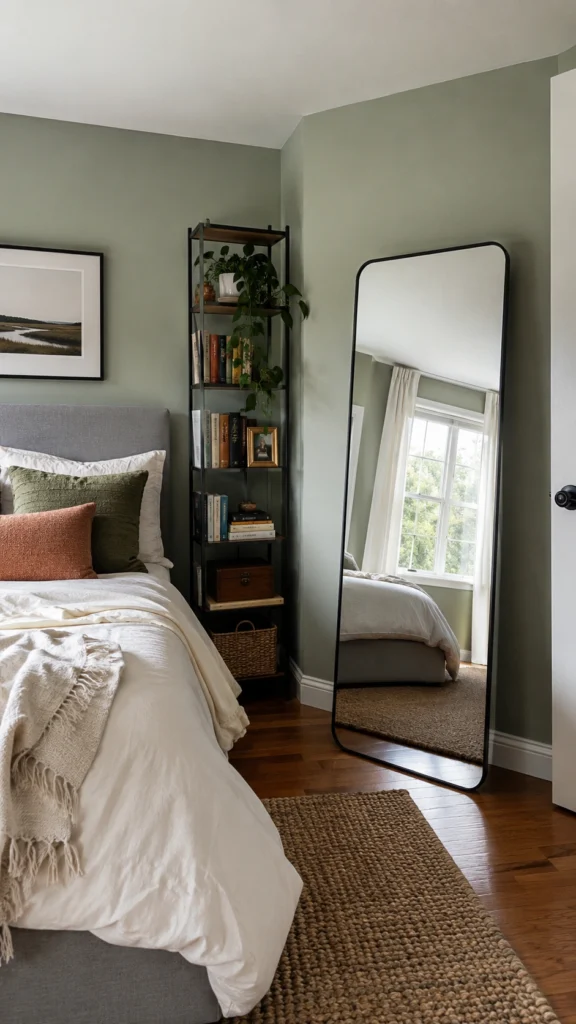
Hotel rooms often feel bigger than their real dimensions, and mirrors do most of that work. A single large mirror, at least 30 by 40 inches, placed directly opposite your window bounces daylight across the room and doubles the space visually. You’ll notice it the same afternoon you hang it. A leaning floor mirror does the same job and covers your outfit checks too.
Resist the urge to scatter several small mirrors instead. A cluster of little ones reads as clutter, while one oversized piece reads as part of the room’s architecture. And if your rental came with mirrored closet doors, leave them uncovered. They’re doing more for the space than you’d guess.
6. Keep the Palette Light and Layered
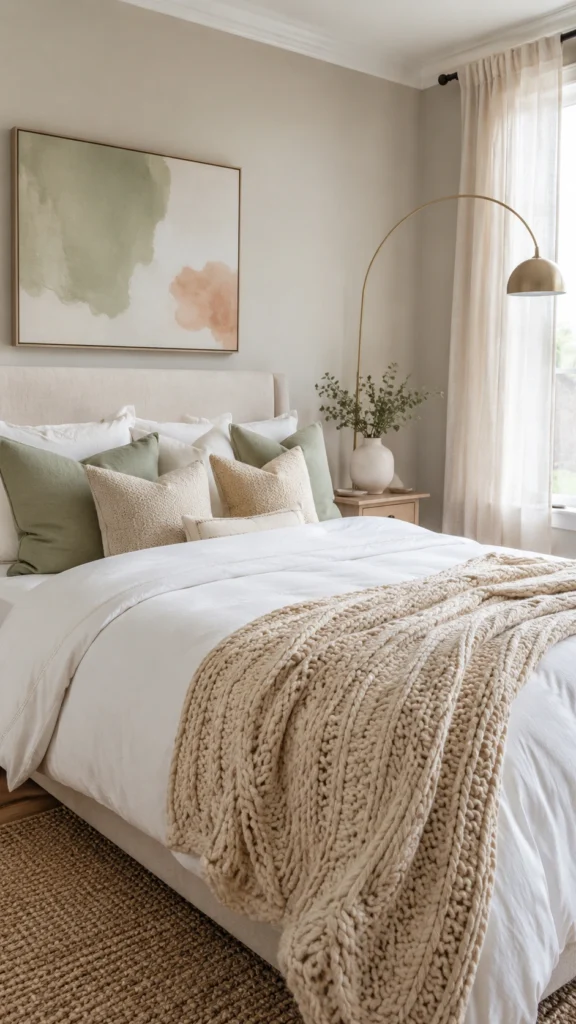
Light walls feel farther apart because they reflect light instead of absorbing it. Soft white, pale greige, or a muted sage all work well. To keep the room from feeling sterile, layer texture through bedding and curtains rather than through color.
If you want contrast, keep the walls and large furniture light and bring darker tones in through small accents: a couple of throw pillows, a lamp base, one piece of art. You get depth without the walls closing in, which is the trap dark paint sets in 90 square feet.
7. Go Vertical With Tall, Narrow Storage
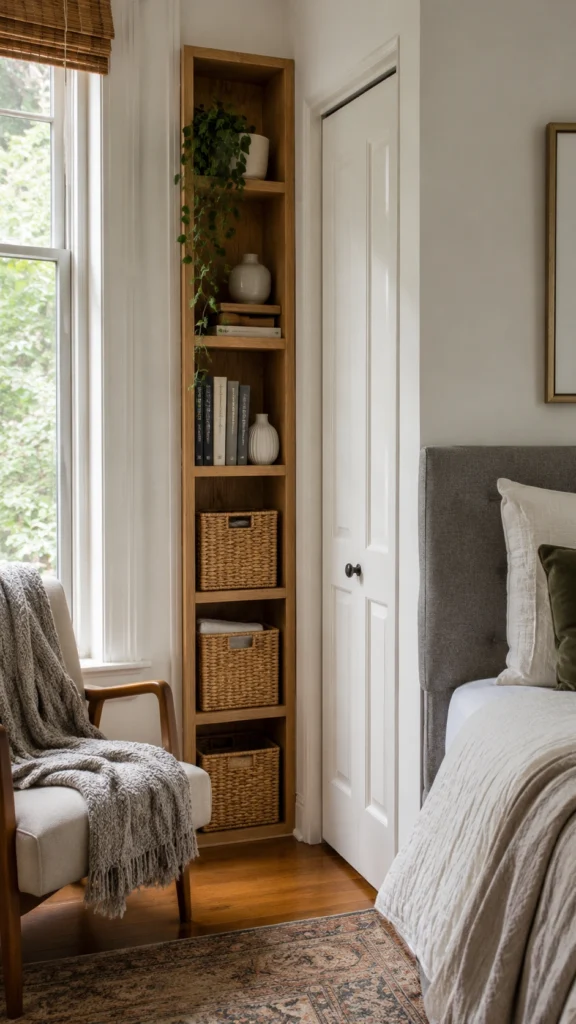
Most small bedrooms leave the top 3 feet of every wall completely empty. A narrow bookcase, something like 12 inches deep and 72 inches tall, holds as much as a wide dresser on half the floor space, and it slips into the awkward gap beside the closet that nothing else fits.
Load the heavy things on the bottom shelves and the light, good-looking pieces up top. The room feels more grounded that way, and the tower is less tippy. Anchor it to the wall regardless. Renters can use removable anti-tip straps that leave the drywall alone.
8. Slide Rolling Bins Under the Bed
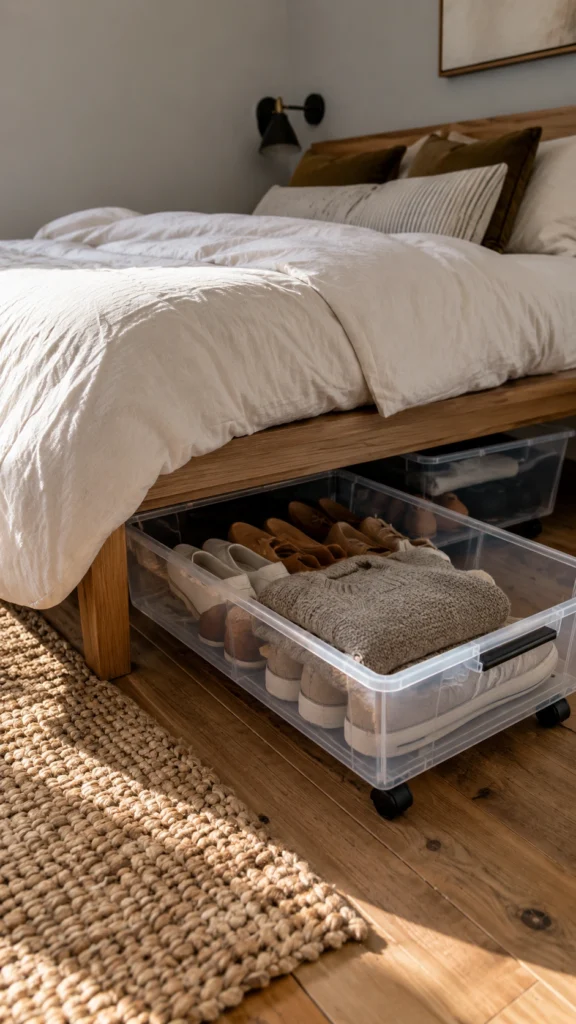
No storage bed frame? Low-profile bins on wheels roll under most standard beds and swallow shoes, sweaters, and linens. Clear plastic wins for everyday stuff because you can see what’s inside without dragging all of it out. Zip-top fabric bags handle soft items and odd gaps. Vacuum-sealed bags work best for bulky comforters, shrinking them by up to 75 percent.
Measure the clearance before you order, because this is where people slip up. Most bins want 6 to 7 inches, and plenty of platform beds only give you 4. Bed risers close that gap for about $15 and practically vanish once the duvet drapes over the edge.
9. Mount Wall Sconces Instead of Table Lamps
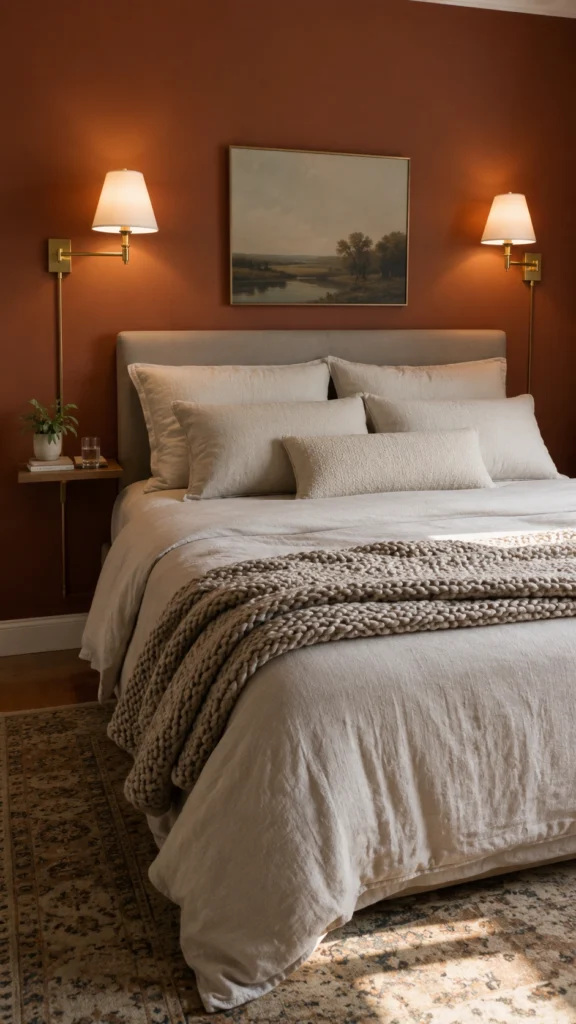
A table lamp needs a table, and table space is the one thing you’re short on. Plug-in wall sconces mount beside the bed, clear off your shelf, and still throw proper reading light. No electrician required either. The plug-in versions run a thin cord down to the nearest outlet and install with two screws, leaving holes smaller than a picture hook, which is exactly what renters want.
10. Pick a Headboard That Does More Than Look Nice
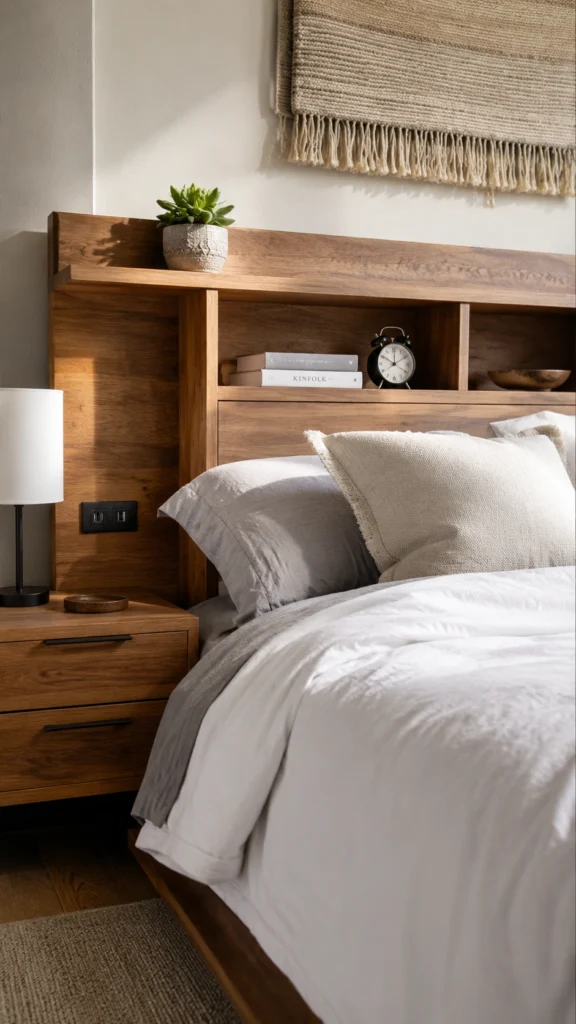
A headboard with shelves or cubbies is basically a bookcase you sleep against. Some come with hidden compartments, USB ports, and sliding panels. A plain upholstered headboard looks nice and does nothing else, which is a tough trade in a small room.
Don’t want to buy a headboard at all? Mount a single long shelf about 12 inches above the mattress line. Same storage, roughly $40, done.
11. Trade the Closet Door for a Curtain
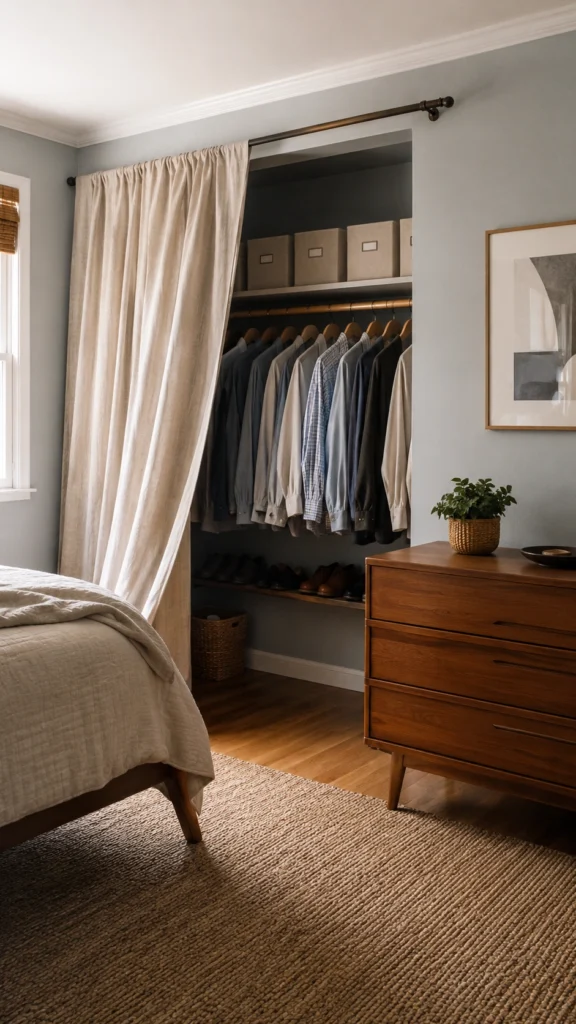
A hinged closet door needs a 24 to 30 inch swing radius, and that arc is dead space you can’t put anything in. Replace it with a curtain, or hang sliding barn-style hardware, and the whole zone comes back into play. The fabric also softens the room and adds a bit of texture, which small spaces tend to be missing.
Most landlords won’t mind as long as you keep the original door and rehang it before you leave. Ask first anyway, and store the door somewhere flat.
12. Add a Second Closet Rod
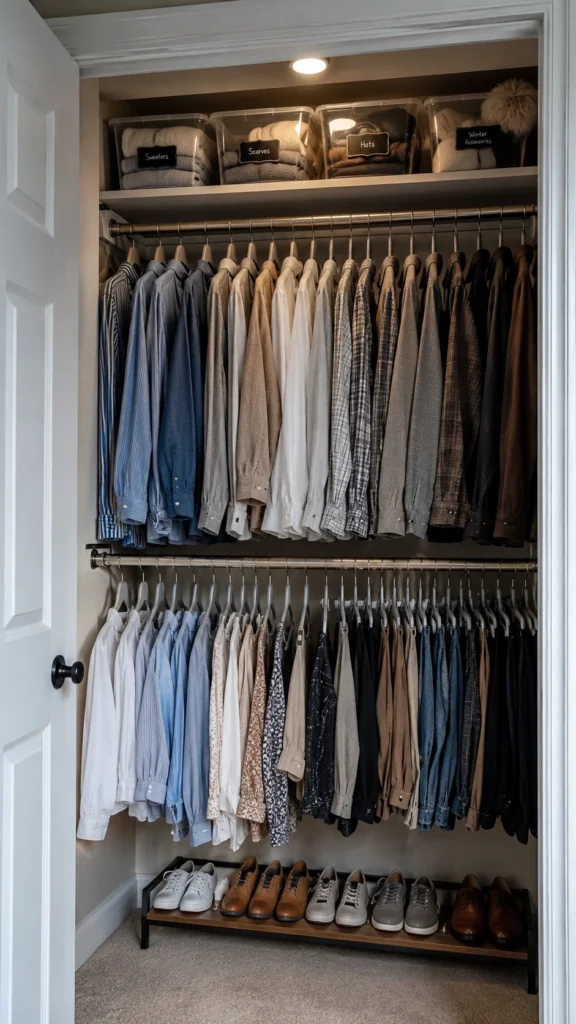
A single rod wastes the entire bottom half of your closet. A second rod that hooks over the first, no tools involved, instantly doubles your hanging space for shirts, skirts, and folded pants. The closet floor then frees up for a low shoe rack or a couple of labeled bins.
If you’re redoing the closet properly, work in this order:
- Pull everything out and donate whatever you haven’t worn in a year.
- Hook the second rod below the first for shorter items.
- Switch to slim velvet hangers, which fit about 30 percent more clothes per foot than plastic.
- Use the top shelf for labeled bins of seasonal stuff.
13. Buy Furniture That Does Two Jobs
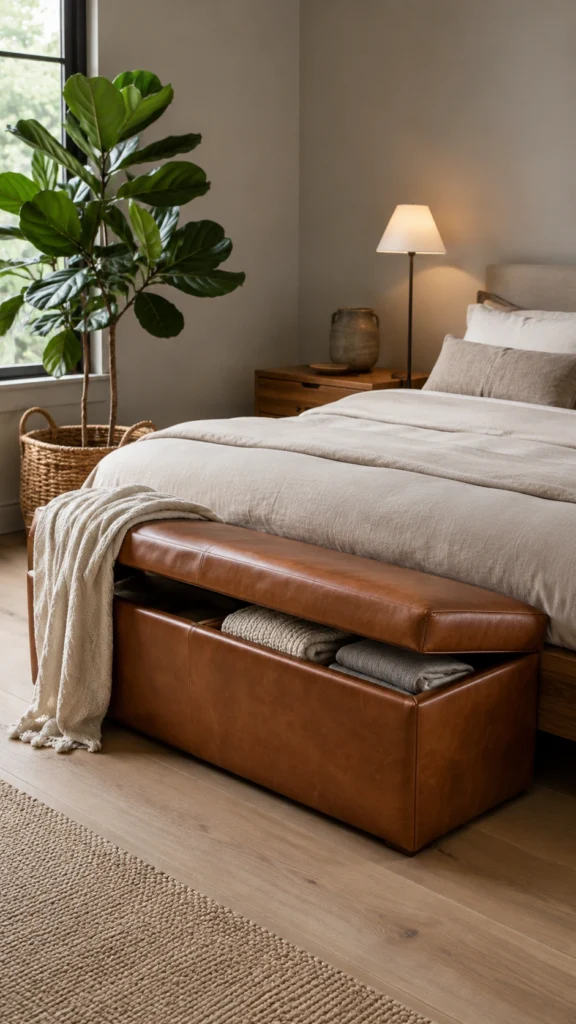
In a room this size, every piece should earn its footprint twice. A storage ottoman is a bench, a blanket chest, and a spare seat for a guest. A trunk works as a coffee table and hides linens. A vanity with a flip-top mirror doubles as a desk.
The thing to avoid is the cute accent chair that ends up holding laundry and nothing else. If a piece only does one job, and that job is collecting worn jeans, it probably doesn’t belong in a small bedroom.
14. Use a Daybed as a Sofa
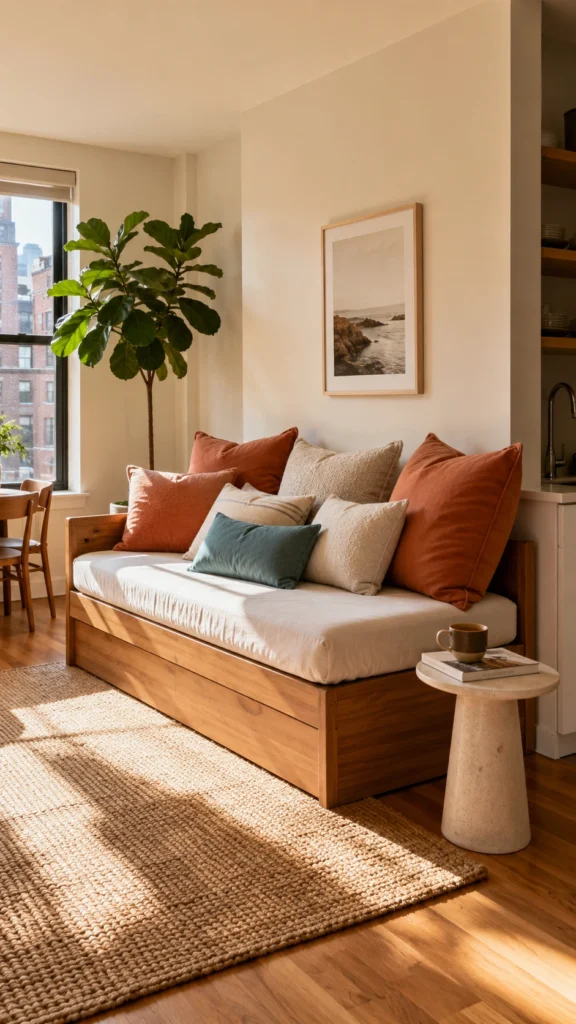
A daybed sits against the wall like a sofa, sleeps like a twin, and often hides a trundle or drawers underneath. In a studio, that one swap can erase the “my living room is also my bedroom” problem. Add a few structured cushions during the day and it reads as seating instead of a bed with pillows on it. It suits solo apartments where guests show up occasionally and a queen mattress isn’t the priority.
15. Mount a Fold-Down Desk
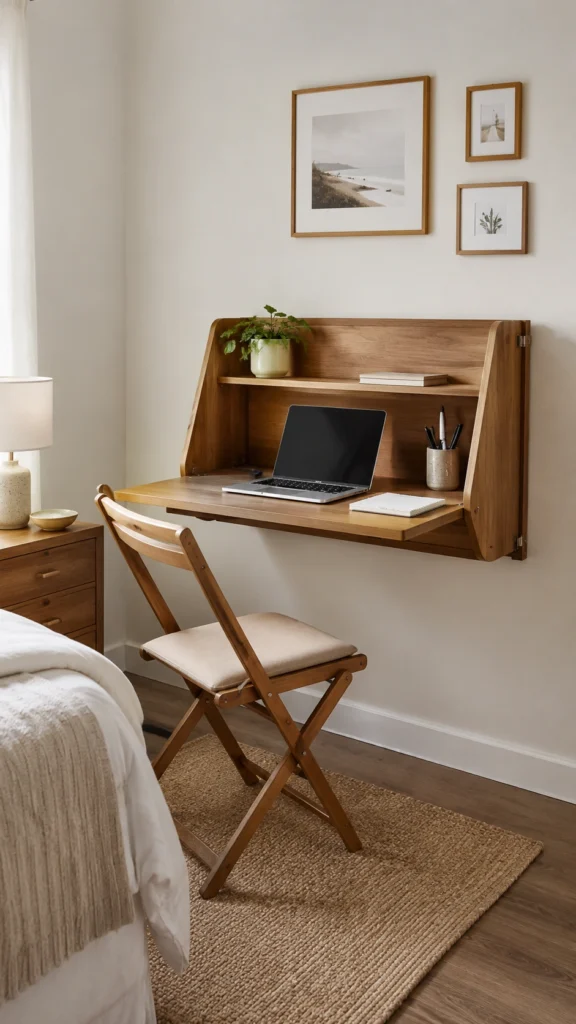
Working from bed is rough on your back and your sleep, but a full desk won’t fit. A wall-mounted fold-down desk settles both problems. Closed, it sits about 4 inches deep. Open, it’s a real workspace, and many include interior shelves for a laptop, notebook, and chargers.
Mount it at 29 inches high, which is standard desk height, and pair it with a folding chair you can hang on a wall hook when you’re done. The whole setup disappears at the end of the day, which is the entire point.
16. Hang Curtains High and Wide
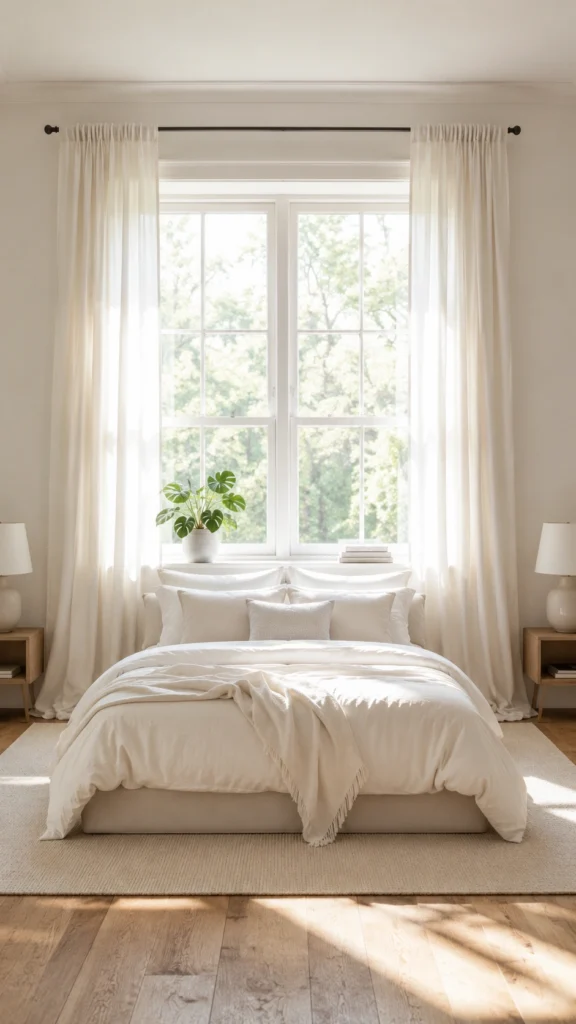
This one costs almost nothing and changes the room more than the price suggests. Mount the curtain rod 4 to 6 inches below the ceiling instead of right above the window, and extend it 8 to 12 inches past the frame on each side. That tall column of fabric pulls your eye upward and makes the ceiling feel higher. Floor-length panels that just brush the floor finish the effect.
Short curtains hung at frame height cut the wall in half and shrink a room you’re trying to stretch. Standard 96-inch panels from a big-box store run $20 to $30 and do the job fine. Pick a fabric close to your wall color so the eye keeps moving instead of stopping at a hard contrast line.
17. Anchor the Sleep Zone With One Big Rug
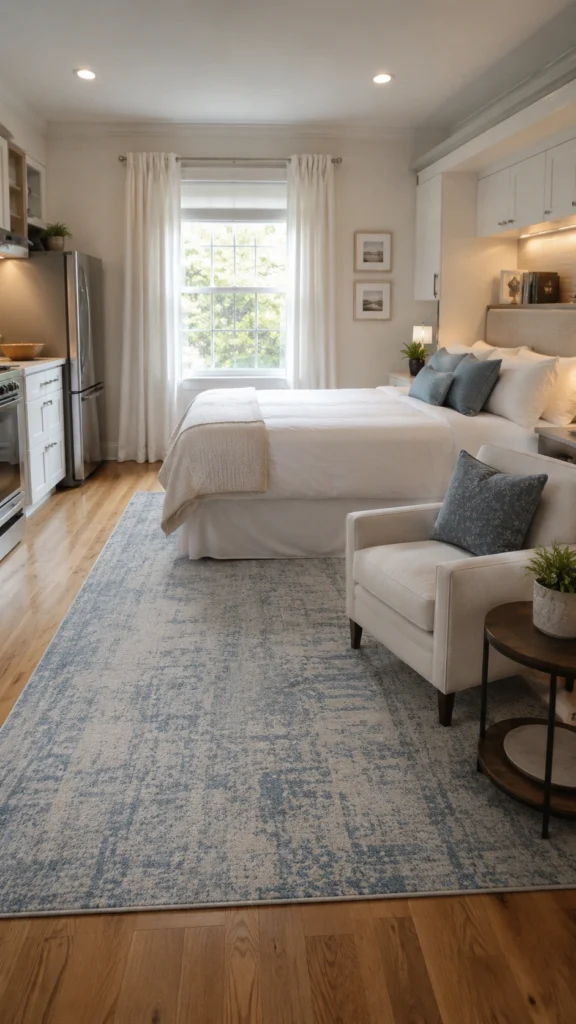
In a studio or a bedroom that moonlights as an office, a rug tells you where the “bedroom” starts. Go large, at least 5 by 8 feet for a queen, and slide it about two-thirds under the bed frame. One big rug ties the space together. Several small ones scattered around do the opposite and make the floor look patchy.
Match the rug’s undertone to your wall color while you’re at it. Low contrast between floor and walls softens the room’s edges, and softer edges feel larger.
18. Put Doors and Walls to Work
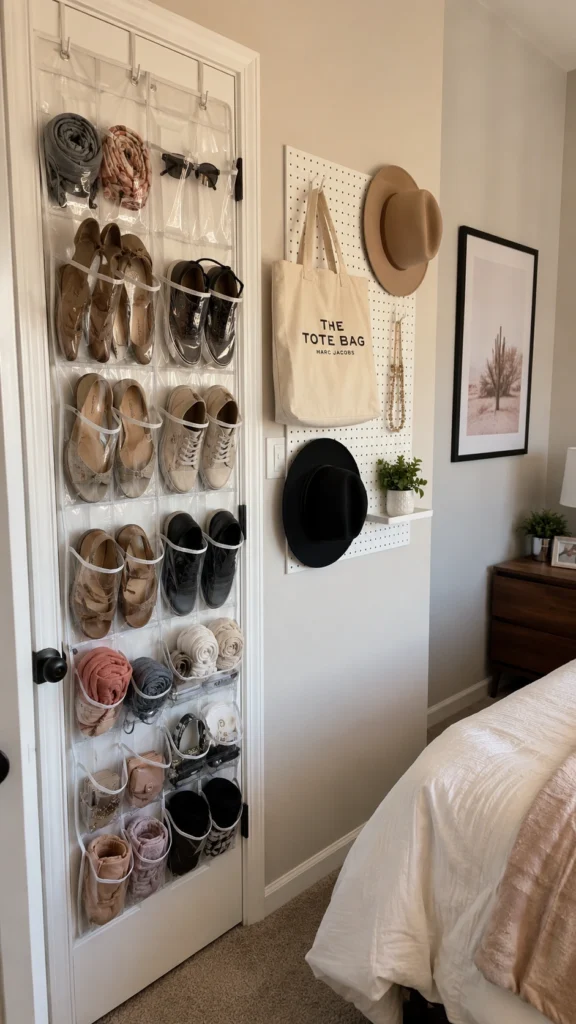
The back of the bedroom door is prime real estate. An over-the-door organizer with 20-plus pockets handles shoes, accessories, chargers, and skincare. Beside the closet, a pegboard or a rail with S-hooks turns blank wall into hanging storage for bags, hats, and jewelry. These surfaces sit empty in most apartments, which is a small waste once you notice it.
A quick sorting guide:
- Over-the-door pockets: shoes, scarves, tech accessories
- Adhesive hooks: robes, bags, tomorrow’s outfit
- Pegboard with shelves: jewelry, sunglasses, a small plant or two
19. Push the Bed to the Wall or Into a Corner
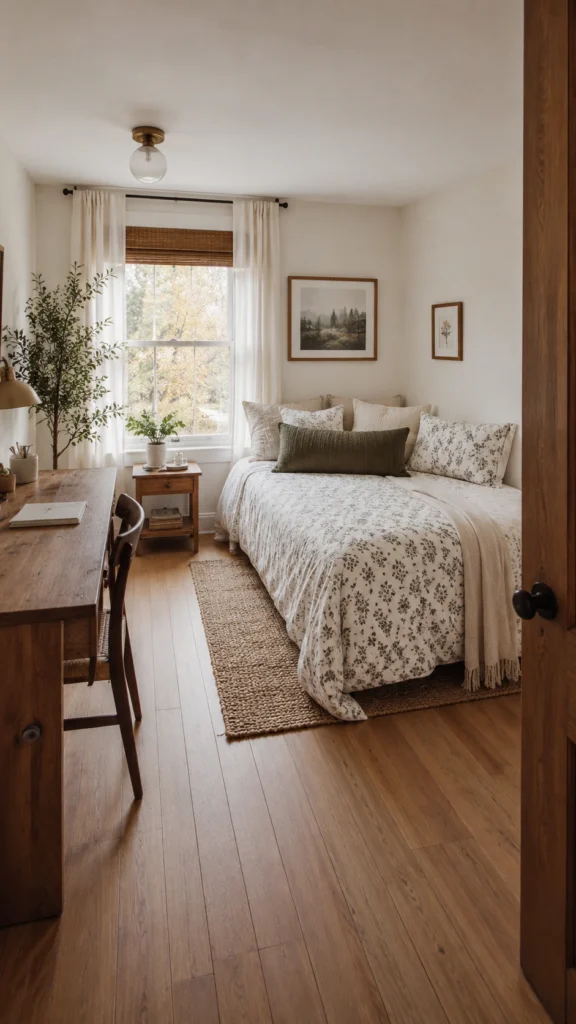
A bed centered with walkways on both sides looks great in a magazine and leaves no room to move in a small one. Push one long side against the wall and you open a walkway wide enough for a desk or dresser. Tuck it into a corner and you free up even more.
Yes, making the bed gets a little harder. If I’m weighing 20 extra seconds of sheet-tucking against 10 square feet of usable floor, I take the floor every time. It’s the easiest call you’ll make in the room.
20. Edit Before You Organize
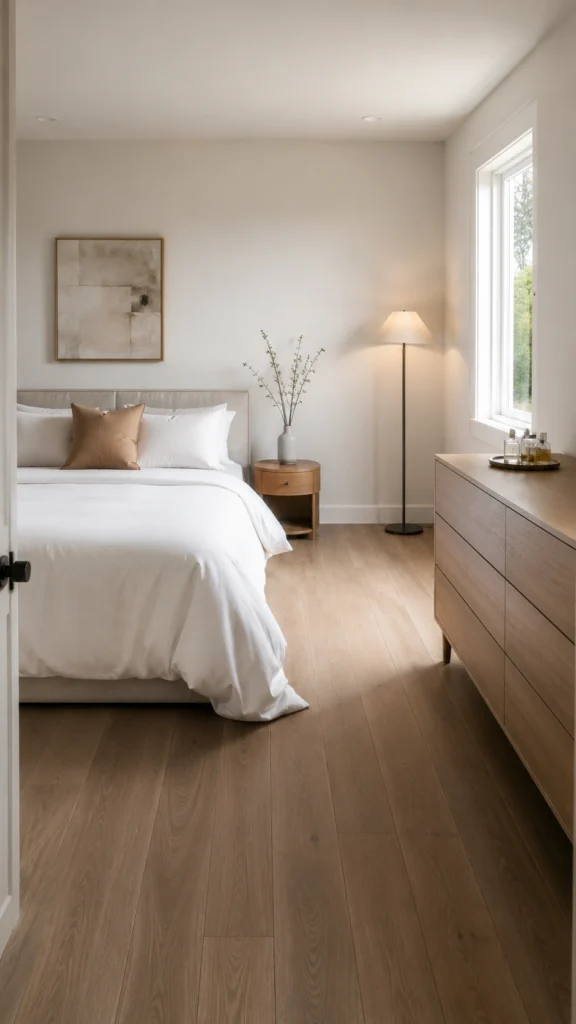
No storage trick beats simply owning less. Before you buy a single bin, pull everything out of the bedroom and sort it into keep, donate, and relocate. Most people find that about 30 percent of what’s in there belongs somewhere else entirely: the coat closet, the kitchen, the donation bag.
A 30-minute version:
- Clear every flat surface into one pile.
- Return only what you actually used this week.
- Box the maybes, date the box, and donate it unopened if 60 days pass.
- Run it again each season.
Do this first if you’re about to spend money on organizers. Decluttering usually cuts the shopping list in half, and half the bins means half the visual clutter.
21. Layer Light at Three Heights
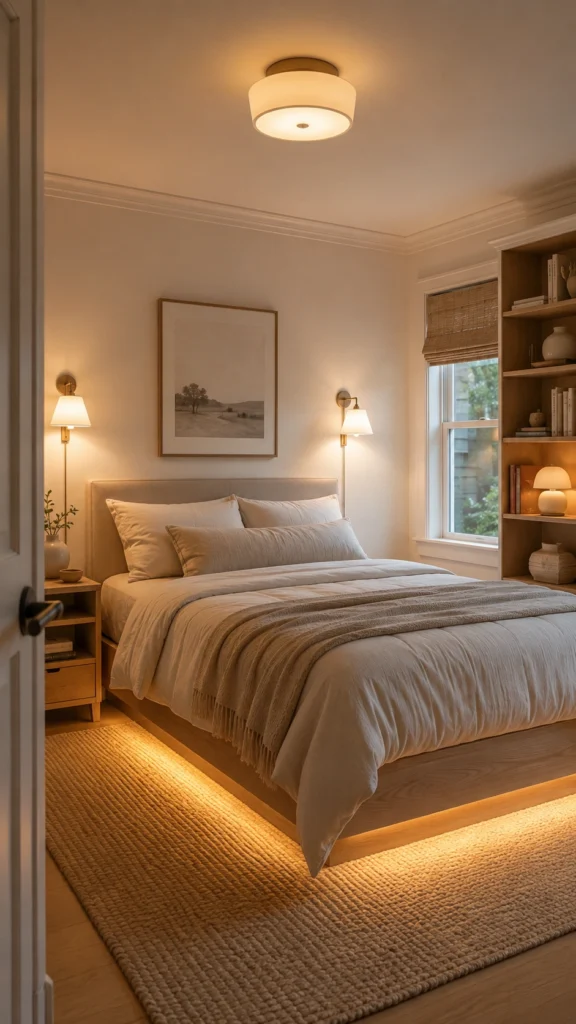
A single overhead bulb flattens a room and gives it the mood of a waiting area. Three light sources at different heights fix that: a ceiling fixture up top, sconces at eye level, and something low, like an LED strip under the bed frame or a small lamp on a shelf. Several pools of warm light create depth, and depth reads as space.
If I had to pick one upgrade on this whole list for the biggest change per dollar, it would be this. Use warm bulbs around 2700K everywhere, since cool blue-white light makes a small room feel clinical. A $10 smart plug or dimmer lets you set the mood without getting out of bed.
How to Choose the Right Small Apartment Bedroom Ideas for Your Room
Twenty-one options is a lot to stare at when you’re standing in the actual room with no idea where to begin. A short plan before you order anything keeps you from the classic outcome: furniture that arrives, doesn’t fit, and lives in its box for a month.
Measure Before You Shop for Small Bedroom Furniture
Write down four numbers: room length, room width, ceiling height, and door width. That last one catches people constantly. A beautiful 62-inch dresser is useless if your doorway is 30 inches wide and the hallway makes a tight turn.
Then map your walkways. You want at least 24 inches of clear path on any side of the bed you use to get in and out. Narrower than that and you’ll shuffle past the mattress sideways every morning, which gets annoying fast. Sketch the room on paper, or better, outline furniture footprints on the floor with painter’s tape. Tape costs about $6 and has stopped a lot of $600 mistakes.
Match Ideas to Your Actual Habits
Choose based on how you live now, not the tidier version of yourself you keep meaning to become. A few honest questions:
- Work from home? Put the fold-down desk (idea 15) or the Murphy bed (idea 3) ahead of extra clothing storage.
- Own a lot of clothes? Start with the second closet rod (idea 12) and the storage bed frame (idea 2).
- Have guests stay over? A daybed with a trundle (idea 14) covers it without a spare room.
- Don’t make the bed daily? Skip the Murphy bed. Folding an unmade bed into a cabinet doesn’t work, and you’ll quit using it inside a month.
Set a Budget Tier and Stay In It
Small bedroom upgrades sort into three rough price bands, and every band gets real results:
- Under $100: curtain-height fix, declutter edit, mirror, velvet hangers, under-bed bins, adhesive hooks
- $100 to $500: floating shelves, wall sconces, storage headboard, daybed frame, tall bookcase, fold-down desk
- $500 and up: storage bed frame, loft bed, Murphy bed, full closet system
Start at the cheapest tier even if the budget is there. The free and near-free fixes change how the room feels, and that new feeling often changes which furniture you actually want to buy.
Mistakes That Make Small Bedrooms Feel Smaller
Knowing what to skip matters as much as knowing what to buy:
- Oversized furniture. A king bed in 90 square feet leaves no walkway. Drop to a queen or full and take your floor back.
- Too many small decor pieces. Ten tiny frames and trinkets read as noise. One or two larger pieces look deliberate.
- Dark, heavy window treatments. If you need blackout, choose light-colored blackout panels over thick dark drapes.
- Furniture blocking the window. Daylight is your best free decorating tool. Never park a bookcase in front of it.
- Buying storage before decluttering. A bin full of stuff you don’t use is just clutter with a lid.
Frequently Asked Questions
What size bed works best in a small apartment bedroom?
A full (54 by 75 inches) is the sweet spot for most solo sleepers in rooms under 110 square feet. You get 15 inches more width than a twin while saving 6 inches over a queen. Couples usually need the queen, so make up the space with a storage frame and wall-mounted lighting rather than shrinking the mattress.
How do you make a small bedroom look bigger without buying anything?
Three free moves do it. Push the bed against a wall to open one continuous walkway, clear every flat surface down to two or three items, and pull furniture a few inches off the window so light reaches the full depth of the room. Most people see the difference within the hour.
Are Murphy beds worth the money for renters?
Usually not, unless you’re staying put for three years or more. Most bolt into wall studs, and plenty of landlords won’t sign off on the install. A daybed or a solid futon gives you about 80 percent of the benefit with no drilling, and it comes with you to the next place.
What colors make a small bedroom feel larger?
Soft white, warm greige, pale sage, and light blue-gray reflect the most light and soften the room’s edges. Paint the walls, trim, and ceiling in one light tone for the strongest effect, since color breaks stop the eye and make walls feel closer. Keep darker shades for pillows, a throw, or a single piece of art.
Where do you put a TV in a small bedroom?
On the wall opposite the bed, at seated eye level, roughly 42 inches from floor to screen center. A wall mount frees the dresser top and removes the need for a media stand. Skip the swivel arm unless you truly watch from two spots. A flat mount sits closer to the wall and looks cleaner.
How much does it cost to organize a small bedroom?
You can cover the basics for under $150: velvet hangers ($25), two under-bed bins ($40), a second closet rod ($20), an over-the-door organizer ($20), and adhesive hooks ($15). The declutter edit costs nothing and outperforms any single purchase. Hold off on the $500-plus items, like a storage bed or loft frame, until you’ve lived with the cheap fixes for a month.
Final Thoughts
A small bedroom forces decisions a big one lets you dodge, and that pressure tends to produce a better room. Four principles run underneath all 21 ideas: go vertical, make every piece work twice, keep colors light, and edit your belongings before you organize them.
You don’t have to run the whole list. Pick the two ideas aimed at whatever annoys you most day to day, the missing desk, the overstuffed closet, or the dim lighting, and start there this weekend. Small rooms reward small, steady improvements, and the floor you clear now is floor you’ll keep noticing every morning.



Pingback: 20 Fall Decor Ideas for Bedroom You'll Love This Season - Caliora Living