
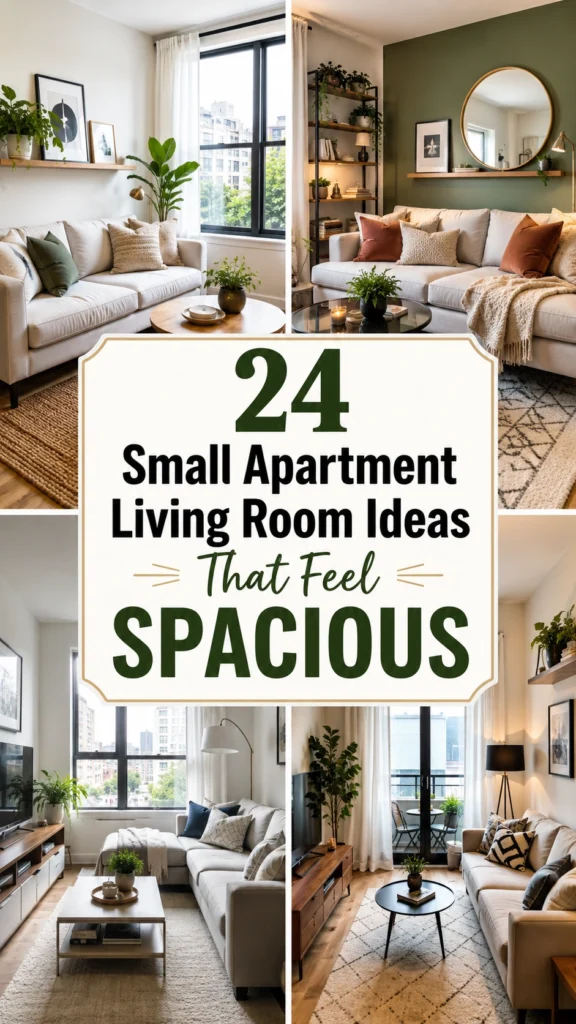

You’ve done the shuffle. Sideways past the coffee table, hip against the armrest, apologizing to a guest who’s now wedged between the sofa and the bookshelf. Your living room isn’t big, and no amount of rearranging pillows is going to change the square footage.
Here’s what will change: layout, scale, and a handful of visual tricks that make a small room read as open instead of packed. None of these require a renovation or a conversation with your landlord. Most cost less than a week of takeout. Below are 24 ways to make a small apartment living room feel bigger, whether you’re working with 100 square feet or a little more breathing room than that
1. Measure Everything Before You Buy Anything
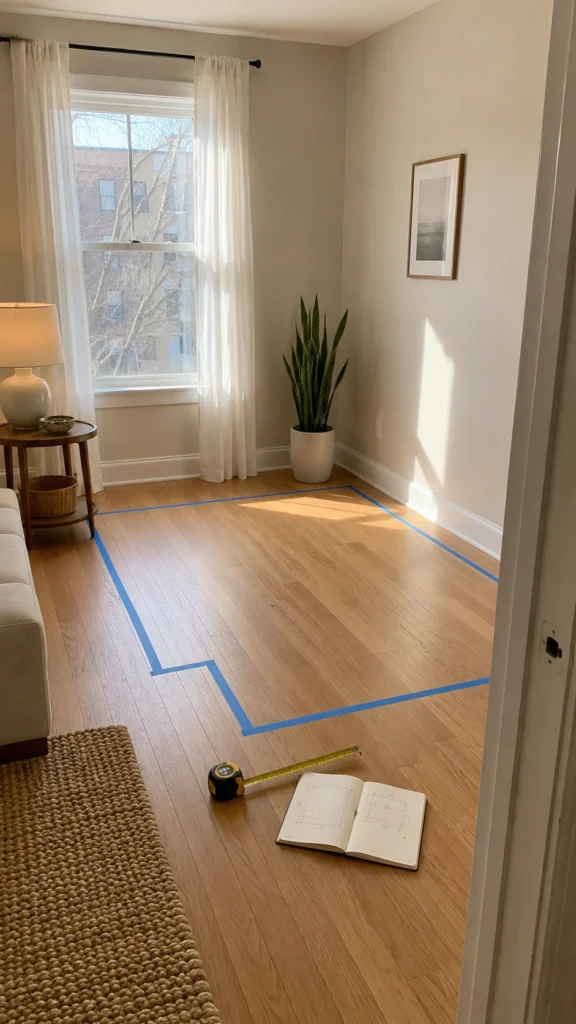
Painter’s tape is not glamorous. It’s also the cheapest insurance against the single most expensive mistake in small-space decorating: furniture that doesn’t fit. Mark the footprint of any sofa, table, or shelf on your floor before you order it, then live with that outline for a day or two.
Leave at least 30 inches for main walkways and 14 to 18 inches between the sofa and coffee table. If the tape blocks a path, so will the actual furniture. A 90-inch sofa looks perfectly reasonable in a warehouse showroom. In a 10×12 room, it eats the whole space.
2. Choose an Apartment-Sized Sofa
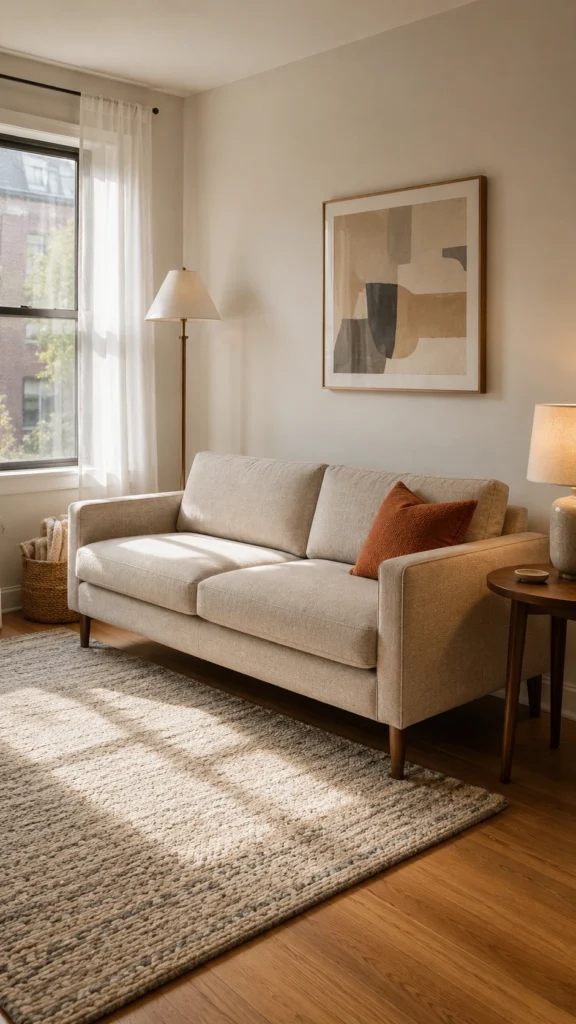
Standard sofas run 84 to 96 inches wide. Apartment sofas run 68 to 78 inches, and that gap is often the difference between a room that breathes and one that doesn’t. Two extra seat cushions you rarely use aren’t worth losing the floor space for a side table or a chair.
Depth matters just as much as width, and it’s the number people forget to check. Standard sofas run 38 to 40 inches deep; apartment versions run 32 to 35. Those few inches frequently decide whether you get a real walkway behind the coffee table. If your room sits under 150 square feet, or you’re in a studio where the sofa shares space with a bed, this is where to start.
3. Pull the Sofa Away From the Wall
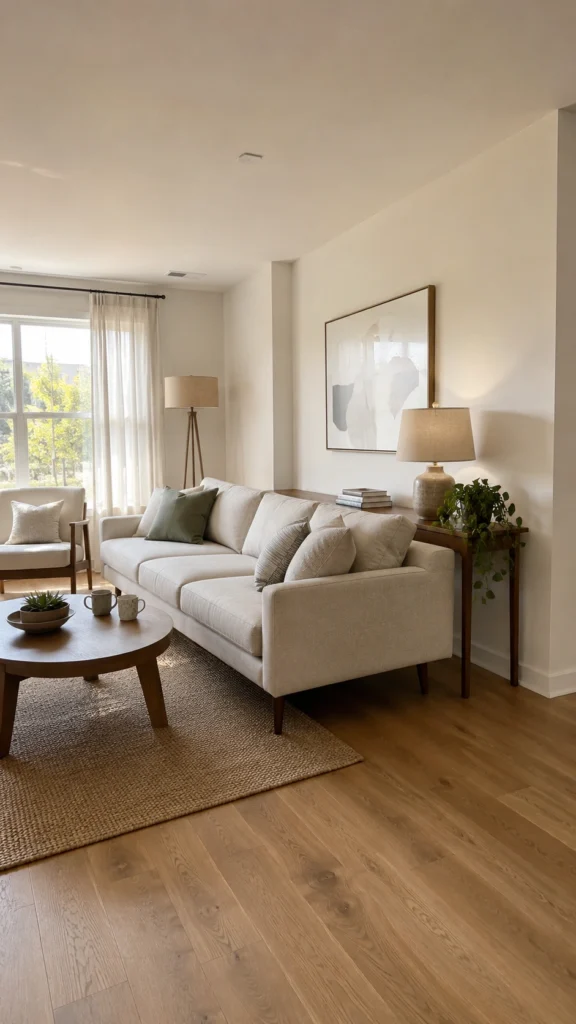
Shoving the sofa against the wall feels like the obvious space-saving move. It usually backfires. Floating it even 8 to 12 inches off the wall creates depth, and depth is what reads as space to the eye.
Staged apartments in listing photos almost always use this trick, which is part of why they look roomier than the same layout does in person. The gap behind the sofa also happens to fit a slim console table, which gives you a spot for lamps and chargers you’d otherwise pile on the arm of the couch.
4. Swap the Coffee Table for Nesting Tables
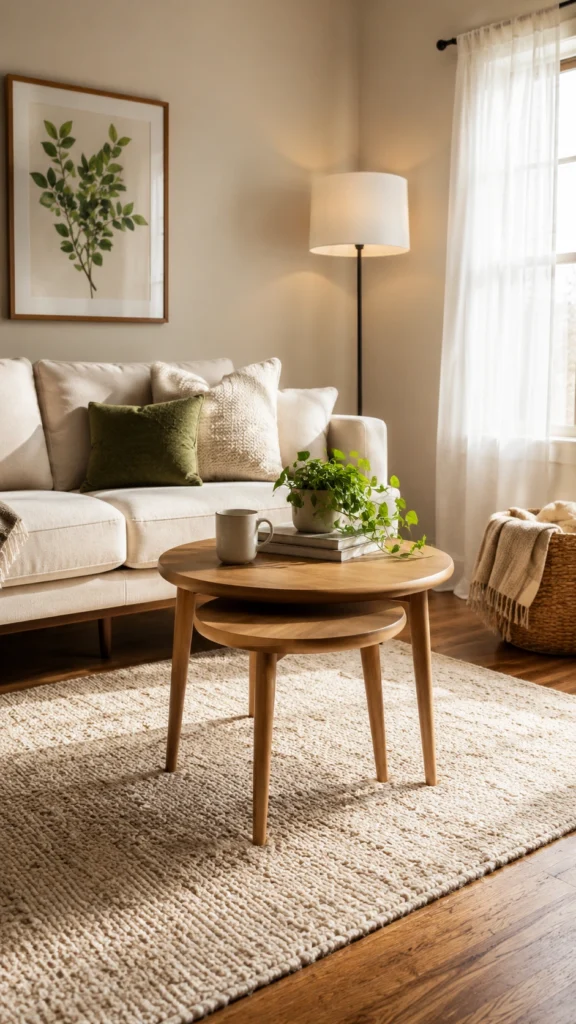
A chunky coffee table claims the center of the room permanently, whether or not anyone’s using it that day. Nesting tables spread out when you need the surface and stack into one small footprint the rest of the week.
Look for a set where the largest table measures 20 to 24 inches across. That’s enough for a laptop or two mugs, while still leaving room to tuck the set beside the sofa when you need open floor for yoga, kids, or an air mattress. Two mismatched thrifted side tables in similar heights do roughly the same job for under $40.
5. Use a Storage Ottoman as Your Coffee Table
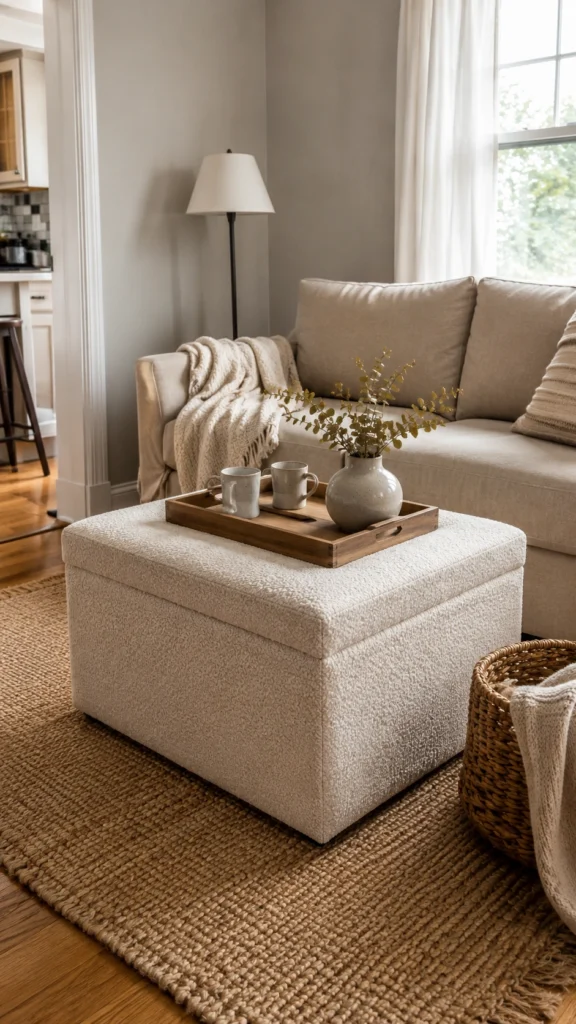
One piece, three jobs: coffee table, extra seat, blanket bin. Add a sturdy tray on top and you’ve got a flat surface for drinks that doesn’t wobble every time someone sets a glass down.
In a small apartment, every item should earn its floor space more than once. A storage ottoman earns it three times over.
6. Mount the TV and Ditch the Bulky Stand
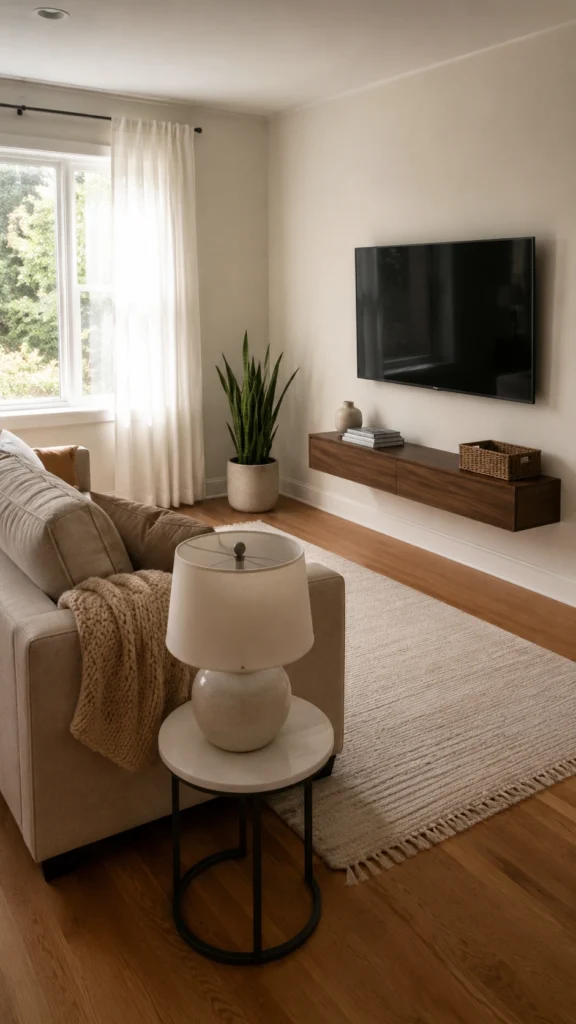
Wall-mounting the TV frees up the entire footprint an entertainment center used to occupy. Center the screen 42 to 48 inches from the floor, which lines up with seated eye level for most sofas.
If you still need storage underneath, a slim floating console beats a floor unit every time. Cables disappear, the floor stays open, and the room looks less crowded almost immediately. Renting? Ask your landlord before you drill, or use a heavy-duty easel-style stand with a small footprint as a no-drill option.
7. Pick Furniture With Visible Legs
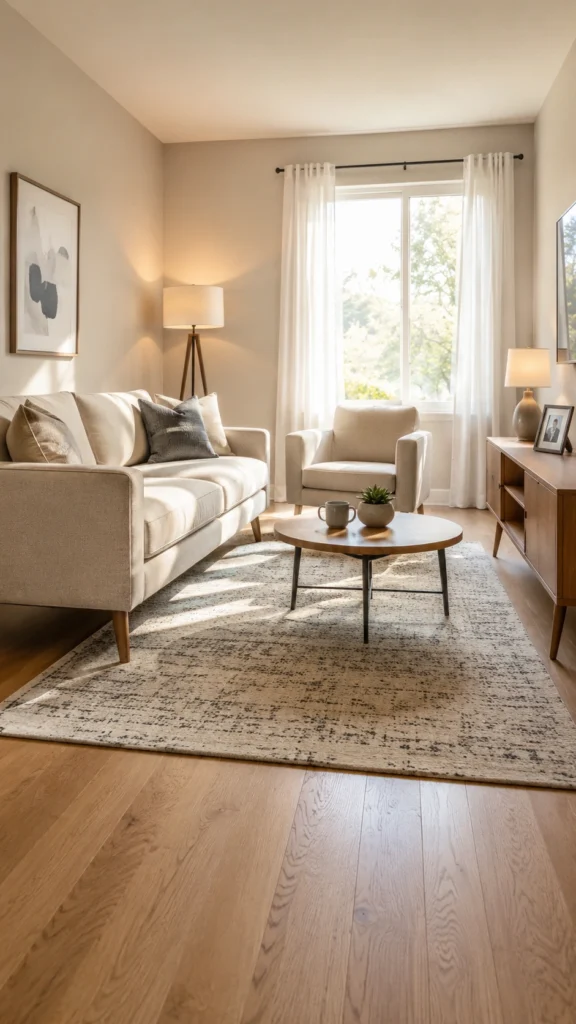
Sofas, chairs, and consoles that sit flush on the floor read as solid blocks. Pieces raised on 4 to 6 inch legs let light and sightlines pass underneath, so your eye registers more open floor than actually exists.
Apply this everywhere you can: sofa, armchair, media console, side tables. The effect compounds across the room rather than working on just one piece.
8. Install Floating Shelves for Storage
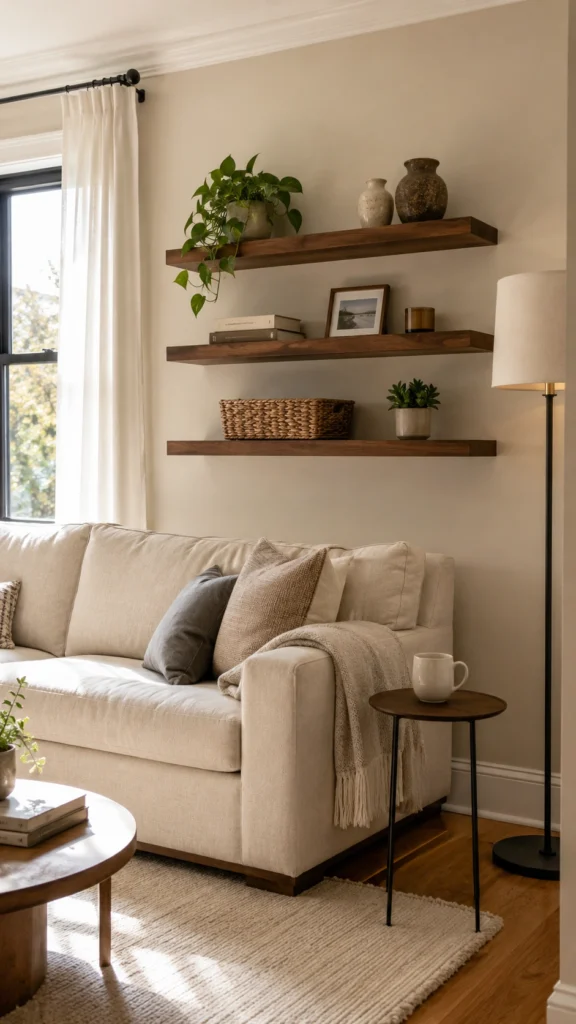
Most people leave their walls completely empty, which is a waste of usable space. Floating shelves above the sofa or beside a window hold books, plants, and framed photos without taking a single inch of floor.
One rule keeps them from tipping into clutter: fill each shelf to about 70 percent, then stop. Empty space on a shelf isn’t a failure to fill it. It’s doing its job.
9. Go Tall With One Bookcase Instead of Wide With Two
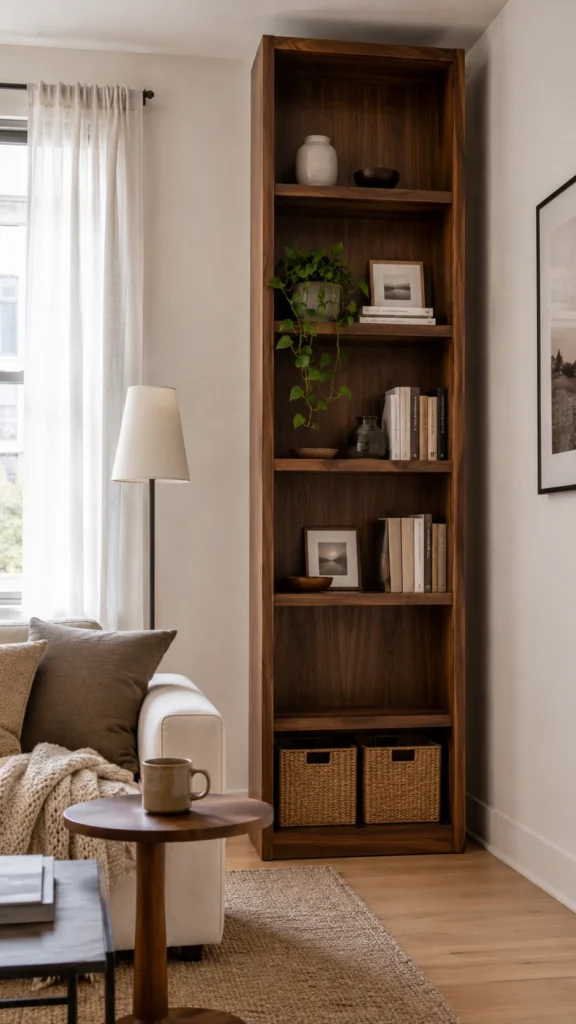
A bookcase that reaches near the ceiling pulls the eye upward, which makes ceilings feel higher than they are. Two short, wide units do the opposite. They chop the wall in half and add visual weight low in the room.
Tall and narrow gives you more storage per square foot and stronger vertical lines. Short and wide gives you more surface clutter and a heavier feel. In almost every small room, tall wins, and it’s one of the easiest storage upgrades on this list to execute.
10. Hang Curtains High and Wide
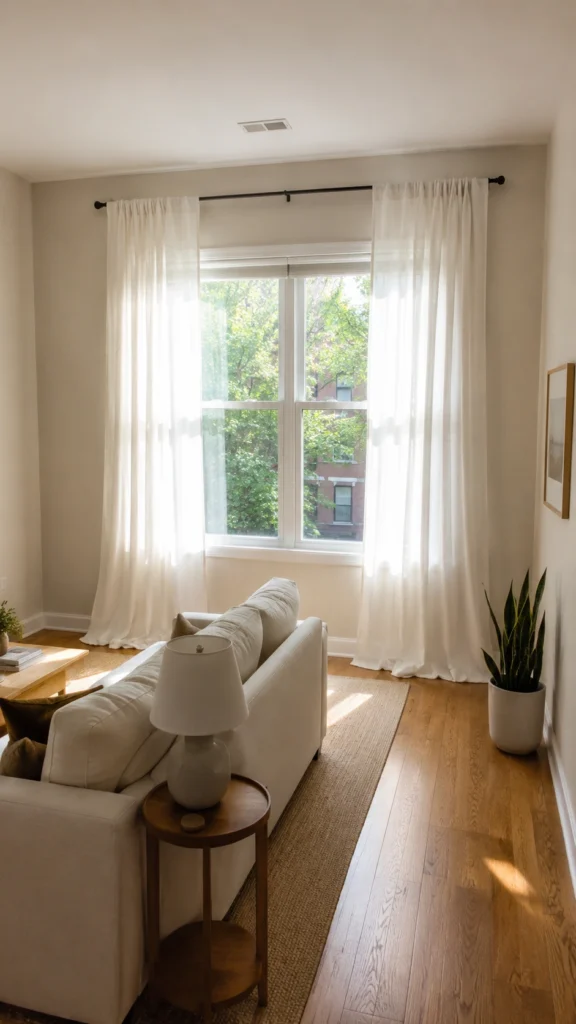
Mount the rod 6 to 12 inches above the window frame and extend it 8 to 10 inches past each side. Let the panels fall all the way to the floor.
This tricks the eye into seeing a taller, wider window, and the whole wall feels grander for it. The cost is a longer rod and longer panels, usually $30 to $60 more than the standard size, for one of the biggest visual payoffs in the room. Curtains that stop at the windowsill do the opposite: they cut the wall in half and make ceilings feel lower.
11. Place a Large Mirror Opposite the Window
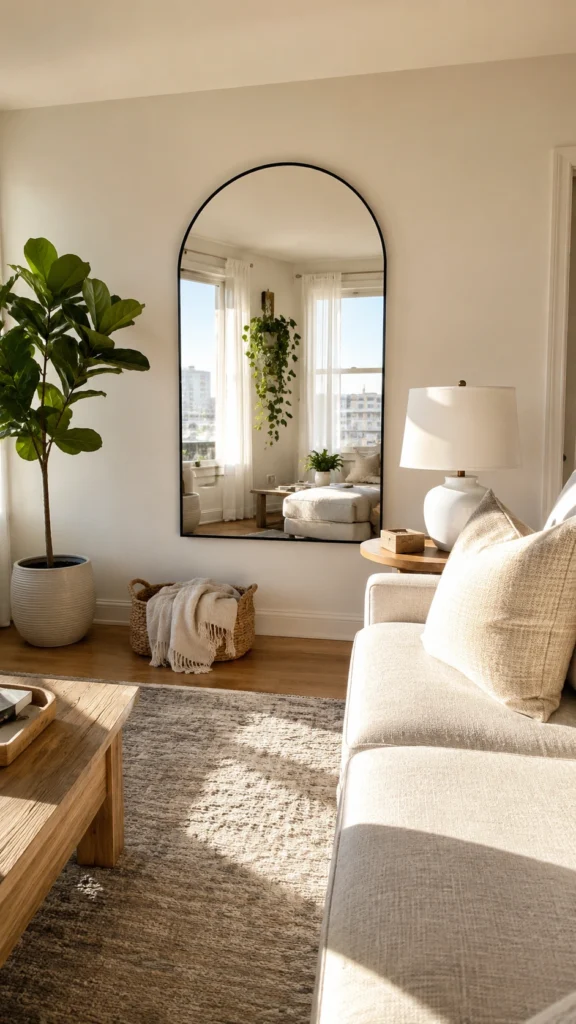
A big mirror facing your window bounces daylight back into the room and doubles the perceived depth. One 30×40 inch mirror, or larger, does more for a dim, cramped living room than three new lamps combined.
Can’t drill? Lean an oversized floor mirror against the wall instead. Same effect, no holes, and you take it with you when the lease ends. Before you commit to a spot, check what the mirror actually reflects. Facing the window or a styled shelf doubles the good stuff in the room. Facing the TV or a cluttered corner doubles the bad stuff.
12. Keep the Color Palette Light and Layered
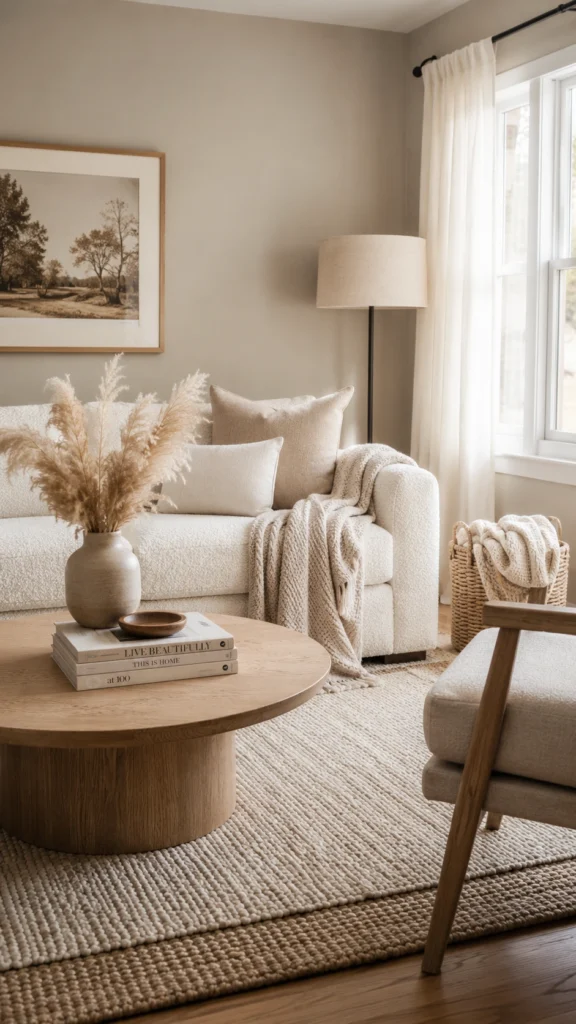
Light colors reflect light, and reflected light makes walls appear to recede. Keep your walls, sofa, and rug in a range of soft tones: warm white, cream, greige, pale oat.
This doesn’t mean beige everything forever. Layer in texture with linen, boucle, wood, and woven materials so the room feels warm instead of sterile, and save the bolder color for pillows and art you can swap out cheaply whenever you want a change.
13. Size the Rug Correctly
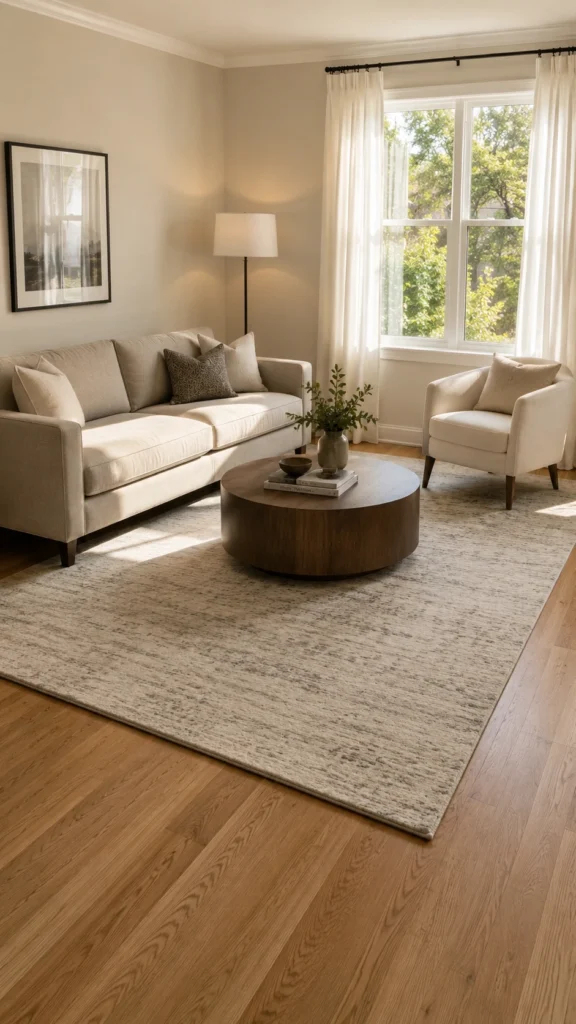
A too-small rug floating in the middle of the floor makes your furniture look like it’s drifting apart, and the room reads as chopped up rather than unified. At a minimum, the front legs of your sofa and chairs should sit on the rug.
For most small living rooms, that means a 5×8 at the absolute smallest, though a 6×9 or 8×10 usually works better. It sounds backward, but a bigger rug makes a small room feel bigger, because it unifies the floor into one continuous zone instead of a patchwork of surfaces. Leave 8 to 18 inches of bare floor around the rug’s edges. That visible border keeps it from reading as wall-to-wall carpet, which would flatten the whole effect.
14. Layer Three Light Sources
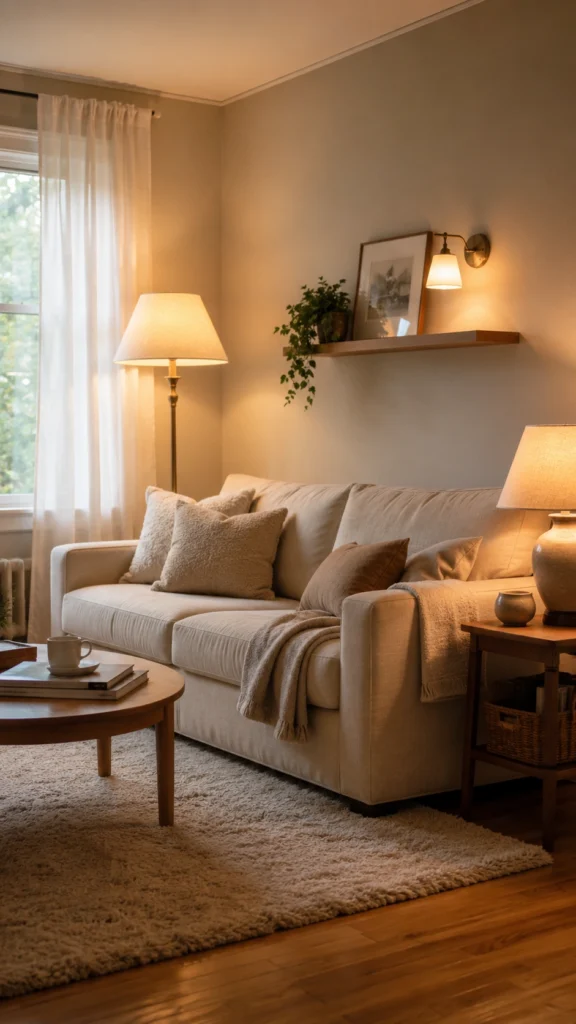
One overhead fixture flattens a room and throws shadows into the corners, which shrinks the space visually more than people expect. Aim for three points of light at different heights instead: a floor lamp in one corner, a table lamp on a side table or shelf, and a small accent light like a picture light or plug-in sconce.
Lit corners read as usable space. Dark corners read as walls closing in, even when they’re not.
15. Choose Armless or Slim-Arm Chairs
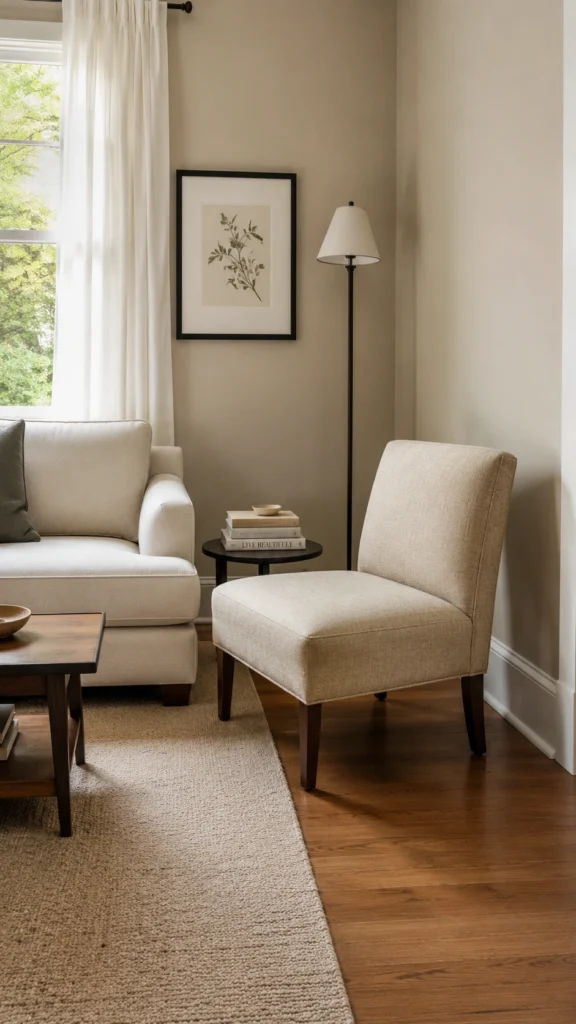
Chair arms can add 10 to 14 inches of width per chair without adding a single inch of usable seat. An armless slipper chair or slim-arm accent chair gives you a full seat in roughly two-thirds of the footprint. If a loveseat plus one chair is all your room can hold, this is where you make that second seat work.
16. Use Round Tables in Tight Spots
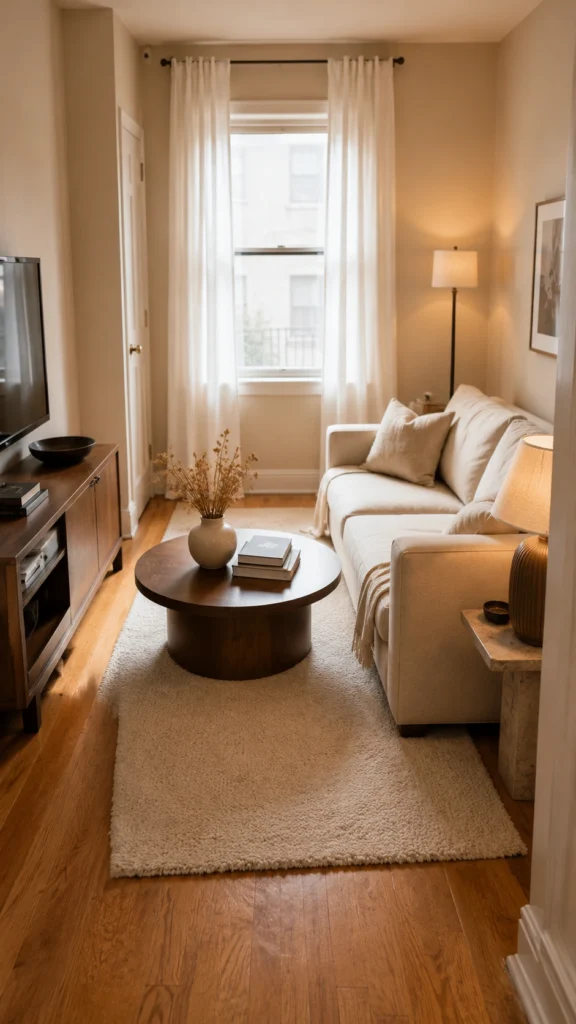
Corners and walkways punish sharp edges. A round side table or coffee table lets people move past without hip-checking a corner, and the curve softens a room otherwise full of rectangular furniture.
In a narrow living room, swapping a rectangular coffee table for a 32 to 36 inch round one often opens up the main walking path entirely. It’s a small change that saves your shins more than it saves square footage.
17. Add Glass or Acrylic Pieces
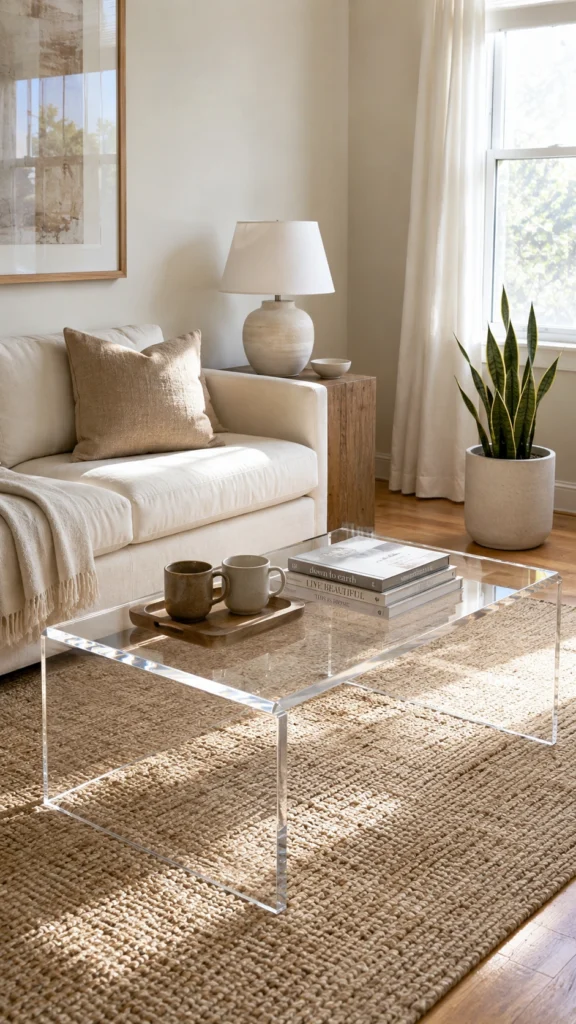
A clear acrylic coffee table or glass-top side table gives you a functional surface your eye barely registers. Less visual mass means the room reads as emptier than it actually is, even with the same number of pieces in it.
One or two transparent pieces is the right amount. A room full of acrylic starts to look like a furniture showroom nobody’s shopping in.
18. Get a Sleeper Sofa or Daybed if Guests Stay Over
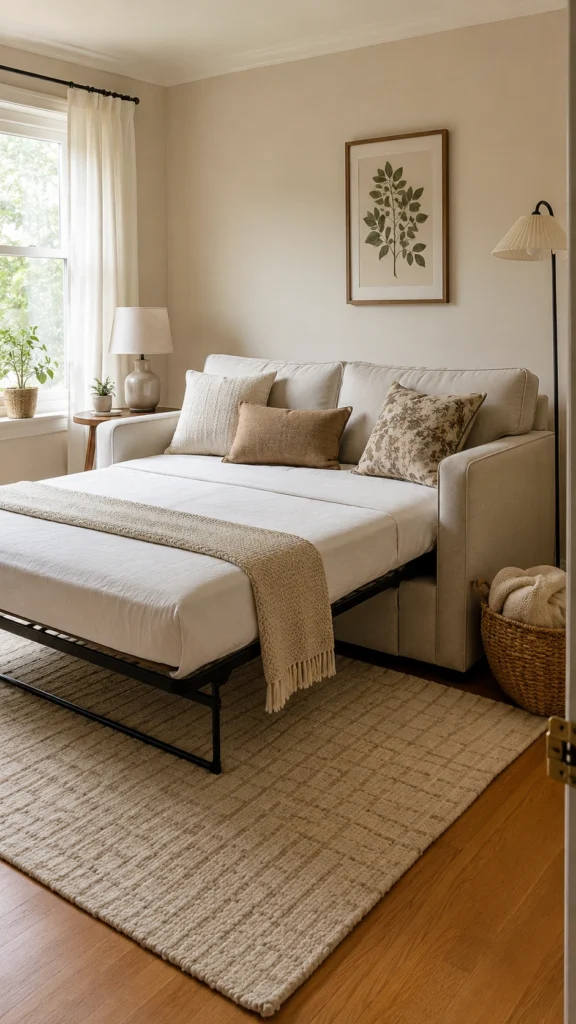
A separate guest room is a luxury most small apartments can’t spare. A quality sleeper sofa or a daybed with a trundle turns your living room into a guest room in about two minutes, then back again the next morning.
A sleeper sofa gives you the best everyday seating but costs the most and weighs the most. A daybed works well in a studio and functions as both sofa and bed daily. A futon is the cheapest option, but it sits worse and sleeps worse than either of the others. Buy for the function you’ll use daily, not the one you use six nights a year.
19. Mount a Fold-Down Desk or Drop-Leaf Table
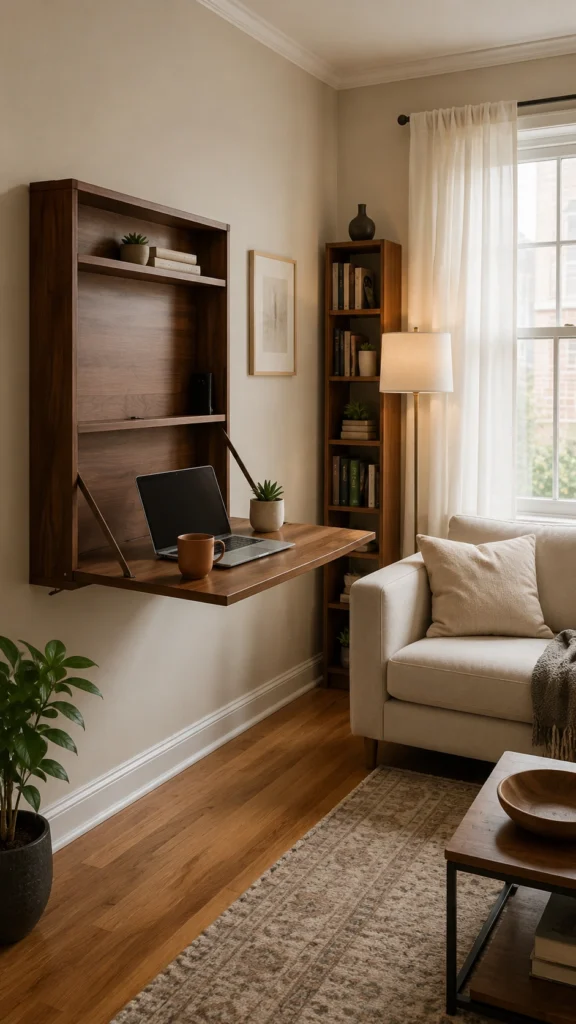
Working from the sofa wrecks your back. A full desk wrecks your floor plan. A wall-mounted fold-down desk splits the difference: a real work surface that disappears at the end of the day.
The same logic applies to dining. A drop-leaf table against the wall seats one for breakfast and opens up to seat four when friends come over. On a tighter budget, a shelf bracket with a 24-inch board runs under $35 and works as a standing desk or laptop perch. It’s not much to look at, but it beats hunching over the coffee table for eight hours a day.
20. Define Zones With Rugs, Not Furniture Walls
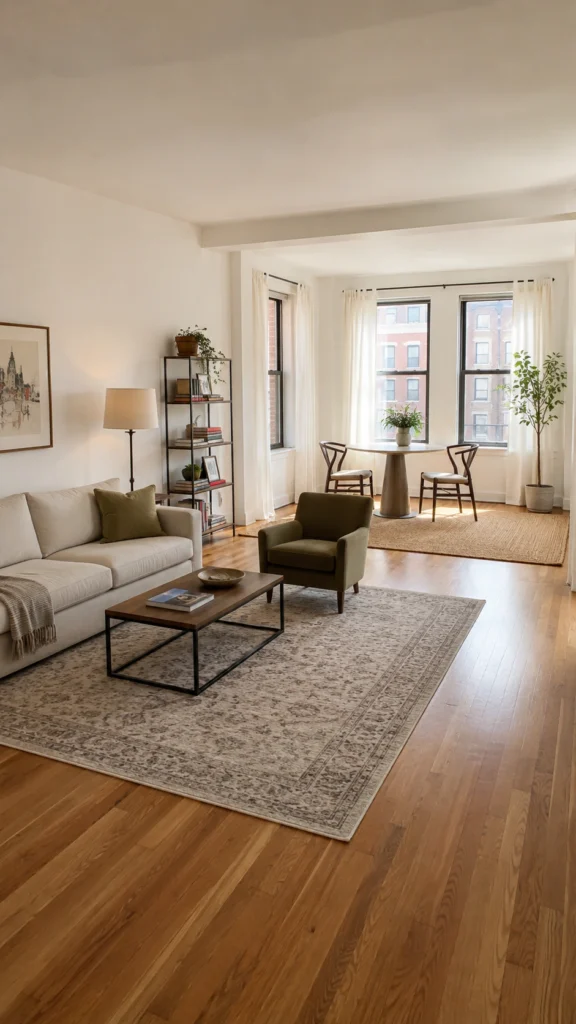
In a studio or open-plan apartment, resist the urge to build barricades out of furniture. A rug under the seating area and a different rug, or bare floor, under the dining or work zone separates the functions while keeping sightlines open across the room.
Open sightlines are what actually make a small apartment living room feel spacious. A clever room divider might look good on Pinterest, but it blocks the exact thing you’re trying to create.
21. Follow the One-In, One-Out Rule
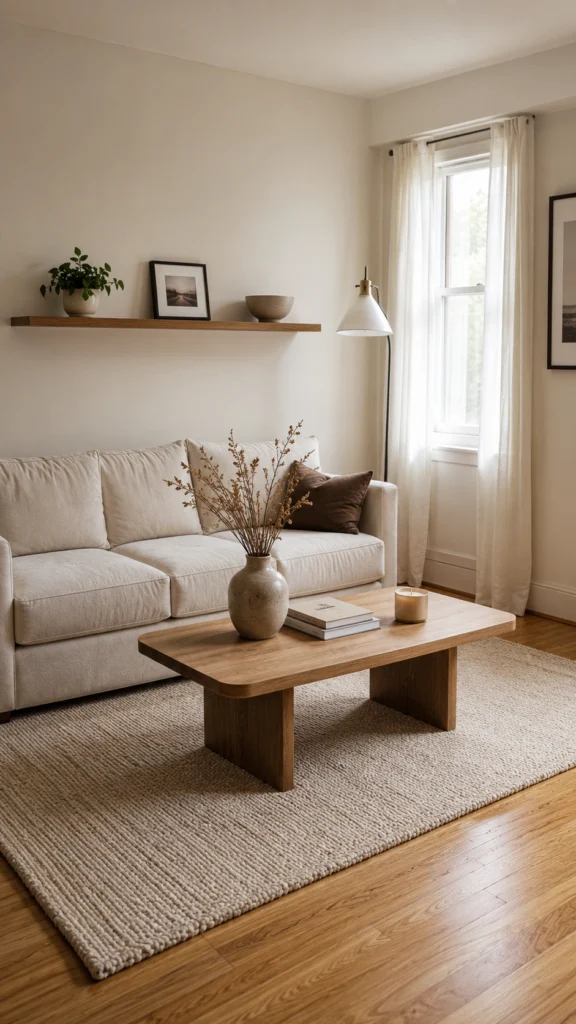
Clutter shrinks a room faster than any furniture mistake you could make. Every time a new decor item, pillow, or gadget enters the living room, one existing item leaves.
This one habit keeps surfaces clear without a dramatic purge every few months, and clear surfaces are the cheapest way to make a room feel bigger. Most people know this and skip it anyway.
22. Go Vertical With Plants
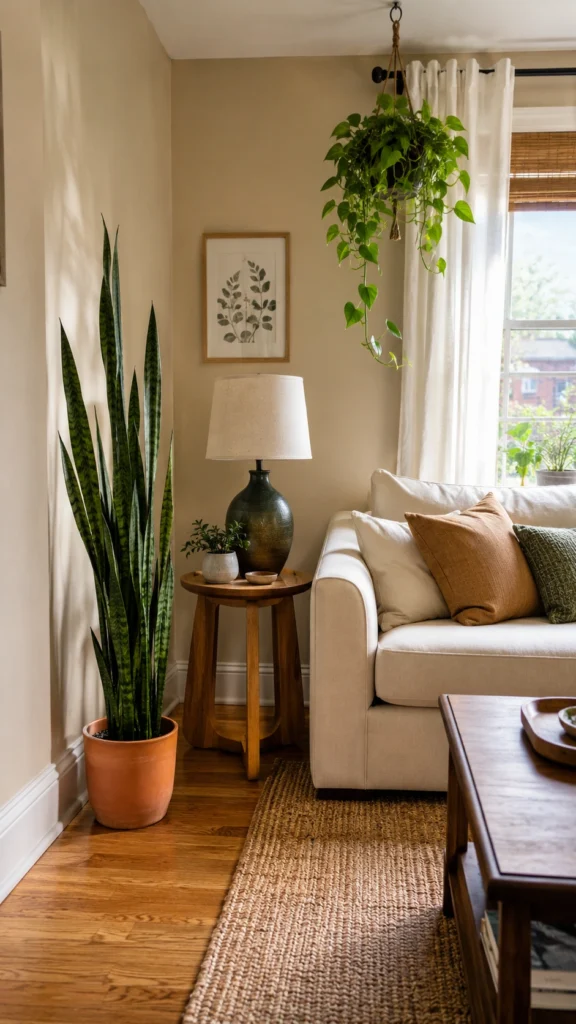
Plants make a room feel alive, but wide, sprawling ones eat floor space you don’t have. Choose tall, narrow growers like a snake plant, dracaena, or a slim fiddle leaf fig, or hang a trailing pothos from a ceiling hook or high shelf.
One tall plant in a corner adds height and life. Six small pots scattered across every surface just adds clutter. Match the plant to the light you actually have, not the light you wish you had. A snake plant survives a dim corner; a fiddle leaf fig sulks anywhere without bright, indirect sun. Faux plants have gotten good enough that nobody checks, if your apartment is on the darker side.
23. Hide Everyday Mess in Closed Storage
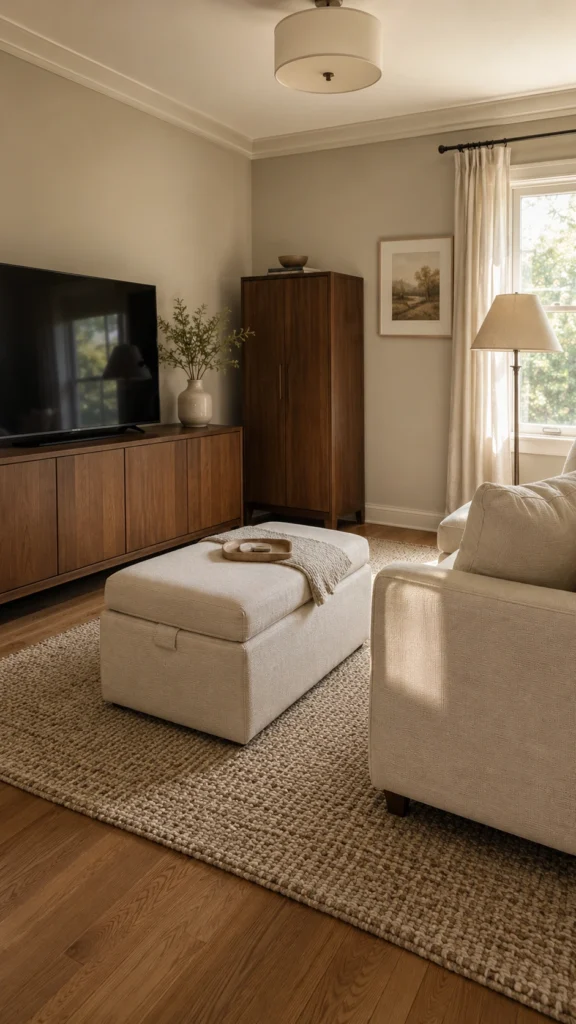
Open shelving looks great on day one and chaotic by month three. For the stuff you use daily, remotes, cables, blankets, kids’ toys, closed storage does more work: lidded baskets, a cabinet with doors, drawers in a side table.
A room only looks as tidy as its visible surfaces. Closed storage lets the inside be a mess while the outside stays calm, and nobody’s opening your ottoman to check.
24. Leave One Wall Mostly Empty
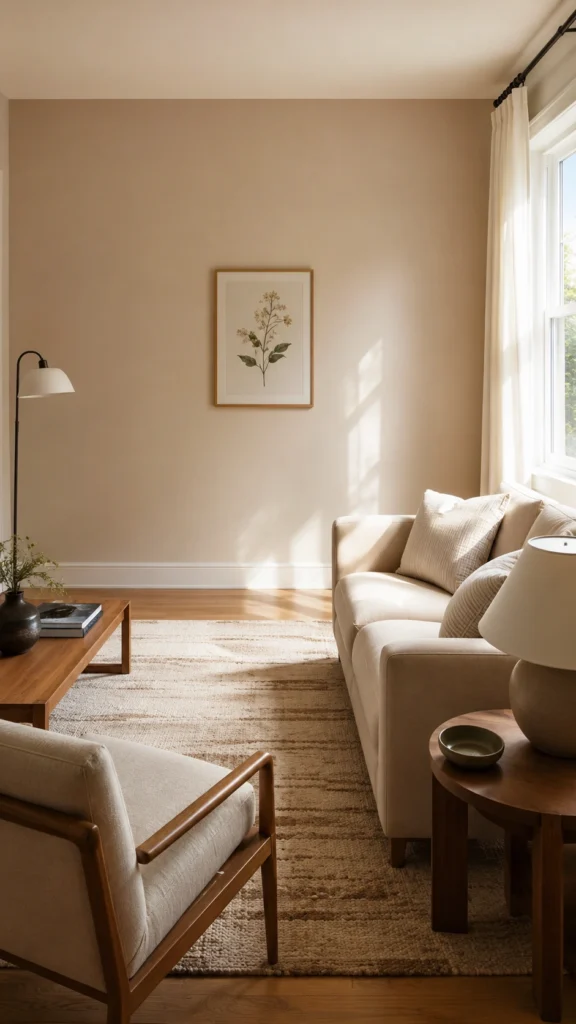
This is the hardest idea on the list to follow, and the one that ties the rest together. Pick one wall and keep it nearly bare: paint, maybe a single piece of art, nothing else.
Every room needs somewhere for the eye to rest. When all four walls carry shelves, mirrors, hooks, and gallery frames, the eye never stops working and the room feels packed no matter how clear the floor is. One quiet wall makes everything else in the room look intentional instead of crowded.
How to Prioritize These Ideas
Twenty-four ideas is a lot to take on at once. If you’re only tackling a few, start where the impact per dollar is highest.
Start with what’s free. Pull the sofa off the wall. Declutter surfaces and start the one-in, one-out habit. Rearrange your lamps into three light points instead of one overhead fixture. Clear one wall completely. All of this changes the room in a single afternoon and costs nothing.
Then spend on the big three. A correctly sized rug runs $80 to $200. High, floor-length curtains run $50 to $120 including a longer rod. A large mirror opposite the window runs $60 to $180. These three purchases do more visual work than replacing every piece of furniture you own.
Save furniture swaps for last. Replace the sofa, coffee table, or shelving only after the cheap fixes are in place. You might find the sofa was never actually the problem. It usually isn’t.
Timing-wise, the free fixes take one afternoon. The big three purchases can happen over two or three paychecks without straining your budget. A full furniture refresh, if you get there at all, is realistically a three-to-six-month project done piece by piece. Nobody needs to overhaul a living room in a weekend, whatever the makeover shows suggest.
6 Mistakes That Shrink a Small Living Room
Knowing what to avoid matters as much as knowing what to buy. These six mistakes show up in nearly every cramped-feeling apartment, and each one has a straightforward fix.
Too many small decor items. Fifteen tiny objects on a shelf read as noise. Three larger pieces read as style. When in doubt, size up and cut the count.
Dark, heavy furniture in a light room. A black leather recliner in a cream room becomes a visual anchor that drags the whole space down with it. Match your biggest pieces to your lightest tones.
Pushing every piece against a wall. This leaves a dead zone in the middle and a room that looks more like a waiting area than a living room. Float at least one piece.
Skipping the rug entirely. Bare floors in an otherwise furnished room make everything look temporary, like you’re still moving in. A rug grounds the seating and defines the space.
Buying matching sets. A sofa, loveseat, and armchair sold as a set almost never fits a small footprint. Buy pieces individually, sized for your actual walls.
Ignoring the ceiling. Low-hanging pendant lights and ceiling-mounted clutter compress the room from above. Keep the upper third of the room as open as the floor.
Fix even two of these and you’ll notice the difference before spending a dollar on new furniture.
Frequently Asked Questions
What colors make a small living room look bigger? Light, warm neutrals in a tight range: warm white, cream, soft greige. Keeping walls, sofa, and rug close in tone lets the eye move smoothly instead of stopping at every contrast. Bring in personality through texture and small, swappable accents instead.
What size rug works for a small apartment living room? Big enough that the front legs of all your seating sit on it. A 6×9 fits most small living rooms; an 8×10 works if your room allows 12 to 18 inches of bare floor around the edges. Going too small costs you more visually than going slightly too big ever does.
Should I use a sectional in a small apartment living room? Usually not. A compact sofa plus an armless chair gives you flexible seating and open walkways. A sectional only makes sense if your room has one clear corner it can occupy without blocking a path or a window.
How do I make a small living room work as an office too? Use a wall-mounted fold-down desk or a slim console that doubles as a desk, and store your work gear in closed storage at the end of the day. Give the work zone its own rug or its own wall so it reads as separate from the space where you actually relax.
Final Thoughts
A living room that feels spacious comes down to four things you now know how to control: right-sized furniture, clear floor and sightlines, layered light, and ruthless editing. The mirror, the tall curtains, and the properly sized rug handle the illusion. The storage ottoman, the floating shelves, and the closed cabinets handle the reality underneath it.
Pick one idea from this list and do it this week. If you want the fastest win, pull the sofa off the wall tonight. Small rooms reward small moves, and once you see the first change actually work, the rest gets a lot easier to start.
Your living room was never the problem. The layout was. Fix that, and the square footage stops mattering nearly as much as you thought it did.



Pingback: 24 Fall Coffee Table Decor Ideas on a Budget You'll Love - Caliora Living
Pingback: 15 Fall Candle Decor Ideas for an Easy Autumn Refresh - Caliora Living