


My first study corner was a folding table shoved against a wall, with a lamp I borrowed from my mom and never returned. I got nothing done there. Zero. Turns out the space you work in shapes how you work, and a sad table in a dark corner produces sad, dark work.
So I started fixing things, one cheap upgrade at a time. Some ideas worked instantly. Others were a waste of money (looking at you, motivational poster phase). Here are the 15 study corner decor ideas that actually made me more productive, plus the honest truth about each one.
1. Get a Proper Desk Lamp With Adjustable Brightness
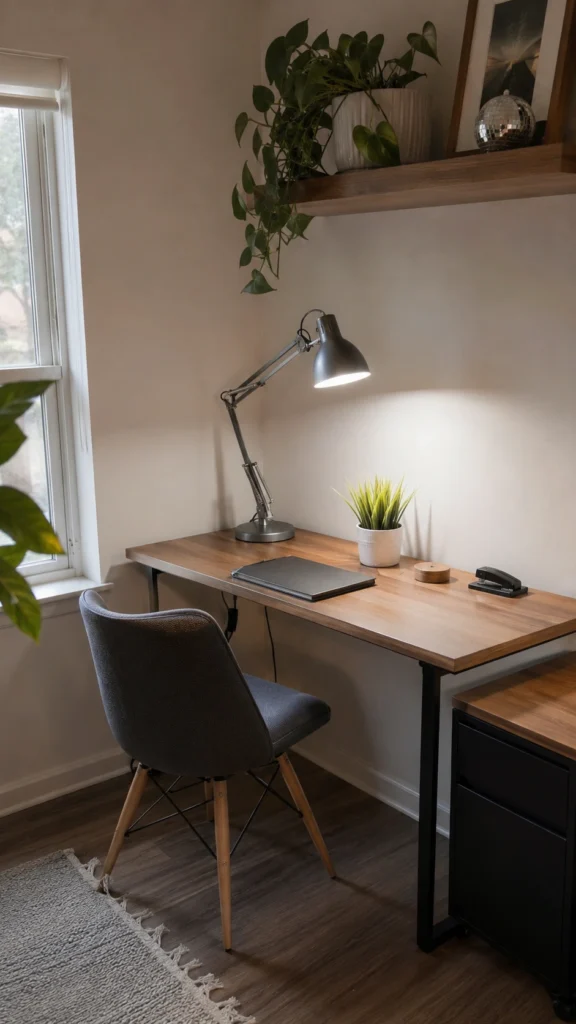
Overhead room lighting is not enough. You need a dedicated desk lamp with at least 2-3 brightness levels and ideally a warm/cool toggle. I use cool white (around 5000K) for morning work and warm light after 8 PM so my brain doesn’t think it’s noon at midnight.
A decent LED lamp costs $20-35. Ever wondered why libraries feel easier to focus in? Bright, even, glare-free light. Copy that at home.
2. Position Your Desk Near Natural Light, but Not Facing the Window
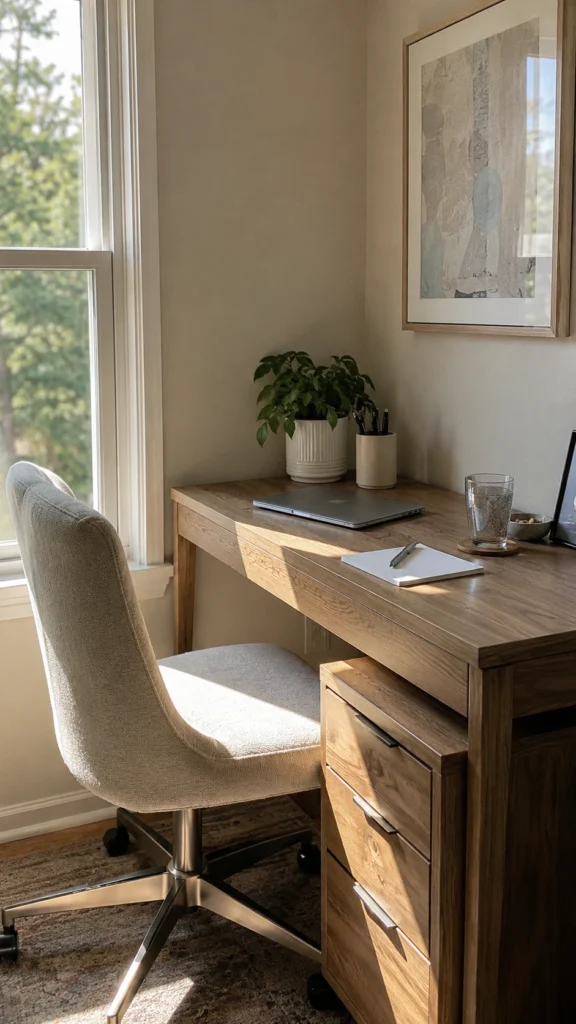
Sunlight keeps you alert and improves your mood. But if your screen faces the window, you’ll squint at the glare all day. Place your desk perpendicular to the window so light hits your workspace from the side.
I learned this the hard way after two weeks of headaches. Free fix, instant improvement.
Add Life (Literally)
3. One or Two Low-Maintenance Plants
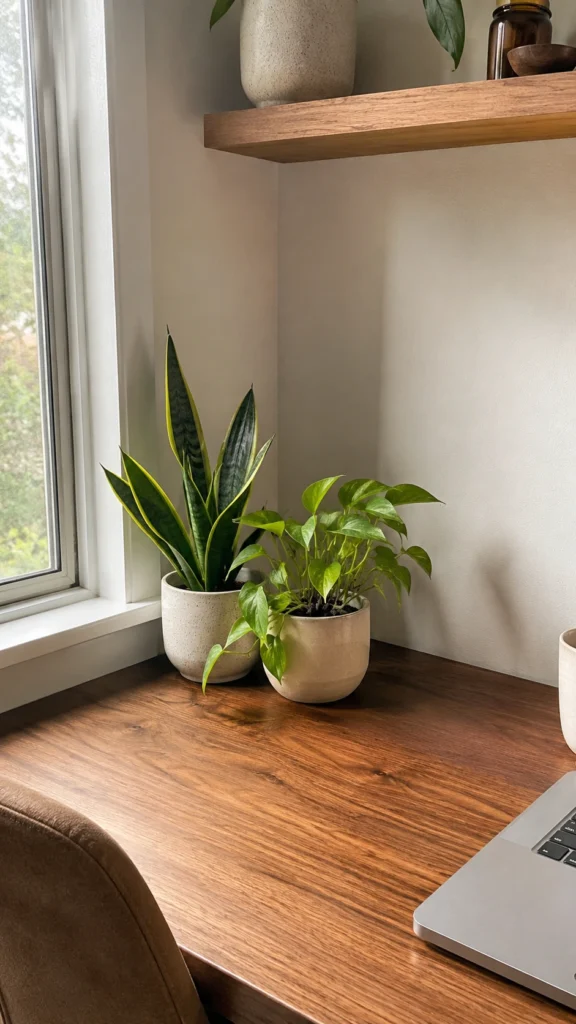
A snake plant or pothos survives neglect, looks good, and gives your eyes something organic to rest on between tasks. Studies on workplace plants consistently show small but real boosts in concentration and reduced stress.
Don’t buy six plants on day one. You’ll kill four of them. Start with one snake plant ($10-15) and see if you remember it exists after a month. 🙂
4. A Small Fresh Flower or Herb Pot
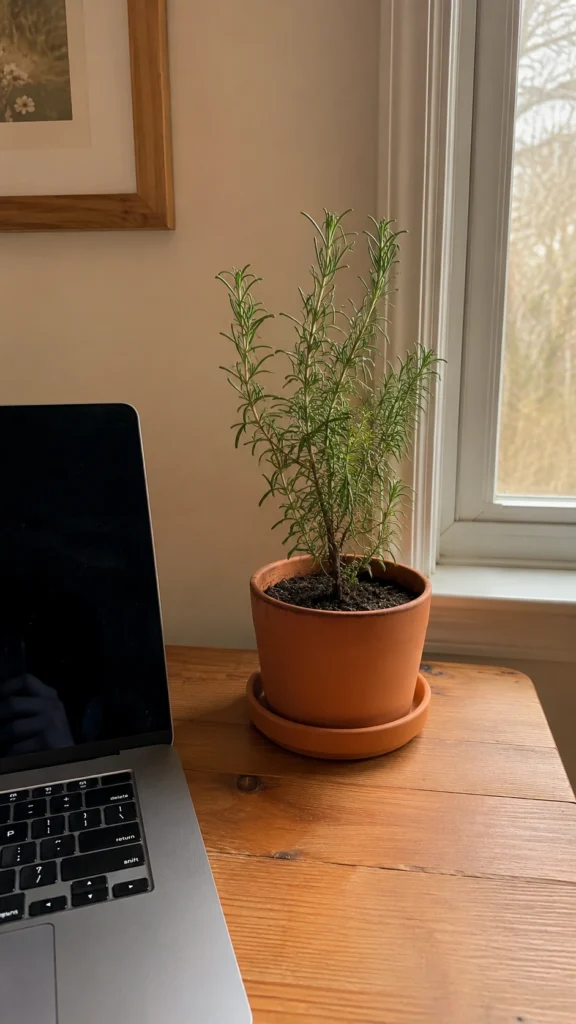
Rosemary on your desk smells great and supposedly helps with memory. IMO, the science there is shaky, but the smell alone makes the corner feel intentional instead of accidental. A $4 herb pot from the grocery store works fine.
5. A Pegboard or Wall Grid Above the Desk
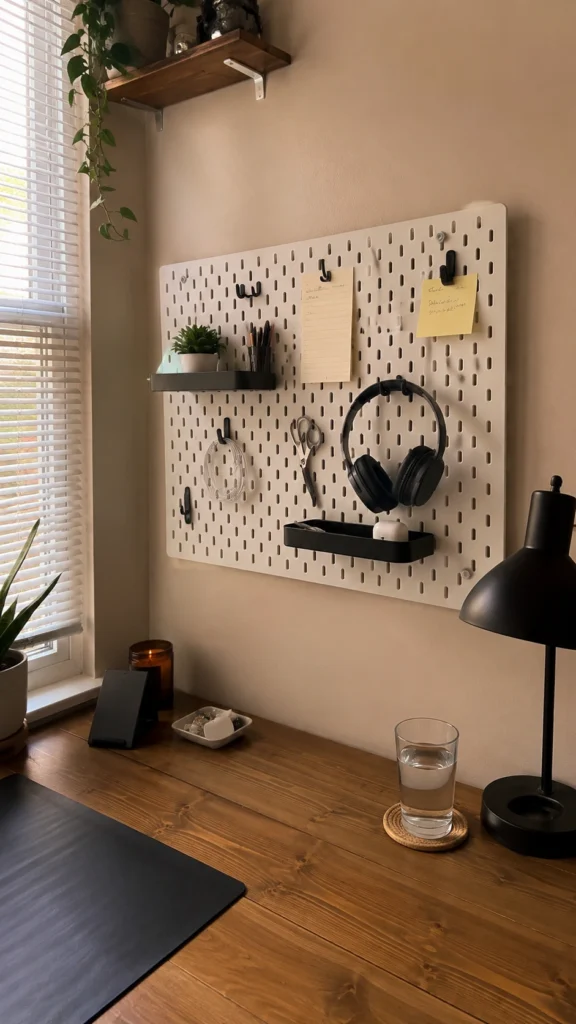
Vertical storage is the single best upgrade for small study corners. A pegboard with hooks and small shelves holds your headphones, sticky notes, scissors, and chargers without eating up desk space.
Mine cost about $25 with accessories. My desk surface went from chaos to actually visible.
6. Cable Management, the Boring Hero
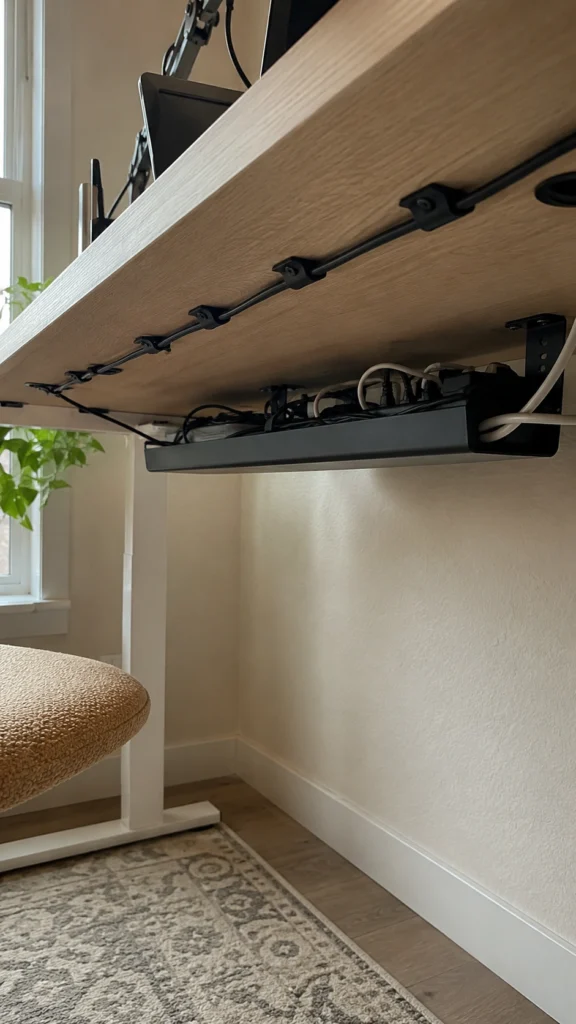
Nobody puts “cable tray” on a decor list, but tangled wires make any corner look like a junk drawer. Use:
- Adhesive cable clips ($5) to route wires along the desk edge
- An under-desk cable tray ($15) to hide power strips
- Velcro ties for anything you unplug often
Ten minutes of work. The whole corner instantly looks 50% more put together.
7. A Single Desk Organizer, Not Five
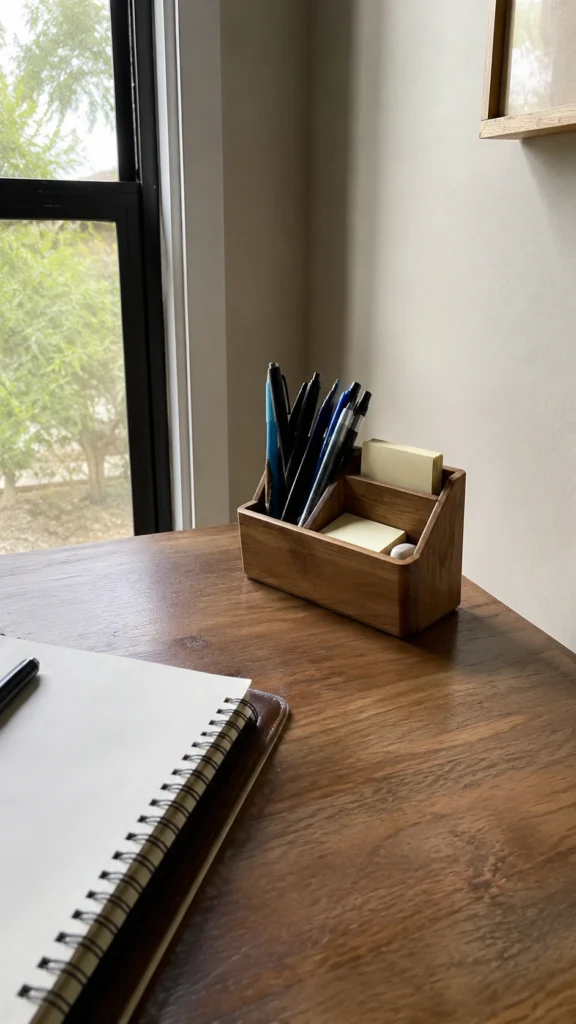
Here’s where I roast my past self: I once owned three pen cups, a letter tray, and a rotating caddy. All full of junk. One organizer with defined compartments forces you to keep only what you use daily.
Everything else goes in a drawer. If you haven’t touched it in a week, it doesn’t deserve desk real estate.
8. A Whiteboard or Glass Dry-Erase Board
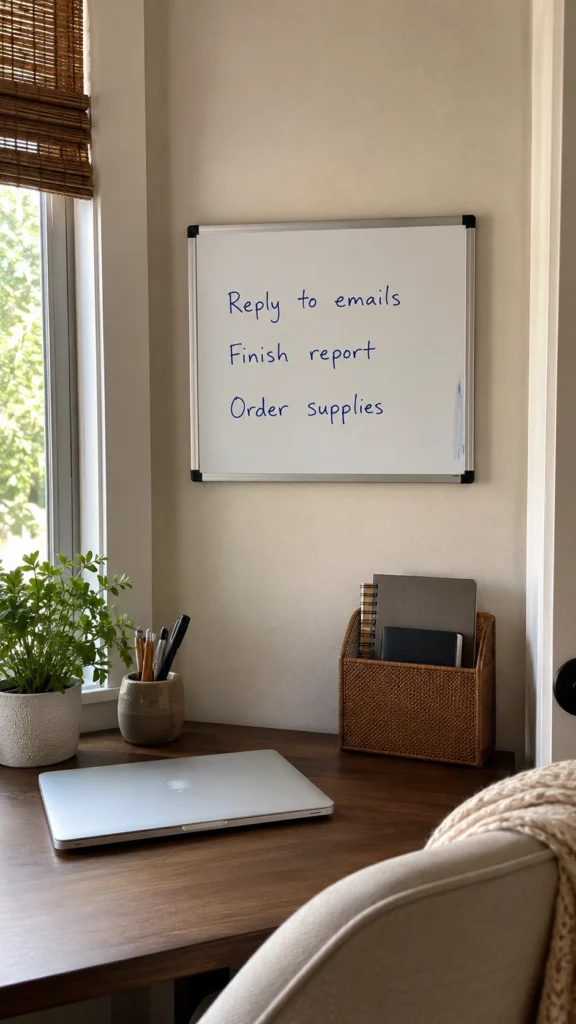
This beats any planner app for me. I write my top three tasks each morning, and they stare at me until I finish them. Slightly aggressive? Yes. Effective? Also yes.
A 24×36-inch board runs $20-40. Glass boards cost more but never ghost (the stain kind, not the dating kind).
9. A Wall Calendar You Actually Update
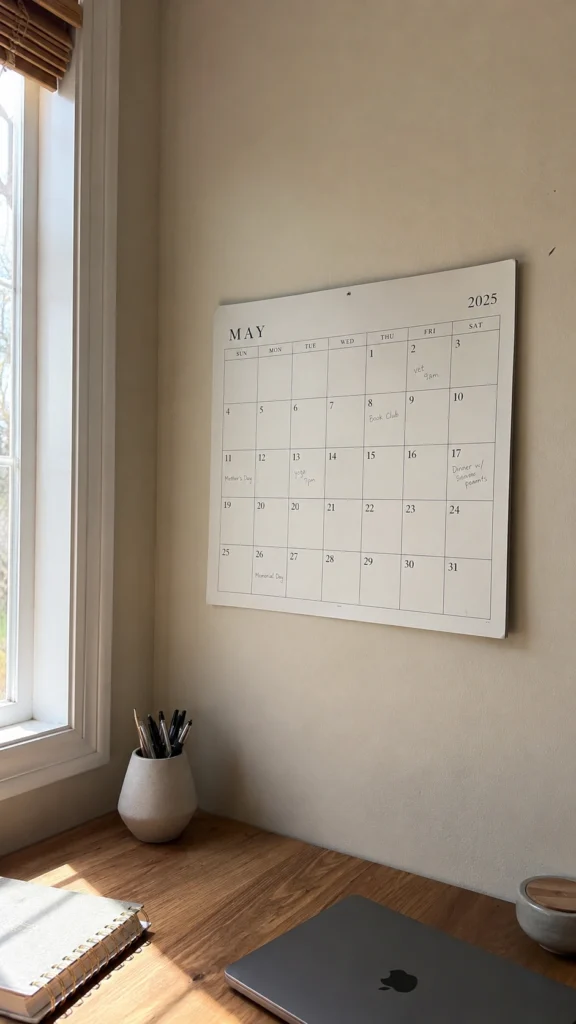
Digital calendars hide your month behind a click. A physical monthly calendar keeps deadlines in your face. I use a minimalist one with big date boxes and a pencil, because plans change and pen commitment is stressful.
10. One Piece of Art You Genuinely Like
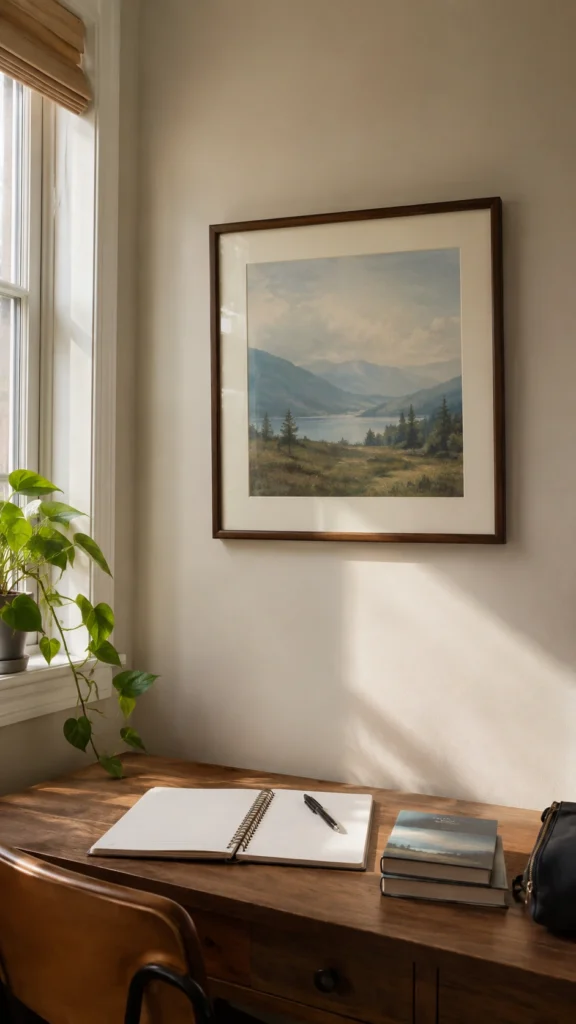
Skip the “Hustle Harder” posters. Pick one print, photo, or piece that makes you feel something when you glance up. For me it’s a framed map of a city I want to visit. It works as a tiny reward for my eyes during breaks.
One piece, properly framed, at eye level. A gallery wall above a study desk turns into visual noise fast.
11. A Quality Chair Cushion or Lumbar Pillow
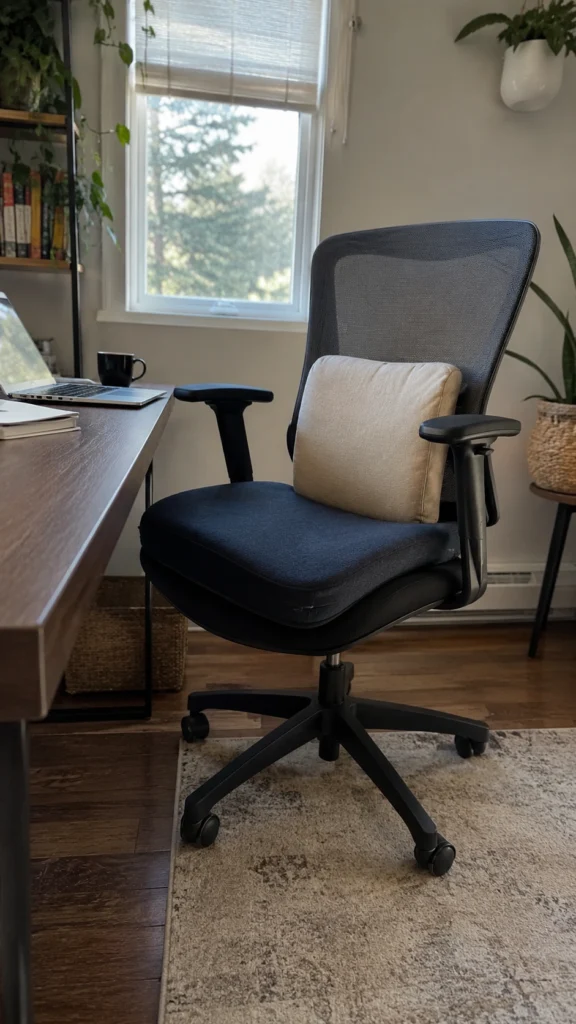
You don’t need a $1,200 ergonomic chair. A $25 memory foam seat cushion plus a lumbar pillow transformed my basic chair into something I can sit in for three hours without my back filing a complaint.
Comfortable people study longer. That’s the whole pitch.
12. A Small Rug Under the Desk
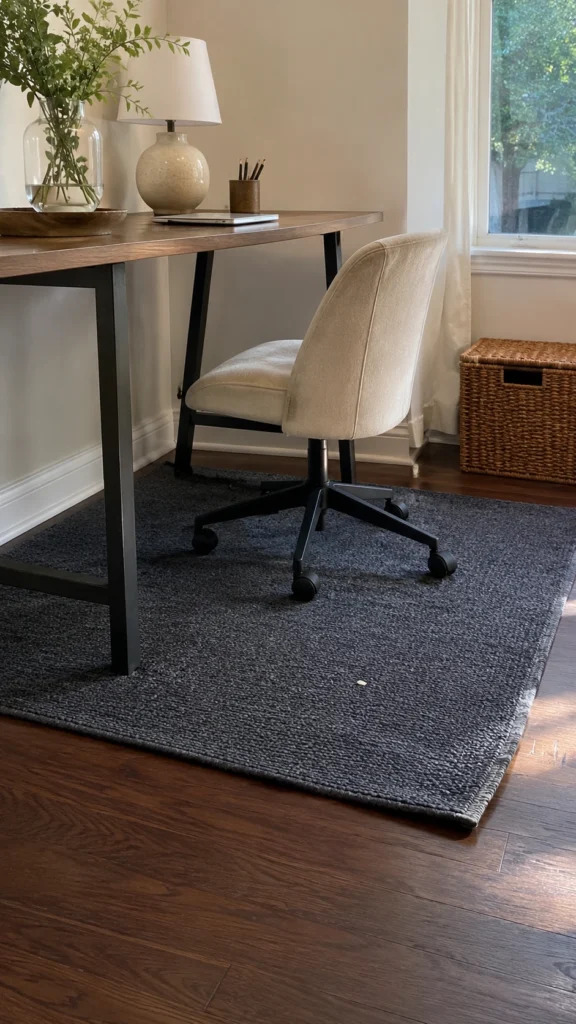
A 3×5 rug does three things: it defines the study zone in a shared room, it warms cold floors, and it dampens echo so the space feels quieter. Quieter spaces feel calmer, and calm brains focus better.
You can grab one for $30-50. Pick a darker color unless you enjoy vacuuming daily. :/
13. Warm Accent Lighting for Evening Sessions
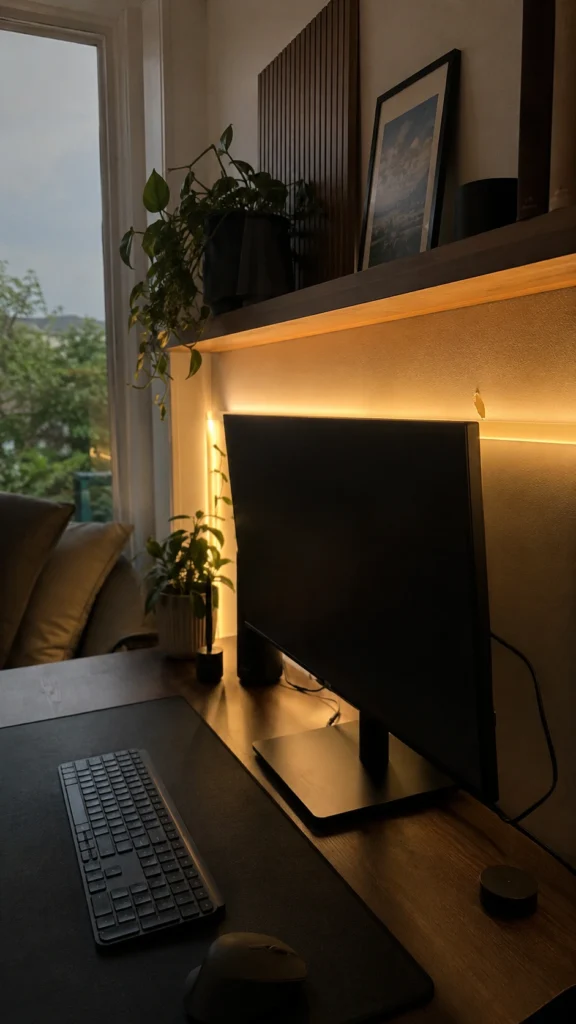
A small LED strip behind your monitor or a tiny lamp on a shelf reduces the harsh contrast between a bright screen and a dark room. Your eyes strain less, and the corner feels cozy instead of clinical.
Bias lighting behind the monitor costs about $12 and takes five minutes to install. Honestly, one of the best dollar-for-dollar upgrades on this list.
14. A Visual Boundary: Shelf, Curtain, or Room Divider
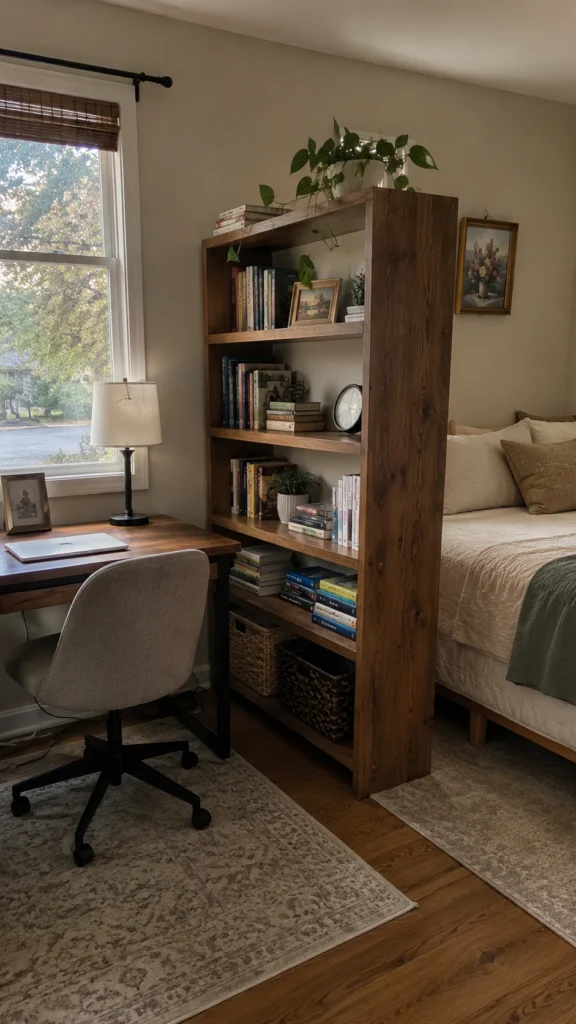
If your study corner shares a room with your bed or TV, your brain gets mixed signals. A narrow bookshelf placed perpendicular to the wall or a simple curtain creates a psychological “work starts here” line.
When I added a small bookshelf as a divider, my brain stopped negotiating naps mid-session. Mostly.
15. A Personal Object With Meaning
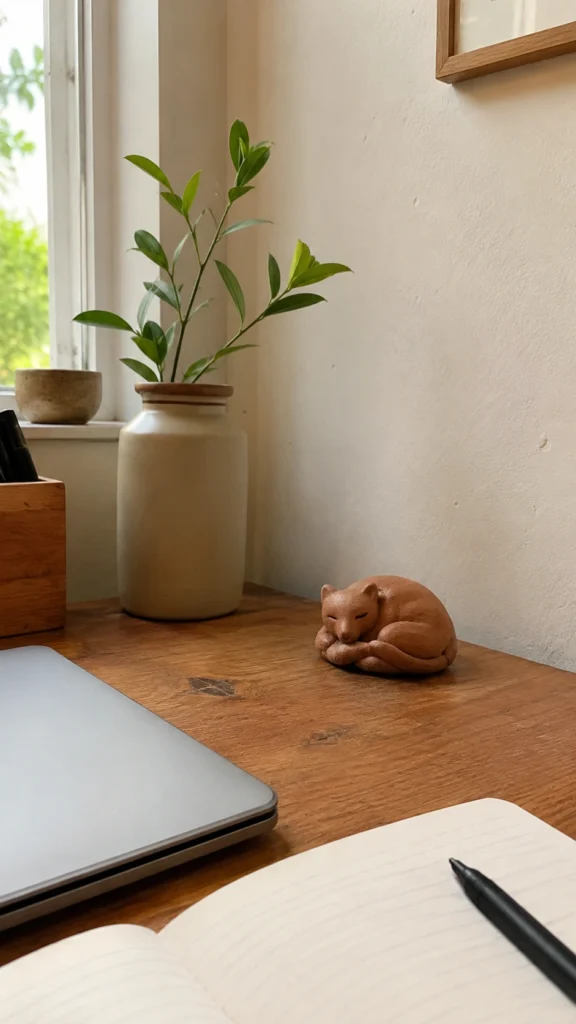
End with one item that’s just for you. A souvenir, a photo of your dog, a weird rock from a hike. It anchors the space as yours, and on rough days it reminds you why you’re putting in the hours.
Mine is a clay figurine my niece made that vaguely resembles either a cat or a potato. Productivity gold.
Common Mistakes to Avoid
FYI, decorating a study corner goes wrong in predictable ways:
- Buying decor before fixing lighting. Light first, always.
- Overdecorating. Five plants, three posters, and fairy lights equal distraction, plus you’ll spend more time dusting than studying.
- Choosing pretty over functional. That gorgeous rattan chair will destroy your spine by hour two.
- Ignoring what’s behind you on video calls. If you take online classes, that wall is now your background. Plan it.
Wrapping It Up
A productive study corner comes down to four things: good light, less clutter, physical comfort, and one or two personal touches. You don’t need a Pinterest-perfect setup. You need a space your brain associates with getting things done.
Start small this weekend. Fix your lighting, hide your cables, and put one plant on the desk. Those three changes alone will make sitting down to study feel less like a punishment.
And if you end up with a clay potato-cat watching over your workspace, even better. Some decor you buy. The best decor finds you.
FREQUENTLY ASKED QUESTIONS
1. How much should I spend on a study corner setup?
You can build a solid setup for $100-150 if you prioritize correctly. Spend first on lighting ($25), cable management ($15), and seating comfort ($35). Skip the expensive stuff early on. A $200 designer shelf won’t help you focus, but a $25 lamp will. Add decorative items slowly over a few months, and only after the functional basics are in place.
2. What’s the best desk position for a study corner in a small room?
Place your desk perpendicular to the window so natural light hits your workspace from the side rather than creating screen glare. If your room is shared with a bed or TV, face the desk away from those distractions and use a narrow bookshelf or curtain as a divider. Avoid facing a blank wall directly if it makes you feel boxed in. Even angling the desk slightly toward the room can help.
3. Do plants actually improve productivity, or is that just a decor trend?
Both, honestly. Research on workplace plants shows small but measurable improvements in concentration and stress levels, though the effect won’t replace actual study habits. The realistic benefit: plants give your eyes a restful focal point during breaks and make the corner feel intentional, which makes you more likely to sit down and use it. Start with one snake plant or pothos. They survive weeks of neglect, so you get the benefits without adding “plant care” to your to-do list.



Pingback: 24 Living Room Corner Decor Ideas That Make Empty Spaces Beautiful - Caliora Living