
That empty corner in your bathroom, the one holding a dusty scale and a bottle of something you stopped using, is usually the most wasted space in the room. A corner shower fixes that. It fits a full shower into the exact spot most people ignore, which frees up the floor and makes a cramped bathroom feel workable again.
None of the 27 small bathroom corner shower ideas below requires gutting your bathroom. Some are pure looks, some are practical fixes, and a few are both. Take one, borrow a handful, or work through the whole list.
1. Choose a Frameless Glass Shower for a Seamless Design
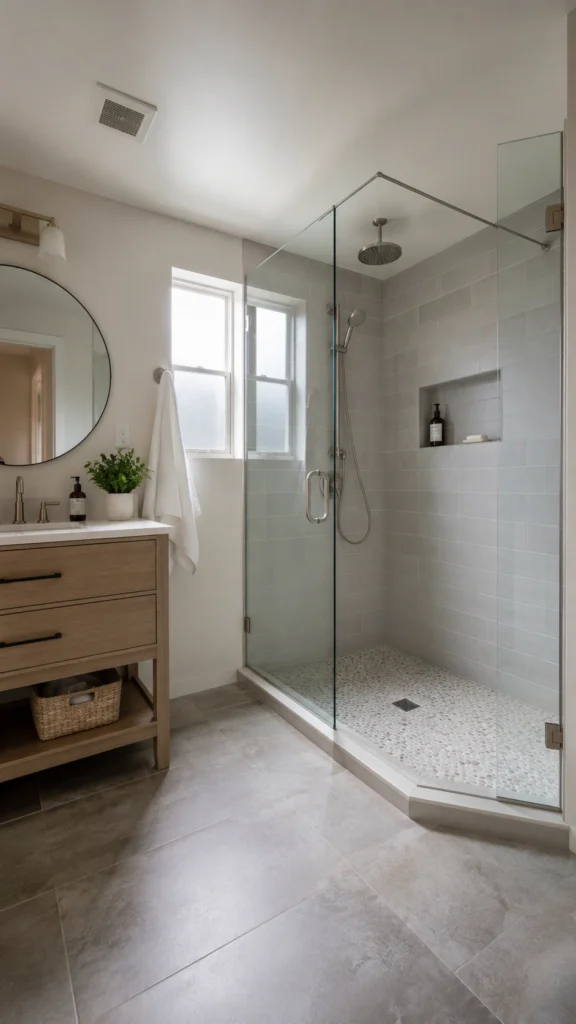
Frameless glass is the fastest way to stop a corner shower from feeling like a closed box. With no metal frame breaking up the view, your eye moves across the whole room, and a small bathroom reads bigger than it is. It also puts your tile or stone on full display, so this works best when the walls are the part you actually want people to notice. One thing to plan for: frameless panels are heavy and need solid wall anchoring, so budget for proper installation rather than a weekend DIY job.
2. Add Blue Floor Tiles for a Pop of Color Underfoot
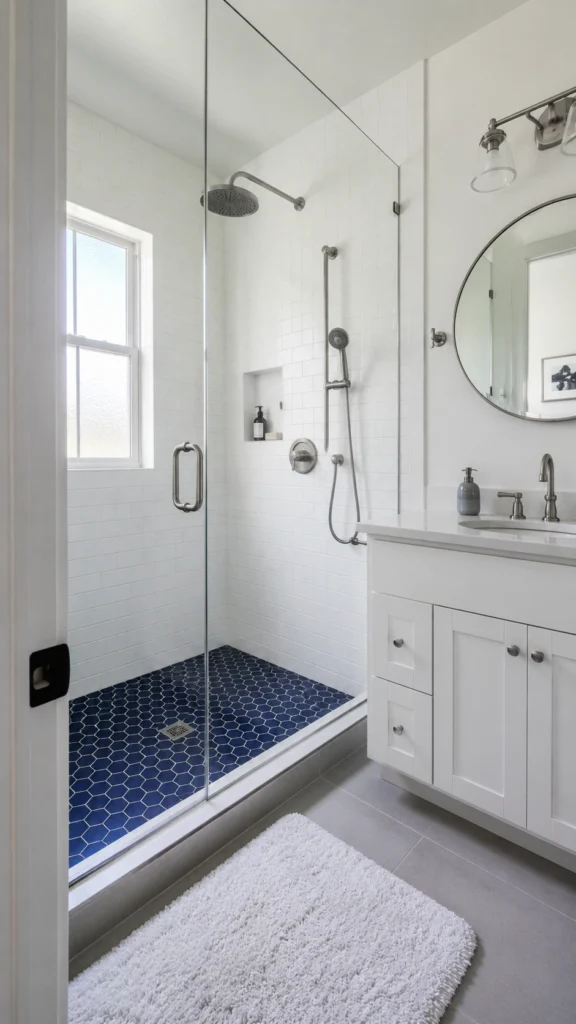
A blue floor gives a shower personality without you touching the walls. Deep navy hides soap film and water spots far better than pale grout, so it looks clean longer between real cleans. Keep the walls white or light gray so the color reads as a choice rather than an accident. Small hex or penny tiles in blue do two jobs at once here, adding grip underfoot along with the color.
3. Stick with Subway Tiles for a Timeless Bathroom Style
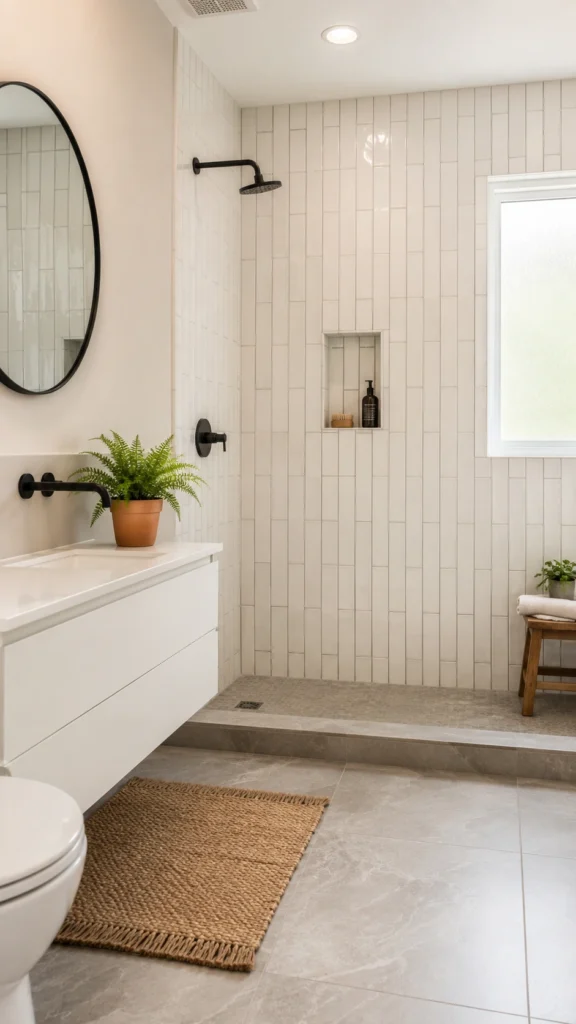
Subway tile stays popular for boring, practical reasons. It’s cheap, it’s everywhere, and it works with almost any faucet finish you already own. Run it vertically to stretch a low ceiling, or stack it in a straight grid for a cleaner, modern look. Ceramic versions cost a fraction of stone and go up fast, which is why they show up in so many rental renovations.
4. Create a Corner Shower with Soft Geometric Patterns
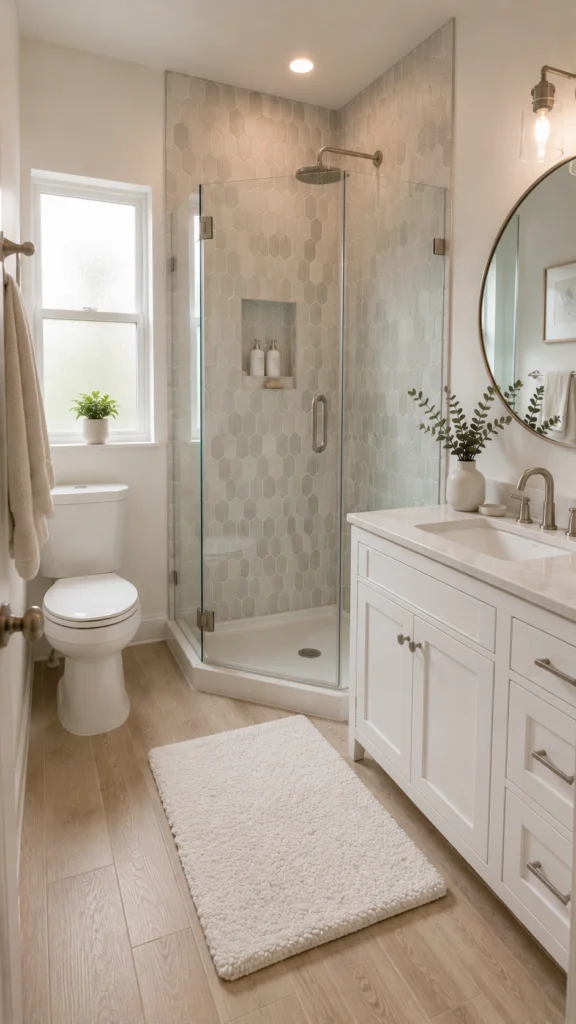
Geometric tile adds movement without demanding attention. Gentle hexagons, elongated diamonds, or a quiet chevron in muted tones give a plain corner some structure while keeping the room calm. This only works when the rest of the finishes stay simple. Put a busy pattern next to busy everything else, and the whole thing turns into visual noise.
5. Create a Soft Minimalist Shower with Neutral Finishes
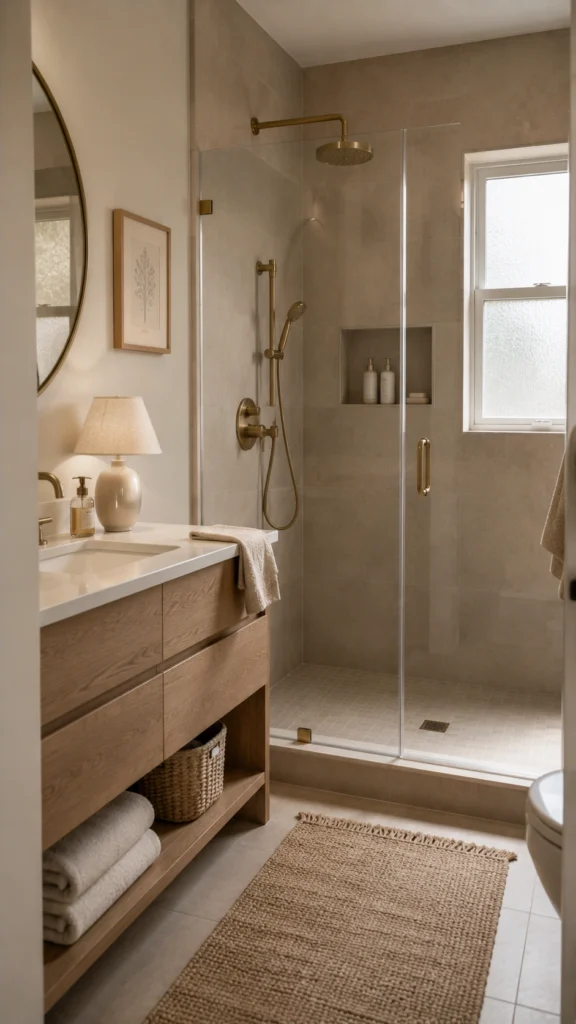
Neutral finishes make a corner shower feel restful the moment you walk in. Warm beige, greige, and soft taupe come across as cozy instead of cold, which matters in a room where you’re usually barefoot and half awake. Keep the hardware in a single finish so nothing competes. The calmest bathrooms tend to have the fewest colors, and that restraint does most of the work.
6. Bring Retro Charm with Vintage-Inspired Shower Details
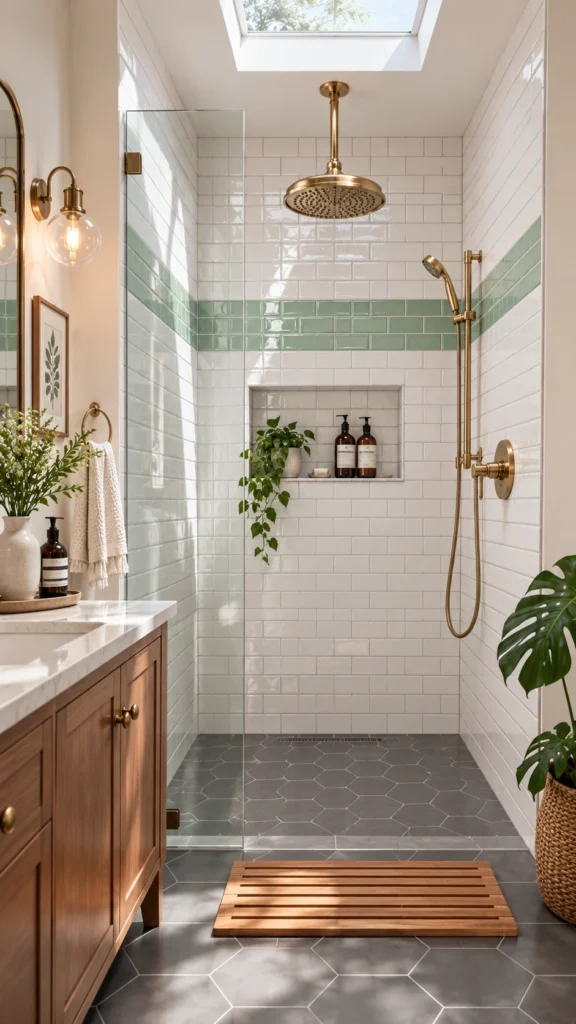
Vintage details give a shower some history. A scalloped tile edge, a brass rain head, or a run of mint-green wall tile brings in charm that builder-grade parts can’t copy. The trick is restraint. One or two retro touches against modern plumbing feels curated. Go full retro on every surface, and the room stops looking charming and starts looking dated.
7. Install an Angled Corner Shower to Fit an Awkward Layout
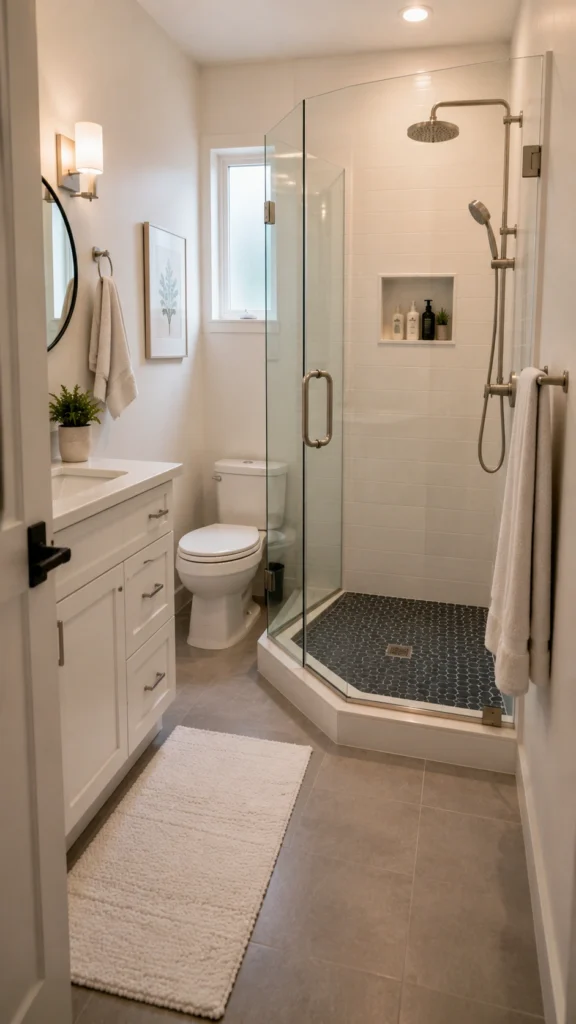
An angled, or neo-angle, shower slots into corners where a square unit simply won’t sit. The diagonal front opens up the floor in front of it, so you stop squeezing past a door every single morning. It’s the shape to reach for in tight half-baths and under sloped ceilings. Neo-angle bases come in standard sizes, too, so you rarely need custom work to make one fit.
Related Blog:
8. Create Bold Contrast with Black-and-White Design Elements
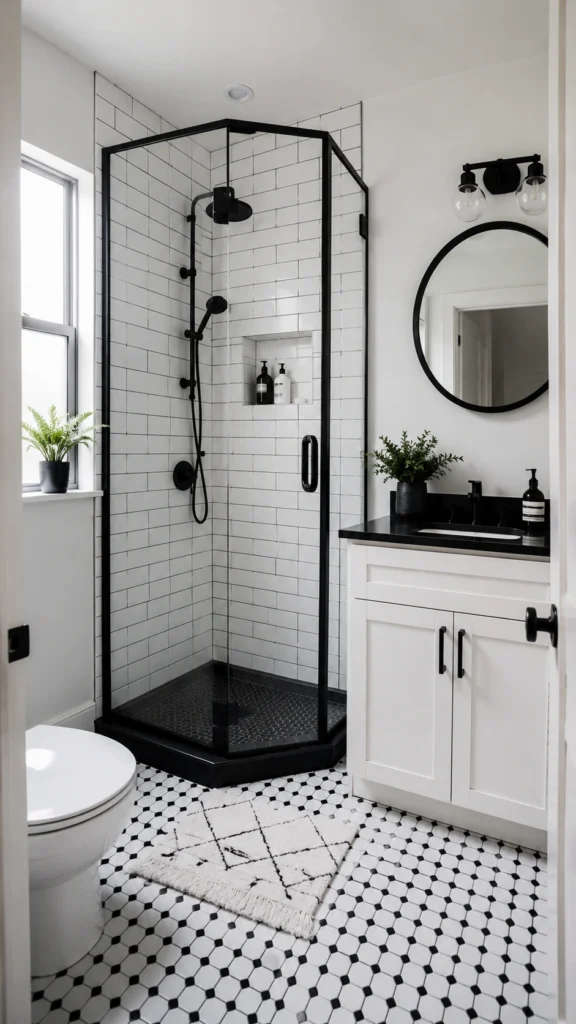
Contrast carries a black-and-white shower, so you don’t have to add anything else to make it look sharp. Black grout against white tile, or a black frame paired with pale stone, gives the whole space definition. Keep the ratio roughly balanced so one color doesn’t take over. This is the look for anyone who wants drama without a single bright color in the room.
9. Maximize Natural Light with a Bright Minimalist Shower
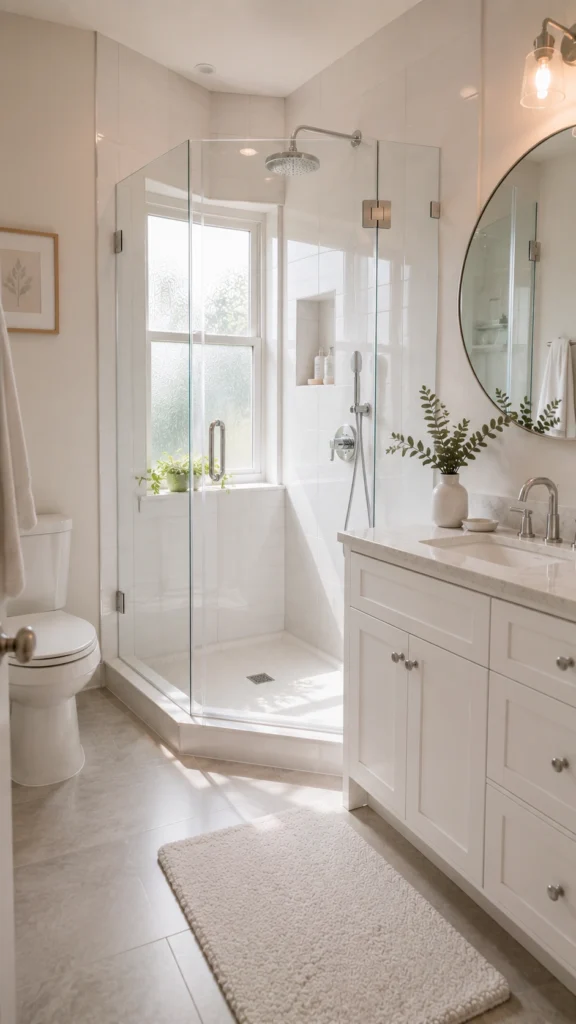
Got a window near the corner? Build around it. Clear glass, glossy white tile, and a pale floor bounce daylight throughout the room, making the shower feel close to double its size. Skip the heavy curtains and let the light move freely. Even on gray mornings, a bright corner shower still feels fresh.
10. Add Texture with Modern Wall Tiles and Finishes
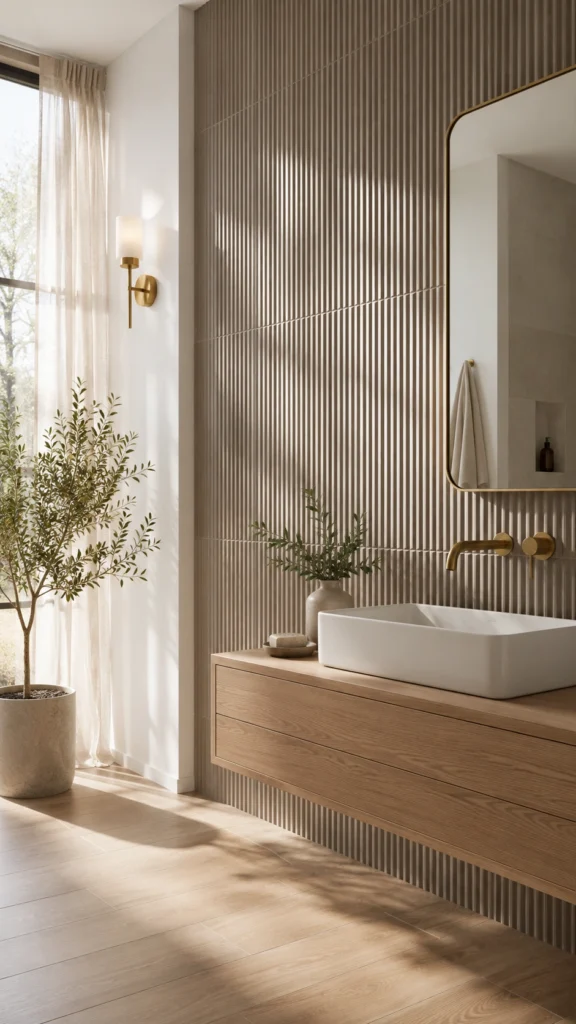
Flat glossy tile is fine, but texture is what makes people look twice. Fluted tile, three-dimensional zellige, or a ribbed stone panel catches light and shadow as the day moves. Texture also hides minor water marks better than a smooth glaze, which is a useful bonus. Keep it to one wall so it stays a feature and doesn’t become an extra scrubbing job.
11. Feature Marble Surfaces for a High-End Corner Shower
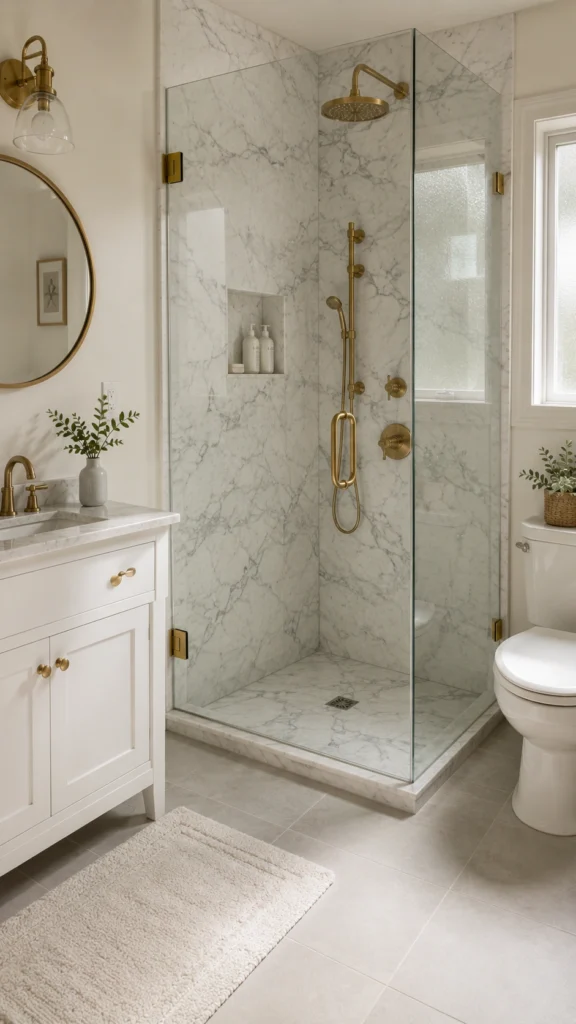
Real marble gives a corner shower an immediate sense of quality. The veining runs differently across every slab, so no two walls match and even a small shower feels custom. The catch is upkeep. Marble needs sealing to resist stains, and you’ll redo that periodically. If you want a genuine upgrade and don’t mind the maintenance, it’s hard to beat.
12. Create a Streamlined Shower That Is Easy to Maintain
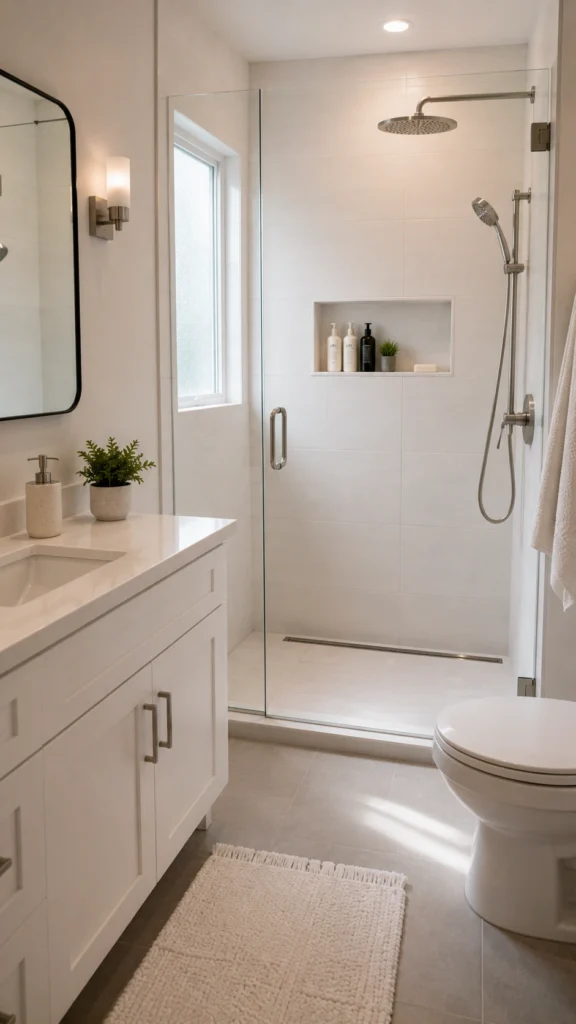
Fewer grout lines, ledges, and crevices mean less scrubbing, full stop. Large-format tiles, a single niche, and a linear drain all cut down on the spots where grime collects. The reduced seams also make the space look more finished. In my experience, this is the upgrade people appreciate most six months later, long after the novelty of a fancy tile wears off.
13. Add Personality with Bold Tile Patterns and Shapes
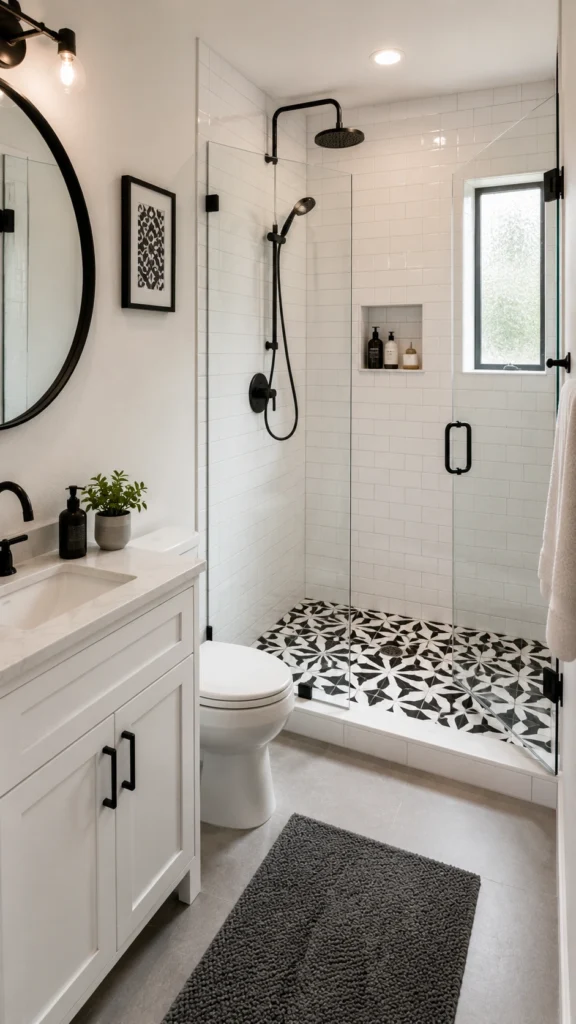
Bold tile is often the reason someone compliments a bathroom. A Moroccan-inspired print, a strong two-tone shape, or an oversized graphic tile on the shower floor turns a plain corner into the focal point. Keep the surrounding walls quiet so the pattern has room. Pull one color from that tile into your towels and bath mat, and the room looks pulled together on purpose.
14. Design a Spa-Inspired Corner Shower with Modern Finishes
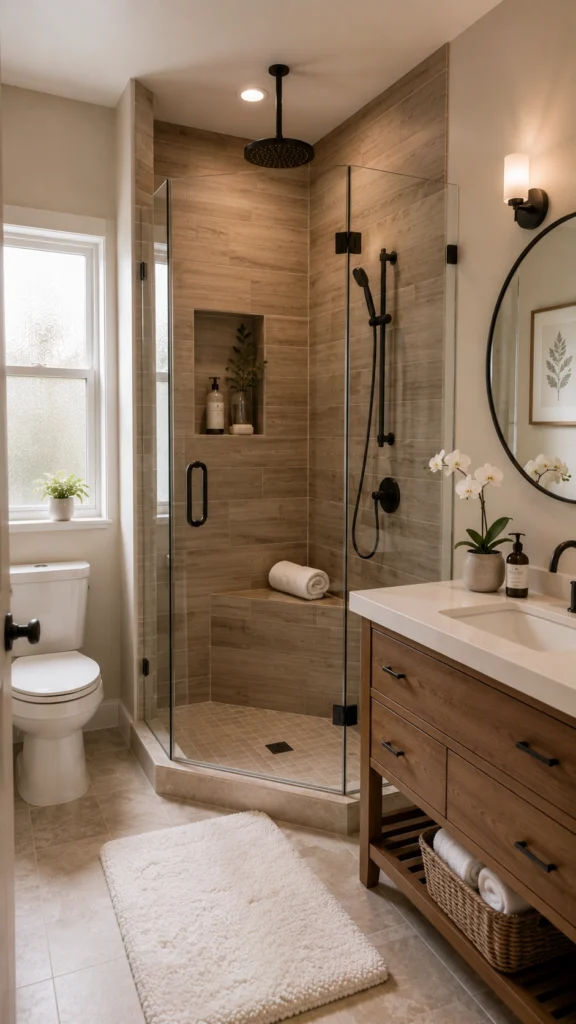
A spa feel comes from soft materials and a calm palette, not a big budget. A rainfall head, a built-in bench, and warm wood or stone-look tile slow the whole room down. Matte black or brushed nickel fixtures keep it modern without going clinical. If your shower is the only quiet ten minutes in your day, this is where to spend your effort.
15. Blend Traditional and Modern Elements for a Warm Look
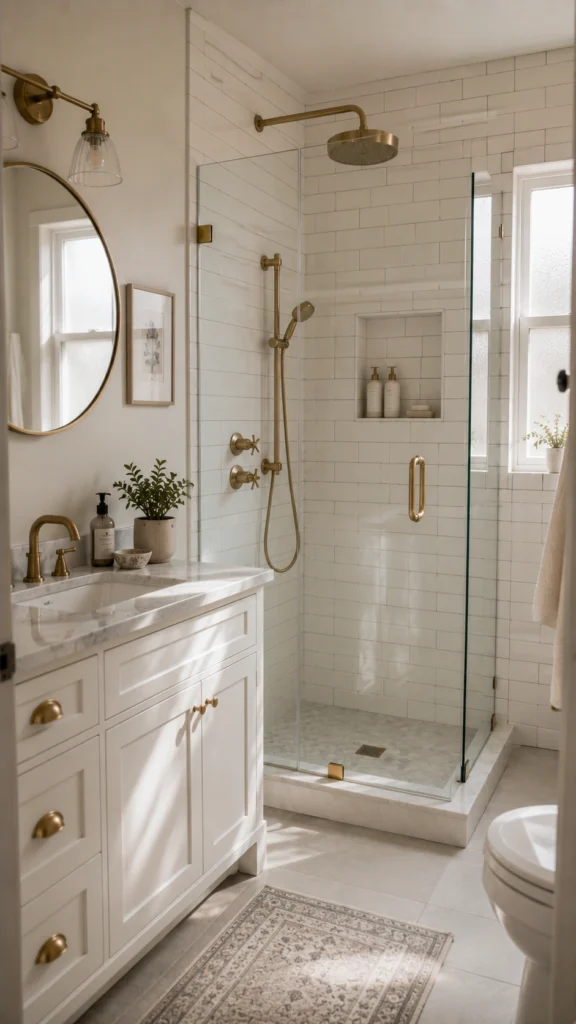
Mixing old and new keeps a bathroom from looking like a showroom floor. Pair classic subway tile with a frameless glass door, or set a modern faucet near a vintage-style vanity. The contrast makes the space feel gathered over time rather than bought in one weekend. It’s one of the easier ways to warm up a shower that would otherwise read flat.
16. Embrace Clean Contemporary Lines for a Modern Bathroom
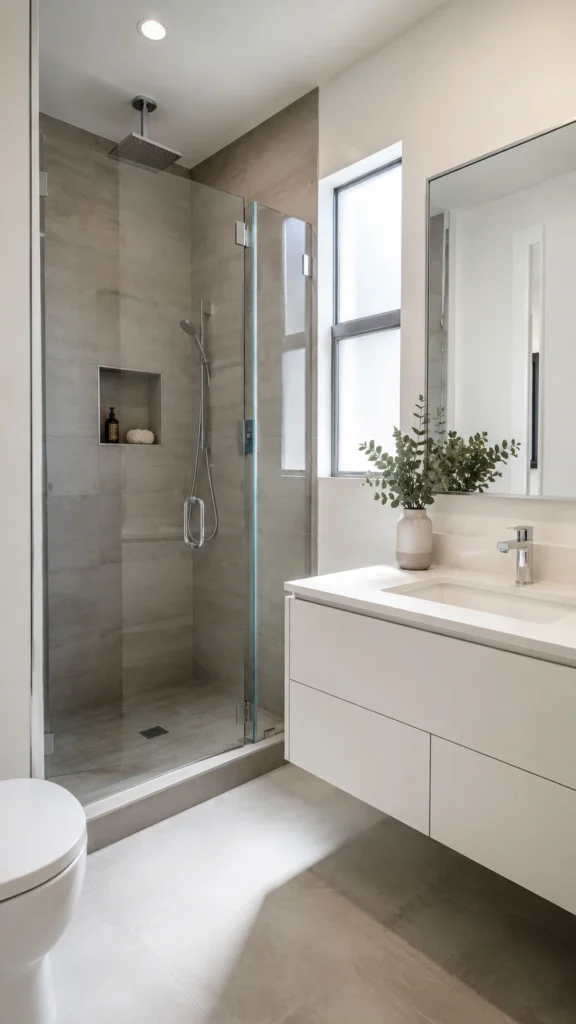
Straight lines and simple shapes keep a corner shower looking current. Square or rectangular hardware, a flush niche, and tile in a tidy grid do most of the work. Contemporary design runs on restraint, so skip the extra trim. The common slip here is piling on too many finishes, which breaks the exact clean lines you were after.
17. Create a Moody Bathroom with Rich Dark Colors
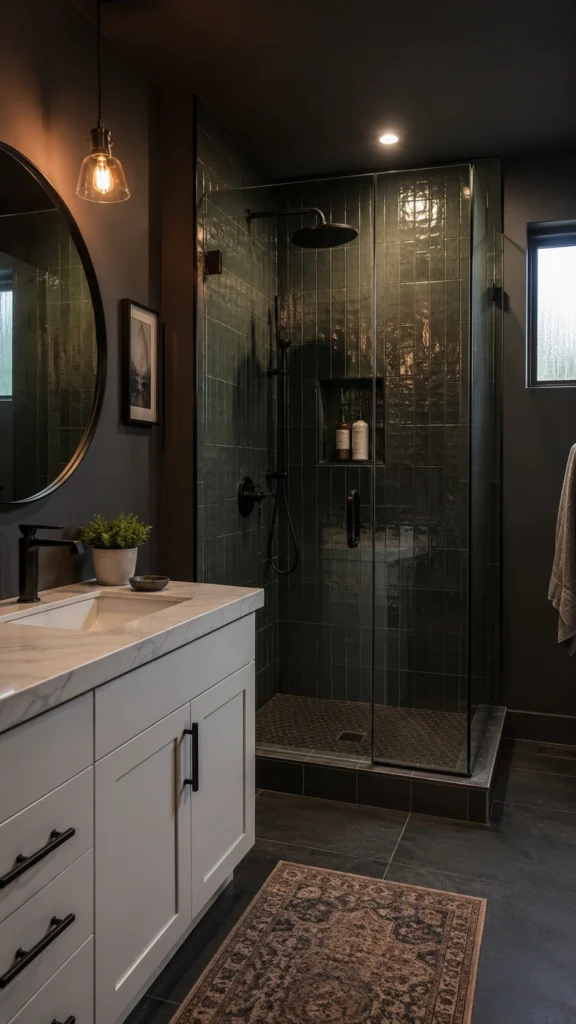
Dark bathrooms feel cozy and a little dramatic, and that suits a corner shower better than you’d expect. Charcoal tile, deep green walls, or near-black stone wrap the space and hide water spots well. Add warm lighting and one metallic accent so it looks deliberate rather than dim. This works especially well in windowless baths that already run dark, since you’re leaning into the room instead of fighting it.
18. Embrace Minimalist Design with Clean Lines and Simple Finishes
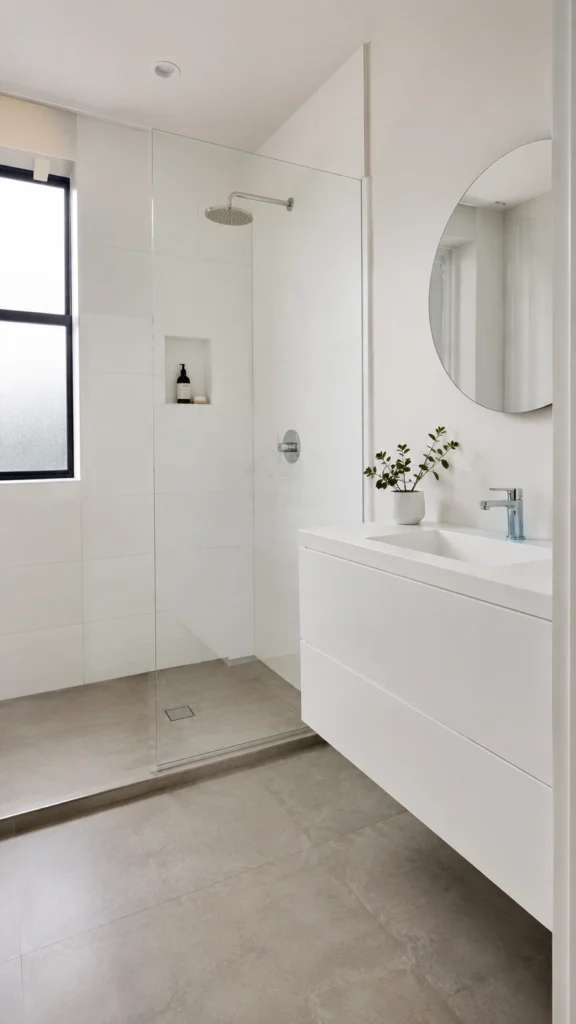
Minimalism works because it gives your eyes somewhere to rest. Stick to one or two materials, hide the clutter, and let the shower’s shape do the talking. A single recessed niche keeps bottles out of sight without adding noise. Personally, I’d point beginners here first, since it’s the most forgiving style when you’re not confident mixing colors yet.
19. Brighten the Bathroom with Cheerful Yellow Shower Tiles
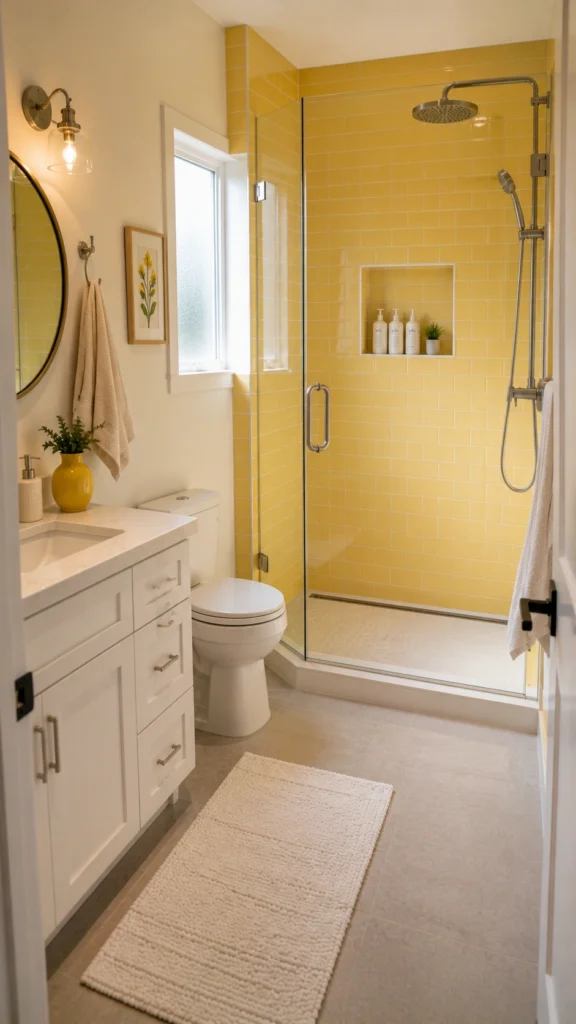
Yellow tile brings warmth into a room that often lacks a big window. A soft butter or mustard tone reads friendly without turning the shower harsh. Balance it with white grout and plenty of neutral space so it stays cheerful. North-facing bathrooms, the ones that never quite feel warm, benefit the most from a color like this.
20. Create a Tuxedo-Inspired Bathroom Using Black-and-White Contrast
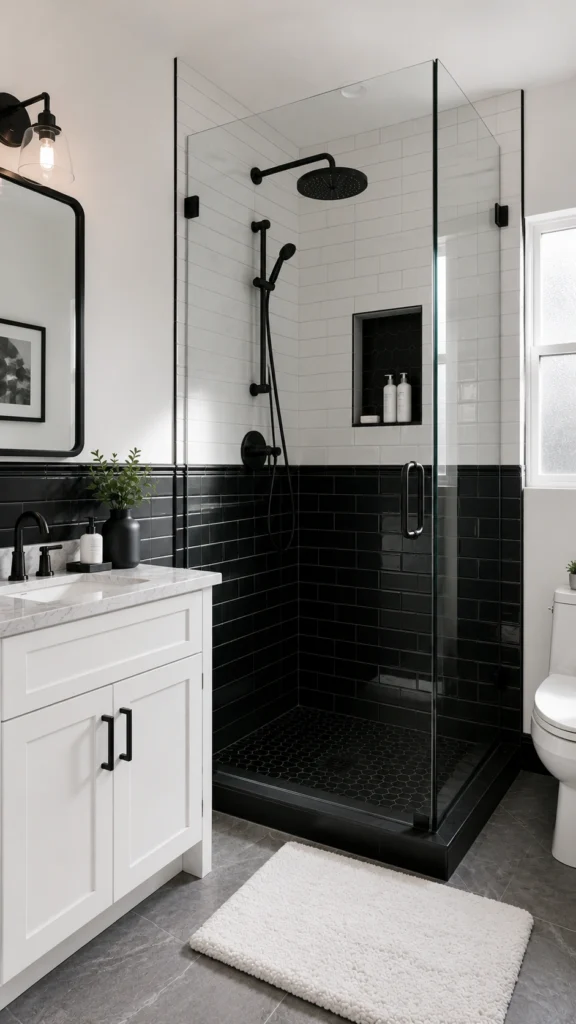
A tuxedo bathroom pairs crisp white walls with a black base, trim, or lower half, and the result looks dressed up without much effort. The split keeps things classic while still landing bold. Carry the black into your fixtures so the theme reads on purpose. It photographs well too, which matters if you’re pulling together a Pinterest board before you commit.
21. Design a Polished Corner Shower for Everyday Comfort
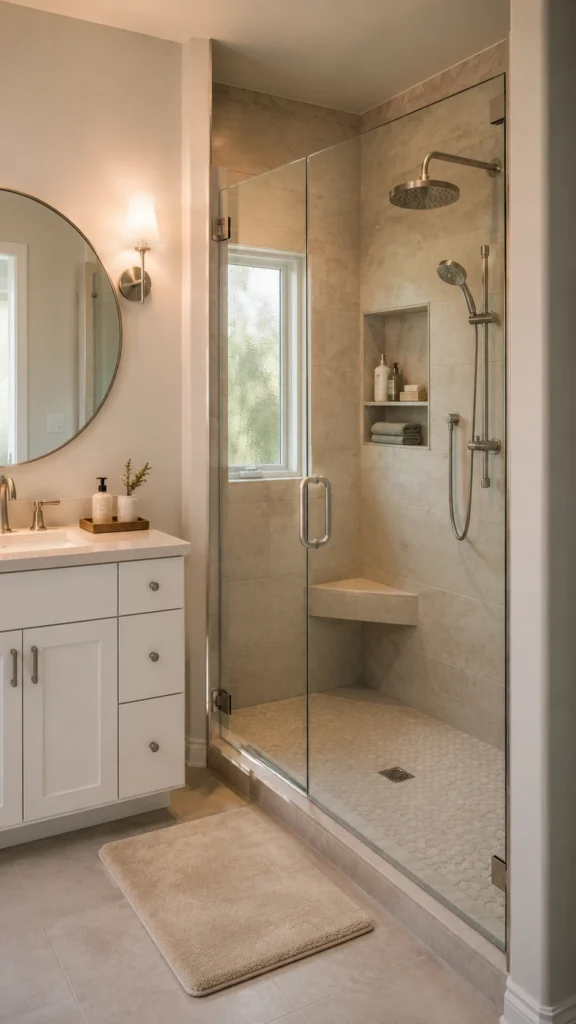
Polished doesn’t mean fussy. It means the small things work: a niche at the right height, a bench for shaving, a slip-resistant floor, and a door that opens without hitting the toilet. Those practical choices are what make a shower feel finished instead of assembled in a hurry. Plan the layout first, and you won’t have to choose between looks and daily comfort.
22. Add Marble-Look Finishes to Upgrade a Small Bathroom
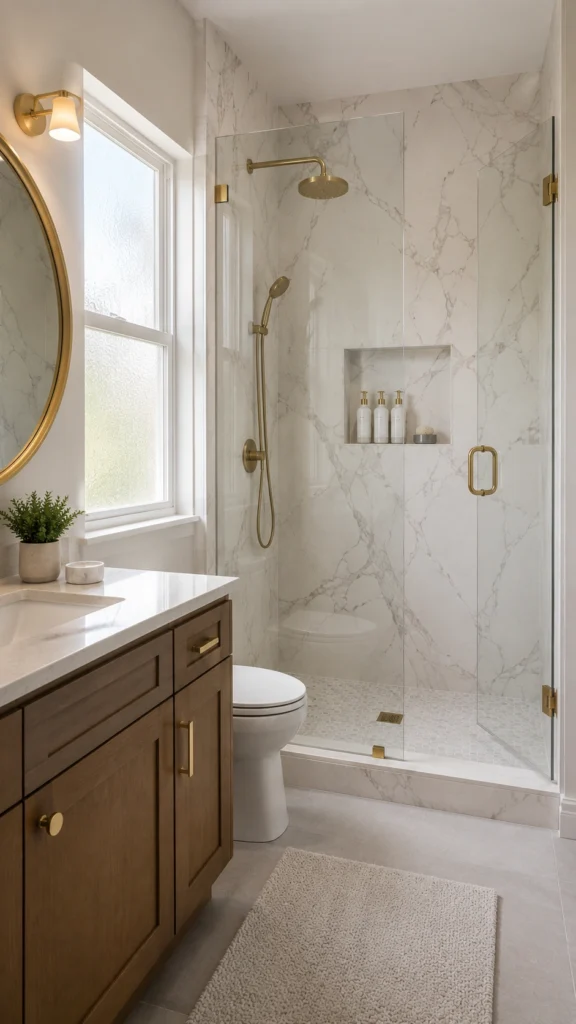
Marble-look porcelain gives you the veining and glow of stone without the price or the sealing routine. It shrugs off water and stains, so it holds up in a shower you run every day. In a small bathroom, large slabs cut down on grout lines and make the walls look more expensive than they were. Porcelain slabs cost far less than natural marble and install faster, which is the main reason they’ve taken over mid-range renovations.
Related Blog:
23. Bring Farmhouse Charm to Your Corner Shower Design
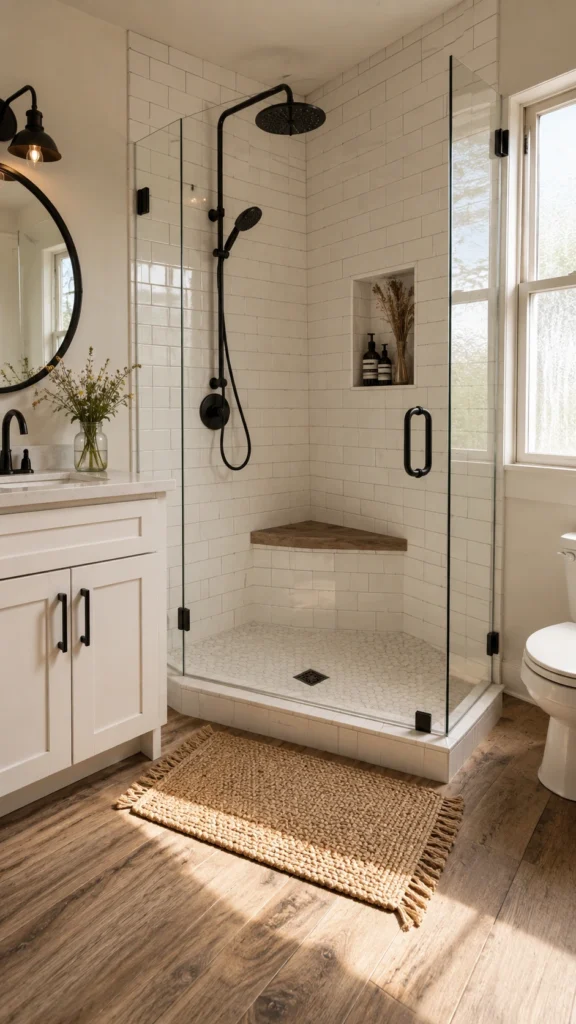
Farmhouse style keeps a corner shower relaxed and homey. Picture white tile, matte black hardware, a wood-look bench, and simple shaker details on the nearby vanity. The mix stays practical while adding character you’ll actually want to live with. It fits best in homes that already lean casual, where a sleek modern shower would feel out of place.
24. Include a Built-In Toiletry Niche for Better Organization
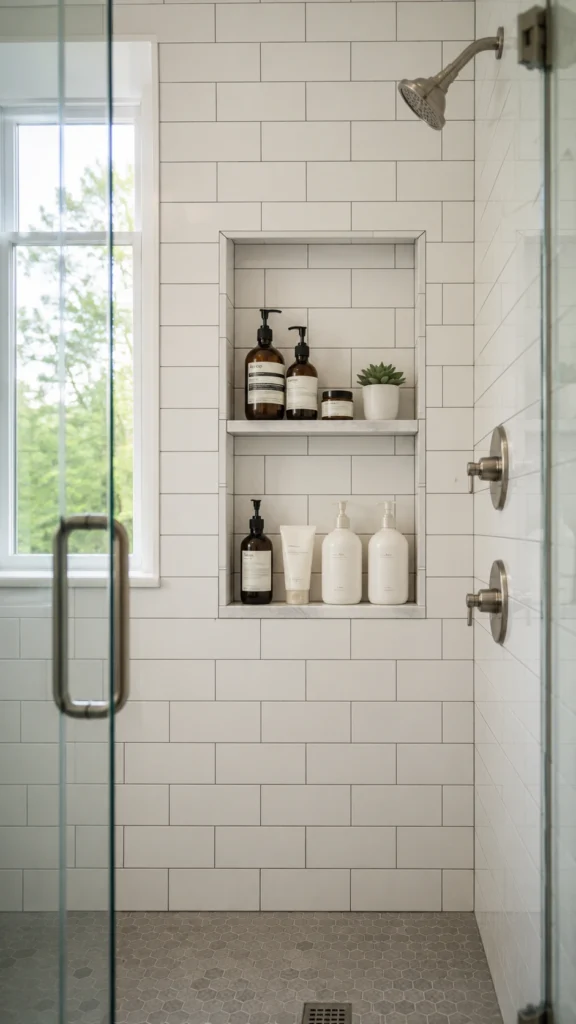
A recessed niche gives your bottles a home instead of crowding the floor or relying on a suction caddy that eventually falls at 6 a.m. Build it into a wall you’re already tiling to keep the cost down, and add a shelf if you own both tall and short bottles. Line it up with a tile course so it looks planned rather than punched in. One detail people miss: put the niche on the wall away from the spray, or your shampoo slowly gets watered down.
Related Blog:
25. Mix Two Different Tile Styles for Added Visual Interest
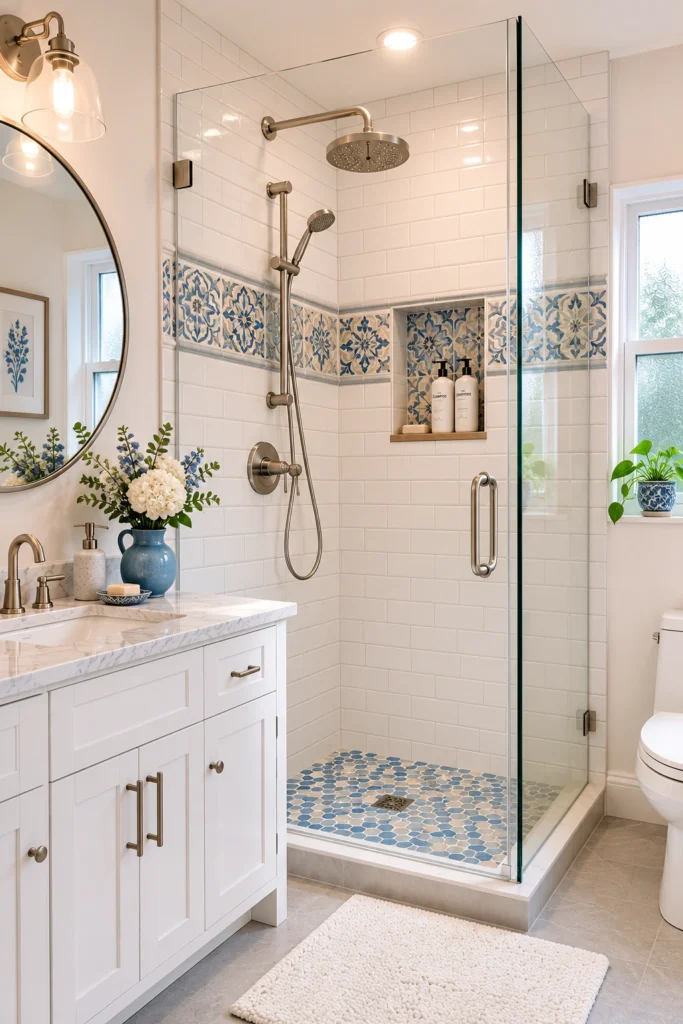
Two tiles let you define zones without moving a wall. A bold floor under calm walls, or a textured feature strip against plain tile, adds depth and keeps a small shower from feeling flat. Repeat one color across both tiles so the pairing looks connected instead of accidental. The exception is a very small shower, where two busy tiles crowd each other, so keep at least one of them quiet.
26. Keep the Space Bright with a Balanced Color Palette
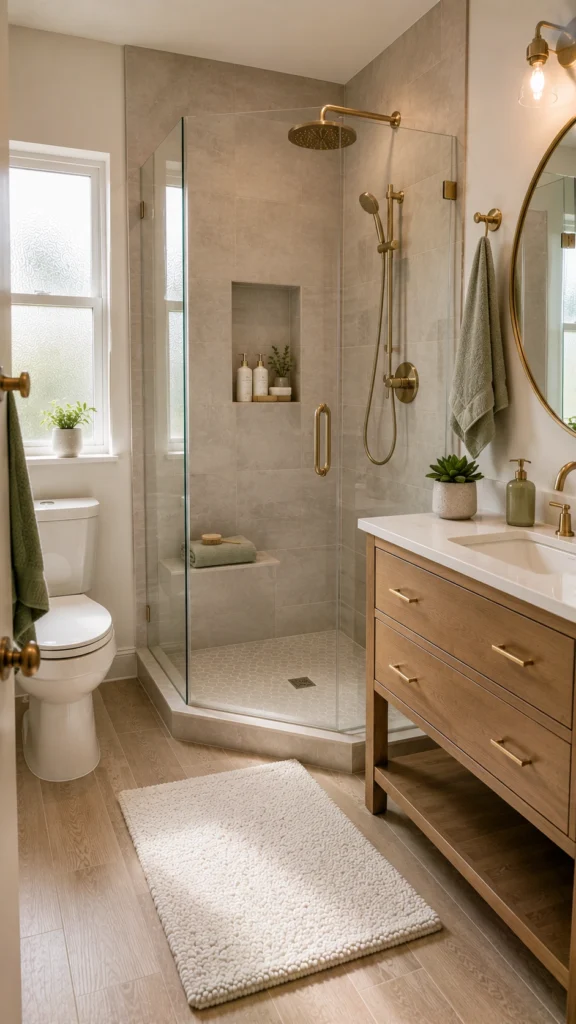
A balanced palette keeps a small bathroom from tipping into either dull or chaotic. Anchor the room with light neutrals, then add one or two accent colors through tile, towels, or a trailing plant. You stay bright while still giving your eye somewhere interesting to land. It’s a low-commitment way to bring in color, since swapping a towel is a lot cheaper than re-tiling.
27. Refresh Your Bathroom with a Classic White Tile Design
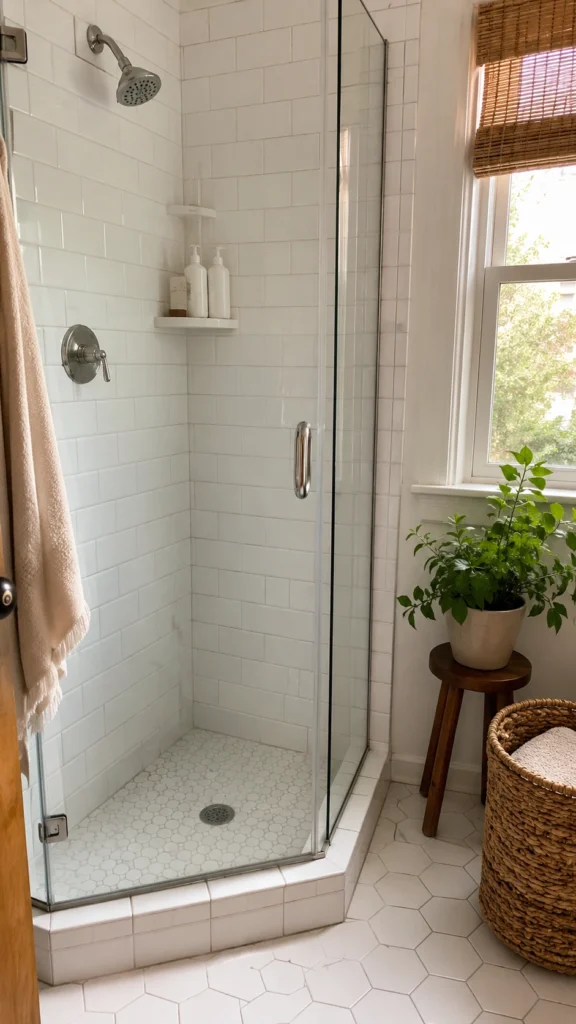
All-white wins when you want clean, bright, and easy to change later. White tile reflects light, works with any hardware, and lets you reset the whole mood with towels and accessories instead of a remodel. If plain worries you, a textured tile or a colored grout adds edge without much cost. For anyone planning to sell or restyle down the road, it’s the safest place to start.
Recommended Blogs
- 20 Small Apartment Bathroom Ideas
- 22 Small Apartment Space-Saving Ideas
- 24 Small Apartment Organization Hacks
- 23 Small Apartment Storage Hacks
- 21 Small Apartment Modern Design Ideas
Final Thoughts
The small bathroom corner shower ideas that actually work all do the same job: they make a small footprint feel bigger and pull more use out of it. You don’t need marble, dark walls, and bold tile competing in one room. Pick the look that suits your space, keep your finishes consistent, and add a niche so the bathroom stays organized after the novelty fades.
If you do one thing this week, make it the smallest change with the biggest payoff, usually a frameless door, fresh white tile, or a smarter layout. That corner has been sitting empty long enough.
FREQUENTLY ASKED QUESTIONS
Are corner showers a good idea for small bathrooms?
Yes. A corner shower frees up the center of the room and keeps the vanity, toilet, and door swing clear, which makes a tight bathroom feel far more usable.
What is the best tile for a corner shower?
Porcelain is the practical winner for most people. It resists water, needs no sealing, and comes in marble-look, subway, and textured styles, so you get the look you want with easy upkeep.
How much space do you need for a corner shower?
A standard neo-angle base usually starts around 36 by 36 inches. If you have the room, 42 by 42 inches feels far more comfortable and gives you space to turn around.
Are frameless glass corner showers hard to clean?
Not really, though hard water leaves spots faster on glass than on tile. A quick squeegee after each shower and a monthly vinegar wipe keep it clear with very little effort.
Do corner showers add value to a home?
They can. Buyers like bathrooms that feel open and functional, so a clean, well-tiled corner shower that maximizes floor space often reads as a smart, move-in-ready upgrade.