
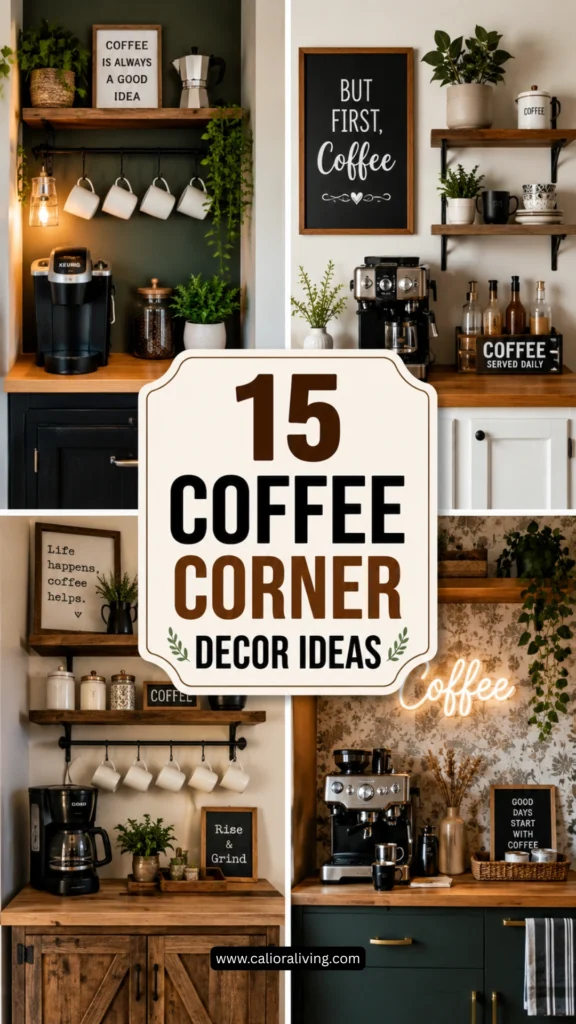

You want a great cup of coffee every morning. You also want your kitchen to look clean and organized. I spent three years drinking mediocre drip coffee while staring at a cluttered kitchen counter. I constantly shuffled my grinder and scale around my cutting boards. I eventually decided to fix my setup. Setting up a dedicated coffee space completely solves the morning chaos. It organizes your gear and gives your equipment a proper home.
Read on for 15 modern coffee corner decor ideas for a chic home. You can use these practical tips to build your own functional brewing space.
1. Floating Walnut Shelves
Wall-Mounted Storage
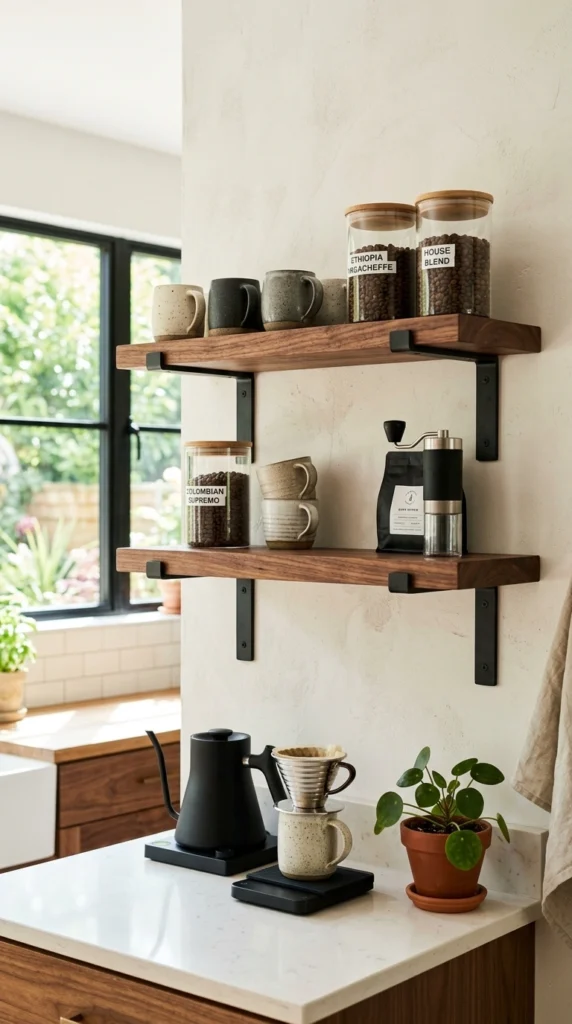
You need vertical storage to clear your countertops. Solid walnut shelves provide a strong base for your heavy ceramic mugs and glass jars. I recommend buying heavy-duty steel brackets. Do you want your expensive coffee gear crashing down onto your espresso machine? You must secure the brackets directly into the wall studs.
Here are the technical specifications you should look for:
- Weight Capacity: The brackets must support at least 50 pounds per shelf.
- Shelf Depth: You need exactly 10 or 12 inches of depth to hold standard coffee canisters.
- Material Choice: You should buy solid wood rather than hollow-core veneer for greater durability.
2. Matte Black Espresso Station
Industrial Aesthetics
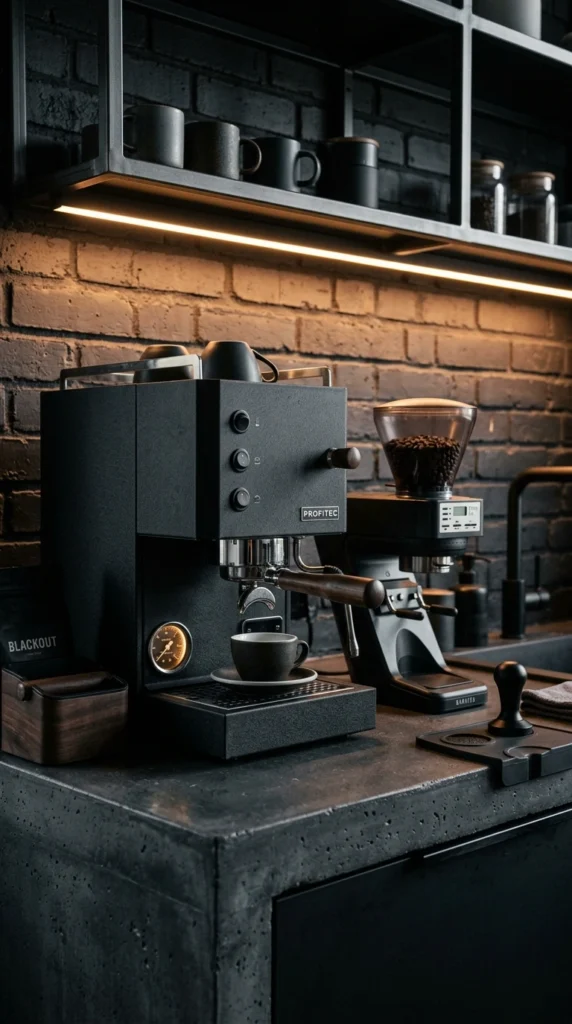
Chrome espresso machines require constant polishing. You touch the machine daily, leaving fingerprints everywhere. Matte black finishes hide these smudges effectively. I switched to a matte black burr grinder last year. I spend much less time wiping it down now.
Consider these practical benefits when choosing black equipment:
- Cleaning Frequency: You wipe down matte surfaces once a week.
- Scratch Resistance: Powder-coated metal resists minor scratches better than polished stainless steel.
- Visual Weight: Darker machines anchor the space and draw the eye immediately.
3. Dedicated Rolling Coffee Cart
Mobile Brewing
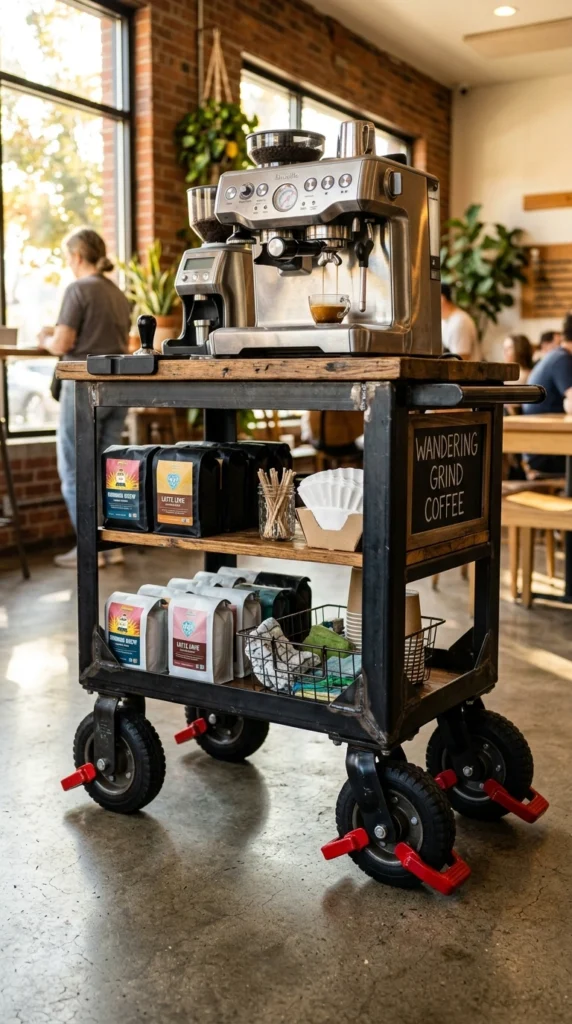
You might lack permanent counter space in your kitchen. A rolling metal cart gives you total flexibility. You simply lock the wheels before you tamp your espresso portafilter. Ever tried pulling an espresso shot on a moving target? FYI, cheap plastic carts wobble too much under pressure.
You need specific features for a functional coffee cart:
- Wheel Locks: You must buy a cart with dual locking casters on the front wheels.
- Weight Distribution: You place your heavy espresso machine on the top shelf and store your lightweight paper filters on the bottom shelf.
- Power Access: You should zip-tie a surge protector to the cart’s back leg.
4. Integrated Kitchen Cabinet Corner
Concealed Counters
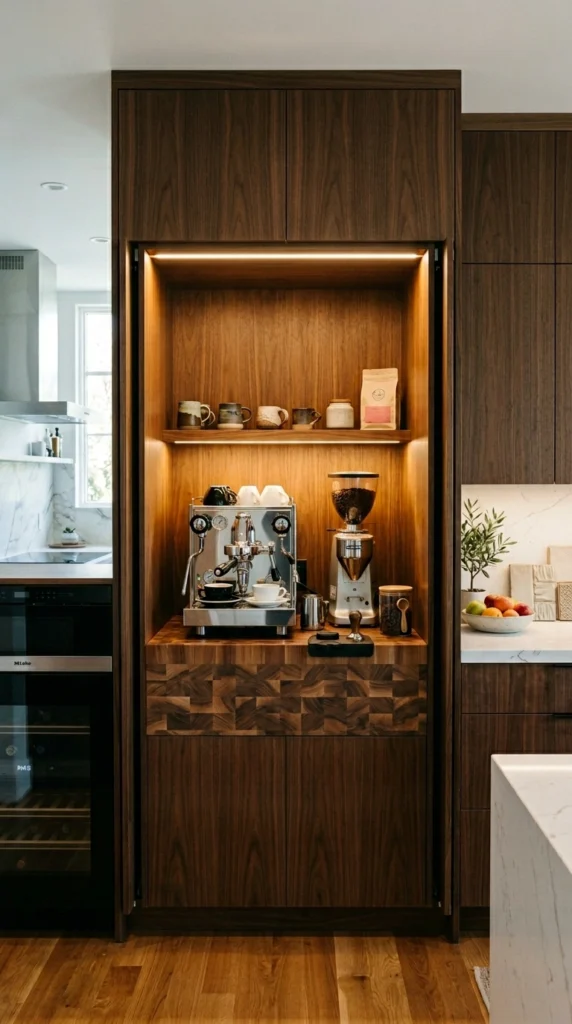
Some people prefer a completely empty kitchen counter. You can build an appliance garage to hide your coffee tools. You install retracting cabinet doors that slide back into the wooden frame. You close the doors when you finish brewing.
You must plan for these structural requirements:
- Vertical Clearance: You need at least 18 inches of vertical height to fit a standard espresso machine.
- Steam Ventilation: You must pull your coffee maker forward when brewing to prevent steam from warping your wooden cabinets.
- Electrical Outlets: You instruct your electrician to install an outlet directly inside the cabinet space.
5. Pegboard Wall Organization
Vertical Flexibility
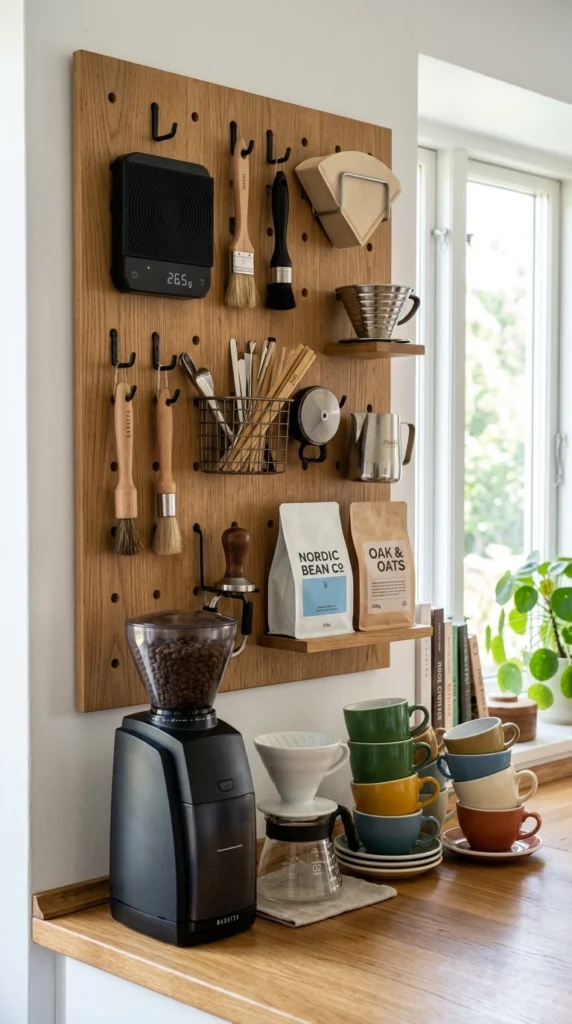
You collect a lot of small tools when you brew speciality coffee. You own scales, stirring rods, cleaning brushes, and extra filter paper. A wooden or metal pegboard keeps these tools organized and visible. I installed a metal pegboard above my grinder. I no longer waste time searching for my cleaning brush.
Compare these pegboard materials before you buy:
- Metal Pegboards: These hold up to 100 pounds and resist water damage perfectly.
- Wooden Pegboards: These look warmer but warp if you splash hot water on them repeatedly.
- Hook Types: You buy locking metal hooks so they stay attached when you remove a tool.
6. Brass and Glass Pour-Over Bar
Vintage Modern Style
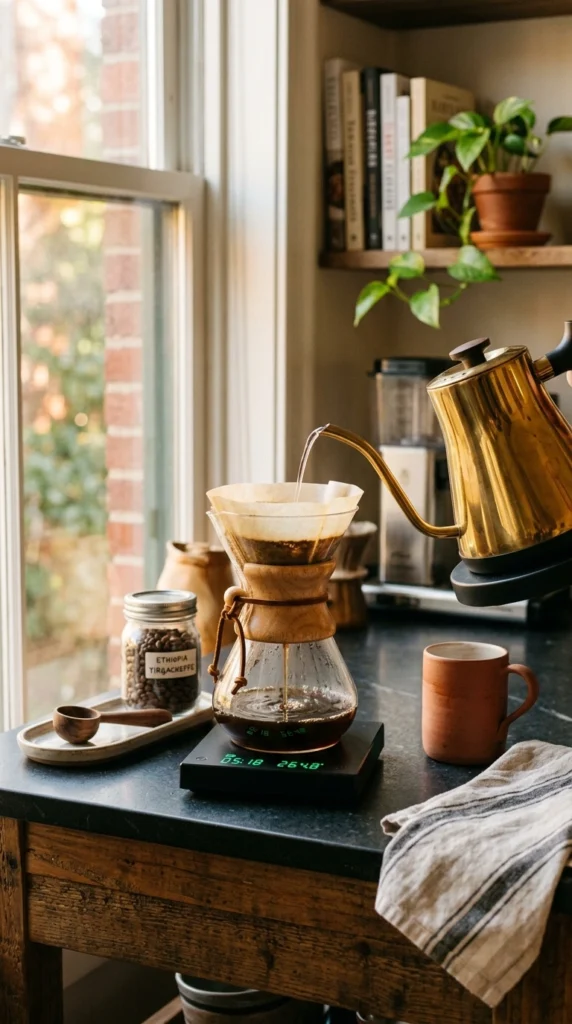
You might prefer the slow ritual of manual brewing. You arrange a glass Chemex and a brass gooseneck kettle on your counter. This setup requires minimal electricity and looks highly intentional. I burned out three cheap electric kettles before buying a proper variable temperature model.
You need these exact components for a manual bar:
- Variable Temperature Kettle: You set the water temperature exactly to 93°C for light-roast coffee.
- Digital Scale: You buy a scale that reads in 0.1-gram increments for precise measurements.
- Glass Brewer: You choose a glass carafe that is easy to clean and does not retain old coffee oils.
7. Neutral Scandi Wooden Trays
Containing the Mess
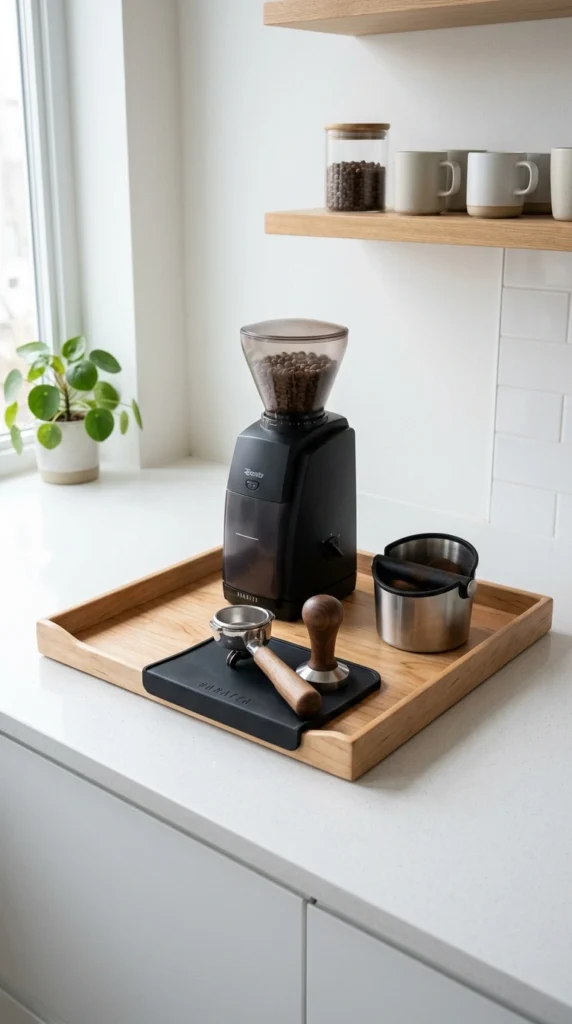
Coffee grounds spill everywhere during the grinding process. You contain this mess by placing your equipment on a large wooden tray. You simply lift the tray and carry it to the sink to dump the loose grounds. Ash or birch wood provides a clean, neutral appearance.
You place these specific items on your tray:
- The Grinder: This catches the stray grounds that fall out of the chute.
- The Tamping Mat: You protect the wood by pressing your portafilter onto a thick silicone mat.
- The Knock Box: You store the container for used espresso pucks right next to the machine.
8. Smart Coffee Maker Integration
Automated Brewing
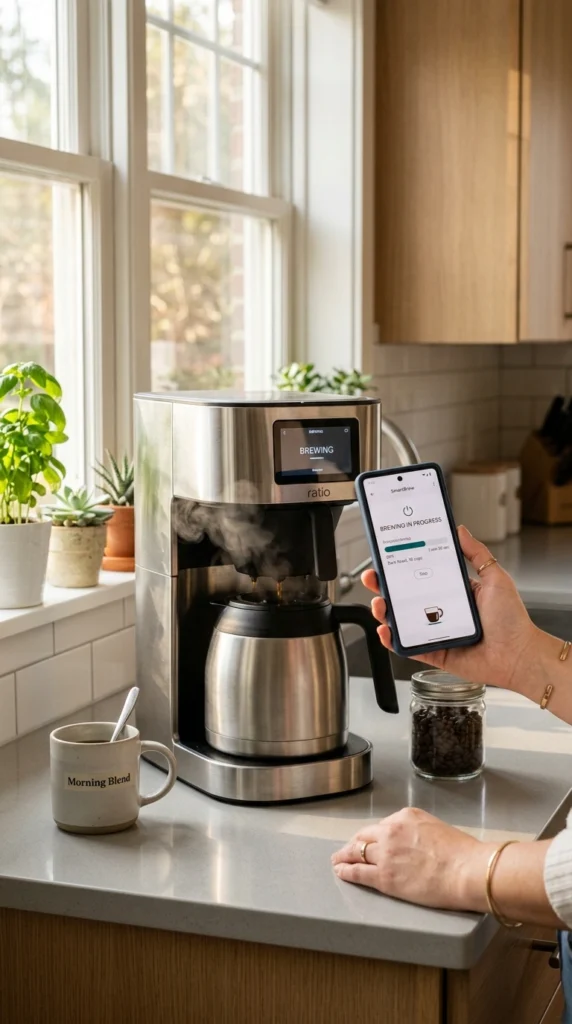
You want your coffee ready the moment you wake up. You connect a Wi-Fi-enabled drip coffee maker to your home network. You program the machine using an application on your phone. Some people enjoy waking up twenty minutes early to boil water manually. I prefer sleeping.
You look for these technical features in a smart brewer:
- Scheduling Applications: You set the exact brew time the night before.
- Water Reservoirs: You buy a machine with a removable water tank for easy refilling at the sink.
- Thermal Carafes: You choose an insulated steel carafe because glass carafes burn the coffee on a hot plate.
9. Repurposed Antique Dresser
Upcycled Bases
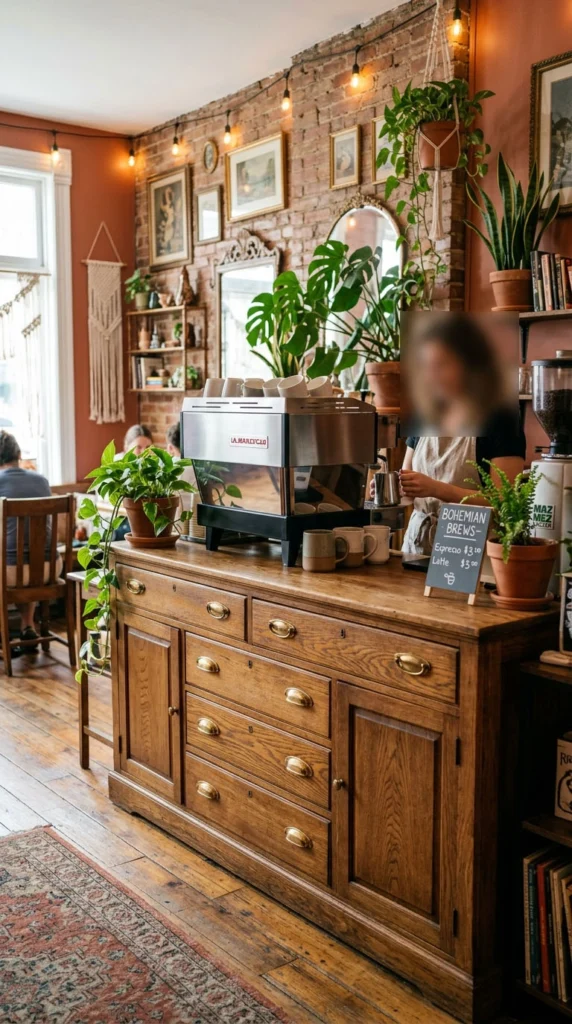
You do not need to buy brand-new furniture for your coffee station. You can sand down a 1920s oak dresser and seal it with waterproof polyurethane. I found my current base unit at a local thrift store for forty dollars. The solid wood construction supports heavy equipment perfectly.
You follow these steps to prepare older furniture:
- Surface Sanding: You remove the old varnish using 120-grit sandpaper.
- Waterproofing: You apply three coats of clear sealant to protect the wood from water spills.
- Hardware Replacement: You unscrew the old wooden knobs and install modern brass handles.
10. Plant-Filled Bohemian Nook
Natural Elements
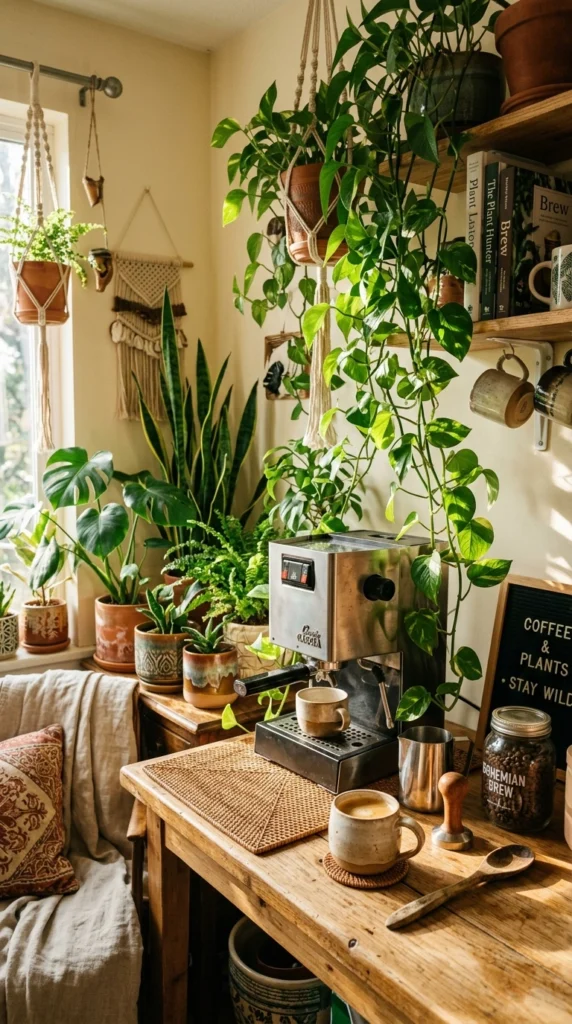
You place indoor plants around your coffee equipment to add color to the room. You select low-light plants if your kitchen lacks large windows. Pothos and snake plants survive easily in these conditions. IMO, dead leaves falling into your coffee grounds ruin the flavor :/
You maintain your plants with these specific actions:
- Distance: You keep the plant leaves at least twelve inches away from the hot espresso machine.
- Watering Routine: You water the plants in the sink rather than on the coffee bar to avoid muddy spills.
- Pot Selection: Use ceramic pots with sealed bottoms to prevent water damage to your wooden counter.
11. Monochromatic White Setup
Clean Clinical Look
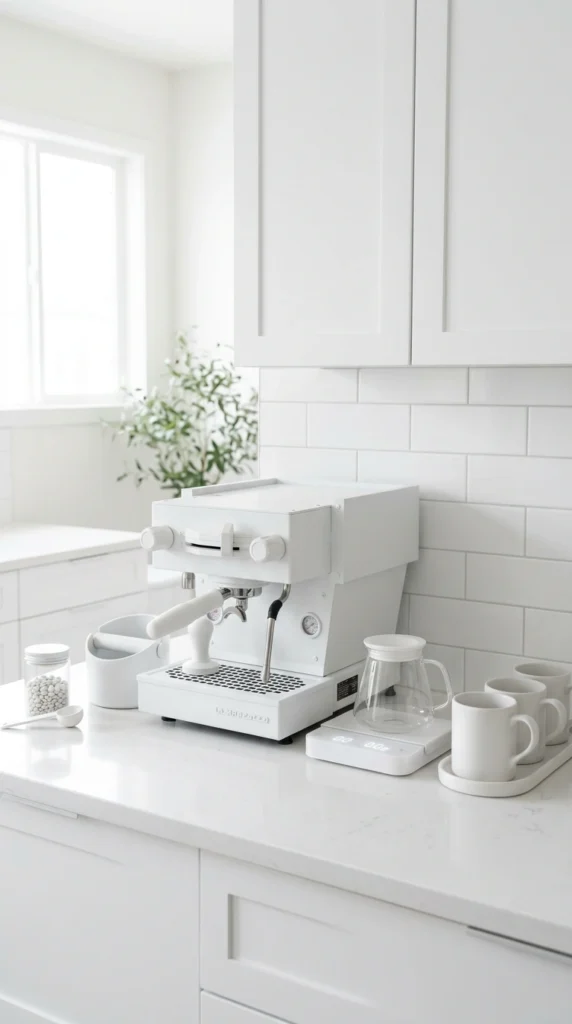
You buy a white espresso machine, a white digital scale, and white ceramic cups. This creates a very clean, unified appearance. You easily spot coffee spills on white surfaces. Are you prepared to clean your machine every single day?
You need these cleaning supplies for a white setup:
- Microfiber Cloths: You use soft cloths to wipe down the painted metal without scratching it.
- Espresso Machine Cleaner: You buy specialized powder to dissolve dark coffee oils from the group head.
- Descaling Liquid: You run descaler through the boiler every three months to prevent mineral buildup.
12. Tiled Backsplash Feature
Protecting the Walls
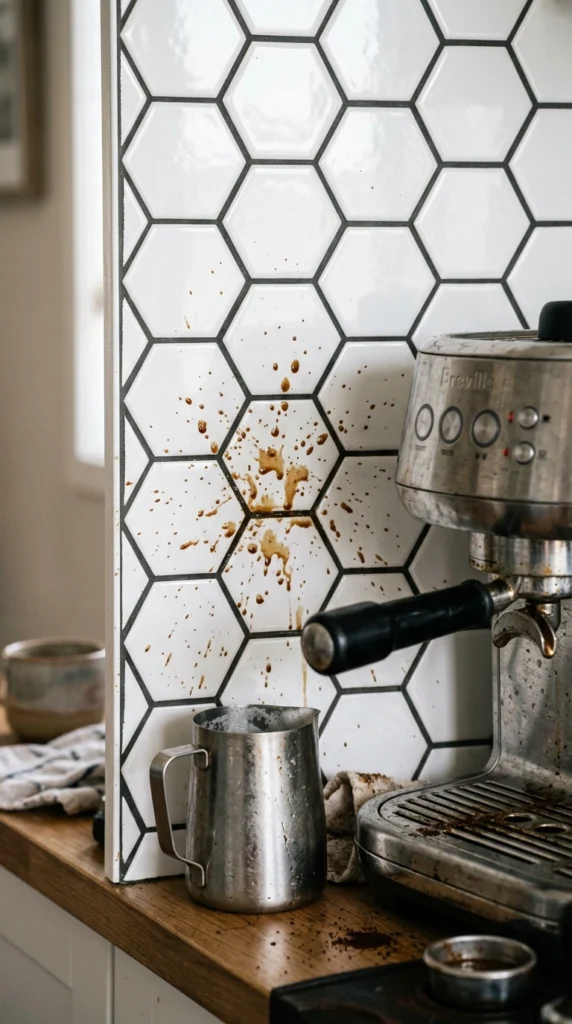
Eventually, you splash dark espresso and milk onto the wall behind your machine. Painted drywall stains very quickly. You install a small section of subway tiles or hexagonal ceramic tiles behind your equipment. Coffee splatters do not count as wall art.
You compare these backsplash options:
- Ceramic Tiles: You wipe these clean with a damp sponge in five seconds.
- Peel-and-Stick Vinyl: You can apply these easily, but hot steam melts the adhesive over time.
- Grout Color: You choose dark grey or black grout because white grout stains permanently.
13. Woven Baskets and Rattan Accents
Textural Storage
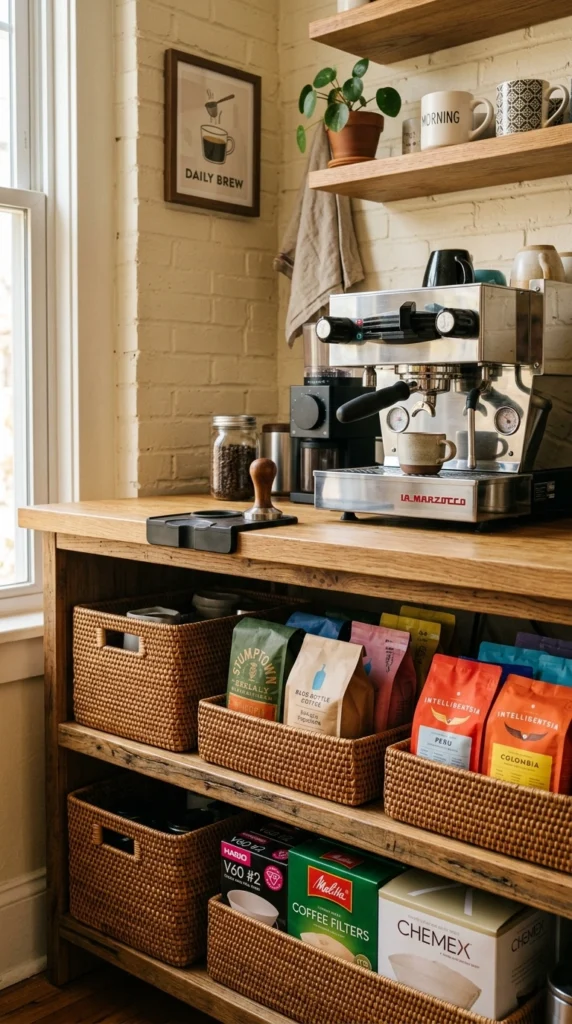
You own many unappealing bags of coffee beans and boxes of paper filters. You hide these items inside woven rattan baskets. You place the baskets on your lower shelves. This keeps your daily tools accessible but hides the visual clutter.
You store these specific categories in your baskets:
- Backstock Coffee: You keep your unopened bags of roasted beans in a dark, cool basket.
- Maintenance Tools: You store your descaling packets, water filters, and screwdrivers together.
- Travel Mugs: You group your tall insulated thermoses in one deep bin.
14. Open Metal Racking
Commercial Cafe Style
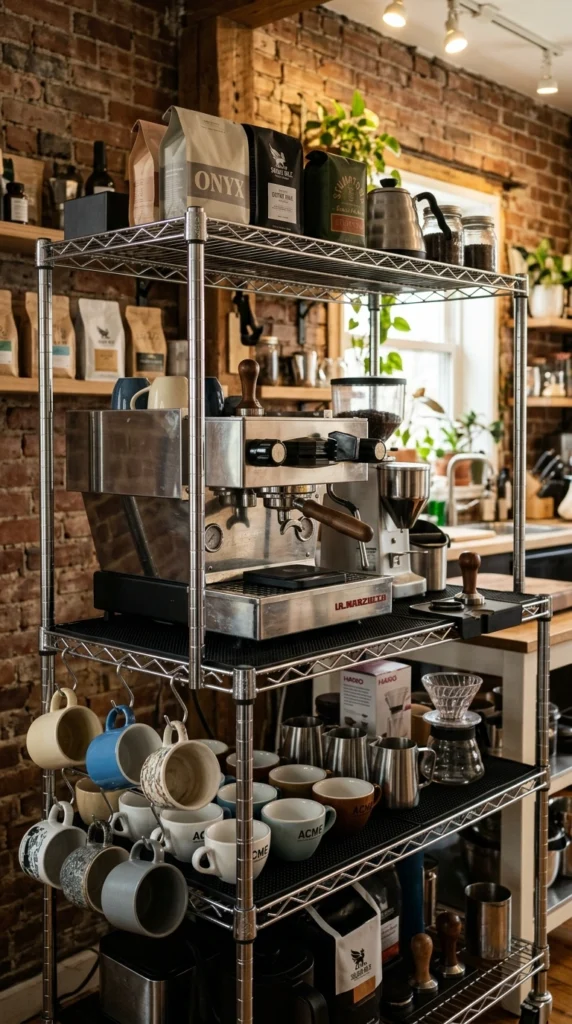
You want your home setup to look exactly like a commercial coffee shop. You assemble chrome wire racks. These industrial shelves hold massive amounts of weight. I used wire racks in my first apartment. They hold everything securely and cost very little money.
You maximize wire racks with these methods:
- Shelf Liners: You buy flat plastic liners so your small spoons do not fall through the metal gaps.
- S-Hooks: You hang your empty coffee mugs from the side wires using cheap metal hooks.
- Adjustable Heights: You position the middle shelf exactly thirty-six inches from the floor for comfortable brewing.
15. Dedicated Sink and Rinser Setup
Plumbing Additions
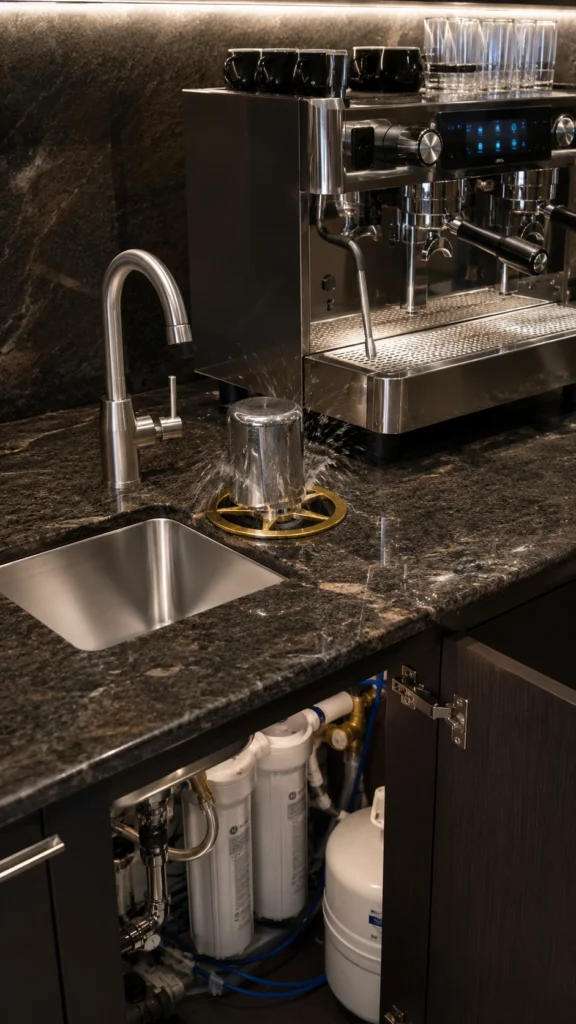
You undertake a major kitchen renovation and decide to include dedicated coffee plumbing. You install a small sink and a commercial pitcher rinser directly into the countertop. You press your milk pitcher down on the star-shaped disk, and high pressure water blasts it clean. Plumbers charge a lot of money to install these water lines :) Do you really want to walk across the kitchen, dripping milk onto the floor?
You require these plumbing connections:
- Water Supply Line: You split the cold water pipe from your main kitchen sink.
- Drainage Pipe: You route a PVC drain pipe downwards with a proper slope to prevent clogs.
- Water Filtration: You install an inline water filter to remove chlorine before the water enters your espresso machine.
Final Thoughts:
You organize your coffee corner to improve your morning routine and protect your equipment. You implement floating walnut shelves to utilize vertical space. You choose matte black or clean white finishes to match your kitchen design. You install practical elements like wooden trays, pegboards, or dedicated sinks to make brewing highly efficient. Assess your current counter space today. You can pick one storage idea from this list and transform your messy kitchen into a functional, chic brewing station.
FREQUENTLY ASKED QUESTIONS
How much space do I actually need for a home coffee bar?
You do not need a massive kitchen to brew great coffee. You only need about 24 inches of horizontal counter space for a basic setup. I used a tiny apartment corner for years before upgrading my house. You just stack your gear vertically using wall shelves.
Where exactly should I place my coffee cart or table?
You must place your setup close to a water source and a trash can. You fill your kettle and dump wet coffee grounds every single morning. Walking across the room with a dripping filter gets old incredibly fast. IMO, you should keep your station exactly two steps away from your kitchen sink.
How do I stop coffee grounds from getting everywhere?
Coffee grinders create static electricity and shoot dry grounds all over your clean counter. You can easily fix this mess by using a containment strategy. I used to wipe my counters three times a day before I figured this out.
You use these tools to trap the mess:
- Wooden Trays: You place your grinder directly inside a tray with raised edges.
- Silicone Mats: You press your portafilter onto a thick mat to catch loose powder.
- Small Vacuums: You keep a handheld vacuum nearby to suck up stray beans instantly.
What equipment do I actually need to start brewing?
You see crazy commercial espresso setups online and assume you need all of those machines. You only need three basic items to make incredible coffee at home. I started with a cheap plastic dripper and a hand grinder, and it worked perfectly. Start small and buy the heavy machinery later :)
You need these core items first:
- A Quality Burr Grinder: You buy this first because fresh grounds dictate the flavor.
- A Digital Scale: You measure your water and coffee exactly to replicate good recipes.
- A Simple Brewer: You buy a French press or a glass pour-over cone.


Pingback: 24 Living Room Corner Decor Ideas That Make Empty Spaces Beautiful - Caliora Living
Pingback: 21 Staircase Corner Decor Ideas That Look Beautiful - Caliora Living
Pingback: 27 Bedroom Corner Decor Ideas for a Cozy, Stylish Space - Caliora Living