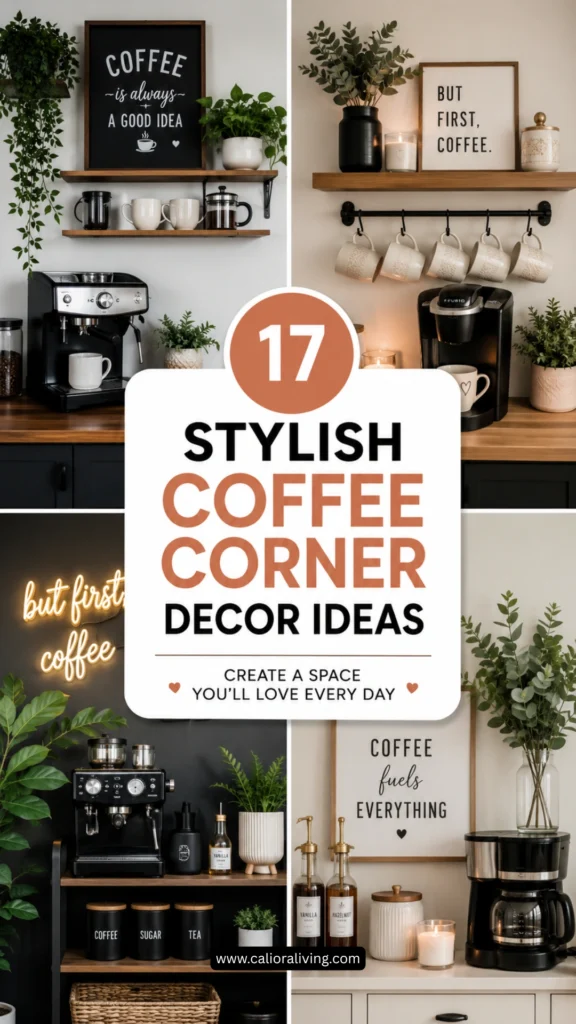

Most coffee makers live wherever there is a free outlet, the day they came out of the box. Wedged between the toaster and the fruit bowl, the cord draped across the counter. If brewing coffee is the first thing you do every morning, that spot deserves more thought than it usually gets.
You don’t need a big kitchen or a renovation budget to fix it. A hallway nook works. So does a rolling cart, or that closet you stopped opening years ago. These 17 coffee corner decor ideas cover every style and price range, with the measurements and costs you need to actually build one instead of just pinning it.
1. Create a Modern Coffee Corner with Floating Shelves and a Neon Sign
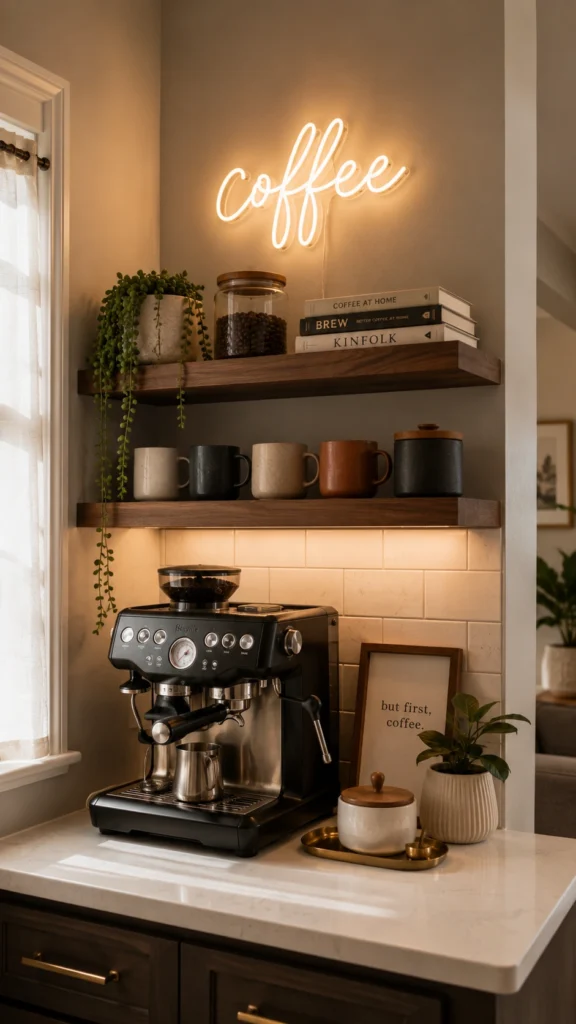
Floating shelves keep the counter clear for your espresso machine, and a neon sign gives the setup instant personality. Mount two slim shelves above your coffee station, stack mugs and beans on them, and hang a small sign that reads “coffee” or “but first, caffeine” above or between the shelves.
The glow pulls the eye upward, which makes the corner read as a destination rather than an appliance zone. Battery-powered LED neon signs run $25 to $40 and skip the electrician entirely.
One word of caution on color. If your kitchen leans neutral, pick warm white or soft amber over hot pink or blue. The sign should sit inside your palette, not argue with it.
2. Design a Cozy Coffee Nook with a Chalkboard Sign and Warm Lighting
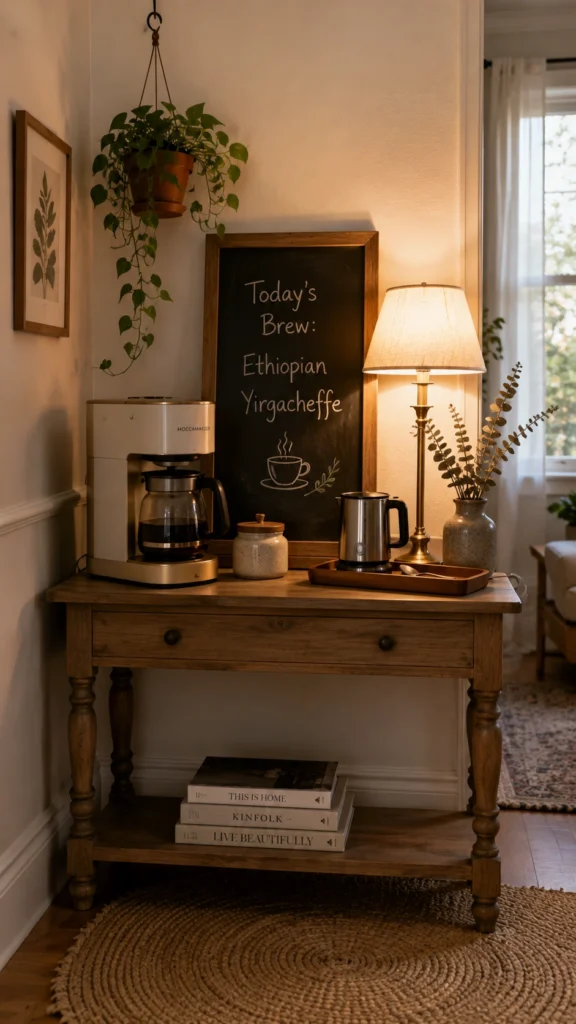
A framed chalkboard does most of the work here. Write a rotating “menu,” a quote, or the day’s brew on it, and the nook picks up a café charm that printed art never quite matches. Lean the board against the wall instead of hanging it. The casual angle looks relaxed, and you can swap it out the moment you get bored with it.
Then get the lighting right, because this detail matters more than any accessory you buy. Use bulbs in the 2200K to 2700K range. Cool white light turns a cozy corner into a waiting room.
3. Style a Luxury Coffee Corner with a Coffee Bar and Pendant Lights
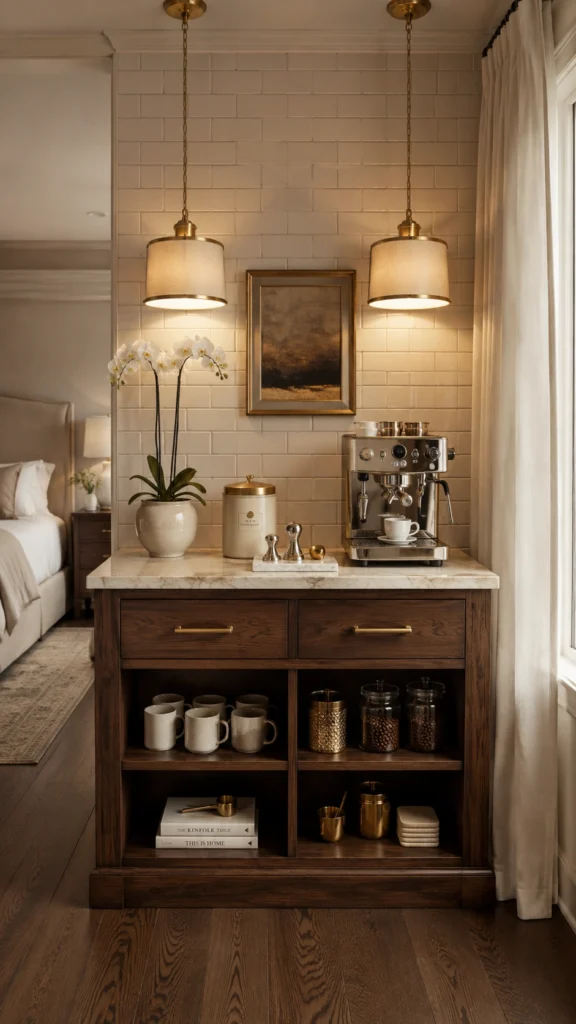
If you have the space, a dedicated coffee bar with pendants hanging above it looks genuinely high-end. Use a bar cabinet or a stretch of countertop, then hang one or two pendants 30 to 36 inches above the surface. That height lights the workspace without blinding you.
Pendants signal intention. Ceiling lights say, “This is a kitchen.” A pendant says this spot exists for a reason. Finish with a marble tray, a glass canister for beans, and brass or gold hardware.
Watch the fixture size, though. People routinely buy oversized pendants for small bars, and the fixture ends up swallowing the space. Keep the diameter under 12 inches if your bar is less than 4 feet wide. If your ceiling sits below 8 feet, go with a flush or semi-flush fixture so nobody hits their head reaching for the sugar.
4. Create a Cute Coffee Corner with Pink Decor and a Coffee Station
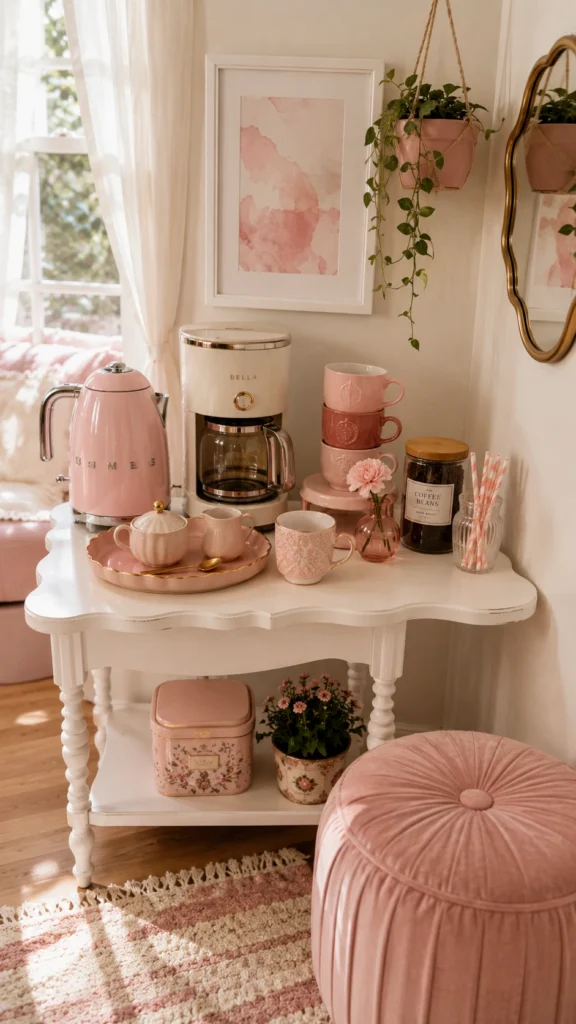
Pink sounds risky until you see a blush-toned coffee station in real life. Start with one anchor piece, like a pink retro kettle or a Smeg-style coffee maker, then layer in pink mugs, a small vase, maybe a scalloped tray.
Keep the surrounding wall white or cream so the pink pops instead of taking over. This idea suits apartments and dorm-style kitchens best, or anywhere you want the corner to feel playful rather than serious.
On a tight budget, skip the pink appliance. Spray a cheap wooden tray with blush paint and you get most of the effect for about $8.
5. Maximize a Small Coffee Corner with Floating Shelves and a Corner Counter
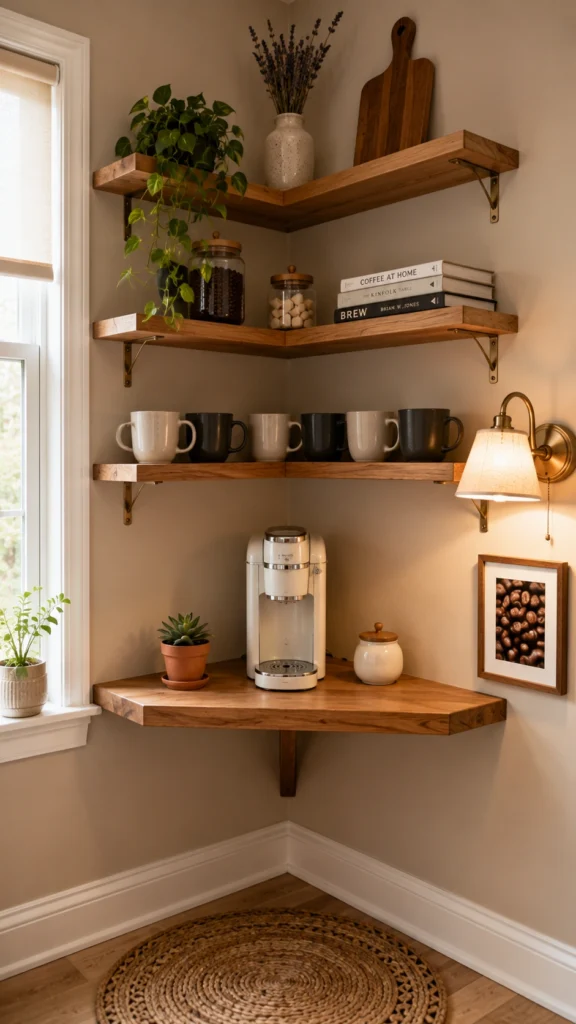
Corners collect clutter because nobody knows what to do with them. Give yours a job. Set up a small corner counter or a triangular shelf unit, then run floating shelves above it in an L-shape along both walls.
You gain vertical storage without losing an inch of floor space. Keep the machine on the counter, mugs on the lowest shelf, beans and syrups up top. Anything you touch daily should sit at arm height. Follow that one rule, and the corner stays functional instead of just photogenic.
This layout earns its keep in apartments and galley kitchens, where every square foot has to justify itself.
6. Design a Farmhouse Coffee Corner with Natural Wood and Woven Accents
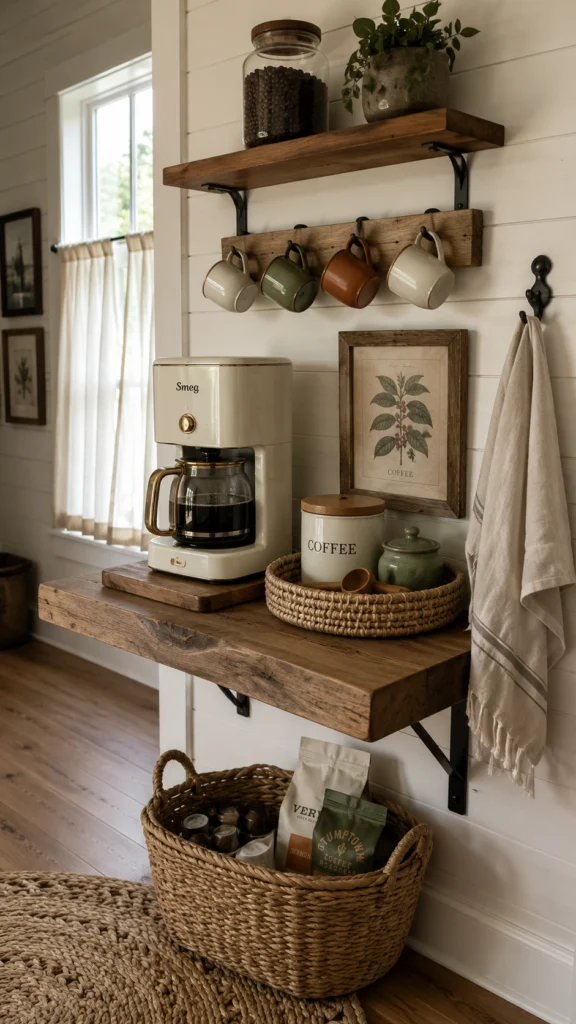
Farmhouse style runs on texture, so build this corner around a chunky wood shelf or a butcher block surface. Add a woven basket for coffee pods, a jute or seagrass tray under the machine, and a few stoneware mugs in cream or sage.
The mix of raw wood and woven fiber gives you a lived-in warmth that sleek materials can’t fake. It also hides wear well, which counts in a spot that catches spills every single morning.
A trick worth stealing: use an actual breadboard or cutting board as your machine tray. It looks authentic because it is, and replacing one costs under $20.
7. Create a Nature-Inspired Coffee Corner with Wooden Shelves and Greenery
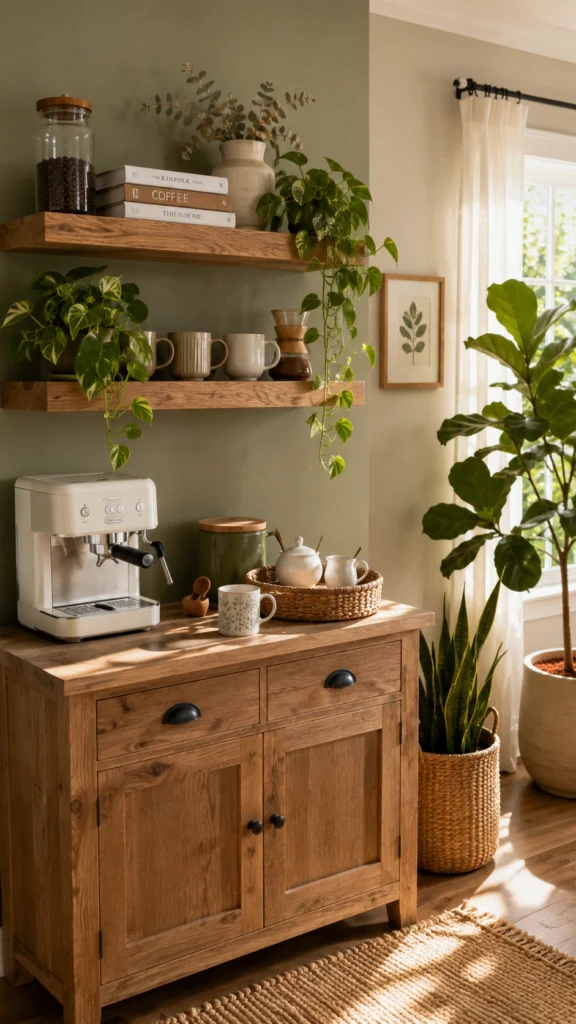
Plants and coffee pair naturally. Mount one or two wooden shelves, then tuck trailing pothos or a small snake plant between the mugs and jars. The greenery softens all the hard surfaces around it, and pothos in particular tolerates low light and near-total neglect. That matters, because a dying plant next to fresh coffee undercuts the whole corner.
Placement is the part people get wrong. Keep plants at least a foot away from the steam wand or spout. Daily blasts of steam cook the leaves faster than you’d expect.
8. Design a Compact Coffee Corner with a Rolling Coffee Cart
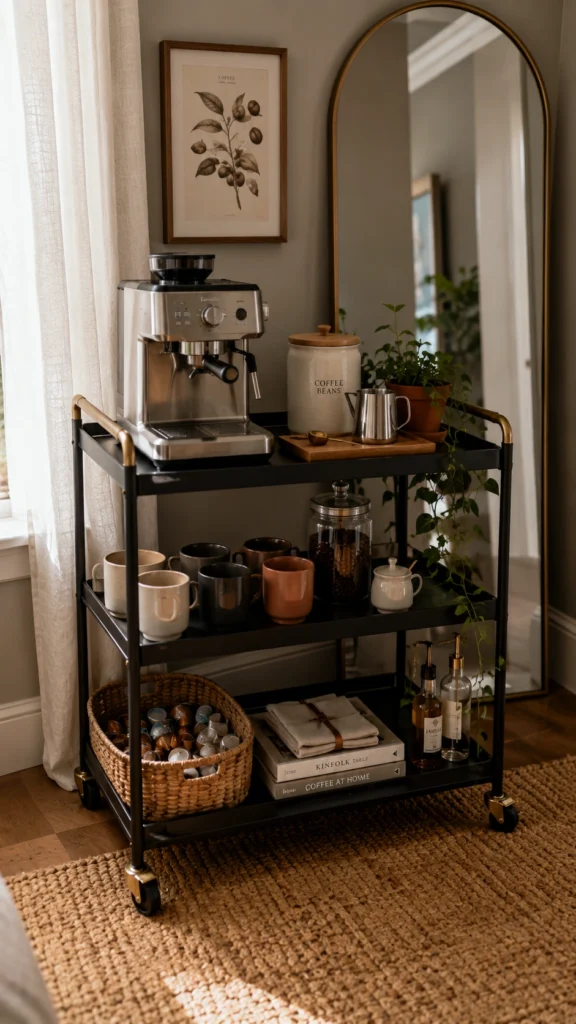
No counter space at all? A rolling bar cart solves it. Machine and kettle on top, mugs and a canister of beans in the middle, backup filters and pods on the bottom.
The wheels are the real feature. Roll the cart next to the dining table for brunch, park it against a wall on weekdays, or move it out entirely when guests arrive. A sturdy metal cart costs $40 to $90 and works in kitchens, home offices, and even bedrooms.
Check the weight rating before you buy, because espresso machines get heavy, and flimsy carts wobble every time you press the brew button. Locking wheels matters too. A cart that drifts mid-pour turns your morning routine into a mop session.
9. Style a Rustic Coffee Corner with a Mug Rack and Coffee Sign
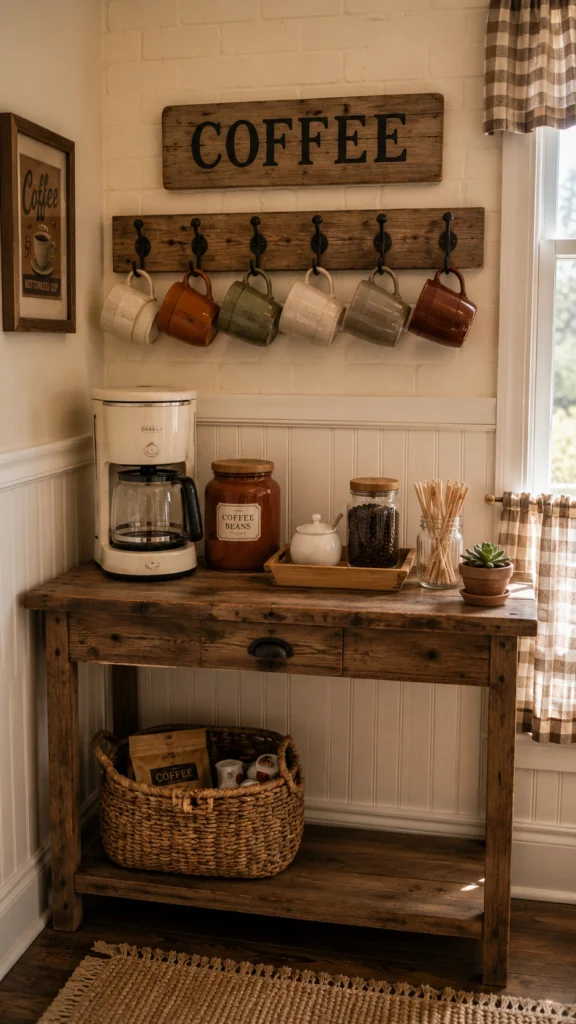
A wall-mounted mug rack turns your mug collection into decor and frees up an entire cabinet in the process. Pick a rack with wooden pegs or wrought iron hooks, hang six to eight of your best mugs, and mount a rustic wood “coffee” sign above it.
The mugs add color and shape variation that flat wall art can’t, and your most-used items end up exactly where you reach for them.
Resist the urge to hang everything you own. Display the good mugs and hide the chipped freebie from that conference in 2019.
10. Organize a Narrow Coffee Corner with a Space-Saving Coffee Station
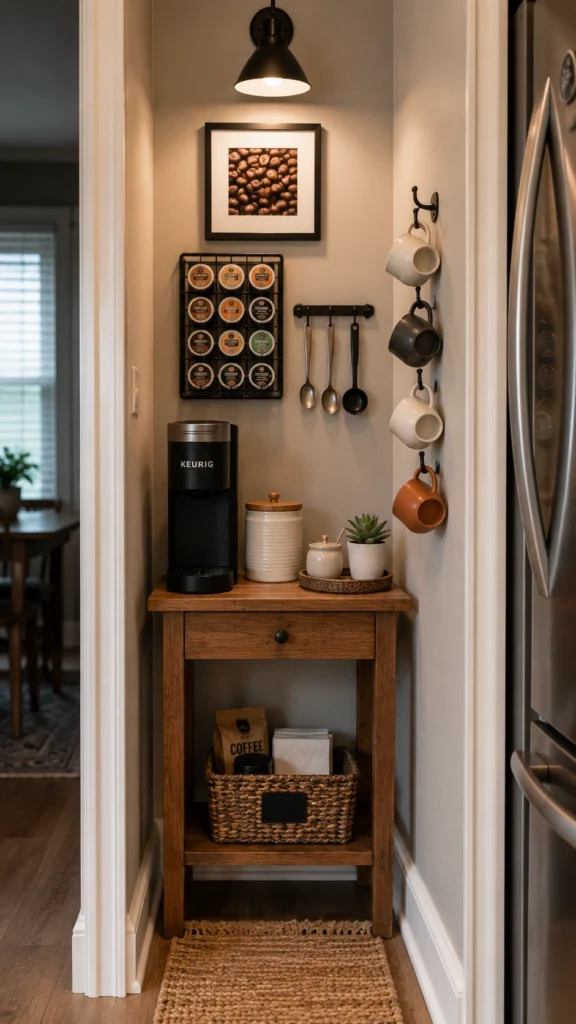
A sliver of wall between the fridge and the doorway is enough. Use a narrow console table or a 12-inch-deep shelf unit, then go vertical with a wall-mounted pod organizer and a hanging mug bar.
Narrow spaces demand ruthless editing. What earns a spot:
- The machine you actually use daily, not the backup French press
- Four mugs maximum, hung or stacked
- One sealed canister for beans or pods
- A small tray to catch drips and corral spoons
Everything else lives in a drawer or basket below. The moment you add a fifth mug, the whole station starts creeping toward clutter again.
11. Create a Minimalist Coffee Bar with a Neutral Color Palette
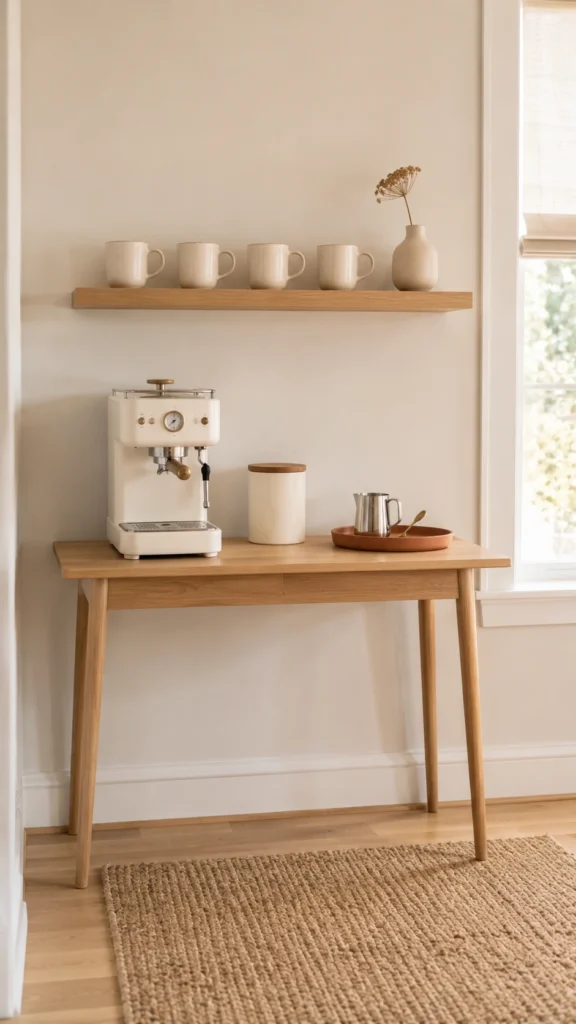
Minimalist doesn’t mean boring. It means every item on the counter earns its place. Stick to white, beige, black, and wood tones, then limit the surface to three things: the machine, a canister, and a single tray.
The payoff is visual calm. Your eye rests instead of scanning clutter, and wiping down three items takes 30 seconds instead of 10 minutes. Choose matte finishes over glossy ones here, since they hide fingerprints and water spots far better.
This setup makes the most sense in open-plan kitchens, where the coffee bar stays visible from the living room all day and has to look composed at 7 a.m. and 7 p.m. alike.
12. Design a Built-In Coffee Corner with Floating Shelves and Under-Shelf Lighting
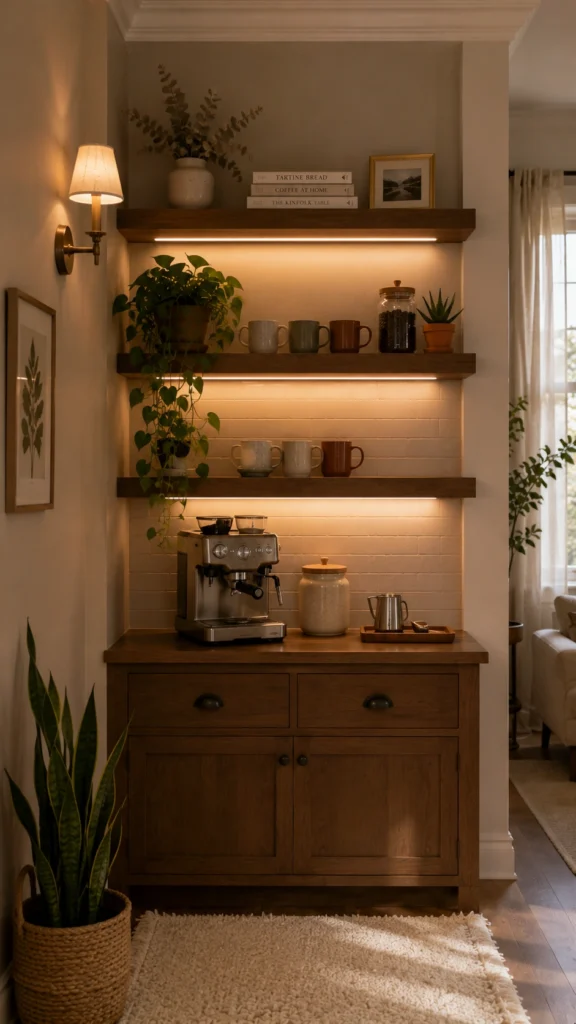
Adhesive LED strips take a basic shelf setup and make it look custom-built. Mount your floating shelves, stick the strips under the lowest one, and aim the glow down at the machine and counter.
The lighting works double duty. It makes early-morning brewing easier on half-open eyes, and after dark it gives the corner a soft, built-in look. Warm white strips with a dimmer cost around $15 to $25.
Hide the wire by running it along the shelf’s back edge with adhesive clips. One visible dangling cord ruins the built-in illusion instantly.
13. Decorate a Modern Coffee Corner with a Slat Wall and Hanging Mug Display
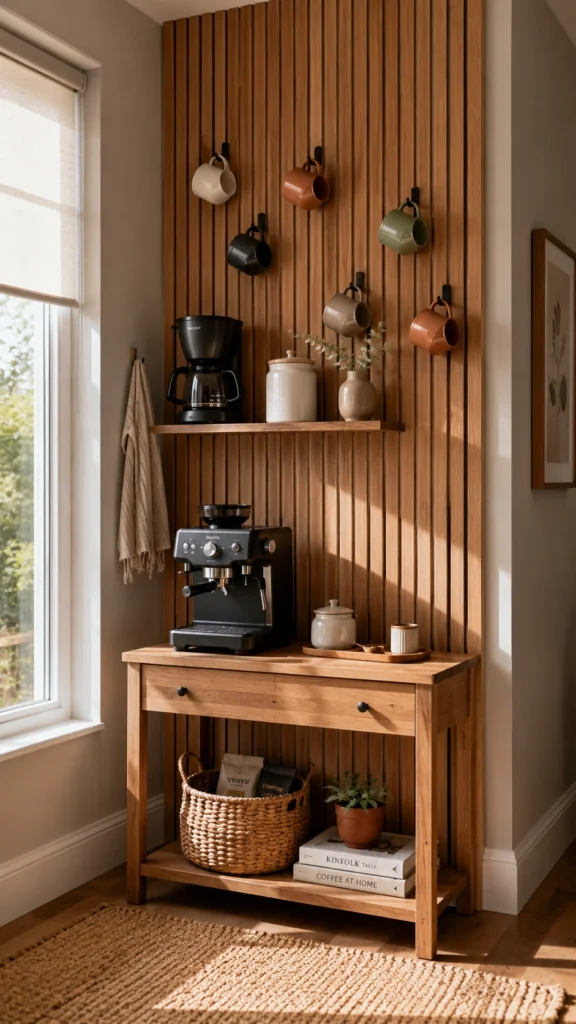
Slat wall panels deliver texture and function in a single move. Install a wood slat panel behind your coffee station, then add hooks between the slats for mugs, a small shelf, or a hand towel.
Compared with open shelving, slat walls win on flexibility. You can reposition hooks anytime without patching holes, and the vertical lines make low ceilings feel taller. Peel-and-stick slat panels now exist for renters, so no landlord drama required.
Match the slat wood tone to one other element in the corner, like your tray or shelf brackets. That single echo makes the panel look planned instead of random.
14. Create a Minimalist Coffee Corner with Floating Shelves and Neutral Decor
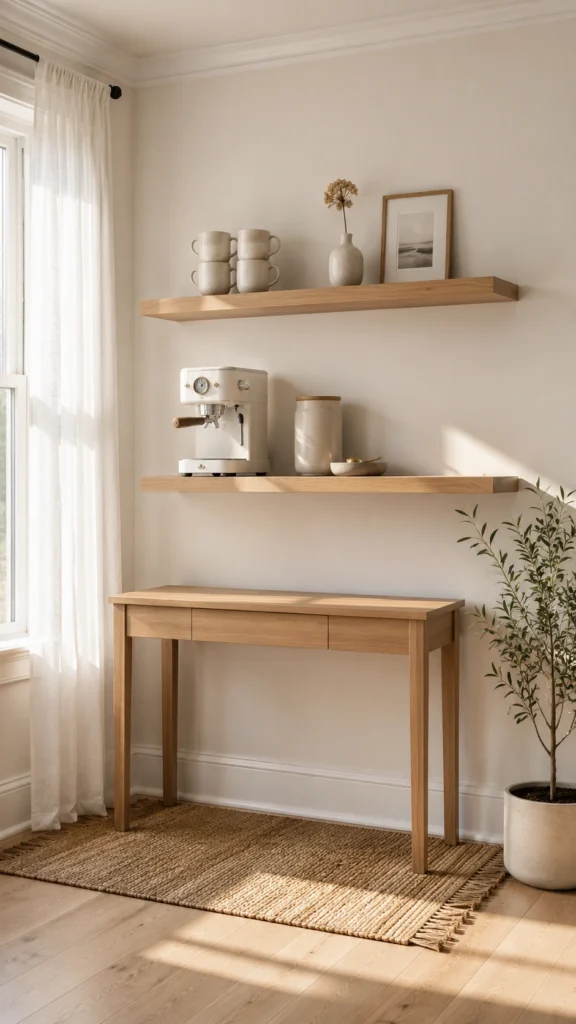
This differs from the minimalist bar in idea 11 by going vertical instead of horizontal. Mount two or three slim floating shelves in white or light oak, then style them sparsely: a short stack of neutral mugs, one ceramic canister, and a single small print or vase.
The trick is negative space. Leave at least a third of each shelf empty. Crowded shelves read as storage, while spaced shelves read as design. Store displays follow the same principle, which is why they always look better than the shelf at home holding the exact same products.
Don’t buy decor just to fill the gaps. If an item doesn’t hold coffee or make you smile, it stays off the shelf.
15. Create a Built-In Coffee Bar with an Arched Nook and Ambient Lighting
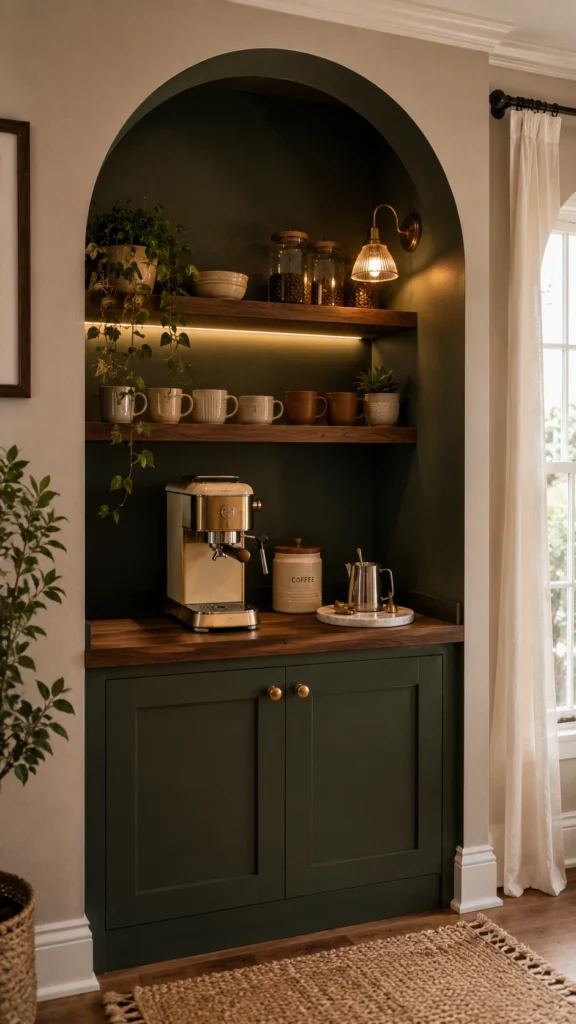
An arched nook is the most dramatic option on this list, and honestly, the prettiest. If you have a recessed wall or a renovation coming up, frame the coffee bar inside an arch, paint the interior a deeper shade than the surrounding wall, and add a small sconce or hidden LED strip for glow.
The curve softens the kitchen’s straight lines and makes the coffee bar feel architectural. Painting the nook interior a contrasting color, like deep green or terracotta, creates depth a flat wall can’t.
No nook? Paint an arch shape directly on the wall behind your station. A quart of paint and some painter’s tape gets you the silhouette for under $30, and it photographs almost as well as the real thing.
16. Turn an Unused Closet into a Hidden Coffee Bar
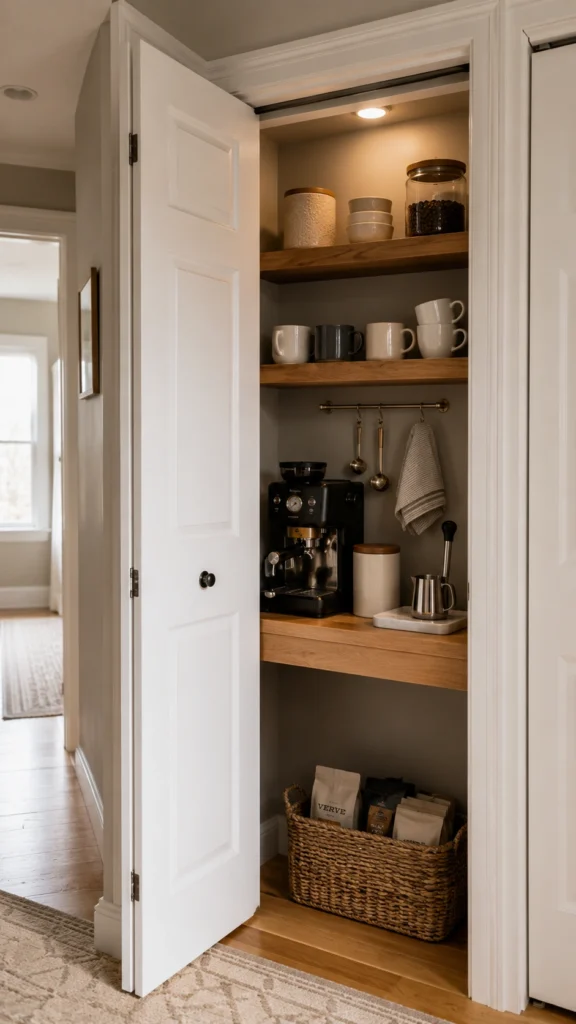
That shallow hallway closet holding three coats and a broken umbrella can do better. Remove the rod, add a counter-height shelf for the machine, install two shelves above for mugs and supplies, and stick an LED puck light on the ceiling.
The genius of a closet coffee bar is that you close the doors and the mess disappears. If you love coffee gear but hate visual clutter, this is your setup, and it suits homes with no kitchen space to spare.
Add an outlet inside the closet before anything else. An extension cord snaking under the door kills the whole effect and creates a trip hazard on top of it.
17. Design an Industrial Coffee Corner with Black Metal Shelves and Edison Bulbs
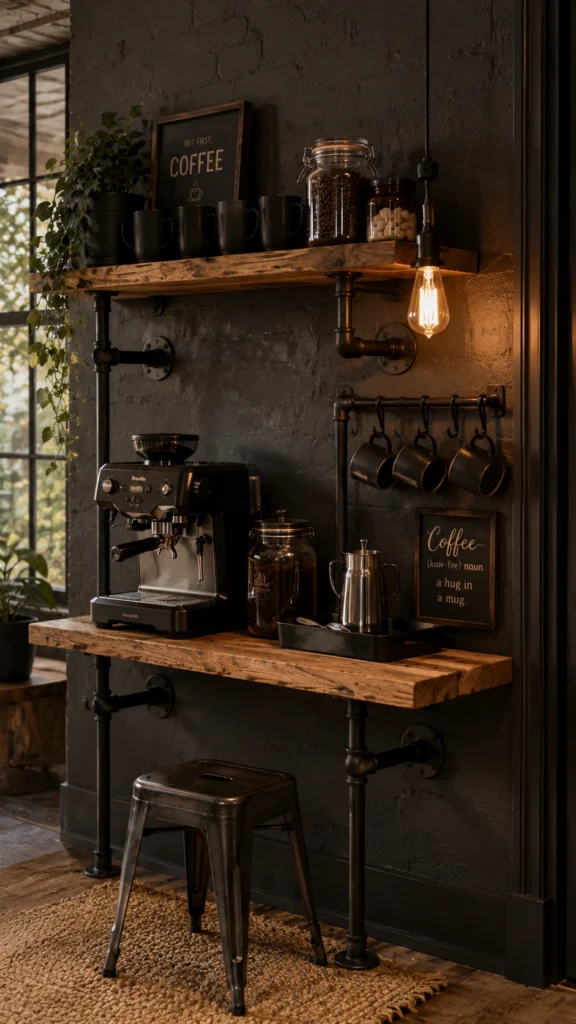
Black pipe shelving, raw wood planks, and an exposed Edison bulb give you a corner that could pass for a downtown roastery. Mount two pipe shelves, keep the wood unfinished or lightly stained, and hang a single plug-in pendant with a visible filament bulb.
Industrial style takes abuse better than any other look here. Metal and thick wood shrug off scratches, water rings, and daily wear, which makes this the most durable setup on the list. Matte black mugs or amber glass canisters finish it off.
If your taste runs more warehouse than farmhouse, or you’re outfitting a loft, basement, or home office, start with this one.
Quick Tips Before You Start Your Coffee Corner
Measure before you order a single shelf. Write down the width, depth, and height of the spot, plus the clearance your machine needs when the lid opens. Most returns happen because a shelf sits two inches too low or a cart doesn’t fit the gap beside the fridge. Ten minutes with a tape measure saves a week of shipping labels.
A few ground rules apply no matter which idea you pick:
- Put an outlet within reach. Extension cords look bad and fail safety checks.
- Leave 6 inches of clearance above the machine for refilling water tanks.
- Store beans in airtight containers away from direct sunlight, or they go stale fast.
- Wipe surfaces daily. Coffee drips stain wood and grout quicker than you’d think.
- Start with what you own. Restyle your current mugs and trays before buying anything new.
Final Thoughts
You don’t need a big kitchen or a big budget to build a coffee corner you actually love. A rolling cart, a couple of floating shelves, or a forgotten closet can each become the best-looking three square feet in your home.
If you’re only taking one thing away, take this: pick the single idea that matches your space, then set aside one weekend to build it. One shelf, one sign, one good tray is a real start. The corner grows from there, and every cup after tastes a little better for having a proper place to be made.
Frequently Asked Questions
How much does it cost to set up a coffee corner?
Anywhere from $30 to $300, depending on what you already own. If you have a machine and mugs, a shelf, a tray, and a sign cover the basics for under $75. A full bar cart setup with new lighting and decor costs closer to $200 to $300. Built-in nooks with electrical work cost more, so price those separately.
How much space do I need for a coffee station?
About 24 inches of counter width and 18 inches of depth handle most drip machines and single-serve brewers. Espresso machines need more, usually 15 to 20 inches of depth plus 6 inches of clearance above for the water tank. If you can’t spare that, the rolling cart in idea 8 or the narrow station in idea 10 solves it.
Can I build a coffee corner as a renter?
Yes, and most ideas on this list work without a single drill hole. Use a bar cart, a freestanding console, adhesive LED strips, peel-and-stick slat panels, and heavy-duty adhesive hooks rated for at least 5 pounds per mug. Save the floating shelves and arched nooks for a place you own.
Where should I put a coffee corner if my kitchen has no room?
Look at the dining room sideboard, a hallway console, the home office, or an unused closet. The only real requirements are a nearby outlet and a surface that handles moisture. Keep water in a carafe at the station so you skip the trip to the kitchen sink every morning.
What do I actually need on a coffee station?
Less than you think. The machine, mugs for the people who live there, a sealed canister for beans or pods, spoons, and a tray to catch drips. Sugar, syrups, and a small plant come next if space allows. Everything beyond that is decoration, which is fine as long as it doesn’t crowd the things you use daily.