
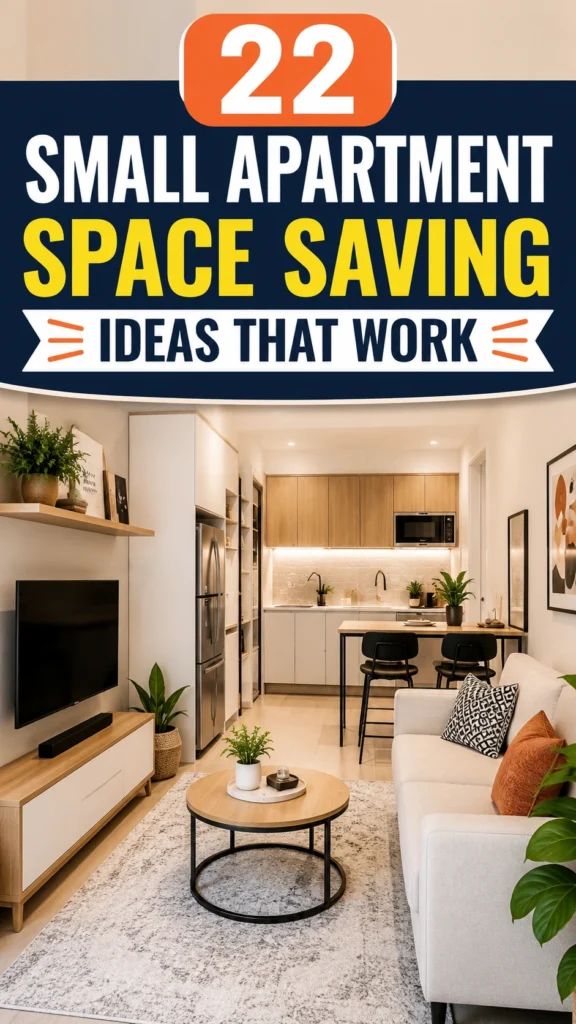

Picture a typical 500-square-foot apartment on a Tuesday night. The countertops are buried, the closet door barely shuts, and there’s a chair in the corner that exists purely to hold clothes. Meanwhile, the wall above the sofa is bare, the 14 inches under the bed hold dust, and the back of every door in the unit does nothing at all.
That’s the real problem in most small apartments. The square footage isn’t the issue nearly as often as people think. The storage that already exists just never gets used.
Below are 22 small apartment space saving ideas that fix specific, everyday frustrations. Some cost nothing. Some require a drill. A few ask you to rethink your furniture entirely. Pick the ones that match your budget and your lease, and ignore the rest.
1. Install a Murphy Bed and Get Your Floor Back
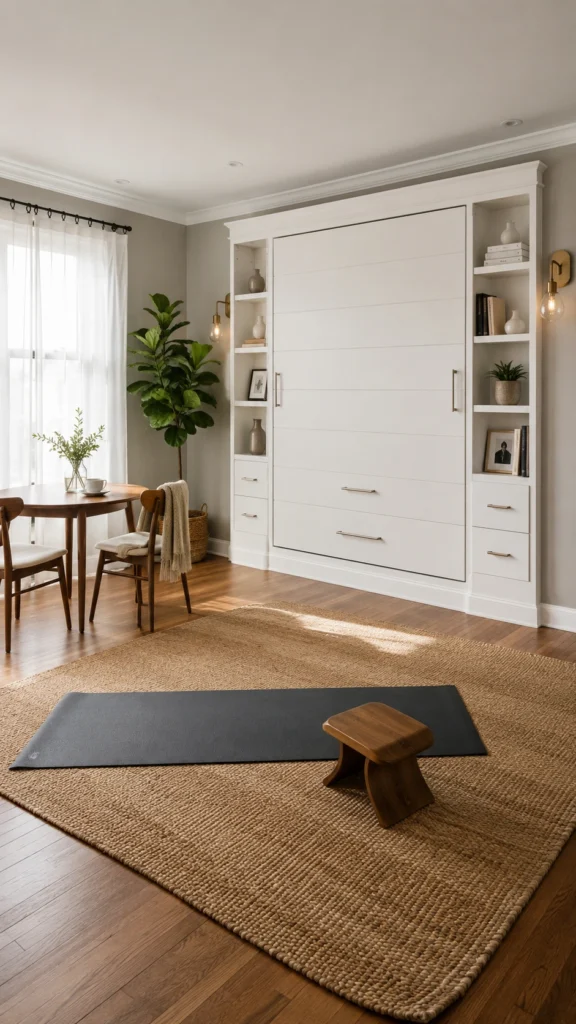
Do the math on your bed for a second. It occupies 30-plus square feet around the clock, and you use it for about 8 hours a day. A Murphy bed folds into the wall each morning and returns that floor to you, enough for a yoga mat, a small dining setup, or simply room to move.
Modern cabinet-style Murphy beds start around $400 to $600, and many don’t require bolting anything to the wall, which helps if your landlord gets twitchy about holes.
One caveat: this upgrade only makes sense in a studio where the bed dominates the main room. If you have a separate bedroom, put the money toward under-bed storage instead (idea #3).
Murphy Bed vs. Sofa Bed: Which Saves More Space?
A sofa bed costs less upfront, but you pay the difference in sleep quality. A Murphy bed holds a real mattress; a sofa bed puts a folding frame with a bar somewhere near your spine. Sofa beds work fine for occasional guests. If you’re sleeping on it every night in a studio, the Murphy bed earns its price within the first month.
2. Swap Your Coffee Table for a Storage Ottoman
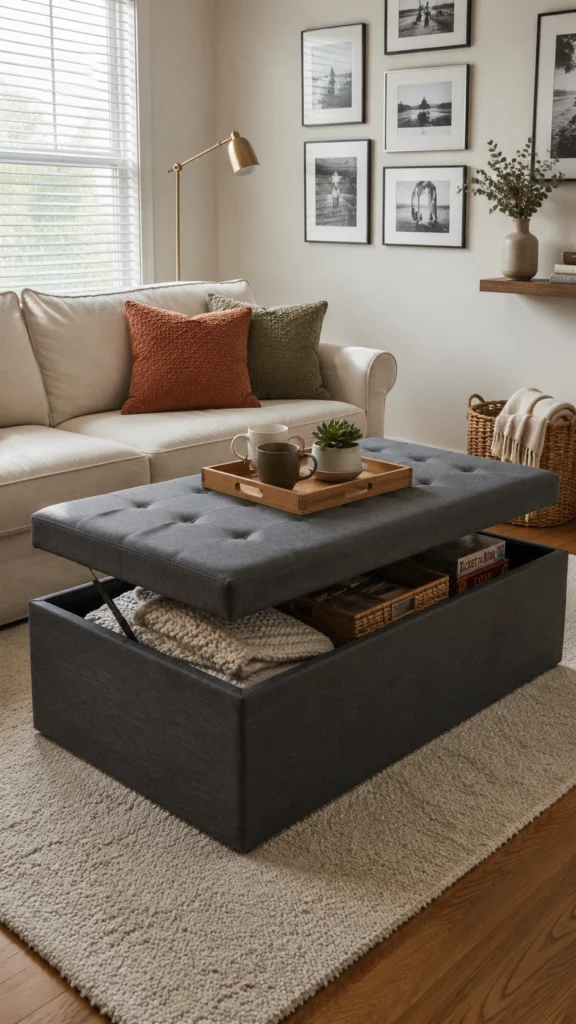
A coffee table does exactly one job: it holds things on top. A lift-top storage ottoman does four in the same footprint. You get a surface, hidden storage for blankets and board games, extra seating when friends show up, and a footrest for the other 360 days of the year.
When shopping, check that the lid is sturdy enough to hold drinks and that the hinge stays open on its own, because digging through storage one-handed gets old fast. A wooden tray on top keeps mugs from wobbling on the upholstery.
If a proper ottoman isn’t in the budget, two fabric storage cubes side by side cost under $40 total and do about 80% of the same job.
3. Put Drawers Under Your Bed
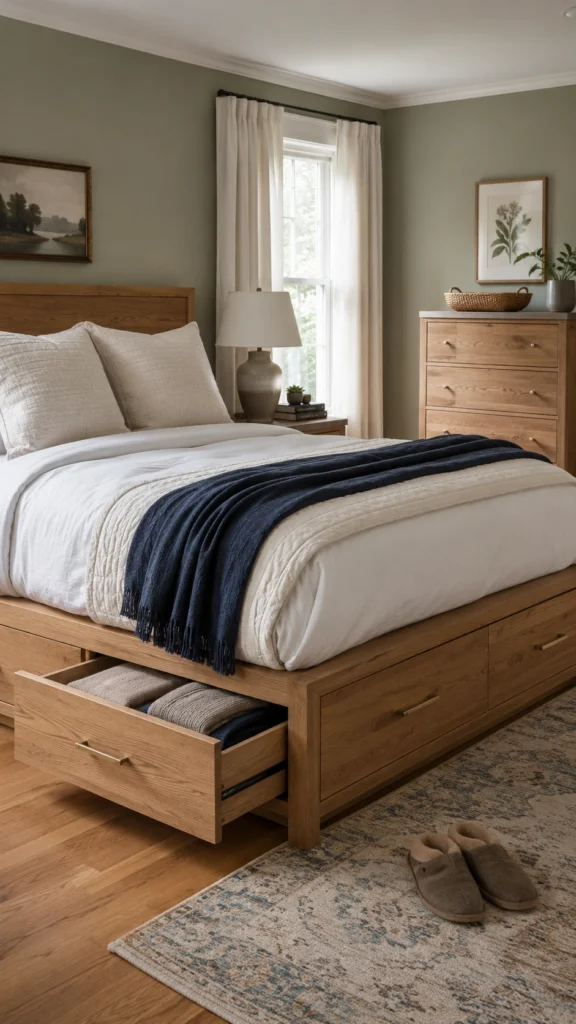
The space under a standard bed frame holds roughly the capacity of a medium dresser. Most people fill it with dust and one lonely sock.
You have two routes:
- A bed frame with built-in drawers, which usually adds $50 to $150 over a basic frame and slides smoothly
- Bed risers plus rolling bins, which lift your existing bed 5 to 8 inches for about $25 total
The drawer frame looks cleaner. The riser setup costs less and moves with you at the end of the lease. Either way, out-of-season clothes, extra bedding, and shoes finally get a home that isn’t your closet floor.
If you go the riser route, use bins with lids or add a fitted bed skirt. Anyone who has tried open bins under a bed will tell you they collect an impressive layer of dust in about two weeks.
4. Run Floating Shelves All the Way Up
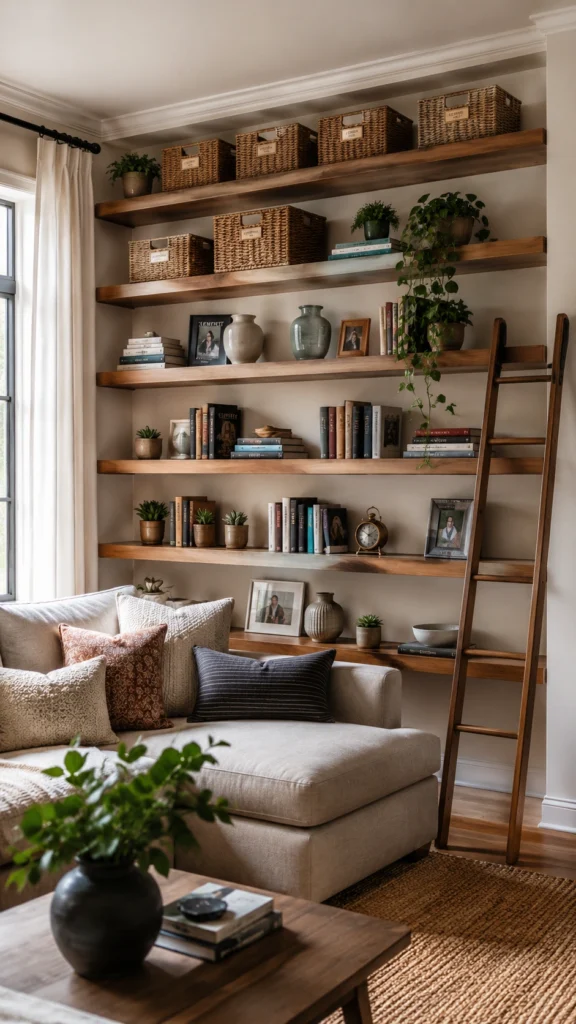
In most small apartments, the floor is completely full while the walls sit mostly naked. Floating shelves mounted high, even 12 inches below the ceiling, store books, baskets, and rarely used items in space you literally cannot use for anything else.
There’s a visual bonus too. Shelves that climb high pull the eye upward, which makes ceilings feel taller. A room that feels taller feels bigger, even though the square footage hasn’t changed by an inch.
The mistake people usually make is hanging one short shelf at eye level and calling it done. Go higher and go wider. A single long shelf above a doorway can hold an entire shoe collection.
5. Hang Organizers on the Back of Every Door
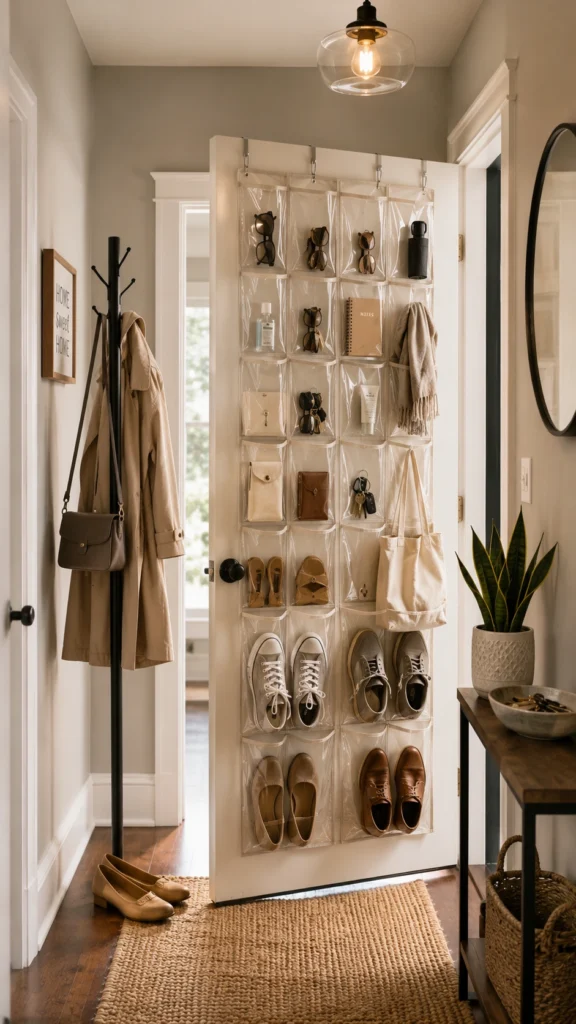
Count your doors. Bedroom, bathroom, closet, maybe a pantry. Each one has a back face doing absolutely nothing, and each can become a vertical storage column at zero floor cost.
Match the organizer to the door:
- Shoe pockets on the closet door
- A spice rack or wrap organizer on the pantry door
- Hooks for towels and robes on the bathroom door
- A slim shelf unit for cleaning supplies on the utility door
Measure the clearance behind each door before buying. Organizers deeper than 2 inches can hit the shelves inside a closet and stop the door from closing, which you’ll discover about four seconds after installing one.
6. Mount a Fold-Down Desk on the Wall
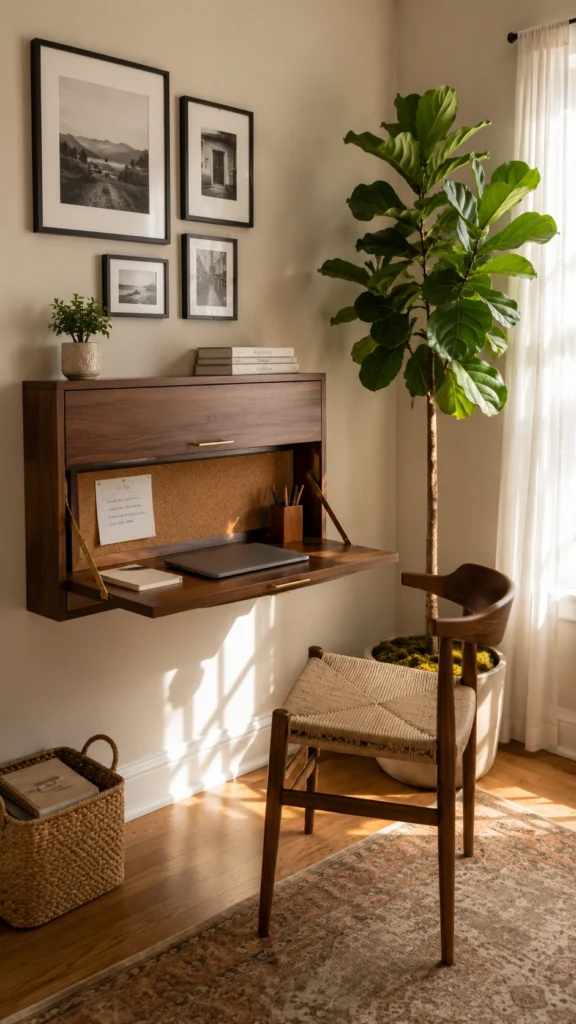
Working from home in a small apartment usually means the dining table becomes a permanent office, and dinner happens next to a monitor. A wall-mounted fold-down desk breaks that cycle. Closed, it takes about 4 inches of depth. Open, it’s a full workstation, and many models hide a small shelf or cork panel inside for supplies. Prices run $40 to $130.
When the workday ends, fold it shut and the living room stops looking like a cubicle. Pair it with a folding chair (idea #18) and the whole office disappears.
Renters, check your lease before drilling. Most landlords allow properly anchored wall mounts, and filling four screw holes with spackle at move-out takes ten minutes. If drilling is truly off the table, a narrow ladder desk leaned against the wall gives you a similar footprint without a single hole.
7. Choose a Drop-Leaf Dining Table
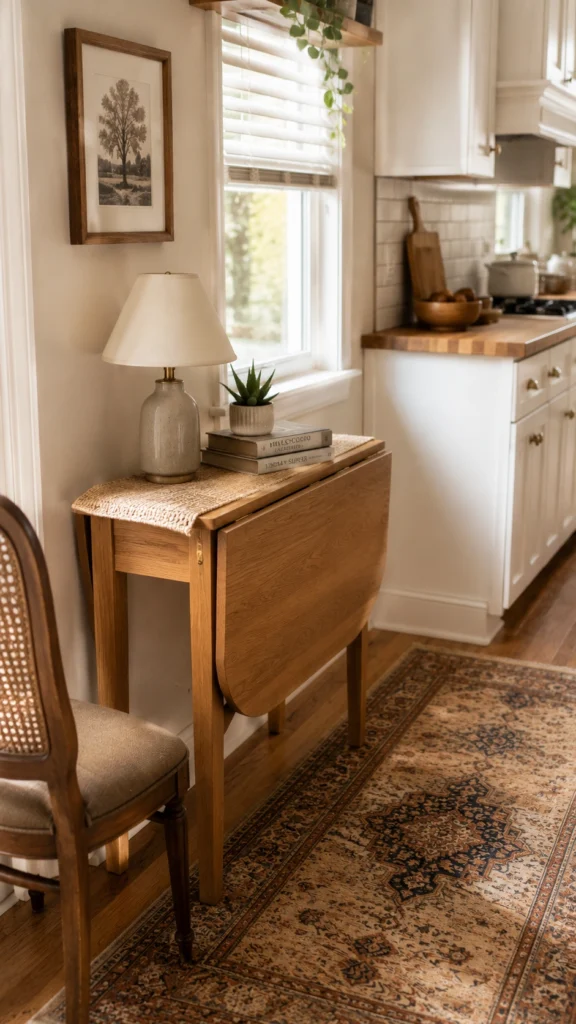
How many meals do you actually eat at your dining table each week? For most people the honest answer is two, yet the table hogs 15 to 20 square feet all week long. A drop-leaf table collapses to a slim console against the wall, some versions down to just 10 inches deep, and expands to seat four in about 20 seconds.
On weekdays it works as a plant stand or entry table. Keep a runner and a small lamp on it while folded so it reads as furniture rather than stored equipment, then pull it out when people come over.
8. Use Nesting Tables Instead of Side Tables
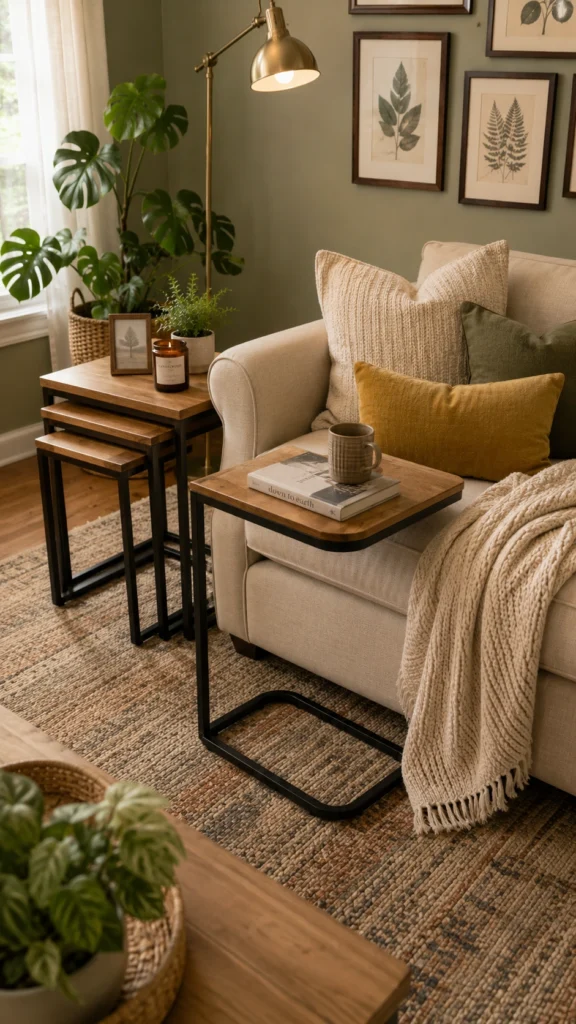
Two or three fixed side tables clutter a small living room fast. Nesting tables stack into a single footprint and separate only when you need extra surfaces for guests, snacks, or a laptop. Three surfaces on demand, one footprint by default.
A C-shaped nesting set adds another trick: the base slides under the sofa’s arm, so your drink hovers exactly where your hand lands. A set of three usually costs $50 to $90.
9. Slide a Rolling Cart into Dead Gaps
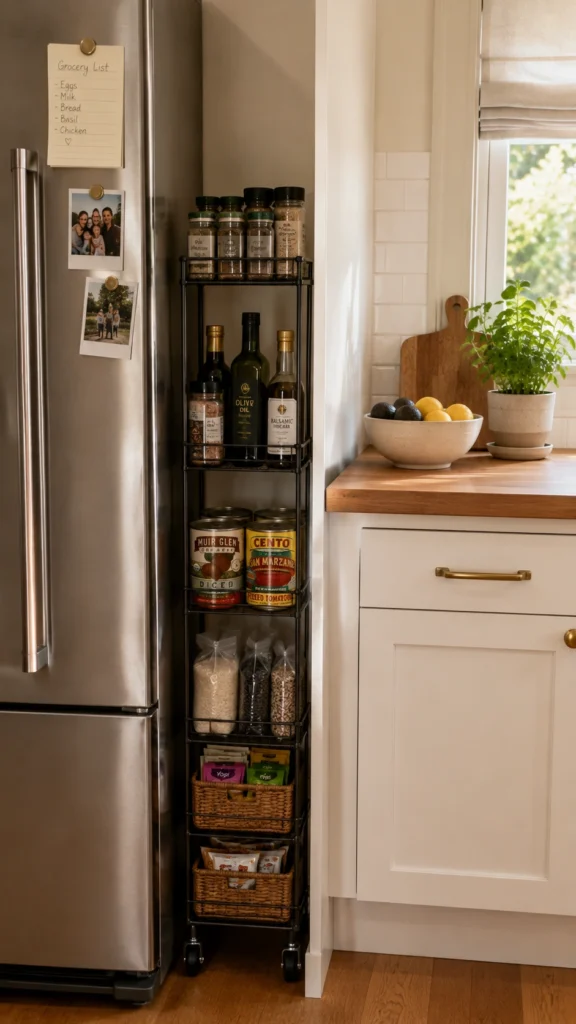
That 4-inch gap between your fridge and the wall is a pantry waiting to happen. Slim rolling carts come in widths from 4 to 7 inches, slide into these gaps, and hold canned goods, spices, oils, and cleaning supplies across three or four tiers.
The same cart works beside a washing machine, next to the toilet, or between a dresser and the wall. Measure the gap’s width, depth, and height before ordering, because fridge clearances vary a lot between models. Most carts cost $20 to $35.
10. Double Your Closet Rod
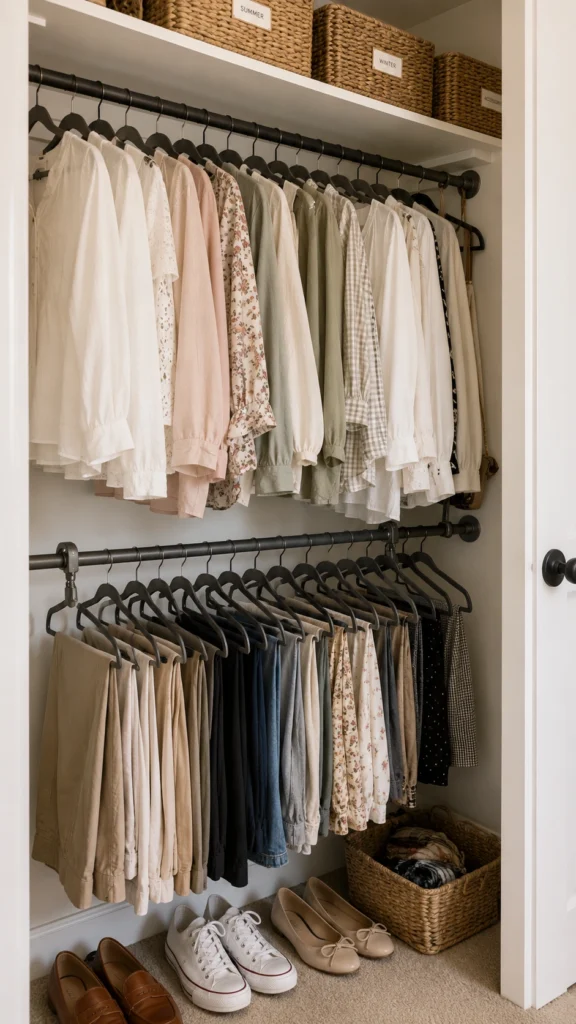
One hanging rod wastes the entire bottom half of your closet. A second rod hung about 40 inches below the first instantly doubles your hanging capacity for shirts, folded pants, and skirts.
No tools needed, either. Rod-doubling attachments hook over the existing rod and dangle a second bar below it for around $15. Keep long items like dresses and coats at full height on one side, and stack shorter items in the doubled section.
While you’re in there, switch to slim velvet hangers. They take about half the rod width of plastic or wooden ones, so the same rod holds nearly twice as many shirts. A 50-pack costs around $25. People often buy more bins before maximizing hanging space they already pay rent on, and it’s almost always the wrong order.
11. Cover a Wall with Pegboard
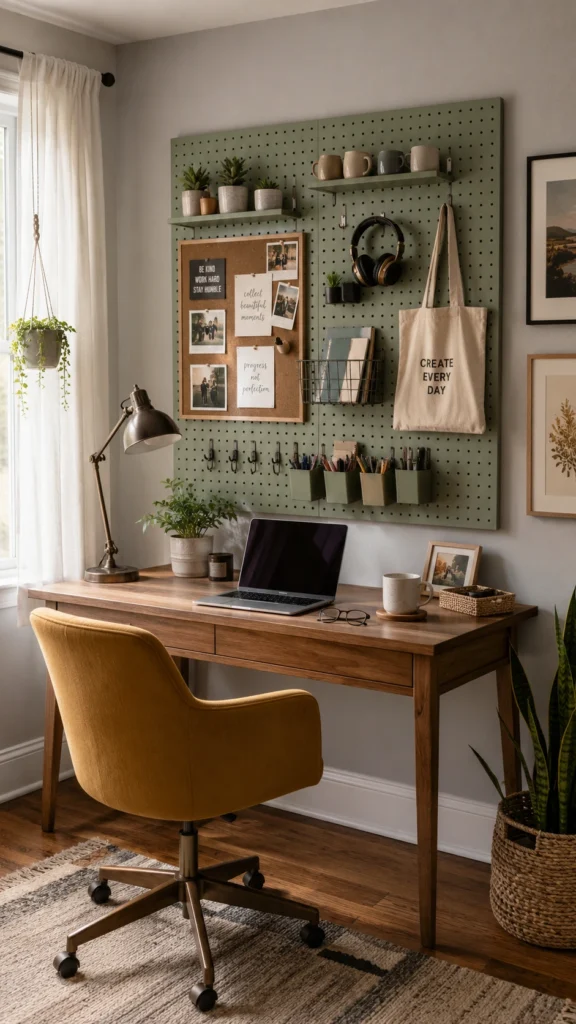
No single wall product handles more storage jobs than a pegboard. In the kitchen it holds pans, utensils, and mugs. In the entryway it holds keys, bags, and dog leashes. At a desk it holds headphones, cables, and supplies.
Its real advantage over fixed hooks is flexibility. Rearrange the hooks, shelves, and baskets any time your needs change, without punching new holes in the wall. Paint the board the same color as your wall and it looks like custom built-in storage instead of garage equipment.
12. Mount the TV and Ditch the Media Console
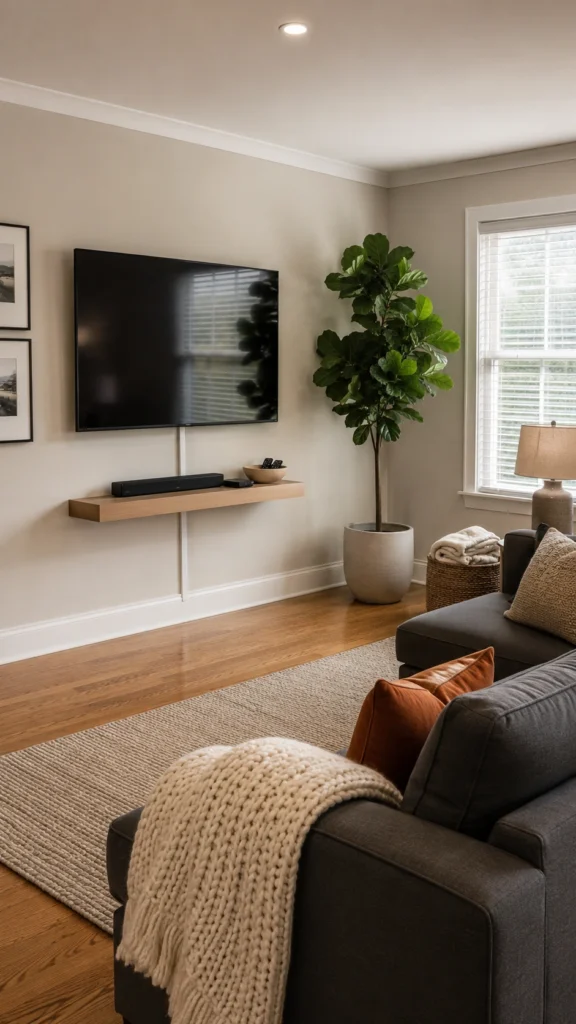
Take an honest look at your TV stand. It occupies 6 to 10 square feet of prime living room floor and probably stores a router and some dust. Mount the TV on the wall and that entire zone opens up.
If you still need a spot for consoles and cable boxes, hang a single floating shelf below the screen. It holds everything the bulky console did, at a fraction of the visual weight. Wall mounts cost $20 to $50, and a cord-hiding raceway kit runs about $15 if dangling cables bother you. They should.
One warning: don’t mount the TV too high. Center the screen at seated eye level, roughly 42 inches from the floor to the middle of the panel, or your neck will complain by episode three.
13. Divide a Studio with an Open Bookcase
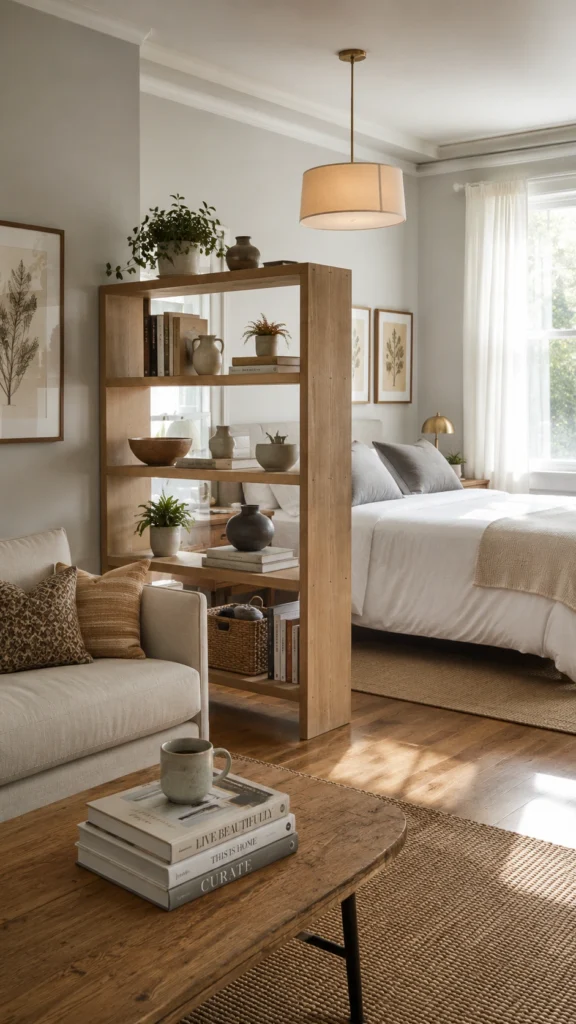
You can create a bedroom without building a wall. Place a tall open-back bookcase perpendicular to the wall between your bed and your sofa, and you get a room divider that stores things on both sides, all within an 18-inch footprint.
The open-back style matters. Light passes through the gaps, so the studio still feels airy instead of chopped up. A solid-backed unit blocks light and turns one half of the room into a cave. Anchor the bookcase to the floor or wall with anti-tip straps, especially if kids or cats live with you.
14. Hang a Large Mirror Opposite a Window
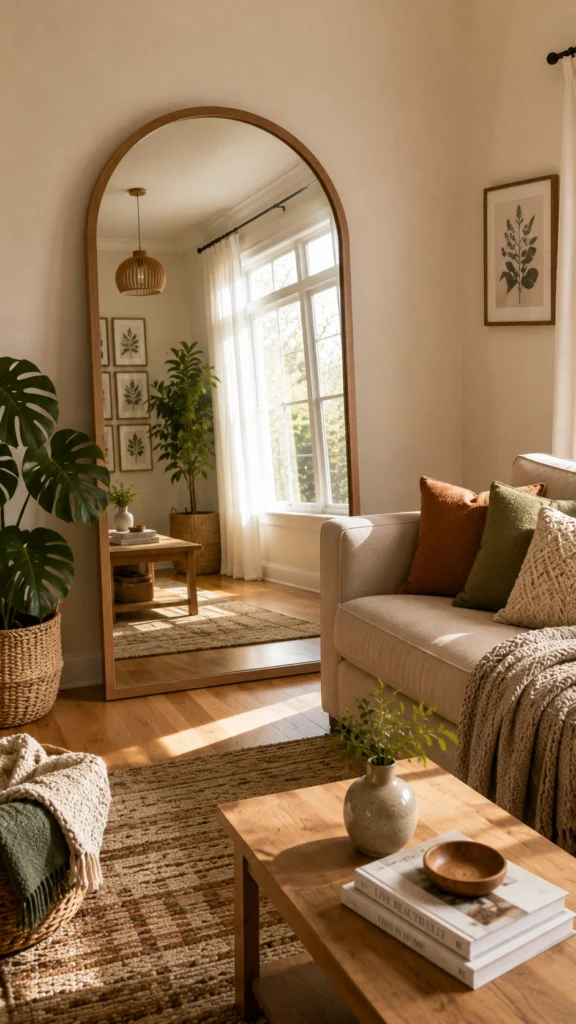
This one saves visual space rather than physical space, and if I had to pick one dollar-for-dollar winner on this list, this would be it. A large mirror placed across from a window bounces daylight deeper into the room and roughly doubles the perceived size of the space, because your brain reads the reflection as depth.
A 24×36 mirror costs $40 to $80 and changes how a cramped living room feels the moment you hang it. If drilling isn’t an option, lean an oversized floor mirror against the wall instead.
15. Claim Your Corners with Corner Shelves
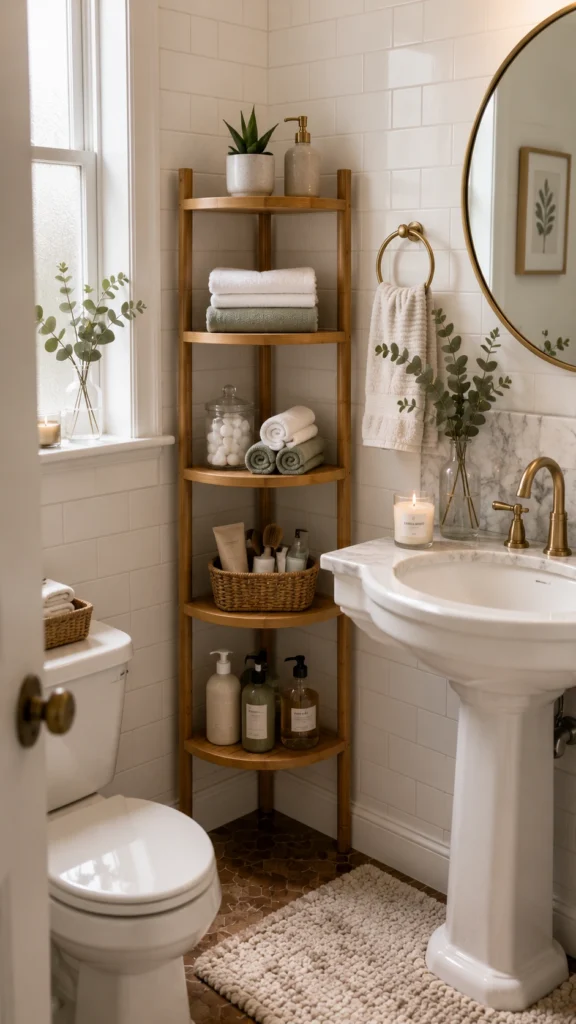
Corners are the most ignored real estate in any apartment, usually occupied by a sad floor lamp or nothing at all. A tiered corner shelf unit builds five levels of storage into that same spot.
They work in more rooms than you’d expect:
- Bathroom corners for towels and toiletries
- Kitchen corners for cookbooks and small appliances
- Living room corners for plants and books
- Shower corners with a tension-pole caddy, no drilling required
A basic 5-tier corner unit costs $30 to $50 and uses vertical space that no other furniture shape can reach.
16. Build a Hook Wall in the Entryway
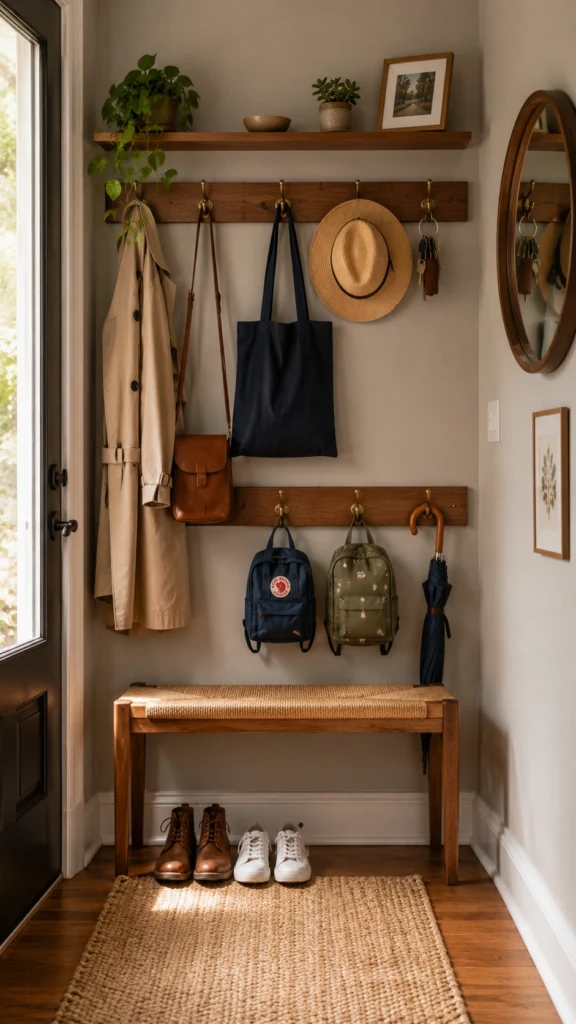
Coats draped over chairs, bags dumped on the floor, keys lost somewhere between the two. A rail of sturdy wall hooks by the front door fixes the daily dump zone with about $20 and 15 minutes of work.
Mount the rail at roughly 60 inches for adults, and add a lower row at 40 inches if kids live in the apartment. A small floating shelf above the hooks catches keys, sunglasses, and mail, and suddenly your entry functions like a real mudroom in 3 square feet.
17. Vacuum-Seal Everything Seasonal
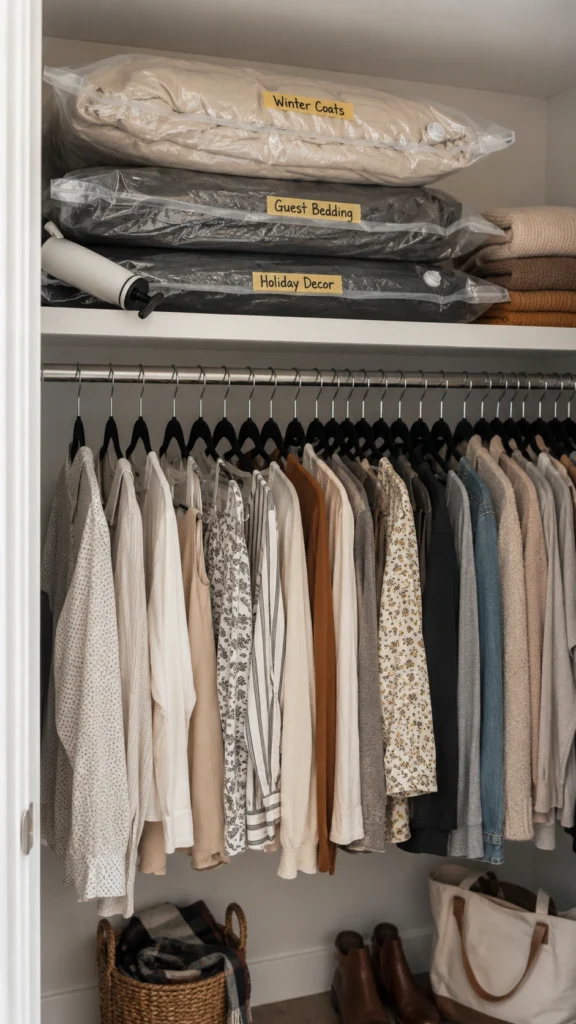
Winter coats, spare comforters, and guest bedding can occupy an entire closet during the months you never touch them. Vacuum storage bags compress soft items by up to 75%, turning a shelf of bulky bedding into two flat slabs that slide under the bed.
A set of six bags with a hand pump costs about $18. Rotate seasonally: compress the puffer jackets in April, compress the summer quilts in October. Label each bag with painter’s tape, because a compressed comforter and a compressed coat pile look identical through plastic.
One exception worth knowing: don’t vacuum-seal down pillows or down jackets for months at a time. Long compression can flatten the fill permanently. Give down items a 24-hour rest and a fluff every couple of months, or store them loosely instead.
18. Keep Folding Chairs for Guests, Not Permanent Ones
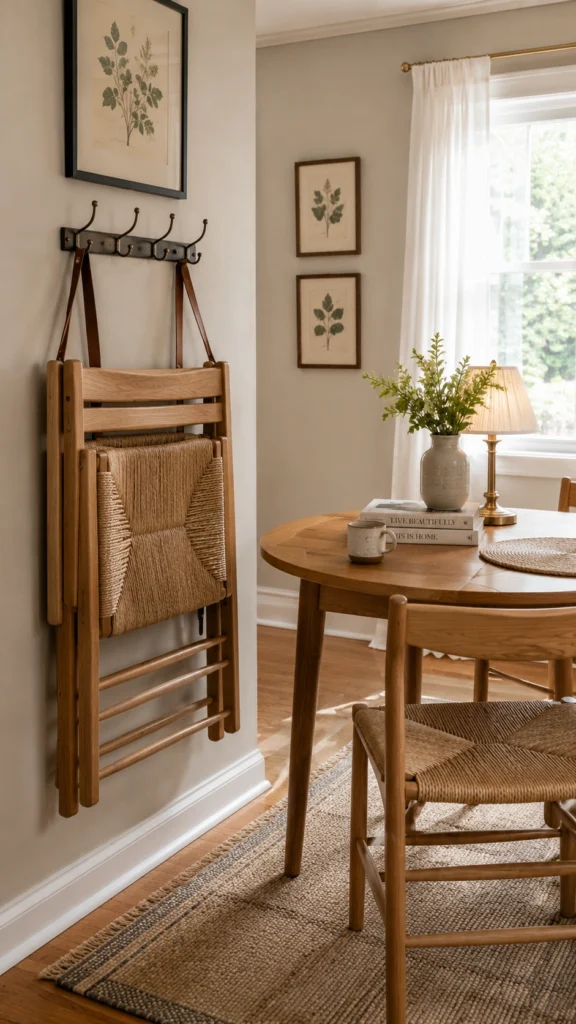
Four dining chairs standing around for the dinner party you host twice a year is a bad trade. Keep two everyday chairs and a set of folding chairs that hang on wall hooks in a closet or behind a door.
Quality wooden folding chairs look nice enough that nobody feels like they’re seated at a school assembly. They cost $25 to $50 each and store in a 2-inch-deep stack. Apply the same logic to step stools, tray tables, and drying racks: anything used occasionally should collapse when idle.
19. Add Tiered Shelves Under Every Sink
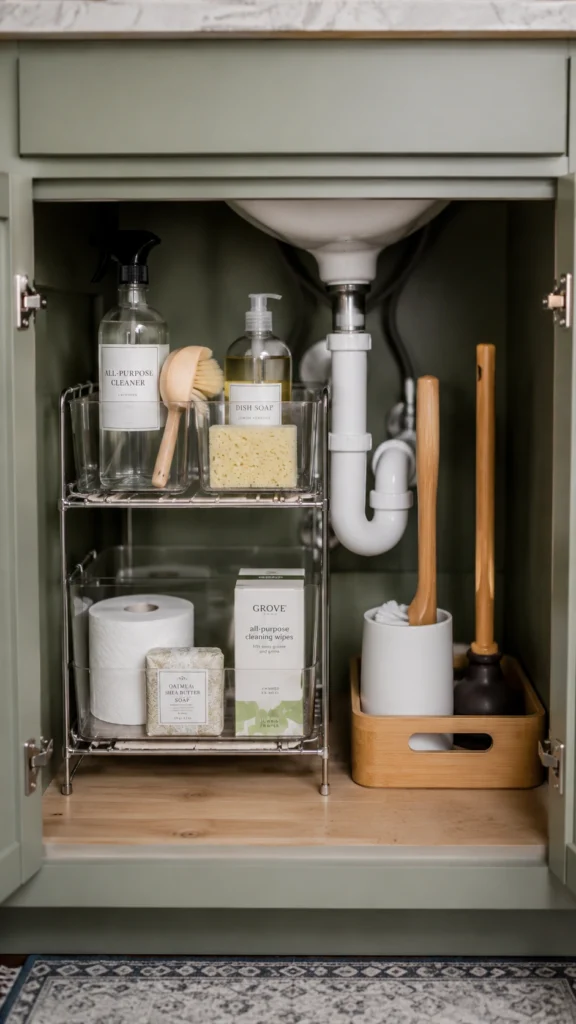
Open your under-sink cabinet. It’s probably one deep pile where the thing you need lives at the very back, behind three bottles of cleaner you forgot you owned. Expandable two-tier organizers wrap around the plumbing and double the usable levels inside.
Pair the shelves with a couple of clear bins so categories stay separated: one for cleaning sprays, one for sponges and refills, one for bathroom backstock. Clear bins beat opaque ones here because you can see your inventory at a glance, which is the only reliable cure for buying a fourth bottle of dish soap.
20. Pick a Headboard with Built-In Storage
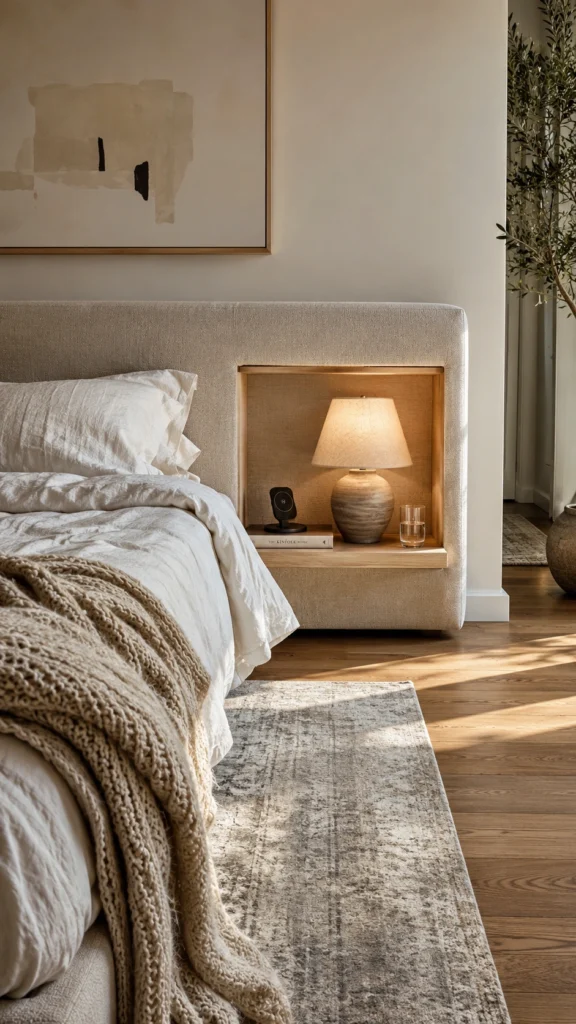
A storage headboard with shelves, cubbies, or sliding panels can replace a nightstand entirely. Your lamp, book, phone, and water glass all move into the headboard, and the 2 to 4 square feet a nightstand would occupy stay open.
Some models include built-in outlets and USB ports, which also removes the extension cord snaking behind the bed. If a new headboard isn’t in the budget, mount a single floating shelf at pillow height beside the bed and get most of the same benefit for $15.
21. Store Things Inside Your Luggage
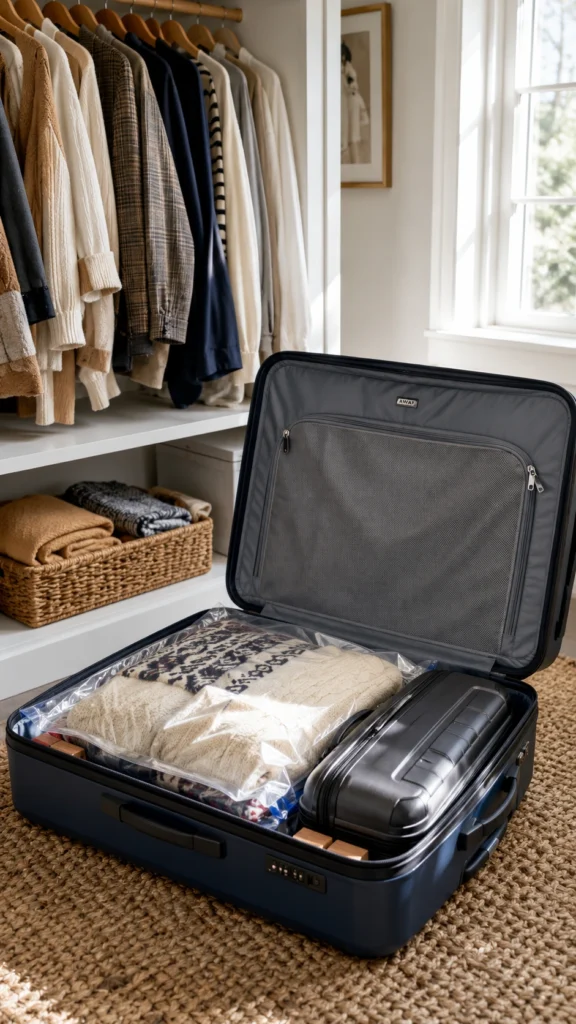
Your suitcases spend roughly 350 days a year completely empty while claiming serious closet space. Fix both problems at once by packing off-season clothes, extra linens, or holiday decorations inside your stored luggage.
Nest the smaller suitcase inside the bigger one first, then fill the remaining space. A medium checked bag holds about the contents of two dresser drawers. When a trip comes up, transfer everything into a vacuum bag from idea #17 and go. It’s free storage you already own.
22. Adopt a One-In, One-Out Rule
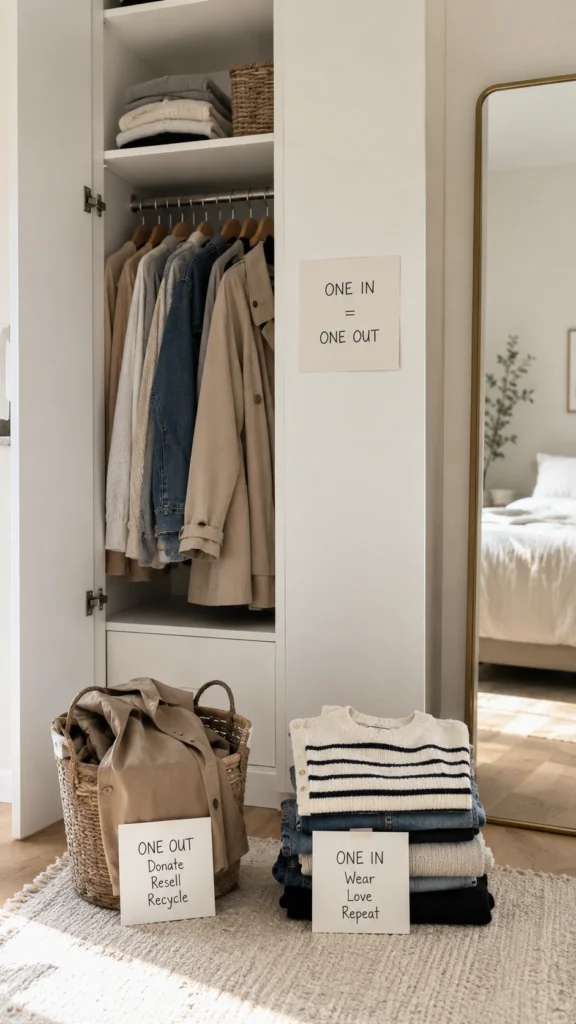
Every idea above adds capacity. This one caps demand, and honestly, it’s the reason the other 21 keep working. The rule: for every new item that enters the apartment, one comparable item leaves.
New sweater in, old sweater donated. New mug in, chipped mug out. It costs nothing and takes about five seconds of discipline per purchase, and it stops the slow creep that refills every shelf you just cleared. Small spaces rarely fail because of bad storage. They fail because stuff arrives faster than it leaves.
Final Thoughts
You don’t need all 22 of these small apartment space-saving ideas. You need the three or four that attack your specific pain points.
Which Small Apartment Space Saving Ideas Should You Try First?
Match the fix to the frustration. Cluttered counters point to vertical storage: floating shelves, pegboard, or door organizers. No room to work or eat points to convertible furniture: the fold-down desk and drop-leaf table. A closet bursting at the seams points to the rod doubler, vacuum bags, and slim hangers.
Start with the free moves this weekend. Load up your suitcases, clear the tops of tall furniture, and start the one-in, one-out rule. Then pick one $20 to $40 upgrade, like door organizers, a rolling cart, or a closet rod doubler, and knock it out next payday. Save the big swings, a Murphy bed or a storage headboard, for when you know the layout you actually want to live with.
Every idea here comes down to three habits: use vertical space, make furniture do two jobs, and stop letting flat surfaces collect chaos. Build those habits and the apartment you already have starts to feel like enough.
Go measure that gap next to your fridge. You’re curious now anyway.
Frequently Asked Questions
What is the cheapest way to save space in a small apartment?
Start with the free options: pack storage into your empty luggage, adopt the one-in, one-out rule, and clear flat surfaces daily. The best paid entry points cost under $25 each, such as over-the-door organizers, a closet rod doubler, or vacuum storage bags. Together they add serious capacity for less than the price of one new bookcase.
How do I save space in a rental without drilling holes?
Plenty of these ideas need zero holes. Tension-pole shower caddies, over-the-door organizers, bed risers, rolling carts, nesting tables, leaning floor mirrors, and freestanding bookcase dividers all work drill-free. For light wall items, adhesive hooks rated for the weight hold up fine and peel off clean at move-out.
What furniture should I avoid in a small apartment?
Skip anything that does only one job. A coffee table with no storage, a bulky media console, a full set of permanent dining chairs, and oversized sectionals all eat floor space without earning it. Every large piece you buy should store something, fold away, or serve two functions.
Does wall color really make a small apartment feel bigger?
Yes, within limits. Light, warm neutrals reflect more light and push walls back visually, while dark colors absorb light and pull them in. Paint helps perception, but it stores nothing, so treat it as a finishing move after you’ve handled the actual clutter with the ideas above.
How much does it cost to organize a small apartment properly?
You can cover the essentials for $100 to $150: door organizers, a slim rolling cart, under-sink shelves, vacuum bags, and a rod doubler. Mid-range upgrades like a storage ottoman or fold-down desk add $50 to $150 each. Big-ticket items like a Murphy bed run $400 and up, and most apartments never need one.


Pingback: 27 Small Bathroom Corner Shower Ideas You'll Want to Copy This Year - Caliora Living