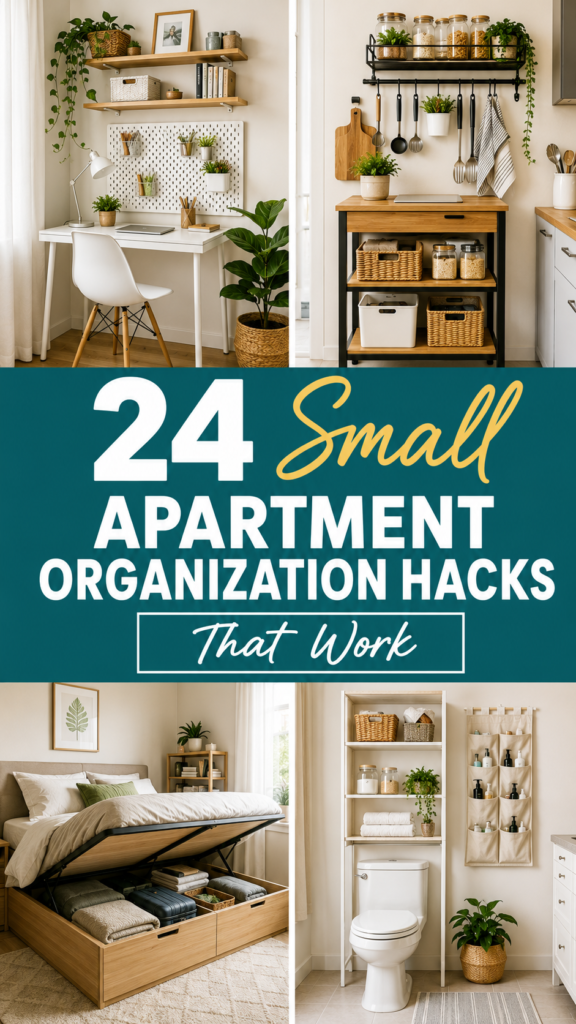

There’s a specific moment every small-apartment dweller knows: you’re holding something you just bought, slowly rotating in place, and there is genuinely nowhere to put it. The closet is full. The cabinets are full. The floor is not an option, though it’s starting to look tempting.
Here’s the uncomfortable truth. Your apartment probably isn’t too small. Your storage strategy is. And a strategy is a lot cheaper to fix than a lease.
The 24 small apartment organization hacks below come from what actually works in real 400 to 700 square foot spaces, with specific products, placements, and the reasoning behind each one. Most cost under $30. Several cost nothing.
Why Small Apartment Organization Fails for Most People
Two mistakes cause almost every clutter problem: storing things far from where you use them, and ignoring vertical space. A 500 square foot apartment with 8-foot ceilings holds roughly 4,000 cubic feet of volume, and most people only organize the bottom third of it.
Nearly every idea on this list attacks one of those two mistakes.
1. Take Your Shelving All the Way to the Ceiling
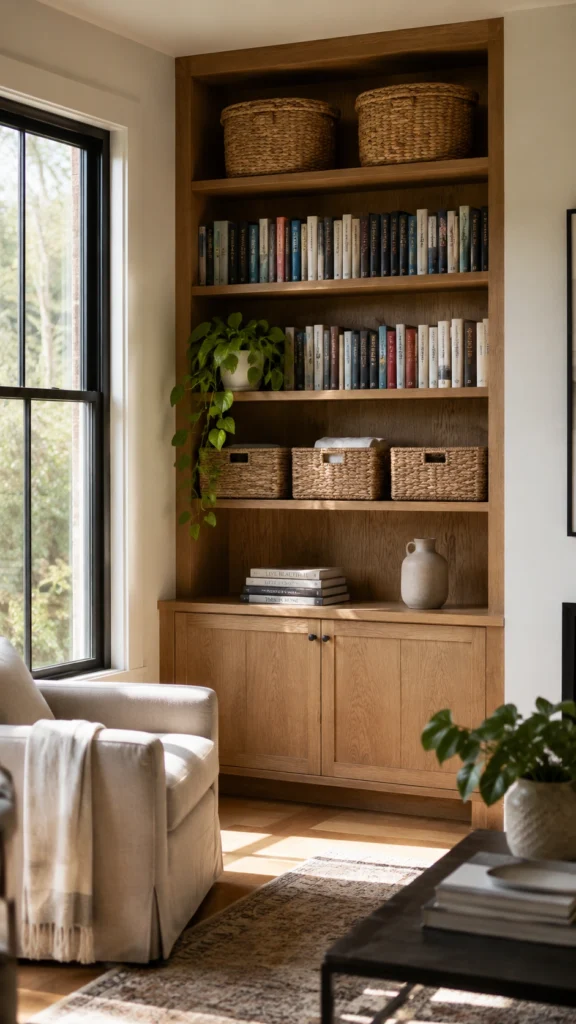
Look at the gap between the top of your bookcase and the ceiling. That awkward two feet is free real estate, and a $15 to $25 floating shelf from IKEA or Home Depot claims it in about twenty minutes of installation.
Reserve that height for things you touch once a month or less, like luggage, holiday decorations, or the bread maker you swore you’d use. The general rule: daily items live at waist height, weekly items just above or below, and rarely used items go up top.
One thing people often get wrong here is stacking loose items up high, which turns the top of the room into visible chaos. Matching bins fix it. The whole upper wall reads as one clean line instead of a junk pile, which matters more in a small room where every surface is in your sightline.
2. Put Your Bed on Risers
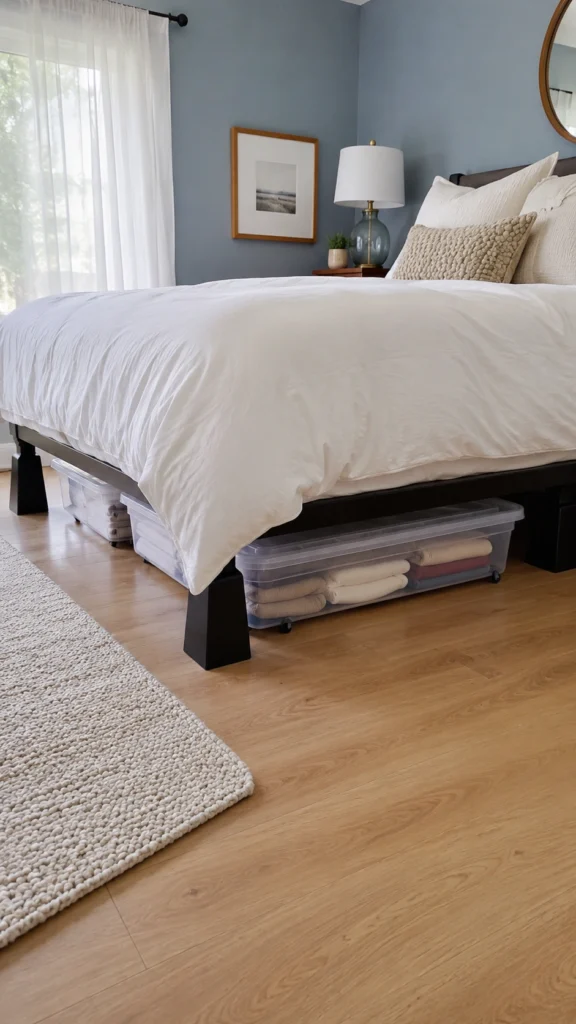
Would you pay $15 for 20 extra square feet of storage? That’s essentially the deal bed risers offer. A set of four costs $10 to $20 and lifts your bed 5 to 8 inches, enough for flat bins of off-season clothes, spare bedding, or shoes.
This beats buying a bigger dresser because a dresser eats visible floor space while under-bed storage uses space you were already wasting. In a studio, that trade decides whether the room feels livable.
Spend the extra few dollars on bins with wheels and lids. Wheels mean you’ll actually pull them out instead of pretending the contents don’t exist, and lids keep dust off your winter sweaters. The one exception: platform beds that sit nearly flush with the floor often can’t take standard risers, so check your frame first.
3. Hang an Over-the-Door Shoe Organizer (Not for Shoes)
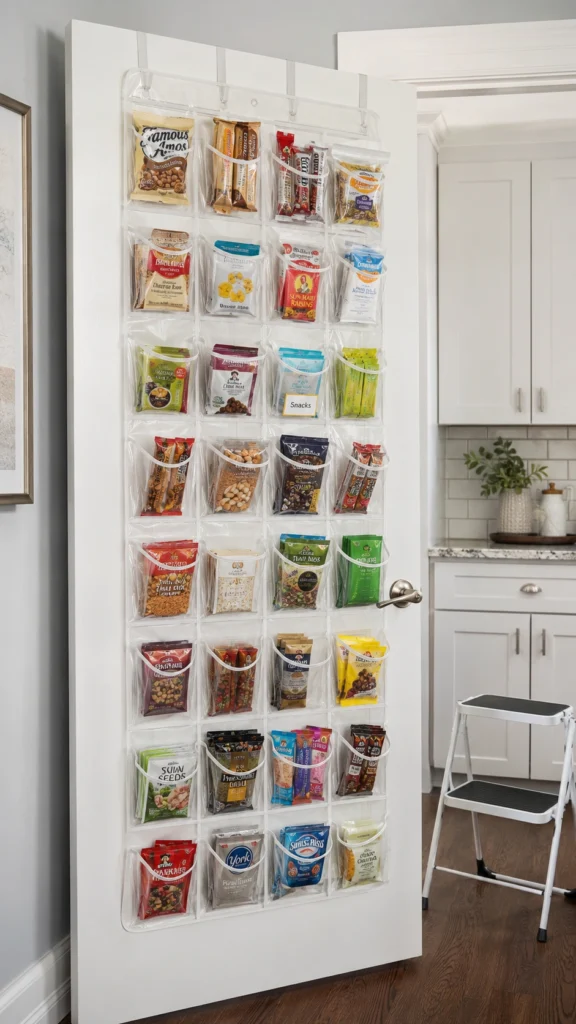
Shoes are honestly the least interesting thing you can put in a $12 over-the-door organizer. The 24 clear pockets work harder inside the pantry door holding snacks and spice packets, on the bathroom door for hair tools and lotions, or in the coat closet for gloves, sunscreen, and dog leashes.
Clear pockets matter more than they seem to. If you can’t see it, you’ll rebuy it. Anyone who has discovered three identical bottles of dry shampoo in different corners of the bathroom understands the cost of opaque storage.
Keep each door to a single category, though. One door for cleaning supplies, one for snacks, one for beauty products. Mixed-purpose doors turn back into vertical junk drawers within a month, and then you’ve just relocated the problem.
4. Use Tension Rods Under the Kitchen Sink
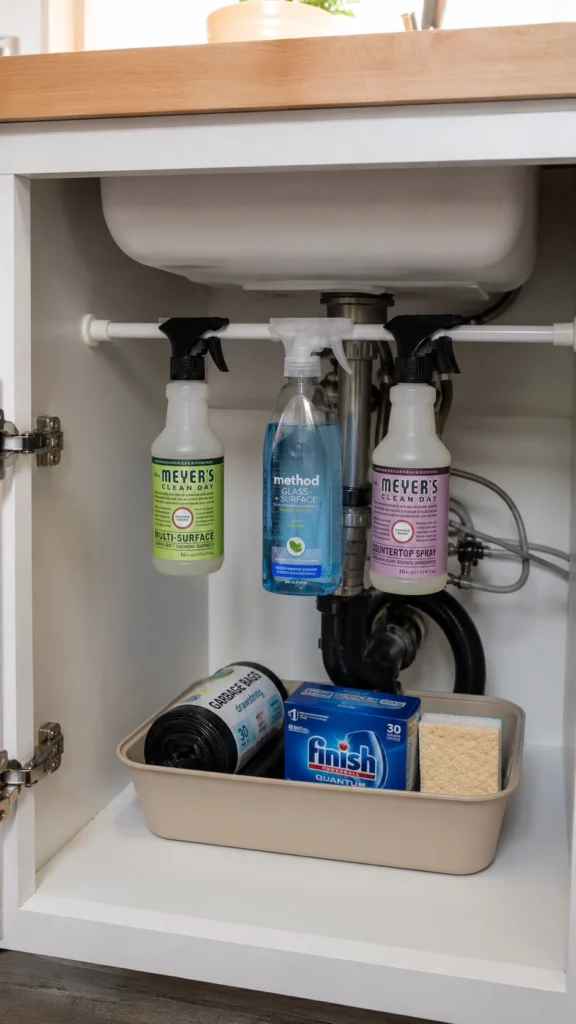
The cabinet under the sink might be the worst-organized spot in any apartment. Half-empty spray bottles tip over, multiply, and hide the sponges. A $6 tension rod installed horizontally near the top of the cabinet fixes it: hang the bottles by their trigger nozzles, and the cabinet floor opens up for a small bin of trash bags and refills.
It works because spray bottles are tall and terrible to stack, but they hang beautifully. Renters get the added bonus of zero drilling. Just measure the cabinet’s interior width first, since a few older cabinets have plumbing that blocks a straight rod.
5. Get a Rolling Utility Cart
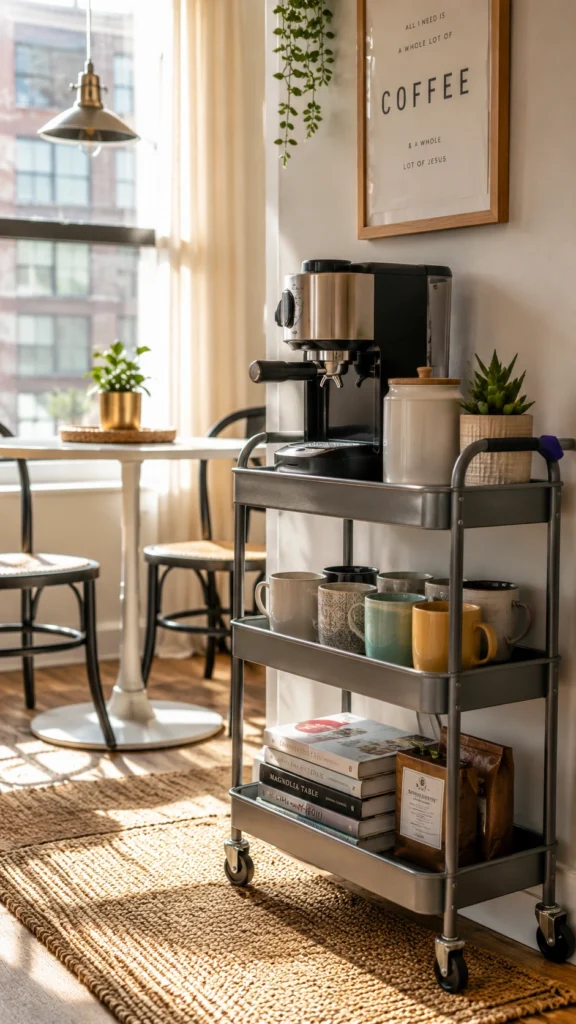
If you only buy one thing from this list, buy this one. The three-tier rolling cart (IKEA’s RÅSKOG at around $40 is the famous version) is the most flexible piece of storage furniture available: coffee station, bathroom tower, craft cart, or a bedside table with three levels instead of one surface.
The wheels are the real feature. Roll the coffee setup out of the way when guests come, or wheel work supplies from the desk to the couch. A cabinet can’t do that.
Target, Michaels, and Amazon all sell near-identical carts for $25 to $35 if IKEA isn’t nearby. Go metal over plastic; plastic shelves bow under a full load of pantry cans within a year, which people usually discover only after the middle shelf develops a permanent sag.
6. Mount a Pegboard in the Kitchen
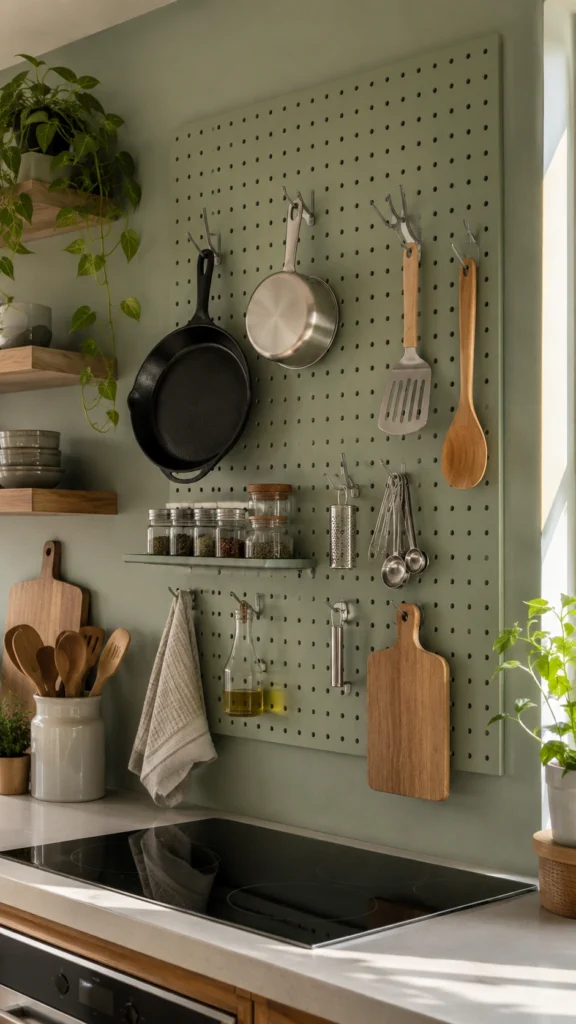
Julia Child hung her entire pot collection on pegboard, and her kitchen worked hard for decades. A 2×4 foot board costs $15 to $20, and the hooks reposition in seconds whenever your needs change.
That flexibility is the whole argument for pegboard over fixed hooks. Nothing about a kitchen stays the same. New pan? Move two hooks. New apartment? The board moves with you.
Paint it the same color as your wall and the tools become the visual interest instead of the board itself. Skip this one if your only free wall sits directly next to the stove, since grease and pegboard are a bad combination.
7. Repurpose a Magnetic Knife Strip
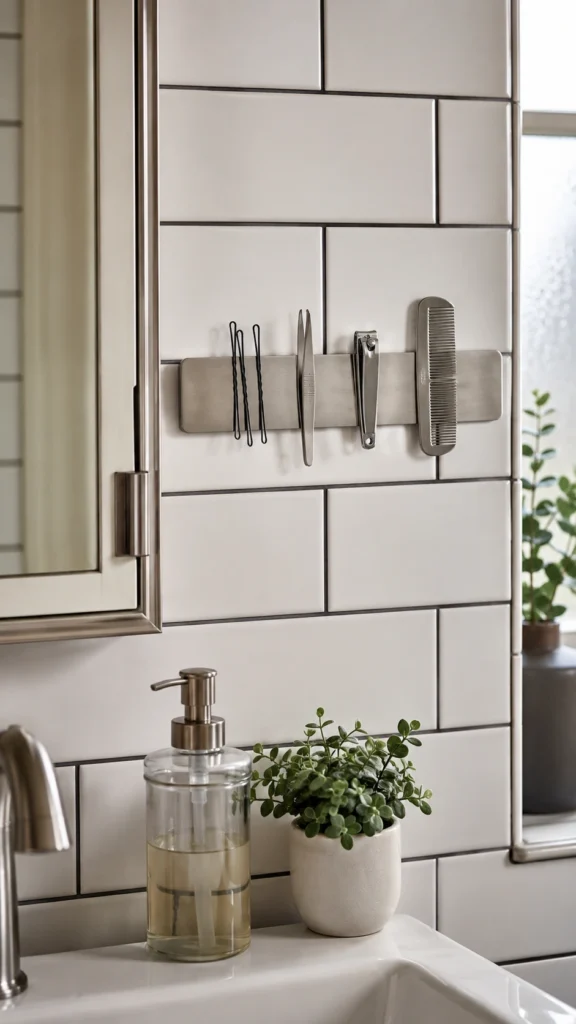
A magnetic knife strip frees an entire drawer, and knives are just the beginning. In the bathroom, one strip corrals bobby pins, tweezers, and nail clippers. By the front door, it holds keys. Inside a cabinet, it grabs metal measuring spoons.
Each strip runs $10 to $15 and solves a specific, maddening problem: small metal items that vanish into drawer corners. If you’ve ever spent ten minutes hunting for tweezers you used yesterday, this is the cure. Just mount bathroom strips away from direct splash zones, since cheap strips can rust.
8. Buy Furniture That Hides Things
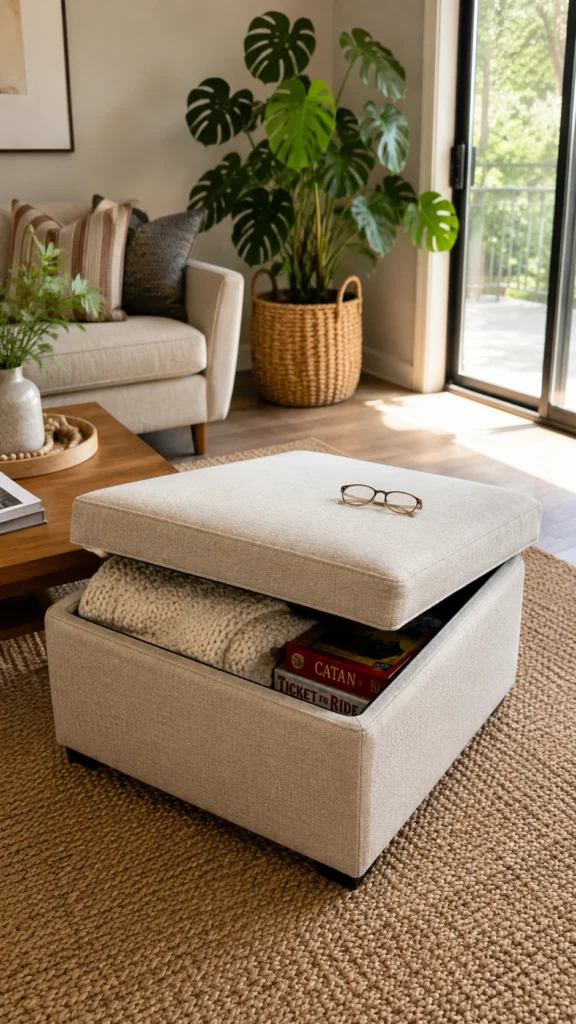
A useful rule for any small space: every piece of furniture should earn its floor space twice. A storage ottoman works as a seat, a footrest, and a hidden bin for blankets or board games. A bench with cubbies, a bed frame with drawers, a coffee table with a shelf underneath all follow the same logic.
Put a standard coffee table next to a lift-top storage version. Same footprint, but one of them hides your remotes, chargers, and the magazine pile you’ll definitely read someday.
Check interior dimensions before buying, because some storage ottomans look roomy but hold barely two throw blankets once the lid mechanism takes its share. Twelve inches of interior depth is a reasonable minimum.
9. Vacuum-Seal Your Off-Season Clothes
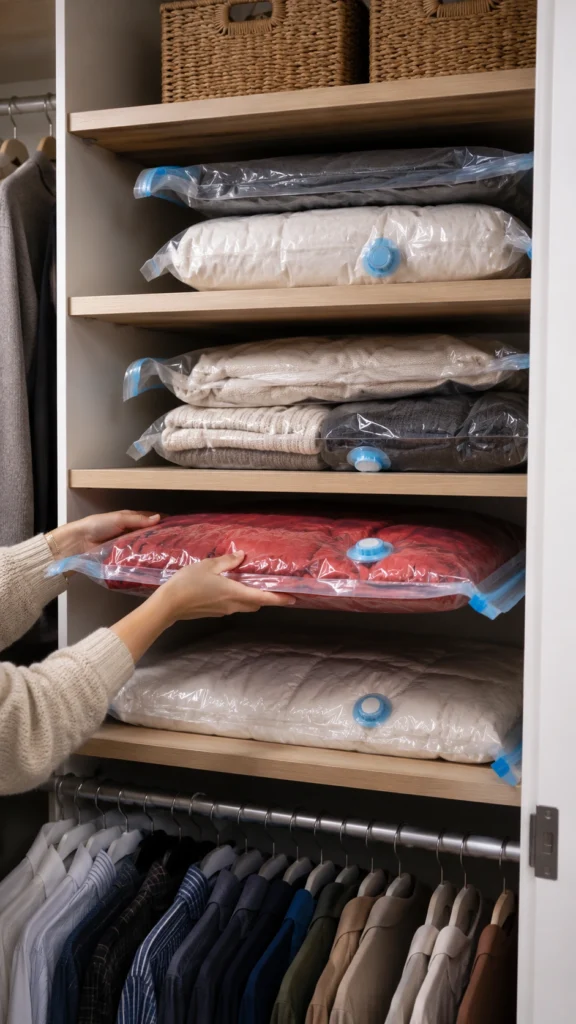
A puffy winter coat compresses to the thickness of a pizza box inside a vacuum storage bag. A set of six large bags costs about $20 and shrinks bedding and bulky clothes to roughly a quarter of their volume, which pairs perfectly with the under-bed bins from hack two or the ceiling shelf from hack one.
Wash everything before sealing it. Whatever smell goes into that bag comes back out in October, concentrated. And leave natural fibers like wool coats and down duvets compressed for months rather than years, since permanent compression can eventually flatten their loft for good.
10. Stick Command Hooks Inside Cabinet Doors
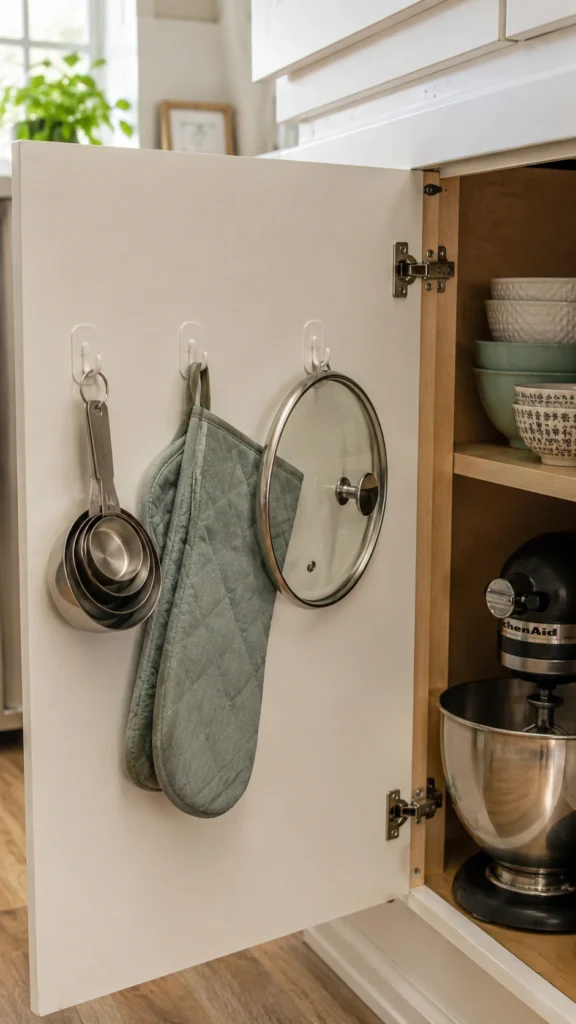
Open any cabinet in your kitchen and look at the back of the door. Dead space, every time. Adhesive hooks turn those doors into homes for measuring cups, pot lids, oven mitts, or the Dutch oven lid that has never had a place to live.
A pack of Command hooks costs $8 to $12, needs no tools, and comes off clean when you move out. Renters keep the full deposit; you gain five extra “shelves” you didn’t have yesterday.
The only real way to ruin this one is overloading. Check the weight rating on the package, because a cast iron lid on a 1-pound hook ends in a loud crash at 2 a.m.
11. Install a Shelf Above Your Doorways
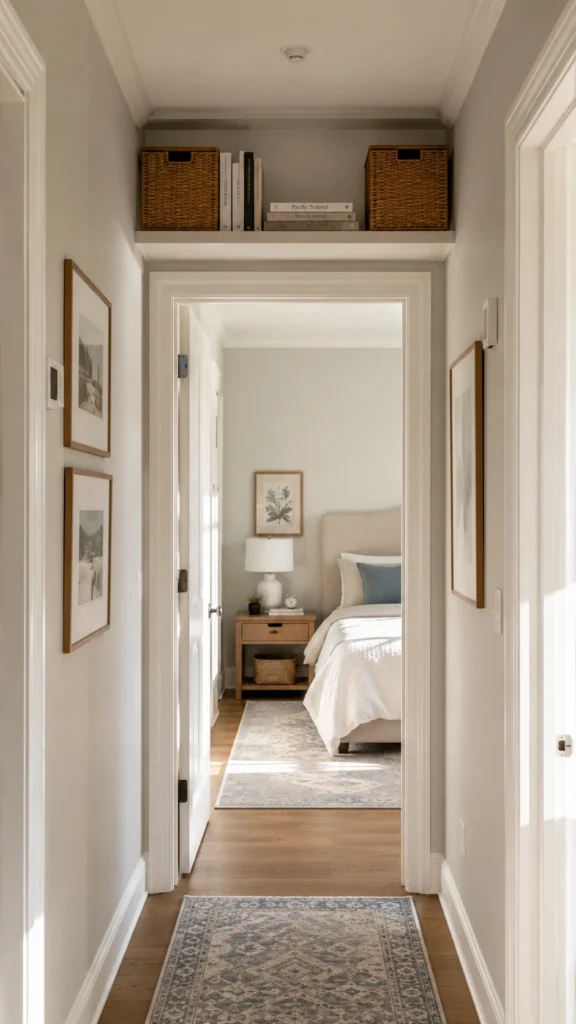
Nobody looks directly above a door frame. That blind spot makes the space over interior doors some of the best hidden storage in an apartment: a single shelf up there holds books, baskets of cables, or extra towels without touching any usable floor or wall space.
Bathrooms and hallways benefit most since they usually have the least storage to begin with. Anchor into studs or use proper drywall anchors, though. This shelf hangs over the exact spot where your head passes many times a day, so it’s not the place for optimistic hardware.
12. Double Your Closet Rod
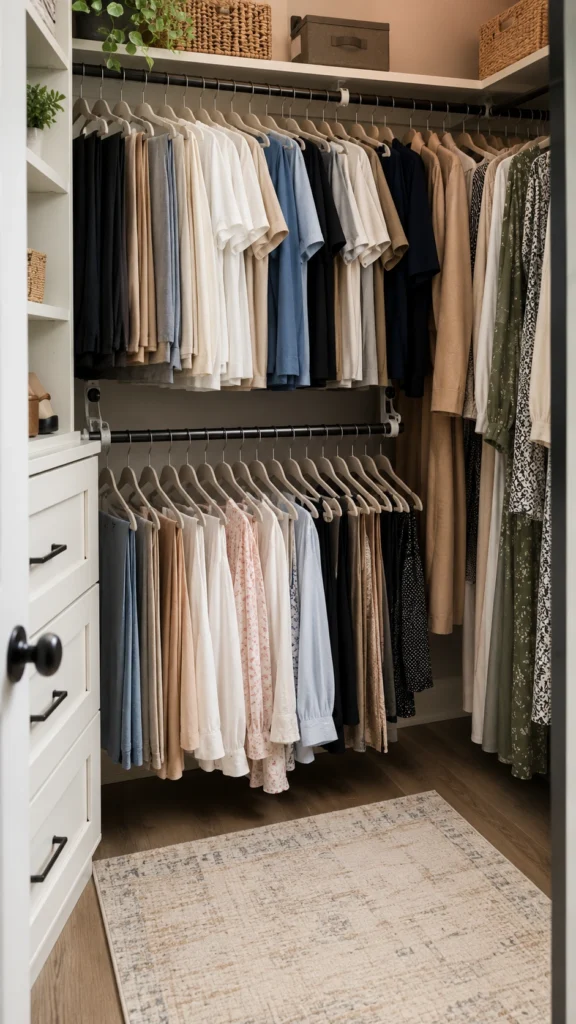
Most hanging clothes need 30 to 40 inches of vertical space. Standard closets give each item 60 or more. You’re paying rent on that wasted air.
A hanging rod extender ($15 to $20) takes it back. It hooks over your existing rod, adds a second bar below, and roughly doubles your hanging capacity in about thirty seconds with no tools. Shirts and folded pants go up top, skirts and more shirts below. Long dresses and coats stay on a section of the original rod, which is the one caveat: this works best for wardrobes that skew toward shorter pieces.
Swap in slim velvet hangers at the same time. They take half the rod width of plastic ones, so you effectively double your capacity twice in one afternoon.
13. Use Drawer Dividers Everywhere
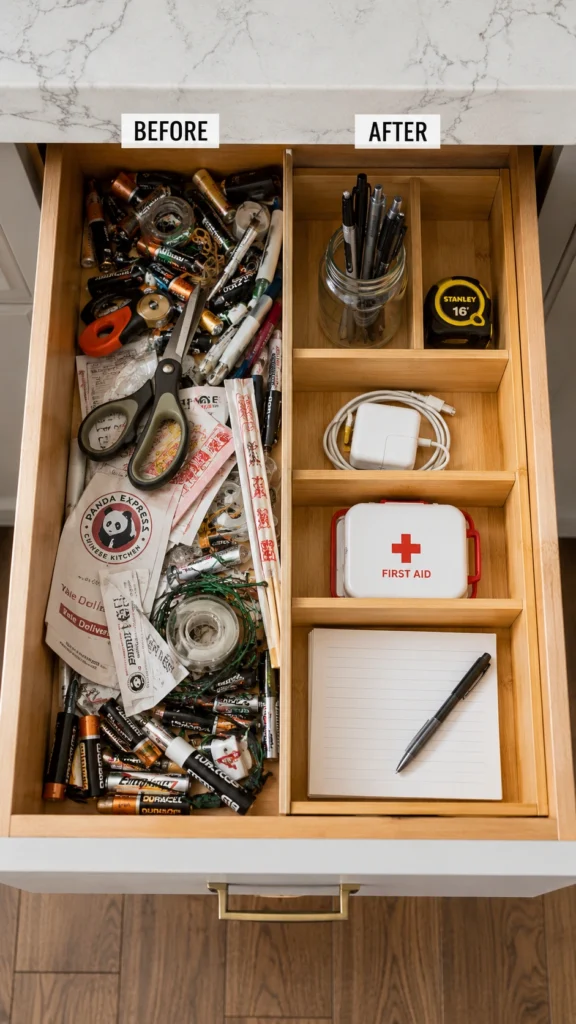
An organized drawer holds about 30 percent more than a chaotic one, simply because dividers eliminate the gaps and tangles between items. Expandable bamboo dividers cost $10 to $15 and work in kitchen drawers, desks, dressers, and bathroom vanities.
Start with your worst drawer. You know the one. Scissors, batteries, takeout menus, and a single chopstick have formed their own civilization in there.
Cut-down cereal boxes work fine if you’d rather spend nothing, and a layer of leftover contact paper hides the cardboard if that bothers you. The dividers matter far more than what they’re made of.
14. Add a Fold-Down Wall Desk
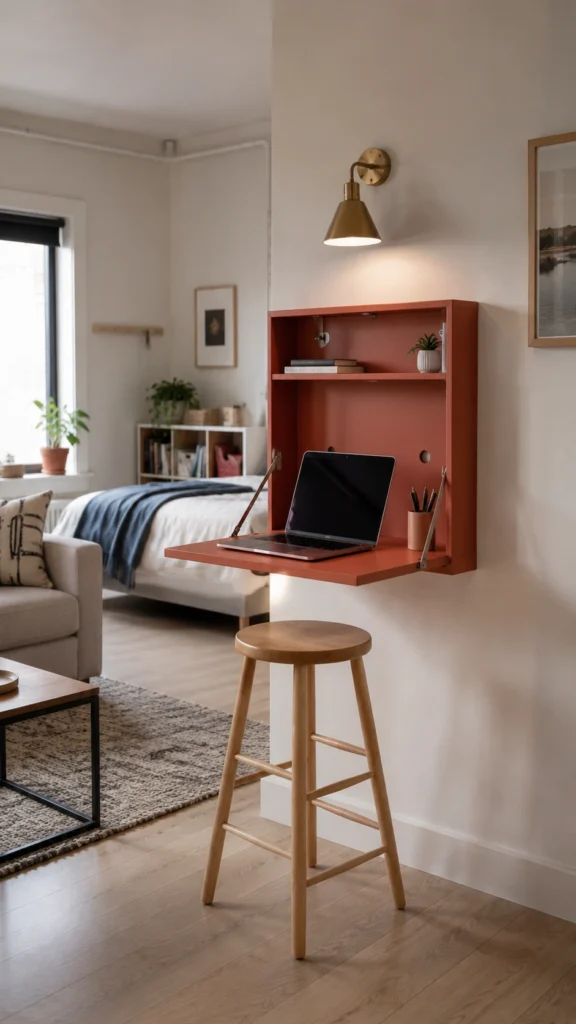
Picture your workday ending with the desk physically disappearing. A wall-mounted fold-down desk does exactly that: open, it’s a real workspace; closed, it protrudes 4 to 6 inches from the wall. Most models cost $60 to $120 and mount to studs.
Even a small standard desk permanently claims 6 to 8 square feet. In a studio where your office, dining room, and bedroom share one room, reclaiming that footprint every evening changes how the whole space feels. Closing the desk at 6 p.m. also gives the workday a physical off switch, which helps more than you’d expect when you live where you work.
This is the priciest item on the list, so it makes sense mainly if you work from home regularly. Occasional laptop users get most of the benefit from a lap desk and a good chair.
15. Switch to Clear Stackable Bins
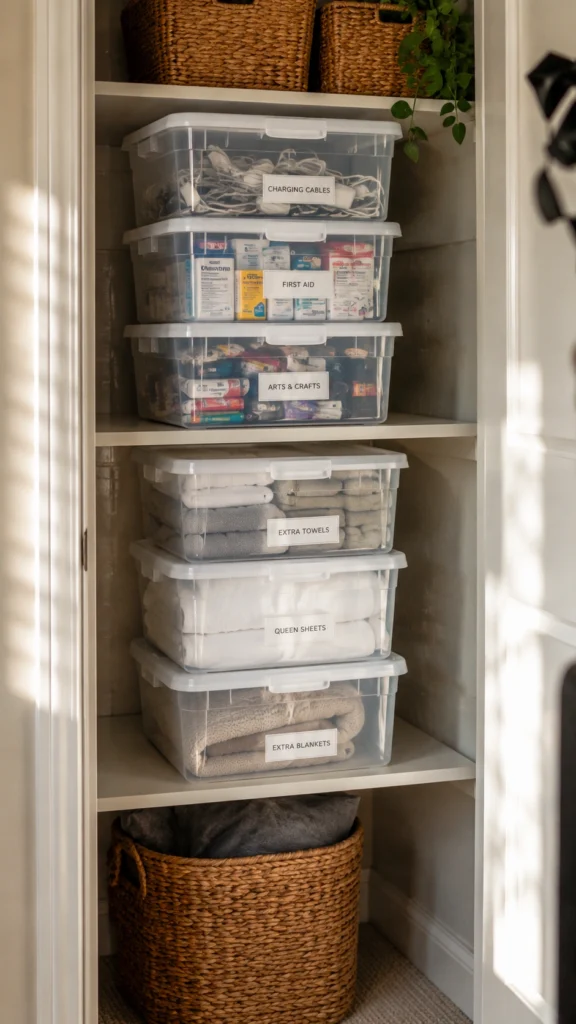
Opaque bins hide clutter from guests, but they also hide your stuff from you. Clear stackable bins solve both directions: you find the phone charger without opening six containers, and the stacking uses vertical space inside closets and cabinets that would otherwise sit empty.
Label the fronts anyway, even though you can see through them. Somehow “misc cables” and “misc cords” end up as two separate categories in every household, and labels are what force the sorting decision. Buy from one product line too, since uniform bins stack securely while a mixed collection wobbles.
16. Put Lazy Susans in Deep Cabinets
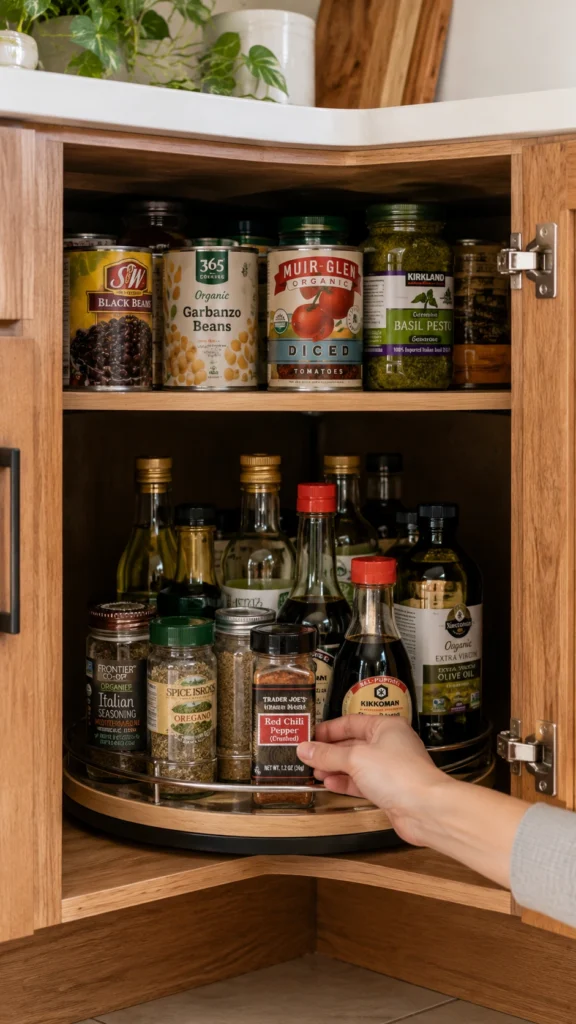
Deep corner cabinets swallow things whole. A $10 lazy Susan turns that graveyard into working storage, because a quick spin brings the back row to the front.
The fridge version pays for itself fastest, at least in most households, since expired sauces hiding behind the milk cost real money every month. Add one in the pantry for oils and vinegars and one under the bathroom sink for skincare. Measure the cabinet depth first; a turntable that’s too large for the shelf will scrape the walls and never spin freely.
17. Slide a Skinny Cart Beside the Fridge
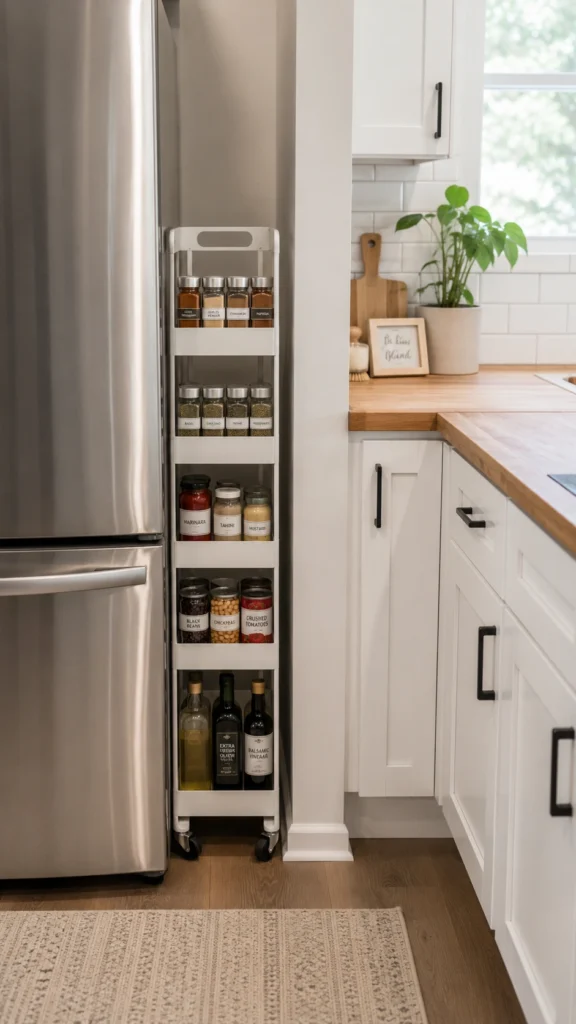
That 5-inch gap between the fridge and the wall looks useless. It isn’t. A slim rolling pantry cart ($25 to $40) holds canned goods, spices, and bottles on three or four narrow shelves, then slides back into the gap and disappears.
This is small apartment organization at its purest: storage occupying space nothing else could use. Measure the gap before ordering, because a cart half an inch too wide becomes a very frustrating decoration, and returns on these are annoying since they usually ship partially assembled.
18. Hang Hooks on the Sides of Furniture
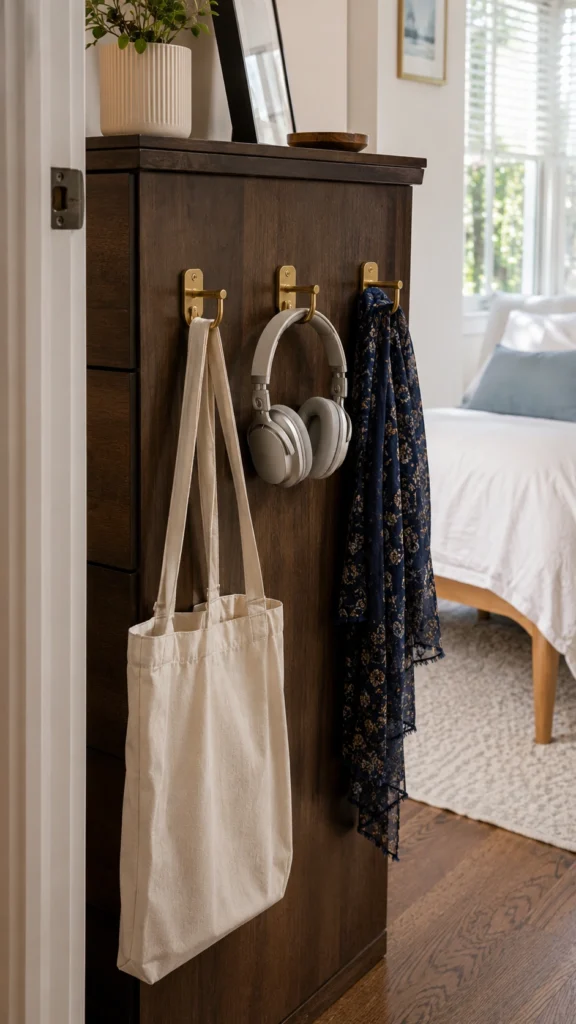
The side of your dresser. The end of a kitchen cabinet. The flank of a bookcase. All flat, all vertical, all completely ignored. Adhesive hooks on these surfaces hold tote bags, aprons, headphones, or tomorrow’s outfit.
Furniture sides often beat walls for daily-grab items because the furniture already sits along your natural walking path. Your bag lands on the hook because the hook lives exactly where your hand already goes. The exception is laminate or particleboard furniture with cheap finishes, where adhesive hooks sometimes peel the surface on removal; test one in a hidden spot first.
19. Choose Nesting Furniture
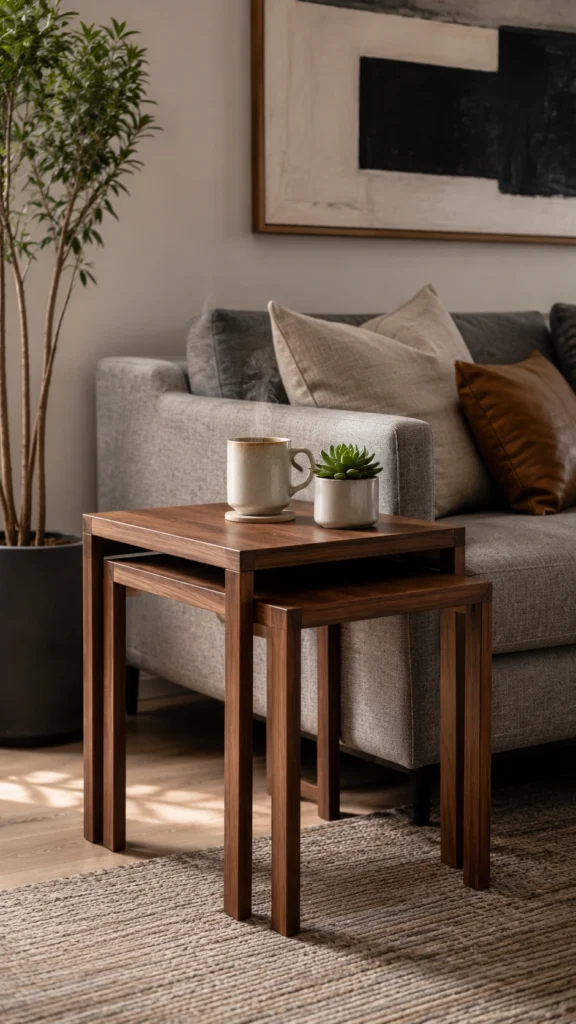
You don’t need maximum furniture every day. You need it some days. That single observation is the entire case for nesting pieces: side tables that slide together into one footprint and split apart when friends come over, or nesting stools that do the same for seating.
Fixed furniture makes you pay the space cost daily for capacity you use monthly. Nesting furniture charges you only when you actually need it. A decent set of two nesting tables runs $50 to $90, and the space savings show up every single day in between gatherings.
20. Store Pans Vertically in a File Organizer
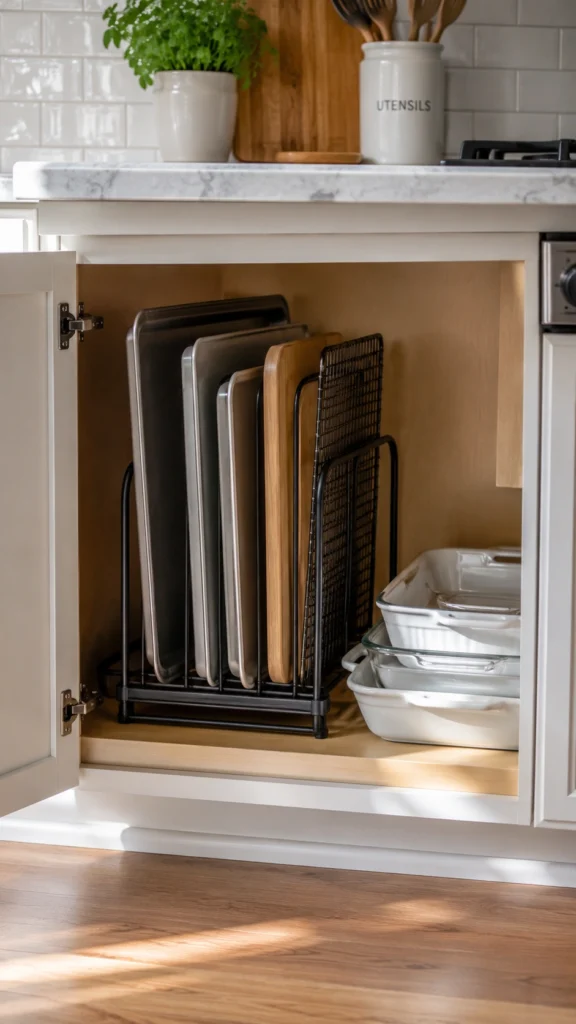
Everyone knows the pan avalanche: reaching the bottom skillet means unstacking four others onto the counter, then reversing the whole operation. A metal file organizer or bakeware rack ($12 to $18) ends it by holding cutting boards, sheet pans, and lids upright like files in a drawer.
Vertical beats stacked for anything flat, because you grab one item in one motion. Put the rack in a lower cabinet, or right on the counter next to the stove if your cabinets have no room left, where it honestly looks intentional rather than desperate.
21. Mount a Wall-Mounted Drying Rack
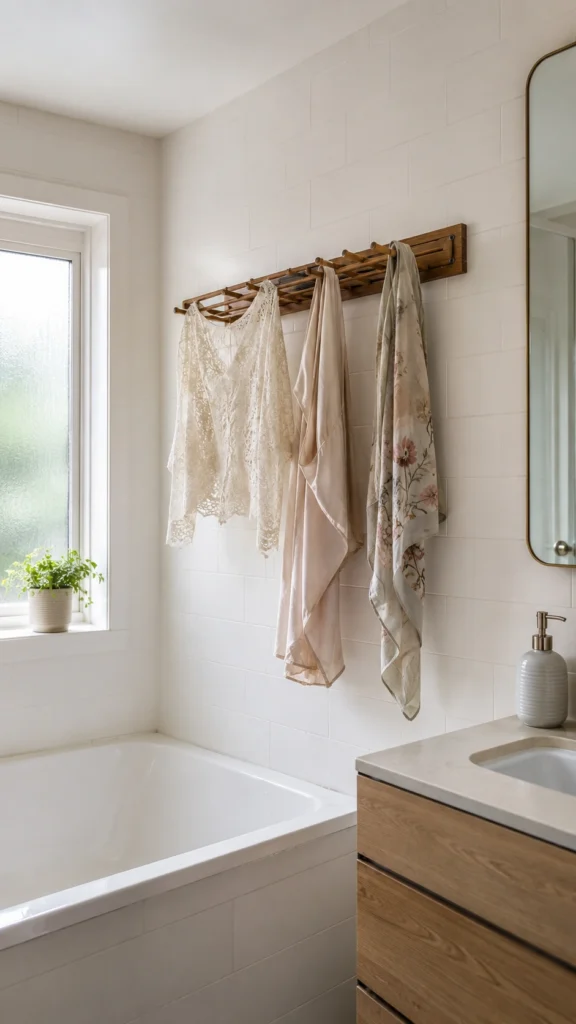
A freestanding drying rack eats 6 square feet of floor, trips you at night, and somehow stays up for two days after the laundry dries. A fold-flat wall rack does the same job while protruding about 3 inches when closed, and accordion-style models cost $20 to $35.
Mount it over the tub so drips land somewhere waterproof. The main limitation is capacity: a wall rack handles a load of delicates well but struggles with a full family-sized wash, so heavy laundry households may still want the floor rack for big days.
22. Create a Landing Zone by the Door
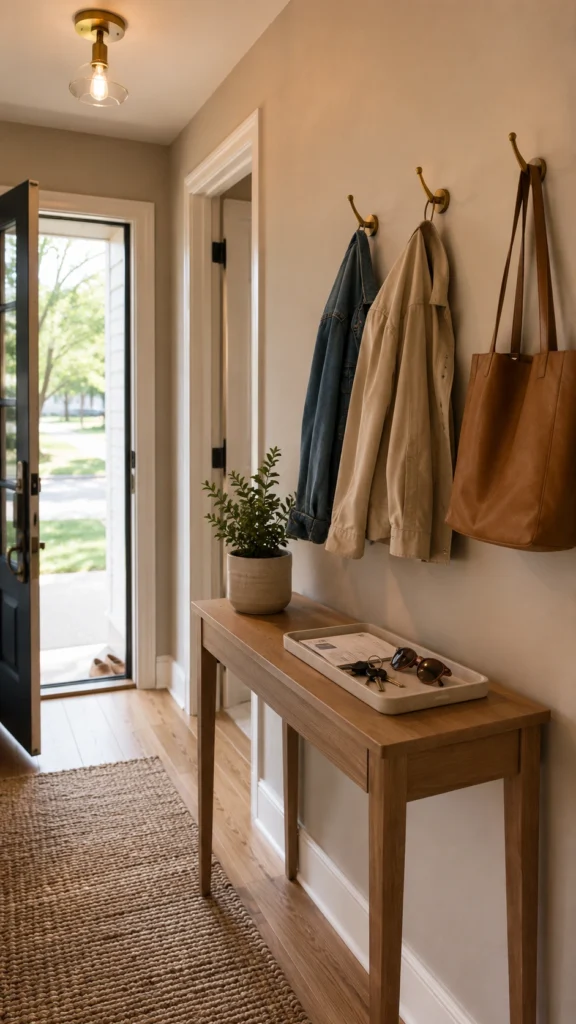
Keys, mail, sunglasses, and wallets scatter across a small apartment fast because none of them has an assigned home. Give them one within arm’s reach of the door: a small wall shelf with hooks beneath it, or a slim console with a tray on top. Under $30 covers the shelf-and-hooks version.
The zone works by catching clutter at the entrance before it migrates to your counters and couch. One tray, one hook per person.
Counterintuitively, smaller works better here. A large console invites piles of mail and random packages, while a surface with no room to hide clutter forces you to deal with it. Empty the tray every Sunday and the system runs itself.
23. Use Shelf Risers Inside Cabinets
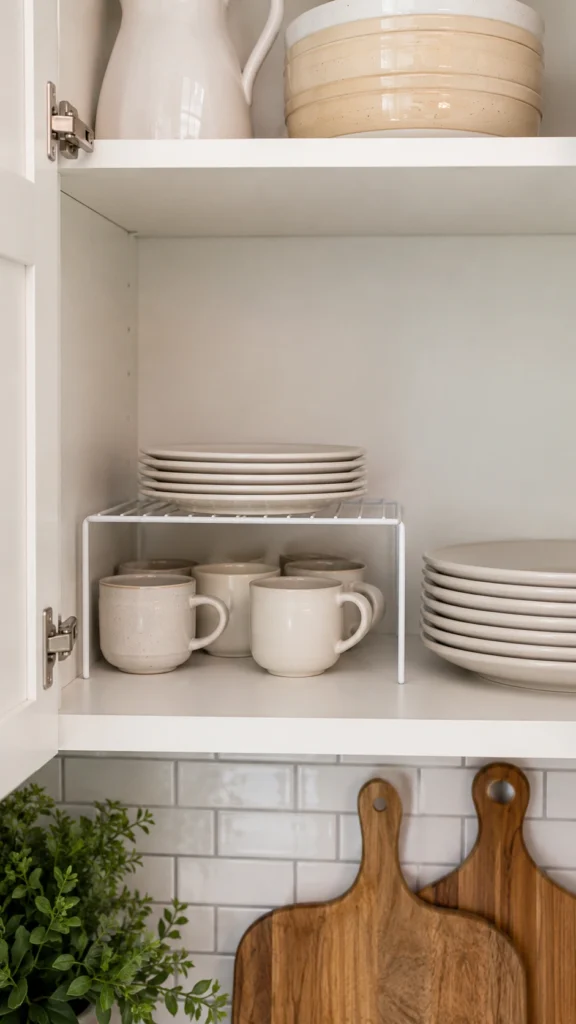
Cabinet shelves sit 12 to 15 inches apart. Your plates and mugs need 5 or 6. Wire shelf risers ($8 to $12 each) split one shelf into two levels and nearly double the usable space without touching the cabinet itself, which makes them one of the best returns per dollar on this entire list.
Start where you store dishes, mugs, and canned goods, since short items that stack poorly gain the most. Buy the expandable kind if your kitchen has quirky dimensions; older apartments rarely have cabinets in tidy standard widths.
24. Run a One-In-One-Out Rule
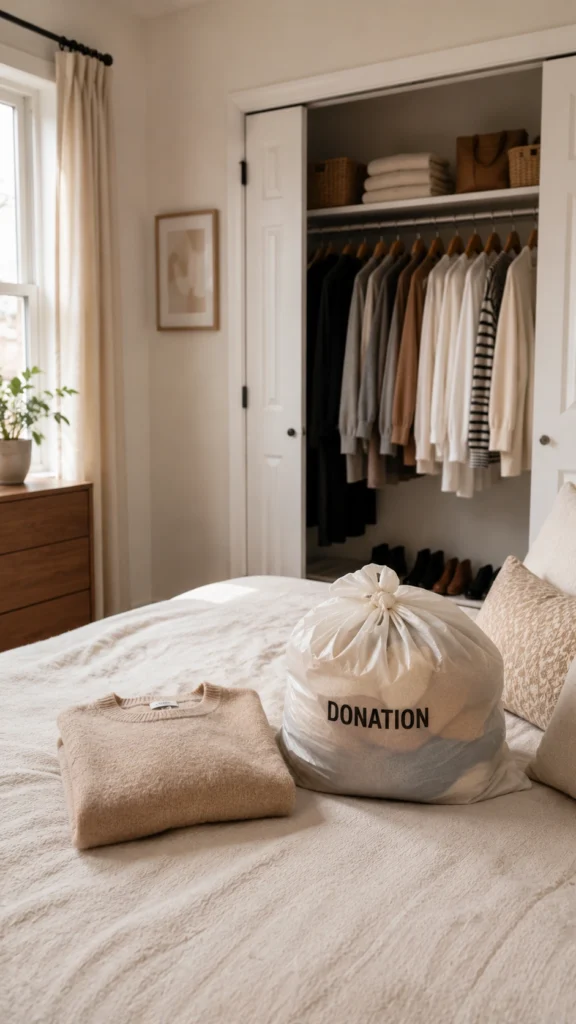
The best hack on this list is free, and it’s the one that protects the other 23: when something new comes in, something old goes out. New sweater? Donate one. New mug? One leaves the cabinet.
An annual purge fights a battle that restarts the next morning, because clutter grows daily. Small constant corrections cost ten seconds each; the alternative costs a whole miserable Saturday. The rule does bend for genuine gaps, like finally buying a proper winter coat when you didn’t own one, but those cases are rarer than the shopping cart suggests.
Which Small Apartment Organization Hacks Should You Try First?
Twenty-four ideas is a lot to act on, so here’s a shorter path in.
Quick Wins Under $15
- Tension rod under the sink (hack 4)
- Command hooks inside cabinet doors (hack 10)
- Lazy Susan in the fridge (hack 16)
- Shelf risers in one cabinet (hack 23)
Biggest Space Gains for Small Apartment Storage
- Bed risers plus under-bed bins (hack 2)
- Ceiling-height shelving (hack 1)
- Double closet rod (hack 12)
- Fold-down wall desk (hack 14)
Two quick wins this weekend, one big gain next payday. Small steps stick; giant overhauls tend to stall halfway through with the apartment looking worse than when you started.
Final Thoughts
Strip away the specific products and every hack here reduces to the same three moves: use your vertical space, store things where you actually use them, and make every piece of furniture do two jobs. That’s the whole playbook for small apartment organization. The bins and rods and risers are just tools for running it.
So pick the one hack that solves your most annoying daily problem. Maybe that’s the pan avalanche, maybe it’s the morning key hunt. Fix that single thing tonight or this weekend, and pay attention to how it feels a week later. Square footage is fixed. How hard it works for you isn’t.
FREQUENTLY ASKED QUESTIONS
How do I organize a small apartment on a tight budget?
Start with what’s free: the one-in-one-out rule, cereal-box drawer dividers, and rearranging storage by how often you use things. Your first $30 should then go to Command hooks, a tension rod, and a lazy Susan, which fix the three messiest zones in most apartments (cabinet doors, under the sink, and deep shelves) before you spend anything on furniture.
What should I organize first in a small apartment?
The spot that annoys you every single day, not the one that looks worst. A chaotic kitchen drawer or cluttered entryway costs you time daily, while a messy storage closet only bothers you monthly. A daily pain point fixed is a win you feel immediately, and that momentum carries you into the bigger projects.
Which organization hacks work for renters who can’t drill holes?
More than a third of this list needs zero drilling: tension rods, Command hooks, over-the-door organizers, bed risers, rolling carts, shelf risers, lazy Susans, drawer dividers, and vacuum bags. Save the mounted pegboard and fold-down desk for a place you own, or ask your landlord; many say yes if you offer to patch the holes when you leave.
How do you make a small apartment look less cluttered without getting rid of things?
Hide volume and unify what stays visible. Bulky items go into closed storage like ottomans, under-bed bins, and lidded baskets, while anything on open shelves should match in color or material. Ten mismatched items on a shelf read as clutter; the same ten items in three matching baskets read as decor. Clear surfaces matter most of all, since flat empty space signals “tidy” to your brain faster than anything else does.
How often should you declutter a small apartment?
With a daily one-in-one-out habit and a 15-minute weekly reset, you’ll rarely need a major purge. If you’re starting from chaos, do one full declutter first, then switch to maintenance mode. A quarterly check of bins and closets keeps stored items from quietly becoming a museum of things you forgot you owned.